Home
+

Published : 24 May 2026, 03:08 AM
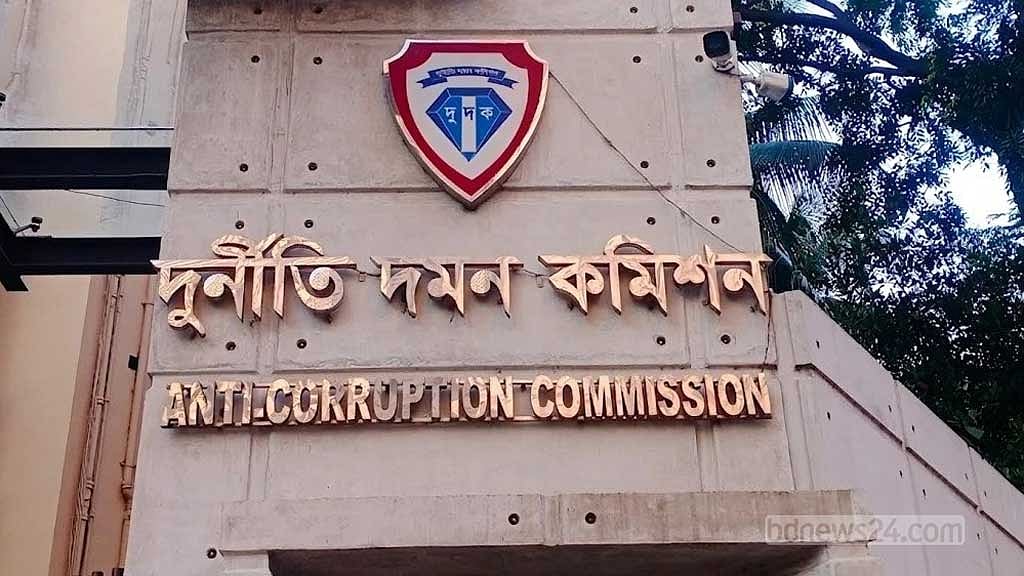
The Anti-Corruption Commission (ACC) has summoned various documents from the British American Tobacco Bangladesh Company Limited (BATBC) in an investigation into an allegation of “laundering $30 billion through ownership fraud”.
Letters were sent to the listed multinational company and the Office of the Registrar of Joint Stock Companies and Firms (RJSC) on Thursday seeking these documents and information.
They have been asked to send certified copies of these documents and information to the ACC’s investigation officer by Jun 15.
The ACC had previously decided to investigate BATBC on the basis of a complaint over the issue of “corruption and money laundering”. An assistant director was assigned the task of investigating the claim.
On Saturday, ACC Deputy Director Akhtarul Islam told bdnews24.com that the ACC has launched an investigation into the complaint. Several documents have also been requested.
However, he could not give any details about the complaint.
Recently, after taking charge, Assistant Director Sajid-ur-Roman has petitioned for documents in this regard as part of the investigation.
Currently, 71.91 percent of the total shares of BATBC, a company with a paid-up capital of Tk 5.4 billion and listed on Bangladesh's two stock exchanges, belongs to entrepreneur directors, while 0.64 percent belongs to the Bangladesh government. The rest belongs to general shareholders.
The ACC recently received allegations that the multinational company, which opened two factories in Dhaka and Chattogram during the Pakistan period, had transferred its ownership to BAT (British American Tobacco) illegally through “forgery” of documents and papers.
However, the ACC officials concerned did not say who made the allegations.
Later, the corruption watchdog decided to probe the claims and a formal verification process was initiated.
The complaint filed with the ACC states that the company, Pakistan American Tobacco (PAT), which manufactured cigarettes in factories in Dhaka and Chattogram, was supposed to be “fully owned by Bangladesh as abandoned property” after independence, but this did not happen.
It is alleged that BATBC has taken $20 to $30 billion in foreign exchange abroad in the last 55 years through “making forged documents and exerting influence” to show that the company was registered in Bangladesh.
The complaint goes on to argue that the factories were legally owned by the Bangladesh government.
It states PAT set up its first factory in Karachi in 1947. Later, factories were set up in Chattogram in 1949 and in Dhaka in 1965. After Bangladesh's independence in 1971, the two factories in Dhaka and Chattogram were supposed to transition to the ownership of the Bangladesh government as abandoned property. PAT's annual reports for 1972, 1973 and 1974 highlight the loss of two of its factories in Bangladesh.
The complaint claims that the company also received tax exemptions and compensation from the Pakistani government based on that information. Then, by creating and exerting influence, the company was shown to be registered in Bangladesh. Through this, the ownership of the company, including the two factories in Dhaka and Chattogram, remained in the hands of British American Tobacco.
The complaint filed with the ACC states that the then finance manager of the former PAT played a role in creating and submitting fake documents in collusion with some ministers, businessmen and government officials. At that time, RJSC objected to receiving these documents, but was ultimately forced to accept the documents under pressure from “influential people”.
According to the complaint, Bangladesh Tobacco Company or BATC was registered in Bangladesh instead of being considered a company registered in Pakistan. Through this, the ownership of the company, including two factories in Dhaka and Chattogram, remained under BAT.
The complaint claims that, to continue this activity and further hide tax and VAT evasion, BAT has appointed or nominated senior government officials or secretaries to the board in the last three decades. It also alleged that politicians have been given benefits through profitable agency business.
The complaint has requested the ACC to verify the documents of Office of the Registrar of Joint Stock Companies and Firms in Dhaka as well as the annual reports of PTC in Karachi, Pakistan from 1972 to 1975. For this, it has been suggested to collect documents through the Bangladesh Embassy in Islamabad and the Consulate in Karachi.
The complaint claims that this is the “biggest instance of corruption and money laundering in the history of Bangladesh”.
Documents Requested by ACC
As part of the investigation into the complaint, the investigating officer has requested all records related to the registration of BAT, PTC and BATBC.
These include the approved memorandum of association, articles of association, ownership of the company, registered office, list of factories, number and date of certificate of incorporation, authorised capital, paid-up capital and number of shares.
In addition, certified copies of the directors, directors' consent letters and all records related to the management of the company have been requested.
When asked for BATBC's statement on the investigation and complaint, the company initially said that the organisation responsible for their media communication would contact bdnews24.com. It has yet to do so as of the filing of this report.
Later, BATBC said that it would issue a statement on the matter, but did not do so.
A BAT Bangladesh spokesperson said: "BAT Bangladesh has operated in the country for over 116 years and remains deeply committed to Bangladesh’s development as one of its leading taxpayers.
"We are aware of the matter through media reports and have not received any formal communication from the relevant authorities. If contacted through due process, BAT Bangladesh will cooperate fully in accordance with the law."