Home
+
Published : 01 Jun 2026, 01:51 AM
In Bangladesh’s banking sector, every decision must be taken with caution so that no “wrong signal” is sent to the system, according to Syed Mahbubur Rahman, one of the country’s senior bankers and former chairman of the Association of Bankers Bangladesh (ABB).
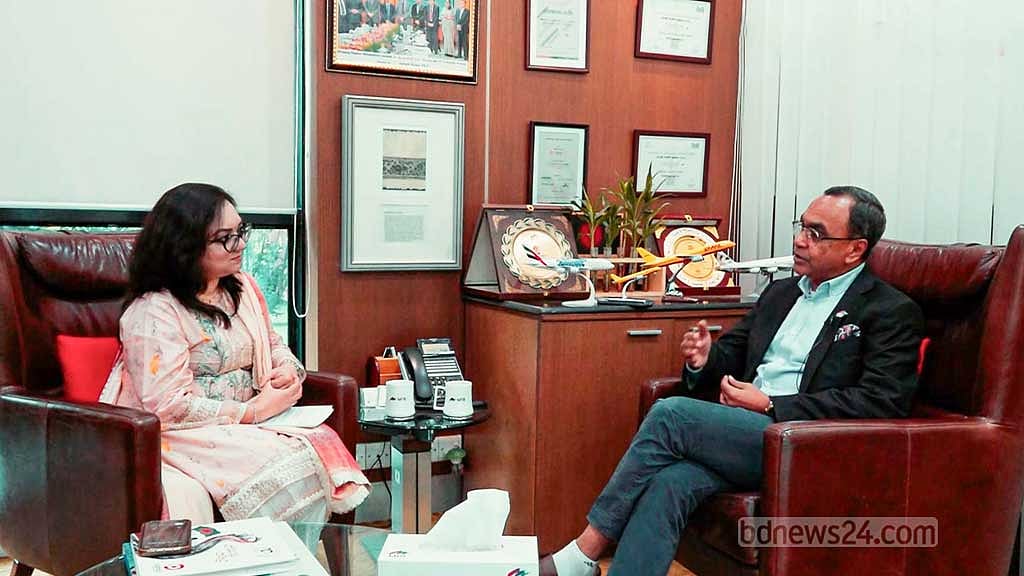
Speaking on bdnews24.com’s programme Chinwag With The Chiefs, Mahbubur -- who is also the managing director and chief executive of Mutual Trust Bank (MTB) -- warned that the sector is facing deep structural stress caused by governance failures, weak supervisory systems and a persistent reliance on short-term investment thinking.
“At present, every single action should be taken in such a way that no wrong signal goes anywhere,” he said. “Because the mess that has built up over the last 17–18 years has to be cleaned up.”
He identified Bangladesh’s non-performing loans -- now estimated at around Tk 7 trillion -- as the most visible symptom of a wider breakdown in governance.
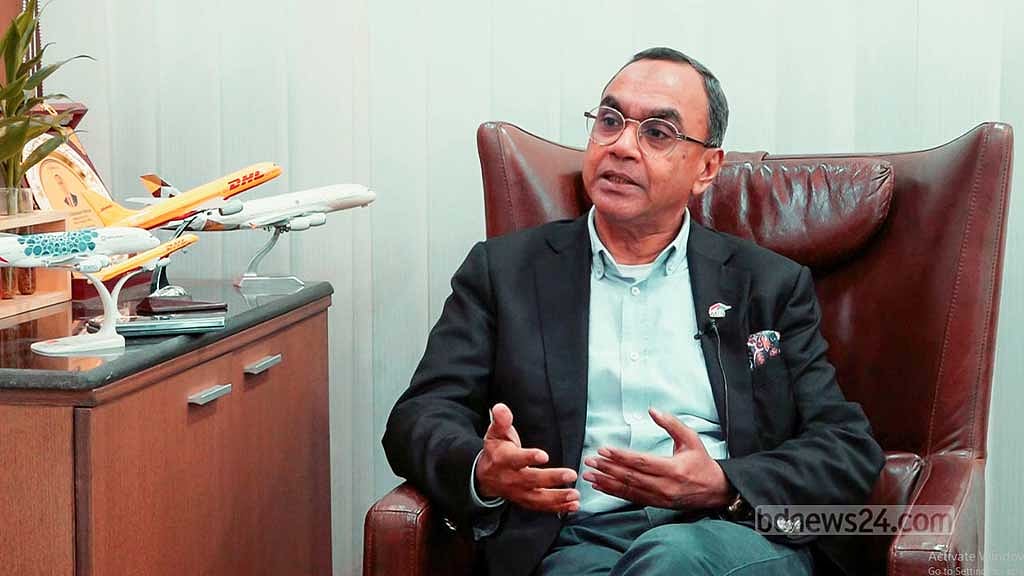
“Why has this happened? It has certainly happened because of a lack of governance,” he said. “Whether at the regulator level, the banking level, or the board level, everywhere this has occurred. That is why the core problems have emerged.”
Mahbubur, however, contrasted the wider sector with the performance of MTB, saying that governance discipline has allowed the bank to remain comparatively stable amid systemic stress.
He said that among banks approved in 1999, only a small number have managed to maintain customer trust, and MTB is among them.
According to him, the bank’s ability to control non-performing loans within international standards, accelerate recovery processes through legal channels, and introduce new customer-focused services has helped it grow steadily since its inception.
Mahbubur, who has served as MTB’s managing director since 2019, said that despite major shocks in the banking sector over the past one and a half decades -- including liquidity pressures triggered by scandals in some banks -- MTB was largely insulated due to strong governance structures, board-level discipline and operational independence.
“The impact of those crises did not fall heavily on MTB because of governance, because of the board’s policy framework and because of the independence of operations,” he said.
He noted that in 2010, total bad loans in the banking sector stood at around Tk 220–240 billion. Now, that figure has risen nearly 35 times to about Tk 7 trillion.
“This is not acceptable. It should not be happening,” he said. “Around 35 percent of the banking portfolio has effectively disappeared.”
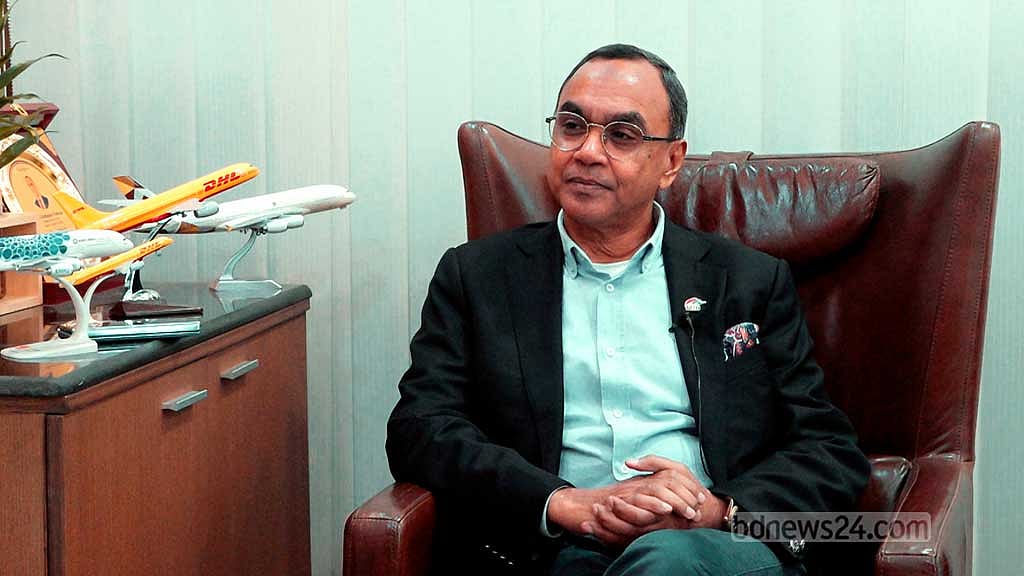
Mahbubur traced the deterioration of the sector to a series of shocks and governance failures over time.
He said the banking sector had initially shown improvement, but a turning point came in 2017 with what he described as the takeover of a private bank “in the middle of the night”, which marked, in his view, the beginning of a broader decline.
“That was the final nail in the coffin -- the beginning of the collapse,” he said. “After that, the situation accelerated further. What we wanted to accelerate towards excellence instead turned into something distorted.”
He also pointed to subsequent crises -- the COVID-19 pandemic, the Russia-Ukraine war, and more recent global conflicts -- as factors that added pressure to both the banking and wider economic systems.
Reflecting on his 16-year experience as a chief executive in the sector, he said he had observed firsthand how governance structures failed over time.
“I have seen how governance breaks down,” he said. “How banks slowly suffer due to regulatory supervisory lapses, how supervisory failures happen, and how the system becomes further accelerated in the wrong direction.”
Despite this, he said MTB’s performance demonstrated the importance of governance as a core institutional principle.
“This is the main thing,” he said. “It is like your head. If your head is fine, everything else will be fine.”
Mahbubur said short-term investment thinking and excessive focus on dividend distribution were among the most damaging trends in the sector.
“Every board says dividends must be higher,” he said. “But if you push for higher dividends, what happens? You automatically move into short-term thinking. You stop thinking long term -- about strategy, about where the bank should go, about maintaining a proper non-performing loan structure, about having a proper dividend distribution policy.”
He warned that such behaviour undermines long-term stability and weakens institutional resilience.
Mahbubur also addressed recent policy decisions by Bangladesh Bank allowing large borrowers greater access to credit. He said the market reaction had been mixed.
“Mixed responses have come from the market,” he said, noting that after multiple bank mergers and restructuring, the number of institutions had effectively shifted to 57 banks, but their capacity had not remained strong.
He referred to capital adequacy concerns, saying that in some cases it had fallen to around minus 3 percent, according to recent central bank statistics.
“That means lending capacity has reduced,” he said. “Everything depends on capital. If capital goes down, lending capacity also goes down.”
He added that a significant portion of non-performing loans had originated from large-scale borrowing.
“The major reason behind the rise in bad loans is large borrowers,” he said. “Where capital has fallen, lending capacity has also fallen immediately. Most of the current bad loans have come from large loans.”
He questioned whether further expansion of such lending should continue.
“Should we increase this further?” he asked.
Mahbubur cautioned that if governance is not properly maintained, and if banks are influenced externally, non-performing assets could rise further.
“If governance is not right and banks are influenced, then non-performing assets will increase again,” he said.
He suggested that large-scale lending should be restricted to specific sectors rather than being broadly expanded across the economy.
He also warned that policy decisions, even if well-intentioned, can produce negative outcomes if not properly implemented.
“Any policy may have a good intention,” he said. “But the problem arises in implementation. That is where things go wrong.”
He added that inappropriate lending behaviour could send negative signals to international financial partners, including institutions such as the IMF, ADB, IFC and the World Bank.
On digital banking transformation, Mahbubur said MTB was investing heavily in improving customer convenience.
He said the bank was working on systems to allow customers to complete cheque-related services, card issuance, renewals and foreign currency endorsements through dedicated software platforms.
A system called “Trade X” is being developed to allow customers to handle letters of credit, export and import documentation through a single platform without visiting branches.
“We are trying to make banking more convenient for customers,” he said.
The bank is also moving towards mobile-based and video-based banking services, allowing verification through voice and visual authentication.
“We are now moving towards video calls as well as voice calls for banking services,” he said. “Through this, we will verify both voice and identity.”
He added that these initiatives would position MTB as a leading institution in digital banking within a short period.
“If we can implement these, I can say, God willing, within a few days MTB will be absolutely a front-runner in the digital footprint space,” he said.
On loan defaults and repeated rescheduling for large borrowers, Mahbubur said monitoring must be strengthened at the factory level to ensure funds are used for their intended purposes.
He said good borrowers affected by uncontrollable external factors could be supported, but diversion of funds between sectors should not be allowed.
“Some good borrowers can be given support if they become defaulters due to uncontrollable reasons,” he said. “But those who move money from one sector to another should not be given that flexibility.”