

How the tax trap is keeping cigarettes cheap in Bangladesh

Faisal Mahmud
Publish: 31 May 2026, 04:14 PM
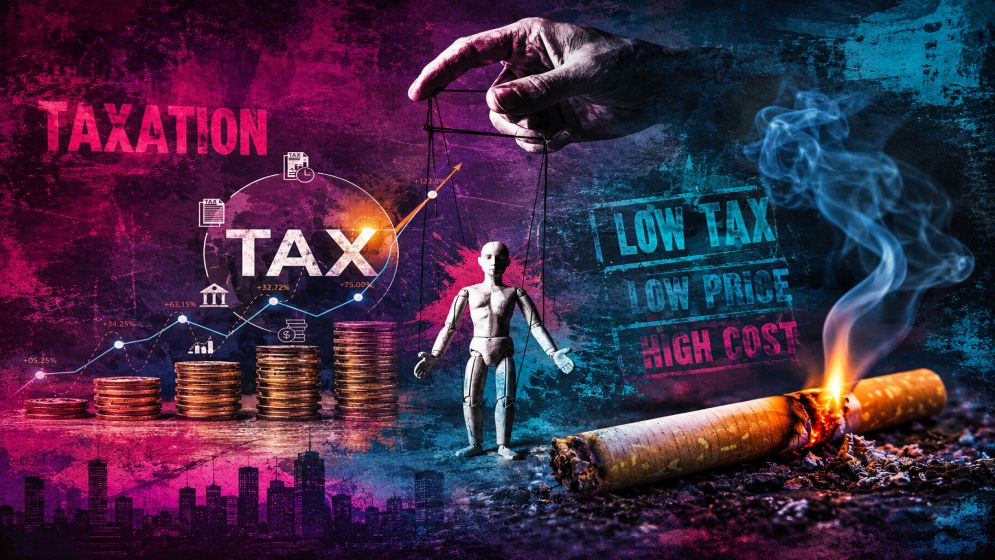
Bangladesh has spent years raising cigarette taxes while somehow keeping cigarettes cheap.
This contradiction sits at the center of one of the country’s most persistent public-policy failures. Every budget season brings another round of tobacco tax adjustments, another declaration that smoking must be discouraged, another warning from public-health experts that cigarettes remain dangerously affordable.
Yet in 2026, Bangladesh still has one of the most smoker-friendly cigarette pricing systems in Asia because the tax structure itself has been designed in a way that allows affordability to survive.
The numbers reveal the paradox. Cigarettes in Bangladesh face a 67 percent supplementary duty, alongside a 15 percent VAT and a 1 percent health development surcharge. On paper, this sounds punitive.
In reality, cigarettes remain among the cheapest in the world when measured against income and purchasing power. Researchers have repeatedly found that Bangladesh’s cigarette prices sit well below global averages, particularly in the low-price segment that dominates the market.
The problem begins with Bangladesh’s uniquely complicated multi-tier system.
Cigarettes are divided into four price categories—low, medium, high, and premium. Taxes are calculated according to government-set retail price slabs rather than a simpler specific excise system.
This structure creates a ladder of affordability. When prices rise in one segment, smokers simply climb down to another.
Instead of quitting, they downgrade.
That is precisely what has happened over the past decade. Research examining Bangladesh’s cigarette market found a significant expansion of the low-price segment, even during periods when tax rates increased.
Consumption shifted downward rather than disappearing. Public-health gains were diluted while tax revenue underperformed. The structure created what economists call a substitution effect but what tobacco companies understand more simply as customer retention.
Industry’s clever pricing
The industry’s behavior makes clear that it understands the architecture better than policymakers do.
Whenever proposals emerge to simplify cigarette taxes, merge tiers, or sharply raise minimum prices, tobacco companies respond with familiar alarms.
Higher taxes will fuel illicit trade. Government revenue will fall. Farmers will suffer. Employment will decline. These arguments have become standard features of Bangladesh’s fiscal politics.
Yet the financial performance of the industry tells a different story.
British American Tobacco Bangladesh, the country’s dominant cigarette manufacturer, generated 9,597 crore taka in gross revenue during the first quarter of 2025 alone despite significant declines in cigarette stick sales. Even as volumes fell, revenues remained extraordinarily large.
In Q1 2026, domestic sales still generated more than 8,400 crore taka in revenue despite further declines in consumption. After taxes, BAT Bangladesh reported net revenue exceeding 1,430 crore taka in a single quarter.
The lesson is uncomfortable for policymakers. Tobacco companies are no longer dependent solely on selling more cigarettes. They have become experts at managing taxation through pricing strategies.
When taxes rise, companies rarely absorb the shock uniformly. Premium brands can tolerate larger price increases because wealthier consumers are less price sensitive.
Lower-tier brands can be adjusted carefully to retain poorer smokers. Profit margins are redistributed across portfolios. Consumers continue smoking while companies continue earning.
The industry often portrays itself as a victim of tax increases. Its financial disclosures reveal something closer to adaptation.
Even when BAT Bangladesh reported its lowest annual profit in 2025, earning 584 crore taka after a 67 percent profit decline, the company continued generating tens of thousands of crores in sales revenue.
The decline reflected factory restructuring costs, excise changes, and falling volumes—not a collapse of the business itself.
Meanwhile, the parent company, British American Tobacco, remains one of the most profitable consumer businesses on earth.
Globally, the six largest tobacco companies generated roughly $364 billion in revenue in 2023—an amount comparable to the entire gross national income of some countries.
The industry’s concern, therefore, is not taxation alone. It is the possibility that Bangladesh may eventually abandon the tier structure that allows companies to cushion themselves from the full impact of tax increases.

Affordability is the operating word
Public-health economists have increasingly argued that the country’s debate has focused on the wrong metric. The crucial issue is not the tax rate. It is affordability.
Affordability depends on the relationship between prices and income. A cigarette pack that becomes 10 percent more expensive does not necessarily become less affordable if wages rise by 15 percent.
Bangladesh’s economic growth has quietly undermined many of its tobacco-control efforts because incomes have often risen faster than cigarette prices.
The evidence is striking. Between 2021 and 2024, prices of essential commodities in Bangladesh rose far faster than cigarette prices.
The prices of staples such as sugar, flour, and potatoes increased by between 40 percent and 90 percent during that period.
By contrast, the FY2024-25 budget increased the price of low-tier cigarettes by only 11.1 percent, medium-tier cigarettes by 4.5 percent, high-tier cigarettes by 6.2 percent, and premium cigarettes by 6.7 percent, while bidi prices remained unchanged.
Public-health experts warned that tobacco products were becoming relatively cheaper than essential household goods, even amid persistent food inflation and declining purchasing power.
The affordability problem becomes even clearer when Bangladesh is compared with neighboring countries.
In Pakistan, repeated increases in federal excise duty since 2023 have pushed cigarette prices sharply upward and contributed to a significant reduction in legal cigarette consumption.
In Sri Lanka, aggressive tax hikes transformed cigarettes into one of the least affordable consumer products for lower-income households.
India’s GST and compensation cess structure, while imperfect, has steadily increased the tax burden on cigarettes and narrowed opportunities for down-trading.
Bangladesh has moved more cautiously than all three.
As a result, the amount of labor required to purchase a pack of cigarettes remains comparatively low. A low-income worker in Bangladesh often spends a smaller share of daily earnings on cigarettes than counterparts in Sri Lanka or parts of India.
Economic growth has amplified this effect. Rising incomes have repeatedly offset incremental price increases.
This helps explain why nearly 90 percent of Bangladesh’s cigarette market remains concentrated in low and medium tiers. The tax structure protects affordability where consumption is highest.
The consequences extend far beyond public health.

Tobacco’s all-encompassing ill-effect
Tobacco-related illnesses now impose an estimated annual economic burden of 87,000 crore taka through healthcare costs, lost productivity, and premature deaths.
Government revenue from tobacco, by comparison, stands at roughly 40,000 crore taka annually. Bangladesh is effectively losing more than twice what it earns from the sector.
Yet every year, the same argument resurfaces: higher cigarette prices might hurt revenue. The available evidence suggests the opposite.
Researchers and tax experts have proposed merging the low and medium tiers into a single category priced at 100 taka per ten-stick pack, raising the high tier to 150 taka and premium brands to 200 taka or above.
They recommend maintaining the 67 percent supplementary duty while adding a specific excise tax of 4 taka per ten sticks. Modeling suggests such reforms would simultaneously reduce smoking prevalence and increase government revenue because fewer consumers would be able to migrate toward cheaper alternatives.
That last point is crucial. The current system is not merely weak. It is self-defeating.
Bangladesh has created a taxation regime that allows cigarette companies to shield themselves from the full consequences of public-health policy. Every tier functions as a shock absorber.
Every price category becomes a refuge for consumers unwilling or unable to quit. The result is a market in which taxes rise, revenues fluctuate, companies adapt, and smoking persists.
The complexity is often mistaken for sophistication. In reality, it has become a mechanism for preserving affordability.
That is why tobacco companies fight so hard to protect the existing structure. Complexity gives them room to maneuver. Complexity allows profits to survive declining volumes. Complexity transforms tax increases into manageable business costs rather than existential threats.
A genuinely effective tobacco tax system would do something far simpler. It would make cigarettes expensive enough that economic growth could no longer erase the impact of tax policy.
It would close the gap between public-health objectives and market realities. Most importantly, it would eliminate the escape routes that have allowed smokers and manufacturers alike to adapt around regulation.
—