

Rights defenders from Ukraine raise alarm over ‘deceitful’ Russian recruitment of Bangladeshis to fight their war

Faisal Mahmud
Publish: 04 Mar 2026, 09:15 PM
-69a84c8910287.jpeg)
For many Bangladeshis, the war between Russia and Ukraine now feels like distant news, a faraway battlefield increasingly overshadowed by the intrigue of local and regional geopolitics.
Yet the country, like much of the world, continues to feel the impact of the four-year-long conflict through significantly higher energy costs and rising prices of essential food commodities such as wheat.
For some families in Bangladesh, however, the war has become far more personal than economic pressures.
They have lost loved ones on the battlefield. More than 100 Bangladeshis have reportedly been trafficked to Russia’s war front to fight against Ukrainian defensive lines, and at least 20 of them have already died.
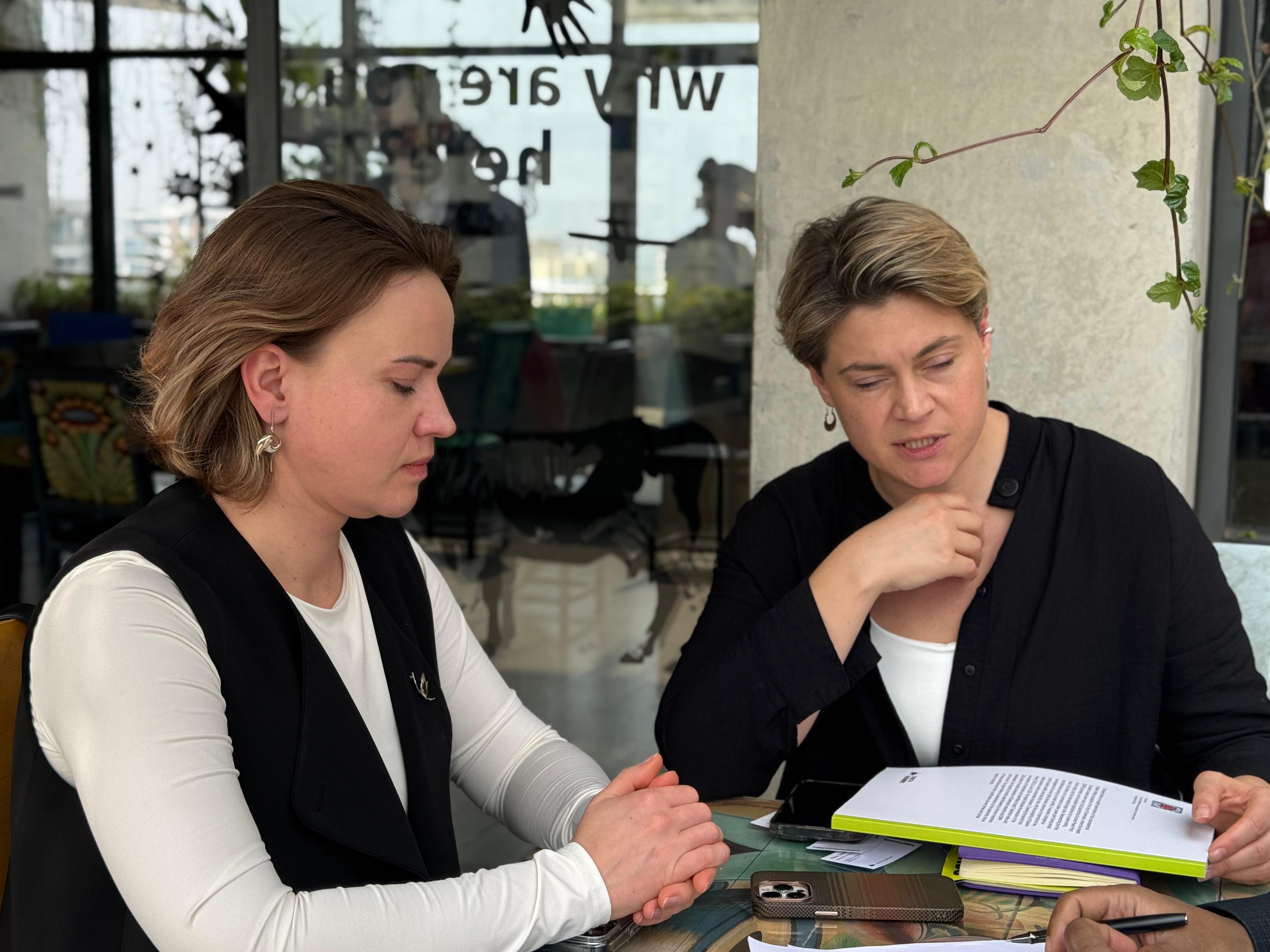
Human rights organizations Fortify Rights and Truth Hounds have conducted investigations into the recruitment and trafficking of migrant fighters to the war front from South Asia and other regions.
Recently, teams from both organizations visited Bangladesh to present their findings on recruitment from the country.
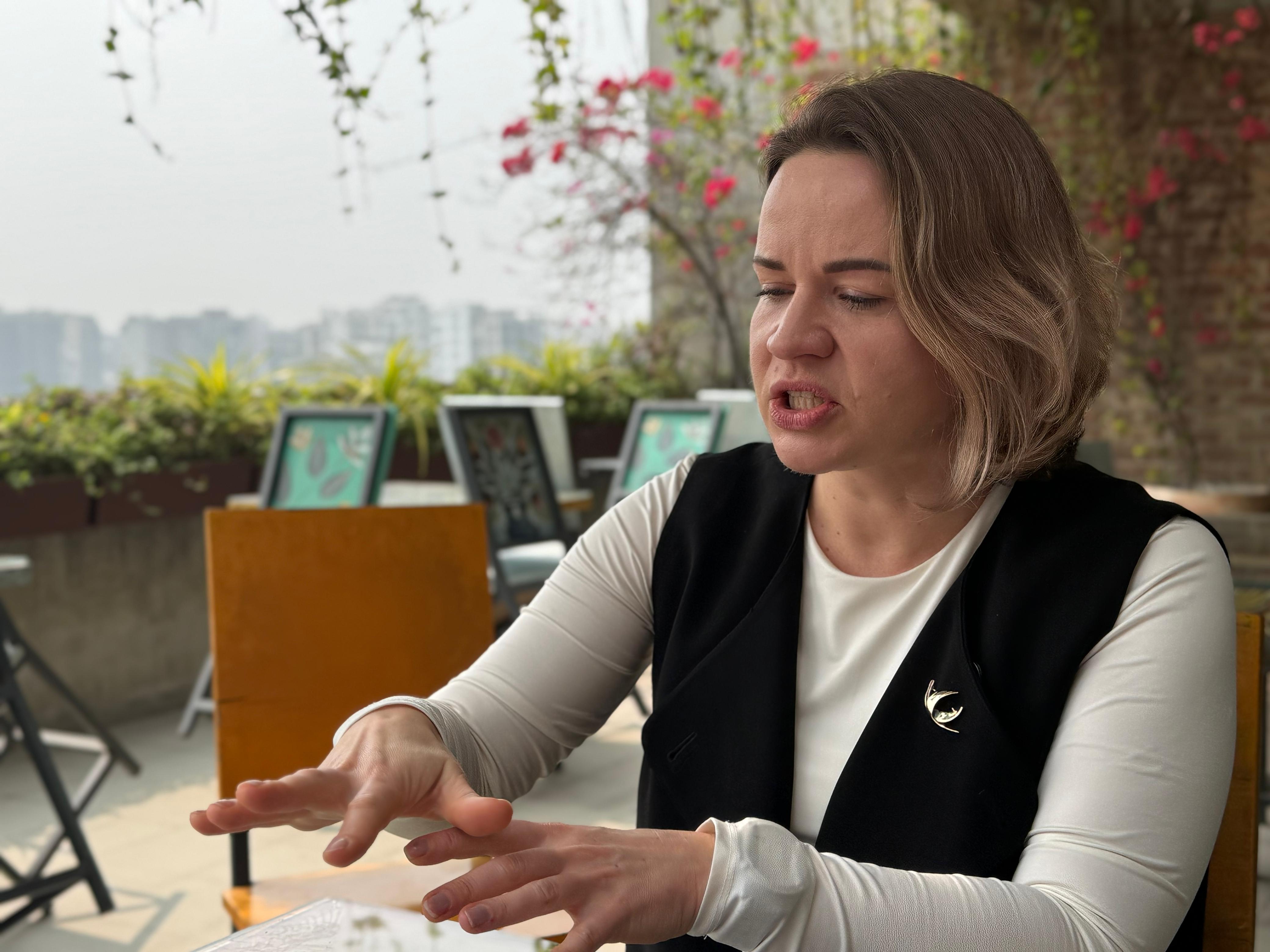
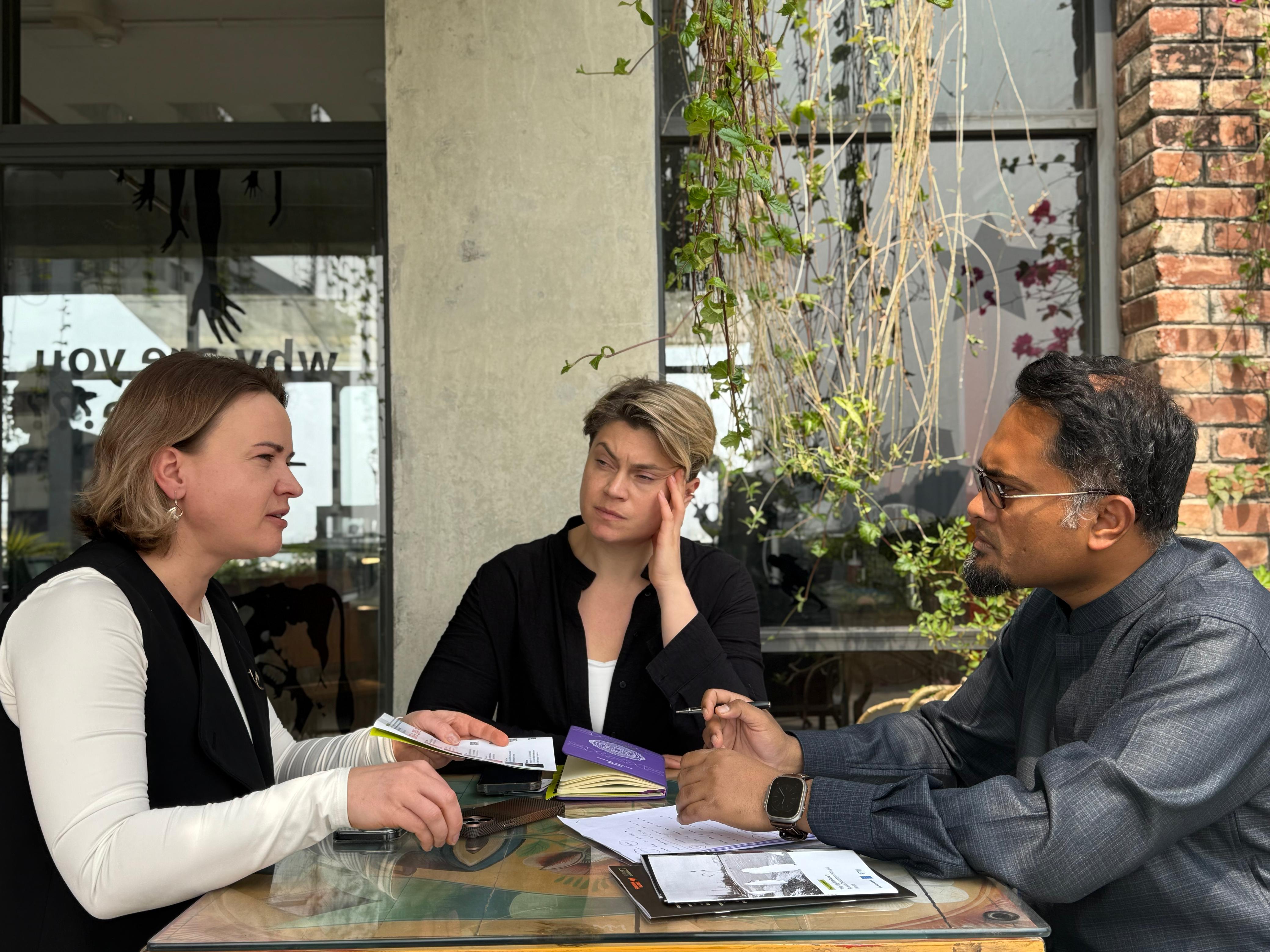
Bangla Outlook (English) editor Faisal Mahmud spoke with Oksana Pokalchuk, co-executive director of Truth Hounds, and Maria Tomak, a researcher with the organization, to learn more about the Russia-Ukraine war, the humanitarian investigations surrounding the conflict, and the growing trend of trafficking migrants to fight on the front lines.
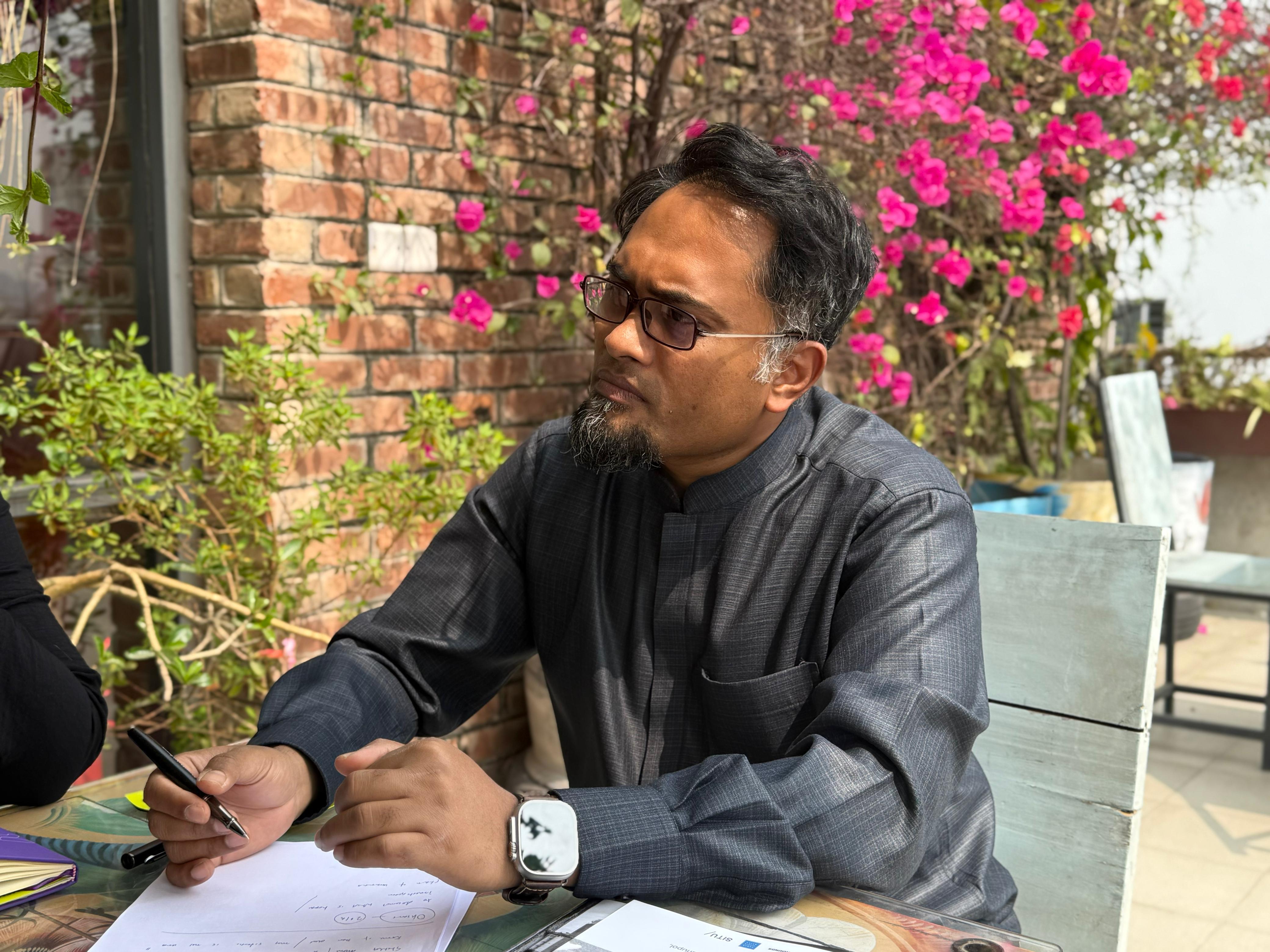
Here is an excerpt from that conversation for our readers.
Faisal Mahmud: Many people believe that the war between Russia and Ukraine began in 2022, but that is not entirely accurate I believe—it actually started in 2014. In Bangladesh, only a small number of people are aware of this earlier phase of the conflict. Since the escalation in 2022, how many people have died in the war? I recently saw a report on CNN suggesting that total casualties may be approaching one million. Is that figure accurate?
Oksana Pokalchuk: Yes, you are right. It is important to note that the war did not begin in 2022 but in 2014. This earlier phase is often overlooked, yet it is crucial to understanding the conflict.
In 2014, Russia occupied the Crimean Peninsula in southern Ukraine and began supporting and fueling the war in eastern Ukraine. For the next eight years, fighting continued in eastern Ukraine while Crimea remained under occupation.
Crimea is also home to the Crimean Tatars, an indigenous Muslim community of Ukraine, and their situation is sometimes overlooked in discussions about the conflict. This history matters because, in 2022, Russia used these already occupied territories as a launch pad for the full-scale invasion of Ukraine. That context should not be forgotten.
Regarding casualties, the figure of one million is a broad overall estimate. There are no completely precise numbers available, but it is reasonable to say that the total number of people affected by the war could be around that level.
Since the escalation in 2022, the scale of suffering has increased dramatically because the war spread across the entire country. This includes those who have been killed or wounded, as well as millions who have lost their homes and are now internally displaced or living as refugees.
In recent months, even Kyiv, Ukraine’s capital, has been heavily targeted by shelling. Critical energy infrastructure has been destroyed, expanding the suffering to large segments of the civilian population.
Ordinary families—children and elderly people included—have had to endure freezing conditions without heating, sometimes with temperatures dropping to minus 25 degrees Celsius. Situations like these raise serious concerns and may potentially amount to war crimes or crimes against humanity.
FM: I have learned that your own apartment in Kyiv was attacked….
OP: Yes.
FM: How did you manage to survive? Could you share some details about your experience during the war?
OP: I live in my family’s apartment in Kyiv, in a regular residential neighborhood with no military facilities nearby. I can say that with certainty because I am a human rights defender and my colleagues and I document these incidents extensively. The building is simply an apartment block where many families live.
It was just another night, and we still do not know why it was targeted. You have to understand that Russian forces do not attack only Kyiv, the capital of Ukraine. Many other cities are also targeted almost every day and night with Shahed drones, other types of drones, as well as various missiles and rockets.
FM: What is the situation in Kyiv right now? Has life returned to some sense of normalcy, or do people still live with the fear of possible drone attacks?
OP: We experience drone attacks almost every day and night. The only time it becomes somewhat quieter is when certain foreign politicians visit—then Russia tends to hold back its drones from the city. But on most nights, drones target residential areas.
That is exactly what happened in my case. It was just an ordinary night. Since it was spring, we had gone to our summer house to check on the garden and decided to stay there overnight.
Early in the morning, around 5 a.m., we saw messages in our neighborhood chat group saying something had happened. Soon we saw the news reports and immediately returned.
Our neighbors had been killed. Some died instantly because it was a missile strike. Others died later in hospitals due to severe injuries or blood loss. Many people lost everything, including their homes and belongings—I lost my apartment and property as well. But at least I survived, and that is the most important thing. Sadly, some of my neighbors did not.
You have to understand that my situation is not unique. This is something people experience almost every night. When you go to sleep in Kyiv or in other Ukrainian cities, you often hear the sound of drones or explosions from missiles landing somewhere nearby. It has become a nightly reality for many people.
FM: Now, Maria, tell me something about Truth Hounds. When was it founded?
Maria Tomak: Truth Hounds was established in 2014, shortly after the Russian Federation’s illegal annexation of Crimea. The organization was created to document what was happening on the ground, particularly the ongoing human rights violations linked to the conflict.
FM: Could you tell us more about your documentation work—what kinds of incidents have you documented so far? I have also seen that you documented the devastation in Mariupol.
MT: Over the past two years, our work has evolved significantly. Before the full-scale invasion, we primarily focused on documenting war crimes—we were mainly documenters.
However, after the full-scale invasion began, we realized that documentation alone was not enough. Ukrainian and international investigators were facing serious resource constraints, so we decided to expand our role beyond documentation and move into full investigations.
Today, we describe ourselves as an organization that works across the entire process. We start by going to crime scenes, where we collect evidence—for example, measuring impact craters from missile or drone strikes. We speak with witnesses, document what happened, and gather as much information as possible.
From there, we conduct detailed investigations and support both national and international investigative bodies in various ways. Our goal is to identify those responsible. We work to establish the chain of command within the military units involved in a particular war crime. Once we have built a legal case, we file complaints with the appropriate courts.
At the same time, we support survivors throughout the process. In essence, our work covers everything—from arriving at the crime scene to representing victims in court.
FM: So that covers the whole gamut. I understand—it seems like Truth Hound had addressed many aspects of the process, Oksana….
OP: Yes. When you look at our reports, you will see that we are increasingly trying to work across different countries to identify similar patterns. For example, we produced a report examining “double-tap” strikes in both Ukraine and Syria.
This was a joint report with the White Helmets, because we observed that the same tactic Russia used in Syria was later repeated in Ukraine.
We believe that in some cases it may even be possible to identify the same pilots, generals, or other perpetrators responsible for war crimes in both places. We are looking closely into who committed these crimes in Syria and in Ukraine.
Similarly, we are exploring cooperation with other countries to identify individuals involved in crimes across multiple conflicts. We believe that Russia has spread these practices globally—spreading patterns of attacks, methods of torture, and knowledge of how to carry out war crimes and other international crimes.
Our goal is to track these patterns and, ultimately, help bring justice for the survivors.
FM: Was it Fortify Rights that approached you to carry out this investigation in South Asia, particularly in Bangladesh, or did the initiative come from your side?
MT: It was more of a parallel process. Truth Hounds had already begun researching this issue as reports started emerging about foreign fighters being recruited into the Russian army. Over time, we realized that this was becoming a significant topic.
There had been some earlier contact between Truth Hounds and Fortify Rights—our colleagues had visited their office in Thailand. Eventually, we realized that both organizations shared an interest in investigating this issue. Fortify Rights was interested because of their work in Bangladesh and the region, while Truth Hounds was concerned because the issue is directly connected to the war in Ukraine.
So we decided to develop this research together, and that is how the collaboration began.
FM: Let me be a bit political here. Bangladesh’s lone nuclear power plant is being built by Rosatom, which makes the country’s position on this war somewhat complicated. Your report on the deceptive recruitment of Bangladeshi citizens by Russia will be discussed in media and policy circles, and there will be growing calls for the government to ensure that no Bangladeshis become involved in this war.
However, given the sensitive relationship between the two countries—especially with Russia’s role in constructing this major power project—do you think it is politically feasible for the Bangladeshi government to exert pressure on the Russian government over this issue?
MT: I don’t think that any form of cooperation with another state can justify the involvement—or loss—of Bangladeshi citizens in an unjust war like this. Yesterday, we met with representatives from several political parties as well as officials from the Ministry of Labour, and no one suggested that because Bangladesh has business relations with Russia, it should allow its citizens to be recruited and sent to fight in the war.
That argument simply did not come up. Of course, we do not know all the details about the specific project being developed in Bangladesh. However, it is reasonable to say that whenever Russia is involved, there may be concerns. It would therefore be wise to examine the project more carefully and assess whether it truly serves the interests of the Bangladeshi people. I cannot say for certain, but it is something worth looking into.
OP: I would echo what Maria just mentioned. It is very important for the Bangladeshi government to take a closer look at what Rosatom has been doing in Ukraine and factor that into its considerations. Before moving forward with contracts or further cooperation, the authorities should ensure that adequate safeguards and security measures are in place for the people of Bangladesh and for the country as a whole.
What has happened at one of the world’s largest nuclear power plants is extremely significant. If Bangladeshi authorities carefully examine those developments, they might conclude that if the project is to proceed, certain guarantees and protections must first be secured.
In that sense, the key question for Rosatom would be whether it is willing to accept and comply with those guarantees. Their response would reveal their true position.
FM: As your report indicates, Ukraine currently does not hold any Bangladeshi prisoners of war, while around 103 Bangladeshis are believed to have been recruited into the Russian army. Compared with Bangladesh, the numbers from Sri Lanka and Nepal are even higher. However, as you mentioned, a significant portion of those recruits may have joined willingly rather than through human trafficking.
In the case of Bangladeshis who went there, do all of them qualify as victims of human trafficking? What does your investigation suggest about their situation?
MT: We cannot determine the exact proportion of each category. We know that some individuals have willingly joined the Russian army. There are cases such as a Bangladeshi man who proudly posted photos of himself in a Russian military uniform. So we cannot deny that such voluntary cases exist.
At the same time, we also cannot ignore that some people were trafficked there. The challenge is that we cannot accurately assess the number in each category because we do not have access to all the individuals involved to conduct a comprehensive survey or a fully systematic investigation.
What we can say is that there are clear grounds to investigate some of these cases as human trafficking and to take steps to stop it. This is not only in the interest of the Bangladeshi people, but also in the interest of our survival as Ukrainian citizens. We are deeply concerned about Bangladeshi nationals becoming involved in this war.
Moreover, based on the cases we have examined—whether prisoners of war, testimonies collected by Fortify Rights, or information reported in the media—we have not seen evidence of ideological fighters from Bangladesh joining the Russian army.
FM: So in most cases, it appears that they joined in search of livelihoods and with the hope of sending money back home to support their families, right?
MT: Yes. They may not understand that they are joining a war—which, for us, is deeply tragic—but it is not because they support Russia or believe the war is justified.
FM: It was mentioned in the report that the recruits sign the contract in Russian. Is this the standard military contract that Russia also gives to its own soldiers?
MT: Yes.
FM: I think there is also a tricky aspect here involving the Russian authorities. They likely know that if these foreign recruits are captured or killed in the war zone, they may not bear the same responsibility to compensate their families as they would for Russian soldiers. Do you think that is the case?
MT: That may be one of the reasons Russia is interested in recruiting people from other countries. However, I believe the main reason is that they want to avoid mobilizing more Russian citizens. Doing so could create tensions within Russian society, especially if casualties continue to rise. As a result, they prefer to recruit people from countries such as Bangladesh.
In some cases, however, there have been exceptions. For instance, in India’s case, when the government pressured the Russian authorities, some compensation was reportedly paid to families who lost relatives on the front line. But such payments are not automatic—families or governments have to push for them.
That said, our main concern is not about securing social guarantees or compensation. While some Bangladeshi families might understandably seek that, our position is that people should not be going there at all. It is an illegal war, and the priority should be to stop people from being recruited into it.
FM: My last question to Oksana. How difficult is it to carry out the work that Truth Hounds does in places like Ukraine, especially when there is an ongoing war? As a human rights defender and investigator, what challenges do you face while documenting human rights violations in such conditions?
OP: The challenges are significant. You can be killed or injured at any moment, or persecuted by Russian authorities or the Russian military. That kind of risk is not unique to this conflict—anyone working in a war zone faces similar dangers. But this war is very different from previous ones. The security measures required today are completely new.
For example, we are always concerned about journalists who come to report on what is happening in Ukraine. Many of them may not fully understand the risks because of the widespread use of drones, different types of drone technology, and new kinds of missiles used by the Russian military. These weapons have made the environment extremely unsafe for civilians.
Near the front line, we now talk about what we call a “kill zone,” because there is no clear front line anymore. Instead, there are large areas that can be reached by drones, and those areas are extremely dangerous. In such places, you cannot even wear a jacket that identifies you as press, because you could immediately become a target. There have been cases where Russian forces deliberately attacked locations known to host journalists or international humanitarian workers. For example, there have been reports of missile strikes on hotels after it became known that journalists were staying there.
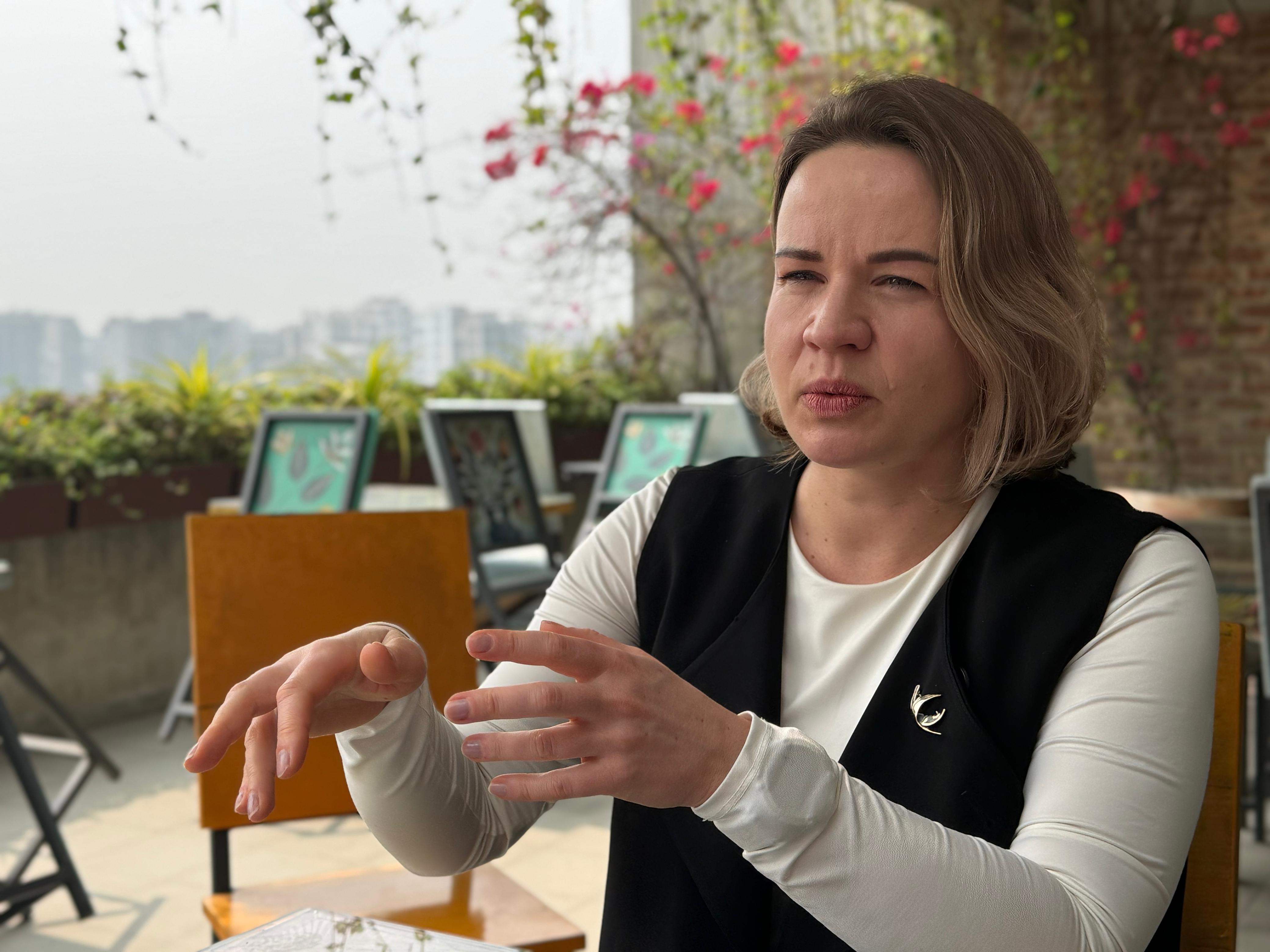
Because we are local, we have some understanding of how to operate in these conditions, but even with all the precautions we take, the risks remain very high. Sadly, we have already lost two of our colleagues during this war. One of them, Viktoria Melina, was a documenter who at the time was assisting international journalists during their trip to Kramatorsk. They were sitting in a restaurant when a missile strike hit the area and killed her. Another colleague, also a documenter, was killed as well—although not while carrying out his work for Truth Hounds.
I think the international community sometimes does not fully understand how hostile the environment really is. But the reality is that without reaching people on the ground and visiting crime scenes directly, it is impossible to gather reliable information or conduct proper documentation and investigations. So we have to take these risks, even as we do everything we can to protect our colleagues.
Another challenge is the cost of security. New technologies that help detect or warn about incoming attacks—such as radar systems or other protective equipment—are extremely expensive. Even if you have funding, it is not always easy to obtain or use them. It is a very complicated environment to work in, but despite all this, the work has to continue.
FM: My last question is for Maria. I understand that Ukraine is at war with Russia, but there are also reports of human rights abuses within Russia itself—for example, cases where people are being sent to the war without their full consent. Are you working with any Russian human rights organizations or counterparts there to gather more documentation and gain a clearer picture of the overall situation?
MT: In fact, our work is not focused on Russia. Of course, there are many human rights abuses happening there, and these issues did not begin in 2022 or even in 2014—they started much earlier. However, our primary focus is not on Russian society.
Addressing those issues is something that Russian human rights defenders themselves are better positioned to do.
FM: I’m just referring to the exchange of information from the other side of the border…
MT: Let’s say there are still some people in Russia who are willing to support humanitarian causes. However, the situation has become much more complicated. Since 2022, many Russians have been arrested, and many others—including human rights defenders we used to communicate with—have fled the country.
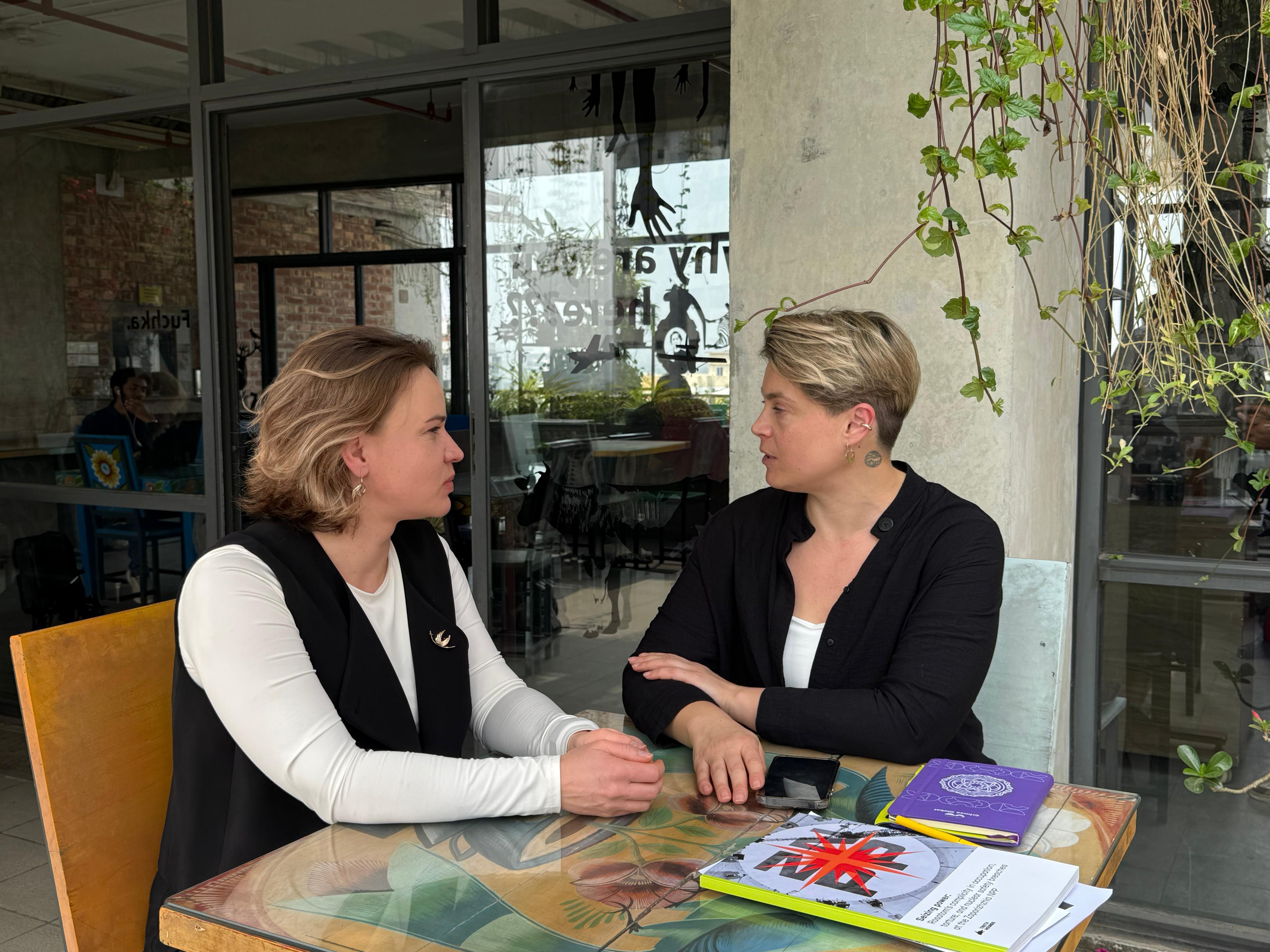
So this is a very complex and sensitive issue. While there may still be some individuals inside Russia who are engaged in such work, their number is quite limited. At the moment, I would say there is essentially no dialogue between Ukrainian civil society and Russian civil society.
Perhaps once the war is over, it will be possible to revisit this kind of engagement. But for now, it is not really feasible.
FM: When do you both see this war will be over?
OP: When Russian elites would not take advantage of it. That's it.
MT: When Russia will fall apart.
FM: Thank you.
—