Becoming an enemy of the state: Finding belonging in exile

Journalist Olga Churakova was sitting in a Moscow café, preparing for an editorial meeting, when she received the notice that the Russian government had declared her a "foreign agent." That was in 2021, and soon after, the investigative media outlet Churakova was working for was declared an "undesirable organization."
"That changed everything," she explained. "Being a foreign agent limits your public presence. But working for an 'undesirable' organization makes any professional activity a criminal offense. Every text, every interview, every collaboration can become grounds for prosecution."
When the full-scale invasion began in February 2022, the danger escalated even further. For Churakova, exile was no longer a choice but the only way to be free.
Anxiety that never fades
Leaving Russia did not bring immediate relief. "For a year, I believed I would return soon," Churakova recalled. "You keep thinking that maybe this will end quickly."
But the longer she stayed abroad, the more she understood how displacement was shifting every aspect of her life: her legal identity, her professional belonging, her emotional grounding, and even her perception of herself.
"There’s this constant feeling that you don’t know where your new country is, where your future is, or who you are now," she said. "How do you reinvent yourself when everything you knew has collapsed?"
The emotional landscape that Russian journalists in exile find themselves in is laced with guilt, disorientation and a persistent anxiety that never fully fades.
"You learn to live with constant anxiety," Churakova said. "I can't go home, but my family, my elderly relatives, my friends are still there. And in Russia, laws change every week. You sit and think: what will they invent next? Will they restrict passports? Will I lose my legal status? How do I prepare for something I cannot predict?"

Podcasting and a community of anonymous listeners
When Churakova and her colleague, Sonya Groysman, first launched their podcast "Hi, you are a foreign agent" in 2021, they saw it as a testimony of their own experience. "We were one of the first to be listed as foreign agents. At that time, little did we know what to do," she recalled. "We decided to document it, so others could understand what this label meant."
But after the invasion, everything changed. The podcast shifted away from their personal story and toward the human cost of the war. The interviews take place exclusively online, a consequence of exile and due to safety concerns. "You can’t meet your sources in person," she explained. "There's no atmosphere to observe, no person sitting in front of you to bond with. You have Zoom and a phone and every month, another platform gets blocked in Russia."
Yet the distance has not weakened the connection. If anything, it strengthened the bond with listeners.
"Our community became a kind of therapy group," Churakova said. "People write to us because they have no one else. They are against the war and feel completely isolated. They are alone with their fear, their grief, their anger, and through the podcast, they find people who hear them."
Half of their audience lives abroad, the other half lives inside Russia, often in small towns, often in silence. The podcast became a meeting point for people who cannot speak openly but refuse to let their stories disappear. Sometimes, listener communities would even meet in person.
"We’ve built something small but incredibly meaningful," Churakova said. "It’s a community that holds people through one of the darkest moments of their lives."
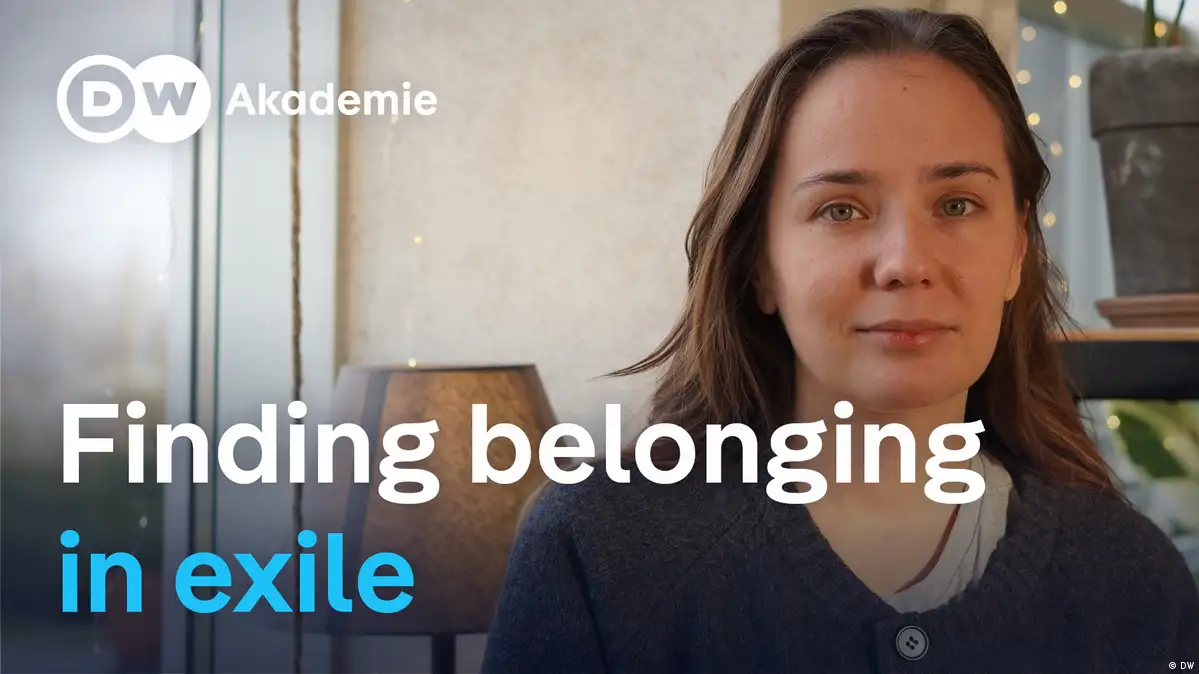
Becoming a foreign agent - Olga Churakova's story
The 'foreign agent' stigma
For many outside Russia, the label "foreign agent" may sound administrative, even technical. But inside Russia, it means something very different.
"It's essentially a ban on the profession," Churakova said. "Every post, every message must carry a legal disclaimer, a kind of public denunciation. People read it as 'this person is an enemy.'"
That kind of stigma also applies to their sources, requiring Churakova to safeguard them. Since so many of the podcast guests remain in Russia, anonymity has become an essential tool. According to Churakova, audiences understand it more than ever.
"It's simply dangerous to speak," she said. "People know that. They don't need us to explain why someone is anonymous."
Unlike larger media organizations with editorial staff, community managers and lawyers, independent journalists in exile rely on their own individual capacities.
"Big media can afford a community manager, someone to run events, someone to handle grant reporting," Churakova said. "For us, it's complicated. We make content, edit episodes, run the community, apply for grants, answer letters, literally everything."
In 2025, Olga Churakova joined DW Akademie's Space for Freedom program. Together with local partner organizations, the Baltic Centre for Media Excellence and Media Hub Riga, it helps exiled journalists from Russia continue their work and support themselves financially. Moreover, Churakova was a speaker at DW's Global Media Forum 2025, enriching the "Innovations in journalism and how to use them for good" panel with her experience.
An uncertain future
Ask Churakova about the future, and she laughs because of the absurdity of predicting anything in exile.
"I don't know what will happen tomorrow," she said. "Maybe next week we'll all need a new profession because our grants end, or because Russia shuts down the internet entirely."
Instead of imagining a fixed, long-term path, she leans into her desire to tell stories, to support others and to pass on experience.
"Maybe the future is in education," she reflected. "Maybe it's in helping others find their voice when ours has been forced out."
For now, her work continues through the podcast, through her community and through each story that helps someone, somewhere, feel less alone.
The project Space for Freedom is part of the Hannah Arendt Initiative and is funded by the German Federal Foreign Office.


