
C++ vs Python: Which is Best for Raspberry Pi?
Python is the go-to programming language on Raspberry Pi, and most of our tutorials use it. However, C++ is also popular and powerful for IoT projects. So, which one should you pick when working on your Raspberry Pi project?
Python is widely used in Raspberry Pi projects due to its simplicity, extensive libraries, and resources. C++, however, excels in performance-critical applications and low-level hardware control. The choice between the two depends on project requirements and familiarity with programming.
Well, that’s the short answer, but you might not be any more advanced after reading this, so I will explain everything in more detail to help you choose the right one for your projects. Let’s dive in!
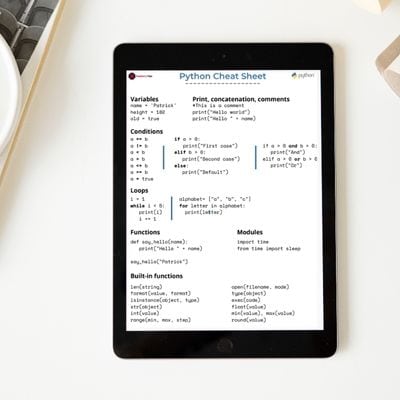
If you’re like me and sometimes mix up syntax between programming languages, I’ve got just the thing for you. I’ve put together a Python cheat sheet with all the essential syntax in one place, so you can keep it handy and avoid any confusion. Download it here for free!
Key Differences Between C++ and Python
If you are friends with people in tech you have most likely come across conversations like “Which programming language is the best for …” or “Which operating system is the best?” Most of the time, you often choose the option you are well-versed with or interested in.
I don’t want that to be the case in this article. If you aren’t proficient in one of these languages (C++ or Python), read the article to learn about its strengths. You might find it useful for a future project.
I will use several factors which are listed below to help you choose which programming language between C++ and Python would be good for your Raspberry Pi journey or upcoming project.
Setup & Compatibility
The Raspberry Pi mainly runs on Linux. If you have used any Linux system before, you must have realized most of them come with various development tools installed, including Python, C++, Ruby, etc.
However, the main operating system for the Raspberry Pi, the official Raspberry Pi OS (a Debian-based distribution), prioritizes Python.
Python is set as the default programming language, and it includes both Python 2 and 3. Let’s have a look at the programming section of the Raspberry Pi OS.
You can get answers from real experts in minutes.
Get help with your setup

In the image above, I have highlighted three IDEs. The interesting part is that all of them support Python, and two are exclusively for Python programming: Mu and Thonny.
Bonus tip: : Instead of Googling syntax every time, I keep a small cheat sheet with the main Python elements. Check it here.

Want to build real Raspberry Pi projects with Python? This book starts from scratch and guides you toward practical scripts, automation, APIs, cameras and more.
Learn Python on Raspberry PiC++, on the other hand, will require some additional setup. That includes installing the G++ compiler and configuring the environment. Therefore, if you want to get started with the Raspberry Pi without too much hustle, Python will be your go-to tool for work.
Tip: If you’re planning to work on different Raspberry Pi projects, the setup process shouldn’t be a major factor in choosing between C++ and Python. You can easily set up the C++ compiler by going through our article on getting started with C++.
Ease of Use
The Raspberry Pi was designed with a strong focus on education, prototyping, and ease of use. In fact, the Raspberry Pi Foundation’s mission as stated on their website is “Enabling all young people to realize their full potential through computing.”
They even have sections for “Coding for kids” and “Code clubs” to support this goal. One programming language that aligns with all this simplicity and vision is Python.

Now, all that brings us to one major question – Is C++ harder than Python? The answer is Yes. Let’s look at some reasons why.
- Syntax and Readability:
Python has an English-like syntax. The code is simple, clean, and easy to read and write. It also uses indentation for code blocks instead of curly braces. C++ on the other hand, has a more complex syntax with strict rules, requiring semicolons, curly braces, and type declarations.
To better understand this point, let’s look at some code for adding two numbers for the two programming languages.
Python:num1 = 5num2 = 10
sum = num1 + num2
print("The sum is:", sum)
C++:#include <iostream>
int main() {
int num1 = 5;
int num2 = 10;
int sum = num1 + num2;
printf("The sum is: %d\n", sum);
return 0;
}
The examples above show that Python is more forgiving and you don’t have to write so much boilerplate code. - Memory Management:
You don’t have to worry about memory management when working with Python. Memory is automatically managed by the interpreter using garbage collection. But in C++, you have to handle memory manually, which can be tricky and might lead to issues like memory leaks if not done right.
Read this article on C++ vs Python (Statically Typed vs Dynamically Typed Languages) to better understand memory management in both languages. - Learning Curve:
As a person who has used many programming languages including C, C++, Java, Javascript, Python, and Rust, I would confidently state that learning Python is easier than any of the languages I have mentioned
If you started learning Python today, you would be surprised how much you could do in a week. C++, on the other hand, has a much steeper learning curve, requiring a deeper understanding of low-level concepts like pointers and memory.
Pre-Installed Tools and Libraries
When you have a keen look at the official Raspberry Pi OS, you will realize that it comes pre-installed with a rich set of Python tools and libraries such as:
- Thonny: A beginner-friendly Python code editor that comes pre-installed on Raspberry Pi OS.

- PIP (Package Installer for Python): A package manager for installing Python libraries and dependencies.
- Libraries like Gpiozero and RPi.GPIO for GPIO (General Purpose Input/Output) programming, which is essential for Raspberry Pi hardware projects.
Other than the pre-installed libraries and tools, there are many other Python libraries available on GitHub and other sites developed for specific tasks. Whether you are working with sensors, cameras, machine learning, etc, there will always be a Python library.
Things work a bit differently with C++. Raspberry Pi OS doesn’t come with C++ tools or libraries specifically made for Raspberry Pi hardware.
While there are third-party C++ libraries available online, they tend to be more specialized, and from my experience, many of them require a bit more effort to set up.
Performance
This is one area where C++ flexes its muscles. If your project involves heavy computations, real-time processing, or low-level hardware control, C++ is the clear winner.
It’s faster and more efficient, making it ideal for performance-critical tasks. Python is great, but it can’t quite keep up when raw power is needed.
Tip: Here, I am not just talking about Raspberry Pi projects. Even in desktop application development or game development, C++ is widely known for its exceptional performance.
Development Speed
The speed at which you develop an application depends on how well-versed you are in a certain programming language. In this section I will assume, you are already exposed to the two languages and you are just looking for one you can use for your projects.
If you are looking for a language that you can use to develop your projects quickly, then Python is your go-to choice. As I stated earlier, its simplicity allows you to write, and test code fast, which is great for experimenting with ideas. Additionally, you can use the many available libraries in various sections of your code instead of writing everything from scratch.
Bonus tip: : Instead of Googling syntax every time, I keep a small cheat sheet with the main Python elements. Check it here.
C++, on the other hand, requires more time and effort to write and debug. So unless you need a performance boost, Python will help you get things done faster.
Something not working? Don't waste hours going in circles. Ask in the RaspberryTips Community and get help from people who've already figured it out. Get unstuck now.
How to Choose Between Python and C++ for Your Project
In the previous section, we learned about the strengths of each programming language. Now assuming you had the two languages as an option for your project, how would you decide on which language to use? Let’s look at several factors that you can consider.
Complexity and Performance Needs of the Project
If you are dealing with a project that requires heavy computations, real-time processing, or low-level hardware control, you are better off with C++. That’s because C++ is a compiled programming language that offers more control over memory management and hardware resources.
You might also like: Don't buy a new SD card until your read this.
Python, on the other hand, is an interpreted language. That means it is first executed line-by-line by an interpreter at runtime, which introduces overhead and makes Python slower than compiled languages like C++. However, it’s perfect for simple applications that are less demanding.
To better understand, read this article on Interpreted vs Compiled Programming Languages.
Time Constraints
If you’re working under tight deadlines, Python can save you a lot of time. It’s much simpler to write scripts and also includes support for many libraries you can import into your code.
While powerful, C++ requires more effort to write and debug, so it’s better suited for projects where performance outweighs the need for speed in development.
Future Scalability
If you are working on a project that you anticipate might need scaling up to more complex or resource-intensive tasks, C++ offers the performance and flexibility to handle those demands. Python, while excellent for smaller projects, may struggle with scalability in highly performance-driven scenarios.
Up to this point, I believe you have decided on which path you want to take. However, unless you are planning to build the next AAA game, I would still recommend Python. You can check our Master Python on Raspberry Pi Ebook where you’ll learn the essentials, step-by-step, without losing time understanding useless concepts.
Lastly, for simpler system scripts, you should check out Bash. Check out our guide to Bash vs Python on Raspberry Pi: When to Use One or the Other.
You might also like: 7 Hidden Raspberry Pi Features You Should Be Using
Not getting the same result?
Even when you follow every step, small differences in OS version, hardware or config can change the outcome. Instead of wasting time guessing, get help from people who have already fixed the same kind of issue.
- Get help on your exact issue
- Access step-by-step videos for tricky setups
- Browse the website without ads