
Menu
A Brief History of Exchanges in 5 Innovations
Exchanges, in one form or another, have existed for hundreds of years. At their core, they are organised places where people come together to trade – whether that trade is in spices, cloth, shares of a company or derivatives. Tracing their history underlines the enduring lessons about trust, transparency and regulation that make exchanges valuable.
It is commonly accepted that the roots of what we consider to be exchanges these days go back to medieval Europe where municipal bonds and other government bonds were traded at big fairs. By the mid-16th century continuous fairs had emerged in Antwerp, Amsterdam and Bruges – we believe the origins of the term “Bourse” come from the Van der Buerse family inn where traders gathered in Bruges.2
These early gatherings were informal, but they revealed a key lesson: commerce flourishes when there is a reliable meeting place where buyers and sellers know they will find one another.

1. The First Stock Exchange
Commodities and debt were already trading but a key moment in the development of stock exchanges was the creation of the Dutch East India Company. It was the first company to issue shares and go public. Traders in Amsterdam established the Amsterdam Stock Exchange in the 17th Century to enable trading. Soon, London and many others followed suit.3
These developments highlight a second lesson: exchanges are built on networks of trust. Early traders often knew each other personally and they created rules and agreements to govern fair dealing. Over time, these rules were formalised into constitutions, listing standards for membership and conduct.
2. Standardised Derivative Contracts
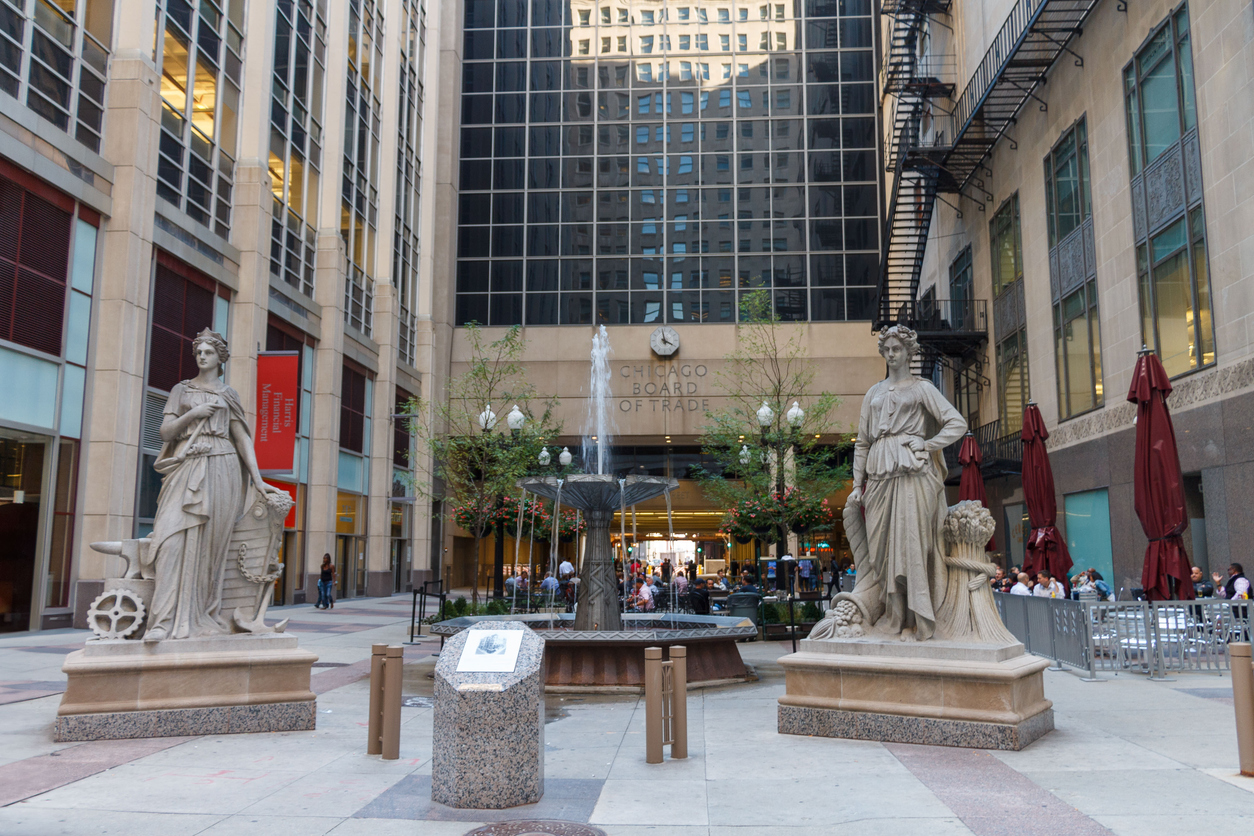
The next pivotal moment came in 1865 when the Chicago Board of Trade (CBOT), now part of the Chicago Mercantile Exchange (CME), introduced standardised futures contracts. CBOT was formed in 1848 as a grain exchange that allowed farmers and grain producers to agree the price at which the crops change hands throughout the months between harvests and allowed consumers to purchase grains at transparent prices throughout the year.
Standardised futures contracts introduced a level of reliability and security to buyers and sellers that stabilised markets against the possibility of default.4 In other words, standardisation allowed contracts to be widely traded which created deep, liquid markets for managing risk.

3. Exchanges Enter the Information Market
At the same time, exchanges got into the business of data. In 1867, the New York Stock Exchange became the first exchange to have a ticker5. It transmitted stock prices over telegraph wires and printed them on a thin strip of paper (the “ticker tape”). This allowed brokers and investors to see near real-time prices instead of waiting for messengers to carry updates from the exchange floor. That means NYSE has been in the business of market data dissemination for more than 150 years.
The ticker revolutionised the stock market. Geography no longer limited trading and, with faster information flow, more trades were executed and liquidity was deepened. Of course, that came at a cost and the ticker was a paid subscription service. Brokerage houses and investors who wanted a machine installed in their office paid the telegraph company a fee for the service. This created a new “information market” – data itself became a commodity and exchanges became more than places where money changed hands and became suppliers and distributors of information.
4. Regulation for Growth
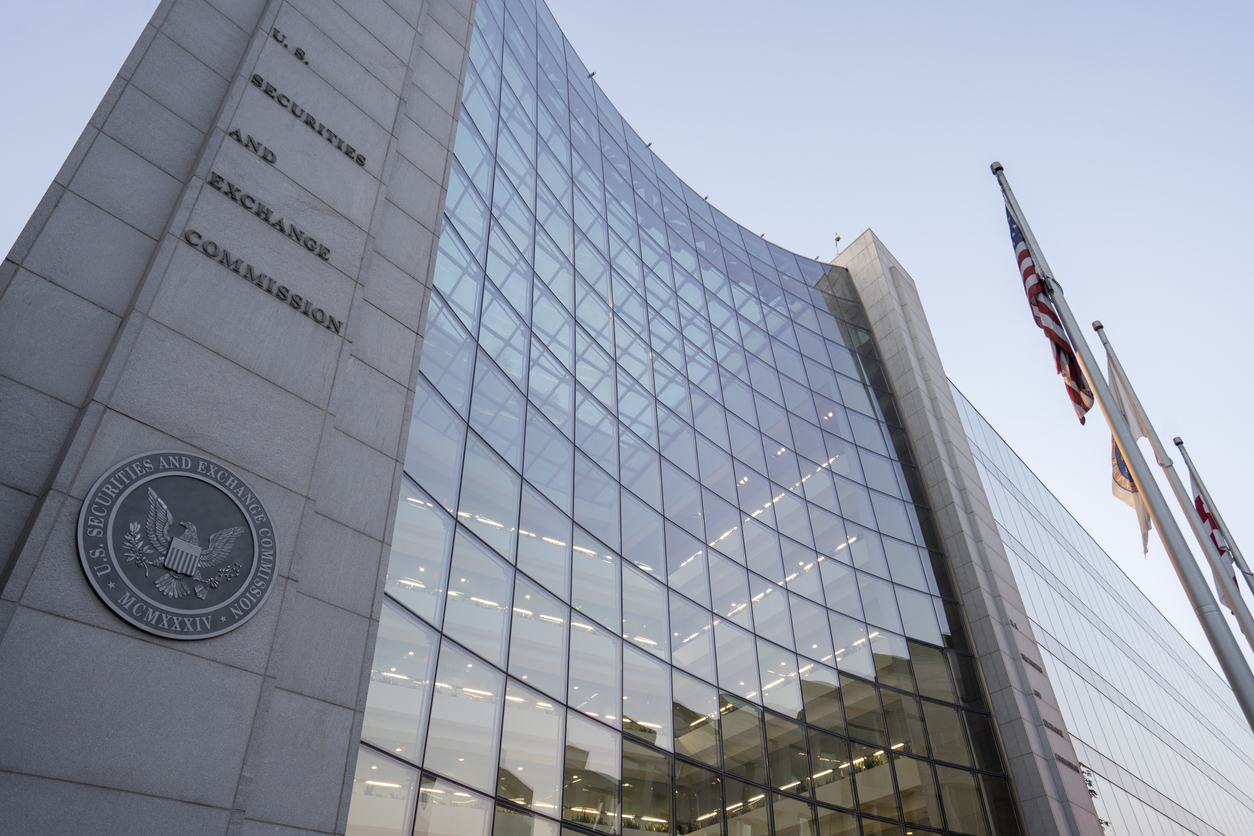
The Wall Street Crash of 1929 exposed weaknesses in financial markets and highlighted the urgent need for stronger oversight. Exchanges became central messengers of this requirement for regulation, as the turmoil revealed a problematic speculative bubble. It led the US Congress to create the first independent securities regulator in the world – the Securities and Exchange Commission (SEC). The SEC could require public companies to disclose accurate financial information and enforce rules against fraud and manipulation.
US capital markets are now the largest in the world. Like many, we have at times expressed concern that some regulation can be overly prescriptive or burdensome. Yet it is clear that some degree of regulation is essential for a stable and competitive financial system to thrive. This reality was recognised internationally, as the SEC provided the template that many other countries adopted when establishing their own securities regulators.
In the decades that followed, regulated exchanges played a critical role in supporting economic resilience. By providing transparent price discovery, orderly trading and reliable dissemination of information, exchanges helped markets absorb shocks and adjust to changing economic conditions. In this way, exchanges facilitate the navigation of difficult economic periods by promoting stability, liquidity and trust in the financial system.
5. Electronification of Markets
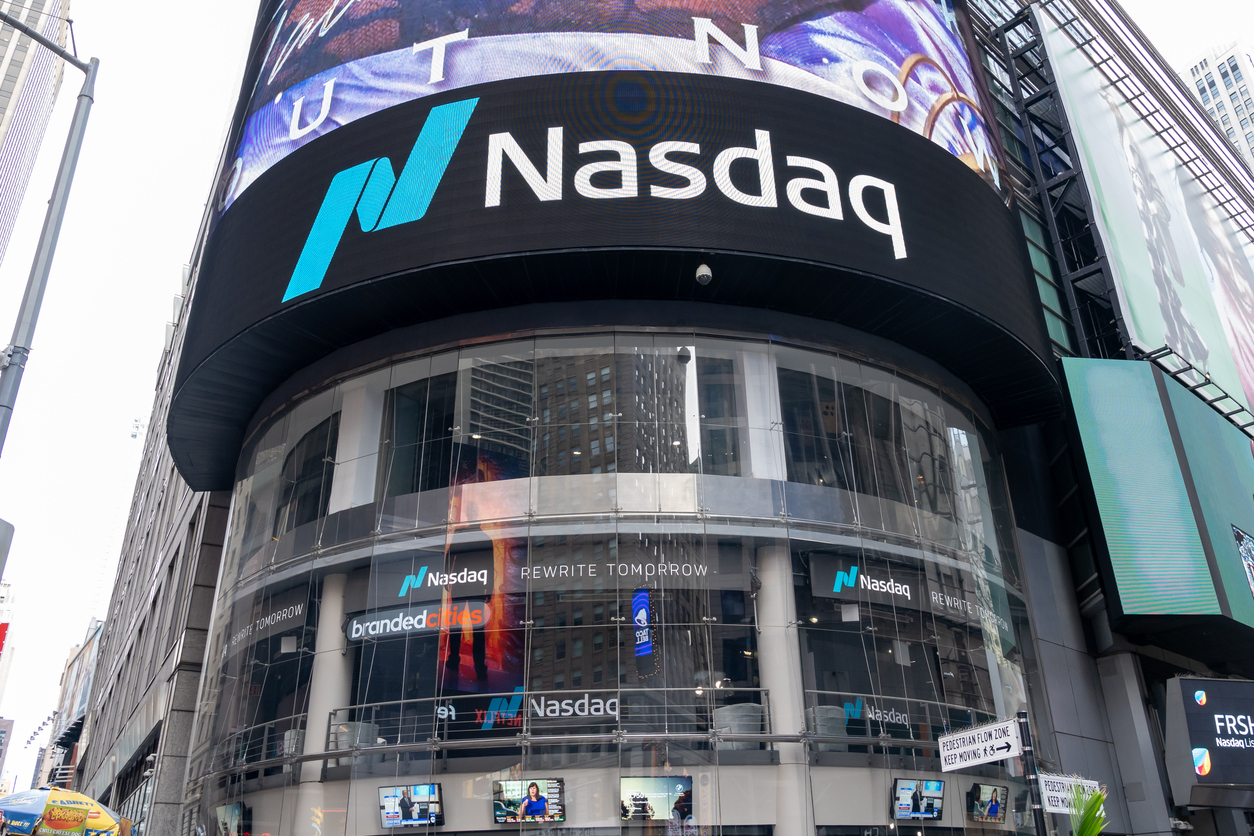
In 1971, Nasdaq launched the world’s first electronic stock market.6 Prior to Nasdaq, markets depended on physical trading floors, where brokers relied on phone calls and informal networks to determine prices of over-the-counter (OTC) stocks.
Nasdaq changed this by distributing real-time price quotations nationwide through a computerised system, delivering unprecedented levels of access, accuracy and efficiency. This innovation marked another revolution in market structure, enhancing speed, transparency and participation. Unsurprisingly, competitors soon followed and today most exchanges around the world operate on computerised order-matching systems.
Ongoing Innovation
Behind the modern exchange is a technological powerhouse that few ever truly see. While public attention often focuses on the trading floor or market outcomes, the real engine lies beneath. Massive systems infrastructure run around the clock to ensure seamless operations. Every trading day begins hours before markets open with automated processes activating thousands of applications, monitored by expert teams to ensure stability and compliance. Matching engines operate with microsecond-level precision and determinism, enabling billions of transactions daily. This quiet, continuous innovation forms the invisible backbone of global capital markets.
On a single day (4th March 2021) the New York Stock Exchange Group, which include the NYSE’s affiliated exchanges, processed a mind-boggling 356 billion electronic messages7. Creating infrastructure capable of managing these complexities is a testament to the ingenuity of exchanges and the modern financial system.
Like many others in the world, exchanges are currently exploring Artificial Intelligence, tokenisation and cloud computing. AI is being used in targeted cases to improve the listings experience and exchange’s own technology stacks. Tokenisation is viewed by some as a natural evolution akin to moving from paper share certificates to electronic ones. And, exchanges are considering cloud solutions for their technical architecture.
Conclusion
Today, exchanges are global, digital and highly sophisticated. Trades happen in microseconds across continents. This electronification has led to intense competition and market fragmentation (trading happening across many different venues, including those with less transparency). Yet the fundamental principles remain the same as in Bruges or Amsterdam: bring people and interests together, ensure fair prices and provide a trusted environment for trade. The history of exchanges shows us that markets require rules, trust, transparency to function and become liquid venues.
2 https://museum.nbb.be/en/resources/origins-stock-exchange-ter-buerse-inn-wall-street
3 https://www.beursgeschiedenis.nl/en/the-story/
5 https://www.nyse.com/history-of-nyse
6 https://www.nasdaq50.com/stories/1
7 https://www.nyse.com/taking-stock/the-high-tech-nyse-that-nobody-ever-sees