Family dinners have long been considered an important way for parents and children to connect, but a new study suggests that smartphones and other digital devices are increasingly disrupting that time together.
As families juggle school, work, tutoring, sports and other activities, finding time to sit down for a shared meal has become more difficult. Even when families do manage to gather around the table, screens often compete for attention.
Media use common during family meals
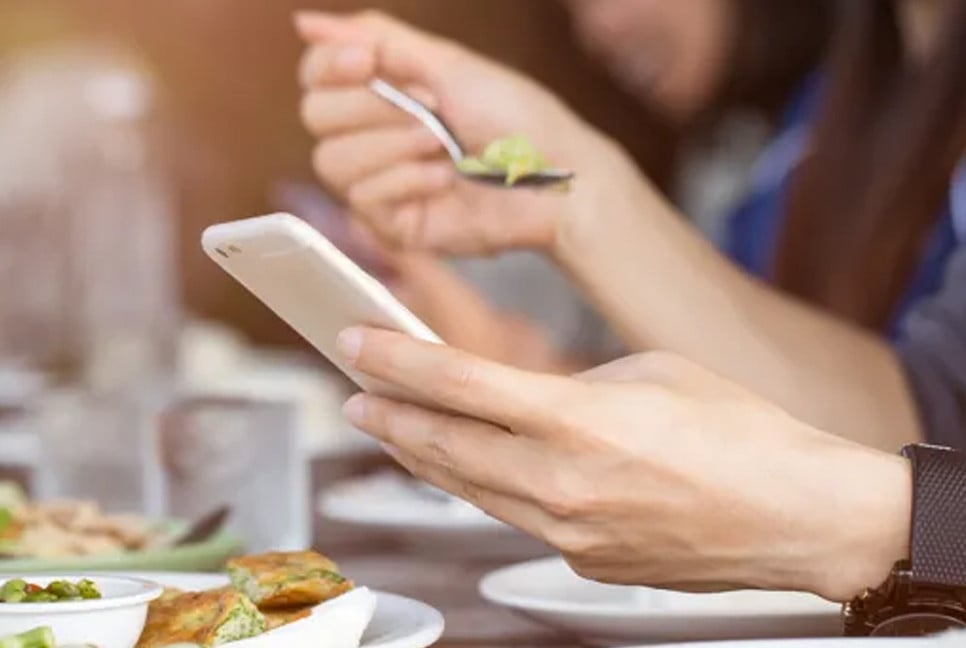
A new study published Monday in JAMA Pediatrics found that more than 75 percent of parents reported using some form of media during their most recent family meal.
The most common form of media use was smartphones.
The study, which surveyed more than 350 parents of children aged 4 to 10, also found that nearly 70 percent of children used media during family meals.
According to researchers, media use has become so deeply embedded in daily life that many people may not realize how much it affects their relationships.
"If you have your device and you're constantly checking it at the table, it can affect a valuable moment parents have with their children in the day," said Cecilia Sada Garibay, a co-author of the study and a PhD candidate at the University of Arizona.
She is also a professor at the School of Communication at Universidad Panamericana, where she studies the effects of social media.
Why family dinners matter
Experts say the benefits of family meals extend far beyond nutrition.
Research has shown that families who regularly eat together tend to have healthier diets, lower rates of substance use among teenagers and higher levels of emotional satisfaction.
However, experts say the meal itself is not the only factor.
"It's actually not what's at the meal at all that matters," said Dr. Margie Skeer, a professor of public health and community medicine at Tufts University School of Medicine.
According to Skeer, family meals provide a built-in opportunity for family members to check in with one another, share feelings and strengthen relationships.
She said children benefit from knowing they are being prioritized in an increasingly busy world.
A daily opportunity for connection
Sada Garibay acknowledged that finding time for family meals can be difficult.
"I know; I have four children," she said.
Even so, she believes family dinners are more important than ever.
Dr. Anne Fishel, an associate professor of psychology at Harvard Medical School and director of the Family and Couples Therapy Program at Massachusetts General Hospital, agrees.
Fishel founded the Family Dinner Project in 2010 to help families preserve mealtime connections despite busy schedules.
She described shared meals as the most reliable opportunity many families have for daily connection.
"Shared mealtimes are a ritual that creates an anchor, predictability and a sense of identity," she said.
Not all media use is the same
Researchers noted that different types of media use can have different effects.
Large-screen media such as televisions may sometimes create shared experiences for family members, while individual smartphone or tablet use is more likely to reduce interaction.
For example, watching a programme such as Jeopardy! together may encourage conversation and bonding.
However, the study found that individual smartphone use was far more common.
"What is changing is this fact that this shared experience is being substituted by individual media use," Sada Garibay said.
"Now each member at the table can be together, but each one is doing something absolutely different from the others."
Experts warned that frequent interruptions from phones and tablets can diminish some of the emotional benefits associated with family meals.
Dining alone becoming more common
The 2025 World Happiness Report found that Americans are increasingly eating alone.
Between 2003 and 2023, rates of dining alone rose across all age groups.
By 2023, about one-quarter of adults in the United States reported eating all of their daily meals alone.
During the Covid-19 pandemic, family meals became more common as people spent more time at home.
According to 2022 census data, nearly 85 percent of parents frequently shared meals with their children.
Despite busy schedules and increasing screen use, experts say many families continue to prioritize shared meals.
Small moments can still make a difference
Experts stress that family connection does not have to come through a formal dinner every night.
A family meal can be as simple as sharing a snack at the kitchen counter and spending a few minutes talking.
"If you had five minutes every day where you were sitting or standing and looking at each other and talking to each other, that would give a lot of benefit too," Skeer said.
One device-free meal a week
Experts also suggest that families start small.
Even one distraction-free meal each week can help strengthen relationships and improve emotional well-being.
"The frequency of shared mealtime seems to confer the nutritional benefits, but the quality of the time around the table is what fosters the emotional and psychological benefits," Fishel said.
She added that even one enjoyable family meal each week can create a sense of belonging and connection.
Using technology to bring families together
While smartphones can be distracting, experts say technology can also be used positively.
Family movie nights, for example, can create shared experiences and opportunities for bonding.
"Anytime you can build in those moments to connect, it's going to be better in the long run," Skeer said.
As digital devices become an increasingly permanent part of everyday life, researchers say the challenge for families is not necessarily eliminating technology, but ensuring it does not replace meaningful time together.
Courtesy: Reuters
Bd-Pratidin English/ AM