Business

Daraz dismisses Bangladesh exit speculation
Daraz has reaffirmed its long-term commitment to Bangladesh, saying it continues to operate normally and remains focused on sustainable growth, amid recent media reports regarding its investment and operational outlook.
“Daraz remains firmly committed to Bangladesh and has no plans to exit the market. Bangladesh continues to be an important market for the company, and we are focused on sustainable growth and contributing to the development of the country’s digital economy,” it said in a statement on Wednesday.
The company said some recent characterisations do not accurately reflect its strategic priorities or day-to-day operations.
It said it remains committed to investing in technology-driven solutions aimed at improving operational efficiency and enhancing customer experience, while building a scalable and sustainable digital commerce ecosystem in the country.
Highlighting its continued business momentum, the company said it onboarded more than 7,000 new sellers over the past year, reflecting the steady expansion of its marketplace and its ongoing efforts to create opportunities for local entrepreneurs and small businesses.
It said the growth of its seller network has contributed to job creation and income-generation opportunities across the broader e-commerce ecosystem.
The company added that, as part of regular business operations, it periodically reviews its organisational structure to ensure alignment with long-term strategic priorities and business objectives.
It further noted that Bangladesh’s growing internet penetration and increasing smartphone adoption beyond major urban centres continue to create significant opportunities for the e-commerce sector.
Daraz said companies with strong operational discipline and a long-term vision are well-positioned to capitalise on the country’s expanding digital economy and drive future growth.
33 minutes ago

Rod prices may shoot up by Tk12,000 per tonne due to new tax structure, power tariff hikes: BSMA
The local steel industry is facing a severe crisis that could push up the production cost of MS Rod by Tk 11,000 to Tk 12,000 per tonne, local steel manufacturers warned on Wednesday (June 17).
The Bangladesh Steel Manufacturers Association (BSMA) attributed this looming price hike to the combined impact of recent power tariff hikes and the proposed hikes in VAT, customs duties, and taxes in the proposed budget for the fiscal year 2026-27.
Speaking at a press conference at the National Press Club on Wednesday, BSMA President Mohammad Jahangir Alam said the direct and indirect production costs would ultimately be passed on to consumers, further dampening sales in an already struggling market.
The association placed a five-point demand to the government to rescue the steel sector from the current crisis.
Their demands include the withdrawal of the proposed additional VAT, duties, and taxes on the steel industry; cancellation of extra VAT at the sales stage and on local scrap; reconsideration of the additional taxes on raw materials; restoring the turnover tax to the previous 0.6 percent from the proposed 1.0 percent; and accelerating the implementation of the development budget to stimulate demand.
Jahangir Alam noted that while the proposed budget includes some business-friendly initiatives, the new financial burdens make survival difficult for the industry.
He revealed that while the country's annual demand for steel rods stands at around 50 lakh tonnes, the total production capacity exceeds one crore tonnes. As a result, most mills are operating at less than 50 percent capacity, which significantly increases overhead costs and puts immense financial strain on entrepreneurs.
Detailing the cost hikes, the BSMA stated that recent electricity price hikes alone added Tk 1,800 to Tk 2,000 to the cost of producing each tonne of rod. Additionally, rising port fees, landing charges, and transportation costs are adding another Tk 3,000 to Tk 3,500 per tonne. Furthermore, the proposed budget’s higher taxes on ferro-alloys (crude alloys of iron), refractory materials, spare parts, and other inputs will hike costs by another Tk 2,000 to Tk 2,500.
While these factors account for a direct production cost increase of Tk 5,000 to Tk 6,000, indirect pressures—such as dwindling market demand, underutilized factory capacity, higher overhead expenses, and rising bank interest rates—will slap on another Tk 5,000 to Tk 6,000 in costs per tonne, the steel leaders said.
The BSMA president pointed out that large-scale infrastructure projects and work orders have remained stalled since August 5, 2024, as many previous contractors have gone into hiding or left the country, and many projects are stuck awaiting design approvals. He urged the government to swiftly release the development budget to keep the construction industry alive.
BSMA Secretary General and Chairman of Rani Steel, Suman Chowdhury, criticized the fiscal strategy, noting that while the education budget was increased, the heavy tax burden on industries will stifle the job creation needed for the educated youth.
He warned that many factories might default on their bank loans if the situation persists.
Among others, Maruf Mohsin, Managing Director of Sonargaon Steels, and Zakaria, Director of CSRM, were also present at the press conference.
50 minutes ago

Bangladesh Bank urges media to report responsibly on banking sector’s ‘distressed loans’
Bangladesh Bank on Wednesday urged all types of media to practice responsible journalism when reporting on the country's banking sector, cautioning that arbitrary calculations of "distressed loans" create unnecessary panic among the public.
In a press release issued by the Department of Communications and Publications (DCP), the central bank clarified its position regarding recent media analyses derived from the newly published ‘Financial Stability Report (FSR) 2025’.
The central bank noted that following the release of the FSR 2025, several newspapers and media published reports claiming that the banking sector's "distressed loan" ratio ranges anywhere between 45 percent, 59 percent, or even 60 percent based on their own calculations.
Dismissing these figures, Bangladesh Bank stated that no internationally recognized financial policymaking body has defined a standard definition for "distressed loans."
Generally, loans that yield no income or where installments are default are treated as distressed. However, the central bank clarified that unclassified rescheduled loans cannot be clubbed into this category because borrowers are actively and regularly paying back their designated installments.
Furthermore, the banking regulator pointed out that under international best practices, written-off loans are completely removed from a bank's balance sheet, meaning they also cannot be mathematically categorized as distressed loans.
According to the official data re-verified by the central bank, the actual Non-Performing Loan (NPL) or default loan ratio in the country's banking sector stood at 30.60 percent as of December 31, 2025.
Bangladesh Bank expressed strong reservations over combining actual default loans with legally rescheduled and written-off loans to project an inflated distressed loan ratio. The regulator warned that such reporting distorts macroeconomic realities and sends highly misleading signals to both domestic and international financial stakeholders regarding the health of Bangladesh's economy.
Considering the extreme sensitivity of the financial architecture and overall national interest, the central bank requested editors, reporters, and media houses to ensure maximum objectivity, depth, and precision when disseminating banking and economic data.
1 hour ago
BB governor agrees with 7-point demand over Islami Bank: Grahak Forum
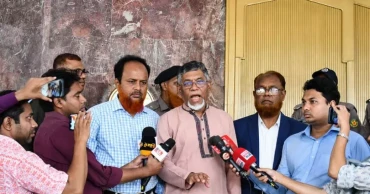
Bangladesh Bank (BB) Governor Md Mostaqur Rahman has expressed agreement in principle with the seven-point demand put forward by the Islami Bank Sachetan Grahak Forum to restore corporate governance in Islami Bank Bangladesh PLC, the platform said on Wednesday.
It said central bank Deputy Governor Kabir Ahmed conveyed this to the forum leaders during a meeting at the central bank headquarters.
Speaking to journalists after the meeting, the convener of the forum Prof Nur Nabi Manik said the governor took the matter positively.
He said the deputy governor told them that the central bank chief agreed in principle with their demands.
The forum chief reiterated their core position, emphasising that individuals tainted by financial irregularities, loan scams, or institutional plunder must be permanently barred from occupying positions on the board of directors or holding the post of chairman at Islami Bank.
"The new board must consist entirely of highly ethical, professional, and politically neutral individuals," Manik added.
He expressed optimism that rebuilding the board based on their seven-point charter will heavily reinforce depositor confidence and restore structural stability to the country's largest Shariah-based commercial lender.
Forum leaders assured the central bank that once their demands are visibly implemented on the ground, they will disseminate positive messages to millions of depositors across the country, playing a supportive role in rebuilding the bank's operational legacy.
The demands of the forum are formation of an independent, capable, and professional board of directors; reviewing the controversial ownership and shareholding changes of 2017 to reinstate the rights of genuine, original owners; establishing a special tribunal to fast-track the trial of those accused of plundering bank funds; immediate recovery of looted capital and confiscation of illicitly acquired assets; refraining from controversial or arbitrary regulatory decisions to curb panic and volatility across the banking sector; amending Section 18(a) of the Bank Company Act to close rehabilitation loops for financial fraudsters; and withdrawing misleading political statements regarding the bank's health made in Parliament.
3 hours ago
DSE awards FIX certification to 3 more brokerages
The Dhaka Stock Exchange (DSE) on Wednesday issued FIX (Financial Information Exchange) certification to three more brokerage houses, bringing them closer to launching their own Order Management Systems (OMS) through API connectivity with the exchange's Nasdaq matching engine.
The certificates were handed over at a ceremony by DSE Chief Financial Officer Md Abid Hossain Khan to representatives of GMF Securities Limited, Prime Islami Securities Limited, and Unicap Securities Limited.
Head of IT at GMF Securities Lubna Mahmud, CEO of Prime Islami Securities Md Rajib Hasan and Unicap Securities CEO Waliul Islam received the certificates on behalf of their organisations.
DSE Deputy General Manager Jisan Bin Mubarak and Assistant General Manager Kamrun Nahar, along with other senior officials, were present at the event.
With the latest batch, DSE has now certified a total of 61 brokerage houses under the FIX protocol. Of these, 53 have already gone live with their own OMS platforms, conducting trading operations via API integration with the exchange.
DSE had initiated the API-based Broker House Order Management System (BHOMS) programme in 2020. Following that, 85 brokerage houses applied to DSE seeking API connectivity with the Nasdaq matching engine to operate their proprietary order management systems.
3 hours ago
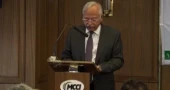
Ambitious revenue target may trigger taxpayers’ harassment : MCCI
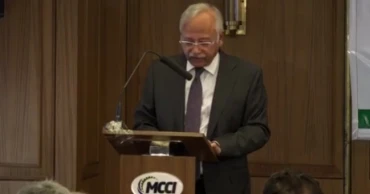
Metropolitan Chamber of Commerce and Industry (MCCI) on Wednesday cautioned that the government's ambitious revenue mobilisation target for fiscal year 2026-27 could expose taxpayers to harassment at the field level as the National Board of Revenue (NBR) collected only 65 percent of its revised target in the outgoing fiscal year.
MCCI President Kamran T. Rahman raised the concern while delivering the welcome address at a post-budget discussion jointly organised by MCCI, Standard Chartered Bangladesh and the Policy Research Institute of Bangladesh (PRI) at the M. Anis Ud Dowla Conference Hall of MCCI's Gulshan office in the city.
The budget has set a revenue collection target of Tk 6.95 lakh crore, which represents a growth of over 18.2 percent compared to the current fiscal year's revised target.
“NBR managed to collect only Tk 3.27 lakh crore, or 65 percent of the revised target, up to April of FY2025-26,” Kamran said. “Achieving the new revenue target without comprehensive structural reforms will be extremely difficult, and the pressure to do so may lead to harassment of taxpayers at the field level.”
He, however, acknowledged that the proposed budget, the first full-year budget of the newly elected government contains several business-friendly reform proposals, including modernisation of tax and revenue administration, digitalisation, and ease of doing business measures.
The MCCI president stressed that the key objective of the day's forum was not to examine isolated budget proposals, but to explore how the budget can be successfully implemented by broadening the tax base rather than imposing additional burdens on specific sectors or existing taxpayers.
“The national budget is not merely a statement of government income and expenditure, it is a reflection of a country's economic priorities, development strategy, and future direction,” Kamran said.
The budget comes at a time when the global economy continues to grapple with geopolitical uncertainty, trade tensions, and structural economic challenges, he added.
He said MCCI remains committed to fostering open and constructive dialogue among the government, private sector, and other stakeholders on key national economic issues.
Kamran expressed hope that the deliberations from the forum, held ahead of the budget's final approval in parliament, would enrich the policymaking process and provide actionable guidance to the relevant authorities.
7 hours ago

Pizza Hut sold for $2.7bn as Yum Brands reshapes portfolio
Yum Brands has agreed to sell Pizza Hut for a combined $2.7 billion, ending its ownership of the iconic pizza chain as the company seeks to focus on higher-performing brands amid declining sales at Pizza Hut.
The parent company of KFC, Taco Bell and Pizza Hut announced Tuesday that private equity firm LongRange Capital will acquire Pizza Hut’s operations outside mainland China for approximately $1.5 billion.
Pizza Hut’s mainland China business will be purchased by Yum China Holdings for about $1.2 billion. China is the chain’s second-largest market after the United States, accounting for nearly one-fifth of global sales.
Yum Brands began reviewing strategic options for Pizza Hut last November after the chain continued to lag behind the company’s other restaurant brands. While Yum’s global sales increased 5 percent last year, Pizza Hut recorded a 2 percent decline.
Earlier this year, Yum announced plans to shut down 250 Pizza Hut outlets in the United States. At the end of last year, the brand operated nearly 20,000 restaurants worldwide.
Industry analysts said Pizza Hut has struggled for years to regain momentum amid intense competition and changing consumer preferences.
Neil Saunders, managing director of GlobalData, described Pizza Hut as the weakest performer within Yum’s portfolio, saying efforts to revive the chain and close underperforming stores had failed to return the business to sustained growth.
Founded in 1958 in Wichita, Kansas, by two brothers using a $600 loan from their mother, Pizza Hut grew into the world’s largest pizza chain by sales in the early 1970s. The company became part of PepsiCo in 1977 before being spun off into what later became Yum Brands in 1997.
The chain’s business model came under pressure in the 1980s as rivals such as Domino’s expanded rapidly through home delivery services. Pizza Hut’s large dine-in restaurants became less suited to evolving consumer habits.
In recent years, the growth of food delivery platforms such as DoorDash and Uber Eats has further intensified competition by giving consumers access to a wider range of food options beyond pizza.
Yum Brands Chief Executive Officer Chris Turner said the sale would allow Pizza Hut to pursue growth under owners with extensive restaurant industry experience.
He added that LongRange Capital and Yum China are well positioned to support the brand’s future development in their respective markets.
The Louisville, Kentucky-based company expects both transactions to be completed during the third quarter of the year. Yum Brands’ shares rose about 3 percent following the announcement.
23 hours ago
Remittance inflow hits $34.38 billion with 18.6% growth y-on-y; Forex reserves reach $35.76 billion
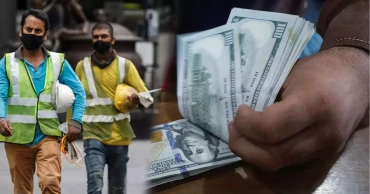
Bangladesh has continued to log an impressive growth in inward remittances, with expatriates sending home over US$ 34.38 billion during the period from July 2025 to June 15, 2026.
This marks an 18.61 percent growth compared to the corresponding period of the previous fiscal year FY 2025-26.
According to the latest data from Bangladesh Bank released today (Tuesday), the total remittance inflow reached $ 34.38 billion during the current fiscal year (up to June 15, 2026), compared to $ 28.98 billion received during the same period of FY2024-25.
The data shows that on June 15 alone, expatriate Bangladeshis remitted US$ 82.55 million through official banking channels.
Furthermore, the remittance inflow during the first 15 days of June 2026 reached US$ 1.62 billion up from $ 1.47 billion recorded during the first half of June 2025. This reflects a healthy month-on-month growth of 9.73 percent.
Banking sector officials noted that the steady and robust inflow of remittances has heavily shored up the country's external sector performance and financial stability ahead of the conclusion of the fiscal year.
Foreign Exchange Reserves Position:
Backed by strong remittance channels and recent external funding, the country’s foreign exchange reserves have shown a strong upward position. According to the central bank's financial account data as of June 16, 2026:
Gross Forex Reserves stood at $35.76 billion. BPM6 standard reserves recorded at $31.21 billion on today (Tuesday) June 16,2026.
The Balance of Payments and International Investment Position Manual (BPM6) format, mandated by the International Monetary Fund (IMF), represents the immediately usable liquid reserves of the central bank.
Central bank officials indicated that the current reserve position leaves the country in a comfortable position to cover more than five to six months of regular import bills, significantly boosting macroeconomic stability and stabilizing the domestic foreign exchange market.
1 day ago

Nadia Nivin appointed first female chairman of IDRA
Mir Nadia Nivin, an international development and institutional reform specialist, has been appointed as the new chairman of the Insurance Development and Regulatory Authority (IDRA).
With this appointment, she makes history as the first female chairperson of the country's insurance sector regulatory body since its inception.
The Financial Institutions Division of the Ministry of Finance issued an official gazette notification on Tuesday making the appointment for a three-year tenure.
An alumnus of Harvard University, Nivin possesses an extensive professional background in global governance. She previously served as a member of the Election Reform Commission during the interim government led by Nobel Laureate Professor Muhammad Yunus.
Between 2020 and 2023, she held key high-level portfolios at the United Nations Development Programme (UNDP) across Bangladesh, Afghanistan, and Malaysia.
In 2019, Nivin was named in the prestigious 'Asia 21 Young Leaders' list by the US-based Asia Society, which recognizes exceptional achievers under the age of 40 across 39 Asian countries. Prior to joining the United Nations, she taught at BRAC University in Dhaka and also worked in journalism for a brief period.
Since beginning its official journey on January 11, 2011, IDRA has been headed by five chairmen. Actuary M. Shefaque Ahmed served as the founding chairman for two consecutive terms spanning six years. He was followed by former Financial Institutions Division Secretary Shafiqur Rahman Patwari, who successfully completed a three-year regular term.
However, the subsequent three leaders—private sector executive M. Mosharraf Hossain, former Planning Secretary Mohammad Jainul Bari, and former Financial Institutions Division Secretary M. Aslam Alam—all exited the top regulatory position prematurely before completing their designated tenures.
Industry stakeholders expect that Nivine's extensive global experience in institutional reform and public policy will bring much-needed structural modernization, discipline, and corporate governance to the country's insurance market.
1 day ago

Islami Bank depositors’ forum submits memorandum to central bank Governor
Islami Bank Conscious Depositors’ Forum on Tuesday submitted a memorandum to the Bangladesh Bank Governor demanding a transparent, professional management structure to safeguard public money.
The platform warned of launching a rigorous countrywide agitation if the central bank fails to immediately form an acceptable and professional board of directors, and hand the bank's ownership back to its genuine shareholders.
The forum strongly criticided the centralidation of all administrative powers under a single central bank administrator, stating that running a massive financial institution without a fully functioning board is detrimental to corporate governance.
They expressed apprehensions that a long-term administrative regime could inadvertently allow controversial individuals or remnants of the previous looting regimes to re-enter the management.
The demands are immediate formation of a complete, honest, and professional board of directors, restoring the bank's ownership and shares to its genuine, original owners, establishing a special tribunal to try those involved in looting bank funds, implementing immediate steps to stabilize the bank and curbing negative propaganda, tracking down, freezing, and bringing back laundered wealth and assets from abroad.
Besides, amending the Bank Company Act to permanently bar financial fraudsters from rehabilitation and withdrawing controversial statements regarding Islami Bank made in Parliament.
1 day ago