special
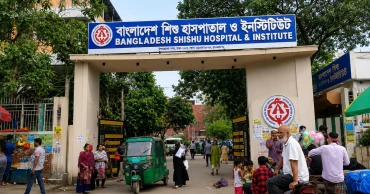
Govt plans major upgrade of Shishu Hospital with 100 new beds, modern facilities
Every day hundreds of anxious parents arrive at Bangladesh Shishu Hospital and Institute (BSHI) with critically ill children, hoping for treatment that could save young lives.
But the country’s largest specialised paediatric hospital has long been under pressure, struggling with rising patient loads and limited capacity for advanced care.
Now, the government has undertaken a Tk 344.02 crore expansion project aimed at transforming the hospital into a more advanced and comprehensive centre for specialised child healthcare.
The proposed “Bangladesh Shishu Hospital and Institute Expansion Project-2”, scheduled for implementation between July 2026 and June 2028, seeks to expand infrastructure, introduce cutting-edge treatment facilities and strengthen specialised services that remain limited across Bangladesh.
Responding to Growing Demand
The expansion comes at a critical time when demand for specialised paediatric treatment is rising steadily due to population growth, improved disease detection and greater public awareness of children’s healthcare needs.
According to project documents, the expansion will include the addition of 100 new beds and six cabins, five state-of-the-art operation theatres and nearly 1,400 advanced medical equipment.
The project also envisages the procurement of more than 1,700 furniture and the introduction of extensive hospital automation through 36 software packages, aimed at improving patient management and service delivery.
At the heart of the initiative is the vertical expansion of the hospital’s existing C-Block at Sher-e-Bangla Nagar.
The building will be extended from the fourth floor to the ninth floor, creating an additional 4,461 square metres of floor space without requiring any new land acquisition.
Planning Commission officials said the site already possesses the structural foundation necessary for vertical expansion, reducing implementation risks and avoiding the delays often associated with land acquisition and utility relocation.
Bringing Advanced Care Within Reach
The expansion will facilitate the introduction and strengthening of paediatric urology, kidney transplantation, surgical oncology and orthopaedic surgery services.
For many families, these are treatments that currently require referrals abroad or lengthy waits at a handful of specialised facilities.
The hospital is also set to establish a comprehensive paediatric cardiac care programme, including a catheterisation laboratory (Cath Lab), cardiac intensive care beds, dedicated operation theatres and post-operative recovery units.
Congenital heart diseases remain among the leading causes of childhood illness requiring specialised intervention.
Health experts believe expanded cardiac facilities could significantly improve survival rates while reducing treatment costs for families.
Strengthening Diagnostics
The project further seeks to improve diagnostic accuracy and speed through the installation of advanced imaging technologies, including CT scan and MRI facilities.
Such equipment plays a crucial role in diagnosing neurological disorders, cancers, congenital abnormalities and other complex childhood diseases.
Doctors say delayed diagnosis often contributes to poor treatment outcomes, particularly for patients arriving from remote districts.
Reducing Medical Migration
Bangladesh has made notable progress in child health indicators over the past decades, including reductions in child mortality and improvements in immunisation coverage.
However, access to specialised paediatric treatment remains uneven, forcing many families to seek expensive care abroad, particularly in neighbouring countries.
Health sector officials believe the planned expansion of BSHI could help bridge that gap by making advanced treatment available domestically.
A Legacy Nearly Five Decades in the Making
The story of Bangladesh Shishu Hospital is closely intertwined with the country’s post-independence healthcare development.
Founded in 1972 by noted philanthropist Prof Tofayel Ahmed with support from voluntary organisations and the government, the institution began modestly with a 50-bed inpatient facility operating from a rented house in Dhanmondi and outpatient services from a tent in Sukrabad.
What started as Bangladesh’s first specialised children’s hospital gradually evolved into the nation’s premier paediatric healthcare and training centre.
A landmark decision by the National Economic Council in 1974 paved the way for the construction of a dedicated 250-bed hospital, later designed for expansion to 500 beds. The institution moved to its permanent Sher-e-Bangla Nagar campus in 1977.
Over the decades, the hospital expanded beyond patient care to become a major centre for medical education and research through the Bangladesh Institute of Child Health (BICH), established in 1983.
Today, it trains specialists in paediatrics, neonatology, nephrology, cardiology, neurology, pulmonology, haemato-oncology and paediatric surgery, while also producing skilled nurses and allied health professionals.
In 2021, Parliament elevated the institution’s status through the Bangladesh Shishu Hospital Act, formally transforming Dhaka Shishu Hospital into Bangladesh Shishu Hospital and Institute.
Investing in the Future
The government’s Election Manifesto 2026 places particular emphasis on strengthening maternal and child healthcare services, and the new expansion project aligns closely with that commitment.
Beyond bricks and mortar, the investment represents a broader recognition that specialised healthcare for children is essential to the country’s future human development.
For families arriving from distant districts with critically ill children, the expansion promises something more tangible: shorter waiting times, improved access to advanced treatment and the possibility of receiving world-class care closer to home.
If implemented successfully, the project could mark another major milestone in the evolution of Bangladesh’s premier children’s hospital—from a small post-independence initiative into one of South Asia’s leading centres for paediatric healthcare.
9 hours ago
One hour of rain, days of disruption: Sunamganj school battles waterlogging
A spell of rain often brings more worry than relief for the students of Gobindaganj Government Primary School in Chhatak upazila of Sunamganj.
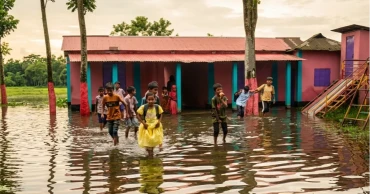
Just an hour of continuous rainfall is enough to leave the school compound submerged, disrupting classes and turning the daily journey to school into a challenge for hundreds of children.
Located in Chhatak’s Gobindaganj area, the school has been grappling with severe waterlogging for years.
Students said the playground, walkways and areas surrounding classrooms go underwater after even moderate rainfall, creating an unhealthy environment and hampering academic activities.
The school currently serves 467 students under the supervision of one head teacher and nine assistant teachers.
However, recurring waterlogging has made regular attendance and classroom activities increasingly difficult.
A recent visit to the school revealed stagnant rainwater covering much of the playground. Mud and scattered waste mixed with the water, creating slippery and unhygienic conditions.
Many students were seen carrying their shoes in their hands while wading through muddy water to reach their classrooms. Others had no choice but to sit through lessons in wet clothes.
Teachers say the situation not only disrupts lessons but also affects students’ concentration and overall learning experience.
“My daughter studies in Class One. Whenever it rains, she does not want to go to school,” said guardian Nilima Nasrin. “Even after an hour of rainfall, water enters the classroom premises. It is ruining the learning environment for young children.”
Parents and local residents blame the problem on the absence of an effective drainage system.
They fear that prolonged waterlogging could expose children to waterborne diseases, skin infections and mosquito-borne illnesses.
According to locals, the institution has been suffering from the same problem for years. They allege that inadequate drainage infrastructure and the dumping of waste around the school premises have worsened the situation over time.
Head teacher Mostak Ahmed said the situation becomes particularly difficult during the rainy season.
“Rainwater frequently enters the school compound and reaches the classrooms. Conducting classes under such conditions is extremely challenging,” he said. “The problem has intensified because waste materials have been dumped around the school, blocking the natural flow of water.”
The issue has drawn the attention of local education authorities.
Upazila Primary Education Officer Mohammad Shahjahan Ahmed said he had been informed about rainwater entering the school premises.
“We have heard about the situation. We will investigate the matter and take necessary steps accordingly,” he said.
Chhatak Upazila Nirbahi Officer (UNO) Mohi Uddin also assured action.
“We will look into the matter and discuss it with the relevant authorities to find a solution,” he said.
As the monsoon season gains momentum, parents, teachers and residents hope that promises of action will soon translate into tangible improvements, ensuring that rainfall no longer stands between children and their education.
12 hours ago

Tiger rescued from poachers’ snare set to return to Sundarbans
A female Royal Bengal tiger rescued from a poachers’ snare in the Sundarbans and nursed back to health in a rehabilitation centre in Khulna is set to return to its natural habitat later this month.
The tiger, estimated to be between nine and 10 years old, was found trapped in an illegal snare near Bairagi Bari, adjacent to Sharkir Khal in the Sundarbans East Forest Division under Mongla upazila of Bagerhat district in early January.
Forest officials rescued the tiger on January 4 after tranquilising it with a dart gun.
By then, the animal had spent several days trapped in the snare, suffering severe injuries to its front left leg where deep wounds had become infected and begun to rot.
The tiger was taken to the Wildlife and Nature Conservation Division’s rehabilitation centre in Khulna, where a six-member medical board was formed to oversee its treatment.
Veterinary Officer Dr. Julkar Nain of Gazipur Safari Park, who was involved in the treatment, said the tiger’s condition was critical when it was rescued.
“The left leg had sustained extensive damage and infection. From January through March, the tiger received continuous treatment, including antibiotics, injections and wound dressing. It started recovering in April and is now fully healthy,” he said.
Dr. Nain said the tiger has resumed normal feeding habits and has regained the physical ability and predatory instincts necessary to hunt in the wild.
Chief Conservator of Forests Amir Hossain Chowdhury said a meeting of tiger experts held in May decided that the animal should be released back into the Sundarbans.
“The tiger has fully recovered and will be released into the forest by the end of June,” he said.
Forest officials had also discussed fitting the tiger with a satellite collar to monitor its movements after release.
However, experts attending the meeting could not reach a consensus on the proposal and the plan was ultimately dropped.
Divisional Forest Officer (DFO) of the Sundarbans East Forest Division Md Rezaul Karim Chowdhury said the tiger’s injuries had affected skin, muscle and tissue across much of its front left leg.
“Through intensive care and proper treatment, the tiger has made a complete recovery. It has regained its natural aggression and hunting behaviour and is ready to return to the wild,” he said.
The DFO said the Forest Department has strengthened anti-poaching efforts across the Sundarbans.
Officials now conduct extensive foot patrols in remote forest areas, while eight drones are being used to monitor illegal activities. Smart patrolling systems have also been introduced, they said.
According to forest department data, authorities recovered around 116,000 feet of illegal snares from the Sundarbans over the past year. The traps had been set by poaching gangs targeting deer and tigers.
“The activities of poaching networks have declined significantly due to intensified enforcement,” Rezaul Karim said.
Wildlife expert and Chief Executive of WildTeam Professor Anwarul Islam, who attended the expert meeting on the tiger’s future, praised the Forest Department for saving the animal despite limited resources.
“The tiger should be able to resume a normal life in the forest. It may face some challenges hunting because of its age, but even then, a tiger should be allowed to live and die as a tiger,” he said.
He added that equipping the tiger with a satellite collar would have helped researchers monitor its adaptation to the wild.
Professor Islam also stressed the need to strengthen the institutional capacity of the Forest Department.
“Without stronger conservation efforts, neither the Sundarbans nor its wildlife will survive in the long term. Fortunately, wildlife protection in the forest has improved significantly in recent years,” he said.
Forest Department surveys show that the tiger population in the Bangladesh portion of the Sundarbans has been gradually increasing.
According to the latest camera-trap survey conducted in October 2024, the forest is home to 125 tigers, up from 114 recorded in 2018 and 106 in 2015.
1 day ago
Five years on, unfinished bridge leaves 10,000 Patuakhali residents stranded
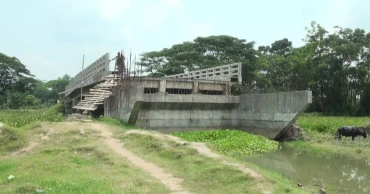
Nearly five years after construction began, a bridge in Patuakhali that was meant to improve connectivity remains unusable, leaving around 10,000 residents of eight villages struggling with daily hardships.
Initiated by the Local Government Engineering Department (LGED) in 2021 at a cost of about Tk 3.5 crore, the bridge was designed to connect Kuripaika with neighbouring Bhuria Union and ease transportation for local residents.
Although the main structure has largely been completed, the absence of approach roads on both sides has prevented the bridge from being opened to traffic.
Locals are being forced to use temporary wooden ladders to cross the structure, exposing themselves to safety risks on a daily basis.
“I was going to Patuakhali Sadar Hospital for treatment when I slipped from the wooden ladder while trying to climb the bridge,” said Ramzan Ali, a resident of Kuripaika village.
“Fortunately, I was not seriously injured, but I could not continue my journey that day. Crossing the bridge is extremely difficult for elderly people like us,” he said.
Local people said residents of at least eight villages—Kuripaika, Bhuria, East Kuripaika, West Kuripaika, Kamalapur and Soula—depend on the route for their daily movement.
Students, farmers, fishermen, traders and office-goers use the crossing as one of the area’s key communication links.
1 day ago
BTRC finds cross-border interference in EGSM spectrum, weighs allocation for network expansion
Mobile Network Operators (MNOs) have identified significant interference challenges in parts of the Enhanced GSM (EGSM) spectrum, particularly in areas close to Bangladesh’s international borders, during a technical assessment conducted under the supervision of the telecom regulator.
Bangladesh Telecommunication Regulatory Commission (BTRC) is considering allocating spectrum in the EGSM band to strengthen mobile network capacity and improve weak network coverage and internet service quality across the country.
As part of the process, the regulator approved a Proof of Concept (PoC) test to evaluate interference levels in the 850 MHz and EGSM (900 MHz) bands, according to official documents.
The four-week assessment was carried out from April 12 to May 8, 2026, using 8.4 MHz of spectrum in the 880-888.4 MHz and 925-933.4 MHz ranges allocated exclusively for testing purposes.
All four mobile operators participated in the exercise, deploying the spectrum across different divisions and using 2G technology to assess performance and interference impacts.
According to the findings, the EGSM band appears to be the more practical short-term option for Bangladesh, as nearly all mobile handsets in the country already support the band for voice calls, SMS and low-speed data services.
A committee formed to compare the 850 MHz and EGSM bands, recommend spectrum pricing and identify technical challenges found that low-band spectrum could significantly improve indoor coverage in densely populated urban areas while helping operators extend services to remote regions.
However, the assessment identified frequency pollution originating from India as the principal source of interference affecting parts of the EGSM spectrum.
To determine the extent of the issue, operators monitored interference levels in Rajshahi, Rangpur, Mymensingh, Sylhet, Cumilla, Chattogram, Khulna, Barishal and Cox’s Bazar, alongside several locations in Dhaka.
Except for Dhaka, most testing sites were situated between approximately five and 50 kilometres from international borders.
For analysis purposes, the committee divided the 8.4 MHz spectrum block into two segments.
The first segment, Block A, consists of 5 MHz of spectrum in the 880-885 MHz and 925-930 MHz ranges.
The report noted that this portion is particularly valuable because of its superior propagation characteristics, allowing signals to travel longer distances and penetrate buildings more effectively.
Interference levels in Block A were found to be minimal in Rajshahi and Khulna.
However, substantial interference was detected in Rangpur, Mymensingh, Sylhet, Cumilla and Chattogram, especially in border-adjacent areas.
The committee estimated that interference in this block could affect around 40 to 50 percent of the country’s geographical area.
The second segment, Block B, comprises 3.4 MHz of spectrum in the 885-888.4 MHz and 930-933.4 MHz ranges.
The report found comparatively lower interference levels in this block, with significant disruption observed only in Rangpur. Most other regions remained largely free from interference.
According to the committee, interference in Block B would likely affect only around 5 to 10 percent of the country, making it a more commercially viable option for operators.
The report also said no interference was detected in Dhaka’s Kachukhet and Cantonment areas or anywhere in Barishal division, indicating that these locations could be considered for initial deployment.
It further recommended direct inspections and practical assessments by BTRC to address the issue of cross-border frequency pollution.
Commenting on the PoC results, Banglalink said it deployed the entire 8.4 MHz spectrum block between 880 MHz and 888.4 MHz using 2G technology during the assessment.
According to the operator, the lower portion of the spectrum, between 880 MHz and 885 MHz, experienced heavy interference across much of the country including Chattogram, Sylhet, Mymensingh and Rangpur divisions, as well as parts of Dhaka, Rajshahi and Khulna.
The upper portion, between 885 MHz and 888.4 MHz, was affected mainly in Rangpur division and some eastern and northern border areas.
Robi, in its observations submitted following the PoC, said Block I (880-885 MHz) was usable in Dhaka, Khulna, Rajshahi and Barishal, while Block II (885-890 MHz) was found suitable for deployment nationwide except in Rangpur.
The assessment came as operators continue to seek additional low-band spectrum to improve network quality and expand coverage.
Earlier, Grameenphone obtained 10 MHz of spectrum in the 700 MHz band through an auction, while Robi and Banglalink did not participate in acquiring spectrum in that band.
Subsequently, state-owned Teletalk was allocated another 10 MHz in the same frequency range.
The 700 MHz band is widely regarded as a strategic spectrum resource because of its ability to provide wider coverage and stronger indoor connectivity, particularly in rural, remote and underserved areas, while requiring fewer network installations than higher-frequency bands.
2 days ago

Under new leadership, can the stock market finally shed its 'casino' image?
Bangladesh's capital market has recently shown its strongest performance since the political storm of August 2024, with daily turnover crossing Tk 1,000 crore for nine consecutive trading days, marking the highest sustained level in nearly two years.
The hint of a recovery comes as market stakeholders express cautious optimism that the bourse may finally be able to shake off its long-standing "casino" tag - a term Finance Minister Amir Khosru Mahmud Chowdhury himself used at a pre-budget event in April, acknowledging that good companies avoid the market because they perceive it as a casino where no credible business would want to be listed.
The market's troubled history dates back to the 2010 share market scam, which wiped out the savings of lakhs of investors. Though the market should ideally rank second only to banks in the finance sector, it instead became synonymous with manipulation and investor despair, dominated by a small group of market manipulators.
When the Awami League government fell following the student-mass uprising in 2024, sweeping changes followed in nearly every sector, but the capital market saw little positive impact initially. Khondoker Rashed Maqsood was appointed chairman of the Bangladesh Securities and Exchange Commission (BSEC) in August 2024, but he failed to win back investor confidence during his tenure.
The Shibli legacy
Much of the market's troubles can be traced back to the tenure of Professor Shibli Rubayat Ul Islam, a Dhaka University academic appointed BSEC chairman by the Awami League government in May 2020. Combined with rampant loan defaults in the banking sector, manipulation across every segment of the capital market under Shibli's leadership pushed the economy into what observers describe as a dark chapter.
After the Awami League government's fall, a string of irregularities under Shibli came to light. He is currently in jail in connection with an Anti-Corruption Commission (ACC) case involving bribes amounting to nearly Tk 4 crore.
Dhaka Stock Exchange (DSE) director Minhaz Mannan Emon, who had spoken out against Shibli's irregularities, even faced a lawsuit over his remarks.
Describing that period, Minhaz said it was a genuinely dark time for Bangladesh's capital market, when no credible investors came forward and no good companies agreed to get listed.
He said only companies from which the Shibli commission could personally benefit were listed over those four years.
According to Minhaz, after taking charge in 2020 the commission listed shell companies through IPOs without due diligence, raising hundreds of crores of taka from the market - the fallout of which became visible from 2023 onward, discouraging fresh listings and eroding investor confidence altogether.
Investor confidence had begun to return after the change in government, evidenced by DSE turnover crossing Tk 2,000 crore on August 11, 2024, alongside rising share prices. However, this rally proved short-lived.
General investors say they had expected the interim government to appoint someone who genuinely understood market dynamics. Instead, they allege the Maqsood commission effectively halted the rally and focused on reform measures that further dampened sentiment.
Tarek Hossain, a general investor, acknowledged that the market had indeed been riddled with corruption, with several low-quality companies involved in insider trading and manipulation.
However, he argued the commission should have been mindful that lakhs of small investors had their money locked into the market, and abrupt decisions risked wiping out their capital.
Another investor, Adiba Akter, said that following the change of government, several companies were fined, directly affecting the market. Investors holding Beximco shares found themselves in particular difficulty, while several companies shut down altogether.
She said the commission should have pursued reforms through a structured process rather than daily ad-hoc decisions that kept dragging the market down.
From September 2024, market conditions kept steadily deteriorating under the Maqsood commission. Turnover, which had touched over Tk 2,000 crore two months earlier, fell to around Tk 300 crore in the first week of October. On October 3, a section of investors staged protests in front of the BSEC office in Agargaon demanding the commission's resignation, at one point locking the main gate of the commission's office.
Mizanur Rashid, president of the Bangladesh Capital Market Investors' Unity Council, who led the protests, said good companies had collapsed in the market while large investors withdrew funds out of disillusionment.
He noted that daily turnover that once exceeded Tk 300 crore within the first few hours fell to around Tk 300 crore for the entire day, sometimes even less, leaving protest as the only option.
Mizan added that the period under the Maqsood commission was nothing short of nightmarish for investors who had taken margin loans to invest, many of whom lost their principal and were left in debt instead of returns, driving them to take to the streets out of desperation.
Despite repeated demands for its resignation, the Maqsood commission remained in place beyond the interim government's tenure and survived roughly three months even after the national election.
In May, the BNP government, aiming to overhaul the capital market, appointed a new BSEC chairman along with three new commissioners.
New leadership, new momentum
On June 4, corporate figure Masud Khan was appointed BSEC chairman, with Nahid Mahtab, Tanvir Habib Rahman and Nafeez Al Tarik appointed as commissioners. Since the new commission took charge, the market has shown clear signs of recovery; notably, turnover exceeded Tk 1,000 crore on all nine trading days between June 2 and June 14.
According to investors, floor prices imposed on shares of Islami Bank PLC and Beximco Limited had been weighing on the broader market. One of the new chairman's first decisions was to lift these floor prices, with an assurance that no floor price would be imposed on any company's shares going forward, allowing the market to function on its own dynamics.
Masud Khan said the commission will grant stock exchanges full independence in market monitoring and oversight of listed companies to ensure transparency and accountability, with their powers to be expanded further if needed, as long as exchange decisions do not harm investor interests.
Budget roadmap raises hopes
Another major positive signal for the market came through the proposed national budget for FY2026-27, where the finance minister outlined a separate roadmap for the capital market, detailing the government's vision and upcoming measures.
In his budget speech, the finance minister said unnecessary complexities, delays, excessive cost-approval hurdles and ambiguities will be reduced to encourage good and promising companies to get listed, aiming to make the market more transparent, diversified and confidence-driven.
He also said the IPO process will be made time-bound and technology-driven, with the entire process moved online, and information exchange among issuers, issue managers, stock exchanges, the Central Depository Bangladesh Limited (CDBL) and the regulator integrated through a unified digital platform.
The minister expressed hope that repatriation and reinvestment of legitimate foreign investment profits, as well as proceeds from share or securities sales through Non-Resident Investor Taka Accounts, will be completed within a single working day going forward.
Market stakeholders view the appointment of the new chairman alongside the budget's emphasis on the capital market as positive developments. Brokerage officials believe the government's clear policy commitment to developing the market into an effective platform for long-term capital raising will have a positive impact.
DSE Brokers Association of Bangladesh (DBA) president Saiful Islam said the capital market has long failed to play its expected role due to a crisis of confidence, limited investment products and overreliance on bank financing.
He said if the policy commitments made in this budget to establish the capital market as a key driver of the economy are implemented, it will boost both domestic and foreign investment, create opportunities for new entrepreneurs to raise capital, and accelerate employment and industrialisation.
Market analysts also stressed the importance of building on reforms already introduced during the interim government's tenure in mutual funds, IPO and margin loan policies. They expect that if good companies can be brought to the market, the bourse will finally shed its image as a casino or a haven for insider trading.
Investment Corporation of Bangladesh (ICB) chairman Abu Ahmed said the capital market had deliberately been kept underdeveloped for years, despite having the potential to bring about major change in the country's economy, an opportunity no government has effectively utilised so far.
Expressing hope that the entry of a single good company could transform the market's character and bring back investors who had permanently exited, Abu Ahmed said multinational companies listed in the capital markets of India, Pakistan and Sri Lanka remain absent from Bangladesh's market, and the reasons behind this reluctance need to be identified and addressed.
He also proposed bringing major infrastructure assets under securitisation to further enrich the market.
Investors, meanwhile, hope that the new government's effective measures will help restore the respect long denied to those who invested in the capital market, who had often been dismissed as mere speculators.
2 days ago
Dilapidated road in Ullapara leaves thousands suffering in Sirajganj
For residents of several villages in Ullapara upazila in Sirajganj, a journey stretching just a few kilometres has become a daily struggle due to the wretched condition of the Gonaigati Road.
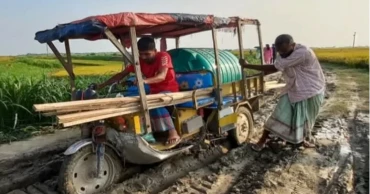
The approximately 2.5-kilometre road stretches from Gonaigati Kheaghat on the western bank of the Gohala River to Kumar Bridge on the Suja-Kaliakoir road. Once a key route for local people, it has now turned into a muddy, pothole-ridden track, causing immense hardship for thousands of residents.
Locals say the road has remained unrepaired for years despite repeated appeals to the authorities.
Even light rainfall leaves the road nearly impossible to traverse, as water accumulates in large potholes and muddy sections.
As the monsoon approaches, fears are growing that the situation will worsen further.
Students are among the worst sufferers. Local residents said many school and college students now need up to two and a half hours to travel a distance that would normally take around an hour.
“During the rainy season, it becomes almost impossible to walk on the road. Sometimes we have to take long detours to reach school,” said a local student.
Farmers are also paying a heavy price. The area is known for its agricultural production, but poor transport links make it difficult for growers to take paddy and other produce to nearby markets.
Auto-rickshaws and other small vehicles often get stuck in the mud, forcing passengers and drivers to push them through damaged sections. Minor accidents are also reported regularly.
Residents of villages including Kayemkhola, Kaliakoir, Shuja and Kaibartagati said the condition of the road has disrupted daily life and affected access to schools, markets and healthcare facilities.
“The suffering of farmers, students and ordinary people is endless. We have submitted applications several times, but no effective action has been taken,” said a local resident.
Many villagers expressed frustration that repair work has yet to begin despite the road's importance to the area's economy and daily life.
Ullapara Upazila Engineer M Shahidullah said several roads in the upazila have already been included in development projects under the Local Government Engineering Department (LGED).
“The Gonaigati Road will also be brought under a development project soon,” he said.
Sirajganj LGED Executive Engineer Rezaur Rahman said steps are already being taken to include the road in a development scheme.
He expressed hope that the project would be approved in the public interest, bringing long-awaited relief to thousands of residents who depend on the road every day.
Until then, however, people in the area remain stuck on a road that has become a symbol of neglect and an obstacle to daily life.
2 days ago
Govt eyes inflation relief, lower debt through sweeping reforms
The government has placed the restoration of macroeconomic stability at the centre of its economic recovery, restoration and reconstruction agenda, pledging a series of fiscal, monetary and institutional reforms aimed at curbing inflation, strengthening public finances and reducing debt dependence.
As per the budget document, the government acknowledged that persistently high inflation over the past several years has significantly eroded household purchasing power and weakened the country’s overall economic foundations.
Inflationary pressures have been driven not only by global factors but also by domestic challenges, including supply chain inefficiencies, market distortions, inadequate competition and various structural bottlenecks, it said.
To shield citizens from the impact of rising prices, the government said, it will focus on strengthening foreign exchange reserves, enhancing external sector resilience and ensuring greater stability in the foreign exchange market.
The document noted that Bangladesh’s import-dependent economy remains vulnerable to exchange rate fluctuations, with the depreciation of the Taka against major foreign currencies contributing significantly to domestic inflation.
The government also pledged to maintain close coordination between monetary and fiscal policies while ensuring adequate credit flows to productive sectors.
Efforts will be made to improve external balances through export growth, facilitation of remittance inflows and prudent management of non-essential imports.
Finance Ministry officials believe these measures, combined with improved expenditure efficiency and sound fiscal management, will help keep the budget deficit within sustainable limits, restore market confidence and create a more favourable environment for investment and production.
A major component of the government’s fiscal strategy is strengthening domestic resource mobilisation.
As part of an institutional reform initiative, the government has begun separating revenue policy formulation from revenue administration.
Under the new framework, tax policy will be developed through a dedicated system supported by professional expertise, evidence-based analysis and broad stakeholder consultations.
The government has also adopted a medium-term revenue strategy focused on broadening the tax base, improving compliance and enhancing transparency and efficiency in revenue administration.
Planned reforms include expanding the taxpayer base, digitising tax registration and return filing, strengthening monitoring systems, modernising VAT administration, improving withholding tax compliance and introducing risk-based audit mechanisms.
At the same time, taxpayer services will be expanded and procedures simplified to encourage voluntary compliance.
The budget also announced a comprehensive review of tax expenditures and exemptions to improve transparency, efficiency and accountability. Future tax incentives will be subject to stronger oversight and clearer justification.
According to the budget document, Bangladesh’s revenue-to-GDP ratio currently stands at around 8 percent, while the tax-to-GDP ratio is approximately 6.8 percent.
The government aims to raise these ratios to 11 percent and 9.6 percent, respectively, by fiscal year 2030-31 through a combination of policy and administrative reforms.
The budget document also highlighted growing concerns over public debt sustainability, attributing current pressures to large-scale borrowing undertaken for what it described as corruption-ridden and poorly planned “vanity projects” implemented during the previous regime.
The government said the resulting debt burden has placed considerable strain on the country’s fiscal position.
To address these challenges, the administration has set a target of improving Bangladesh’s debt risk rating from the current “moderate” category to a “low” risk category.
It plans to achieve this by enforcing stricter fiscal discipline, increasing revenue collection, maintaining sustainable budget deficits and modernising debt management practices.
The government further signalled a strategic shift away from what it termed a debt-driven growth model, emphasising the need to build a self-sustaining economy driven by production, employment generation and private sector investment.
“Policies will be pursued to systematically reduce debt dependence and promote investment-led growth as the foundation of sustainable economic progress,” the budget document stated.
3 days ago

Bangladesh prioritises energy security, domestic gas exploration in economic recovery roadmap
The government has identified energy security and infrastructure development as key pillars of its medium-term economic recovery strategy, placing particular emphasis on reducing external energy dependence and accelerating domestic gas exploration amid growing global uncertainties.
According to the national budget 2026-27 document, Bangladesh remains heavily reliant on imported energy resources, sourcing around 95 percent of its petroleum requirements, about 34 percent of its natural gas demand in the form of liquefied natural gas (LNG), and virtually all of its liquefied petroleum gas (LPG) needs from international markets.
A significant share of these imports originates from the Middle East, exposing the country to geopolitical risks and supply disruptions.
To strengthen energy security, the government has prioritised domestic gas exploration while pursuing measures to diversify energy sources and improve fuel supply reliability for industries, agriculture and households.
Efforts are also underway to enhance the efficiency of power generation, transmission and distribution systems, strengthen the LNG supply chain and expand related infrastructure to meet rising energy demand.
The government is encouraging greater adoption of renewable energy technologies and promoting energy-efficient practices across industrial, agricultural and residential sectors.
Public-private partnerships (PPPs) are expected to play a key role in mobilising investment in energy and infrastructure, supporting economic activities, job creation and long-term growth.
Bangladesh’s growing economy, expanding industrial base and rapid urbanisation continue to drive higher demand for electricity and energy.
According to the Bangladesh Power Development Board (BPDB), the country’s installed power generation capacity stood at 28,919 MW in January 2026, while the highest electricity demand served reached 16,794 MW in July 2025.
The national grid receives electricity from natural gas, coal, furnace oil, diesel, hydropower, renewable sources and imports from neighbouring countries, including India and Nepal. Natural gas remains the dominant fuel in the power sector, although declining domestic reserves have increased dependence on imported fuels.
Electricity generated by public and private power plants is transmitted through the national grid operated by the Power Grid Company of Bangladesh (PGCB) and coordinated by the National Load Dispatch Centre (NLDC) to maintain system stability and balance supply with demand. Cross-border power imports currently contribute nearly 2,700 MW to the national system.
According to government estimates, primary energy imports now account for around 62.5 percent of Bangladesh’s overall energy mix.
Rising international fuel prices have significantly increased power generation costs, highlighting the need for greater domestic energy production and diversification.
The government has also outlined a long-term strategy to develop a secure, efficient and environmentally sustainable energy system.
The plan includes expanding solar, wind and other clean energy sources, modernising the national power grid through smart technologies and advanced energy management systems, and strengthening infrastructure resilience against global market volatility and climate-related challenges.
Officials believe that the combined focus on domestic resource development, renewable energy expansion, infrastructure modernisation and private investment will enhance national energy security and create a more favourable environment for sustainable economic growth in the coming years.
4 days ago

Budget 2026-27: Economists urge focus on recovery over expansion
As Finance Minister Amir Khosru Mahmud Chowdhury prepares to place a Tk 9.38 lakh crore budget for FY2026-27 before parliament on Thursday, a number of economists and financial sector experts are urging the government to prioritise economic stabilisation and recovery over ambitious growth targets, arguing that recovery must come before expansion.
Bangladesh's economy is navigating a difficult stretch marked by high inflation, a stressed banking sector, sluggish private investment, and the lingering damage of financial mismanagement and malpractices under the previous Awami League government. Nearly 500 factories shut down during the interim administration, and foreign investment has remained sluggish.
Distinguished Fellow at leading think tank Centre for Policy Dialogue, Dr Mustafizur Rahman, told UNB the budget must address structural weaknesses before chasing growth figures. “Bangladesh's economy has reached a point where stabilisation must come before growth. To stabilise the economy, we need to rethink the banking system, investment infrastructure, and port management. The budget must also lay out a roadmap for the post-LDC graduation era.”
The World Bank and IMF, in their 2026 assessments on Bangladesh, identified high inflation, weak revenue mobilisation, a distressed banking sector, and volatile private investment as the country's primary economic risks, and called for a long-term structural reform plan.
Professor of Economics at the University of Dhaka Rumana Haq warned that flagship social protection programmes, including the government's proposed family card and farmer card schemes cannot succeed without fiscal stability. “These programmes require substantial funding. Without economic stability and good governance, the intended beneficiaries simply won't benefit.”
To finance the budget deficit, the government plans to borrow nearly Tk 2.5 lakh crore, of which around Tk 1.35 lakh crore will come from domestic banks, a heavy reliance that worries financial sector experts.
Chairman of the Investment Corporation of Bangladesh Professor Abu Ahmed stressed the need to develop alternative financing channels. “Without strengthening the equity market and bond market, the budget will not deliver results. The government must pursue asset securitisation and seriously examine why major companies are struggling, or choosing not to do business in Bangladesh.”
The BNP government has set a target of transforming Bangladesh into a $1 trillion economy by 2034. Experts believe this budget should lay the first concrete roadmap toward that goal, but warn the target is unreachable without reducing interest rates and unlocking private sector potential.
Prof Shahidul Islam Zahid, chairman of the Department of Banking and Insurance at DU, said at least 7 percent annual GDP growth is needed to reach the 2034 target of a trillion dollar economy. “With lending rates currently at 15 percent, investment simply won't come. Without investment and private sector engagement, the target is a distant dream. The government must first stabilise the economy and bring interest rates back to a normal level.”
Khondoker Sakhawat Ali, Emeritus Fellow at Unnayan Samonnay, pointed to a deeper crisis: the collapse of public confidence in financial institutions. “Billions have been looted from banks. Every taka belongs to this country's taxpayers. Depositors who cannot access their own money have lost faith in the entire banking system. There is no more alarming signal for an economy than that.”
The economists UNB spoke to for this report broadly agree: the FY2026-27 budget should abandon overambitious projections and focus squarely on pulling the economy back from the brink. A recovery-focused budget this year, they believe, can set the stage for a growth-oriented one next year.
7 days ago