Foreign-Affairs
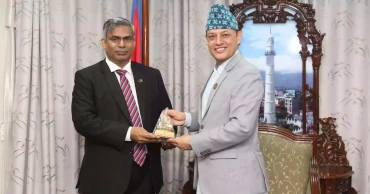
Nepal Speaker calls for greater regional cooperation to tackle climate risks
Acknowledging common risks posed by climate change and environmental challenges, Speaker of the House of Representatives of Nepal Dol Prasad Aryal on Wednesday said environmental risks affecting the Himalayan region and coastal areas are shared concerns for the region and called for greater cooperation in mitigating them.
The Nepalese Speaker appreciated Bangladesh’s remarkable gains in economic growth and infrastructure development noting that Bangladesh’s development experiences could contribute to Nepal’s own development journey.
He made the remarks when Bangladesh Ambassador to Nepal Md Shafiqur Rahman met him at his office in Kathmandu.
The Speaker said the growing role of sports in bringing the peoples of the two countries closer together by fostering friendship and understanding among the youth.
He further emphasized the importance of tourism, cultural exchanges, and people-to-people contacts in strengthening bilateral relations.
Ambassador Shafiqur congratulated the Speaker on assuming his new role and conveyed warm greetings from the Speaker of Parliament of Bangladesh.
He also thanked the Speaker for Nepal’s support to Bangladesh’s Foreign Minister Dr Khalilur Rahman who has recently been elected President of the UN General Assembly’s 81st session.
3 hours ago
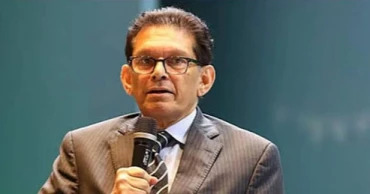
Regularisation of undocumented Bangladeshis depends on host country’s laws: FM
Foreign Minister Dr Khalilur Rahman on Wednesday said the government is maintaining diplomatic engagement with countries hosting undocumented Bangladeshi migrants to expand opportunities for their regularisation stressing that the issue ultimately depends on the laws and policies of the respective host states.
Responding to a starred question from ruling party lawmaker Md Jahandar Ali Miah (Madaripur-3) in Parliament, he said Bangladeshi expatriates are making an outstanding contribution to national development and remain a key driving force behind the country's economic progress.
The Minister said the present government attaches the highest importance to the welfare, rights and dignity of Bangladeshi nationals living overseas.
He said Bangladesh continues diplomatic contacts and discussions at various levels with countries where Bangladeshi nationals are residing or working without proper documentation.
"Within the framework of the laws and regulations of those countries, we are pursuing diplomatic engagement so that opportunities for regularisation can be expanded for eligible and employed Bangladeshi nationals," he told Parliament.
Dr Rahman said Bangladeshi missions abroad are actively providing consular support and facilitating participation in regularisation and amnesty programmes announced by host countries.
"Whenever a country announces an amnesty or regularisation programme for irregular migrants, our embassies provide necessary information, guidance and overall assistance to undocumented Bangladeshis residing there," he said.
Referring to recent developments in Europe, he said the initiative of Spain to legalise nearly 500,000 undocumented migrants could benefit around 20,000 Bangladeshis.
"As you are aware, the Spanish government has undertaken an initiative to grant legal status to approximately 500,000 irregular migrants. As a result, an estimated 20,000 Bangladeshi citizens are expected to gain opportunities for legal residence and employment," he said.
However, the Minister emphasised that the regularisation of undocumented migrants remains a sovereign decision of the host country.
"The legalisation of irregular migrants residing in a foreign state primarily depends on that country's own laws, policies and decisions. Therefore, despite all efforts and goodwill on the part of the Government of Bangladesh and its embassies, regularisation cannot be guaranteed through unilateral initiatives by Bangladesh alone," he said.
"Irregular migration often exposes our citizens to human trafficking, labour exploitation, legal complications and other risks. For this reason, the government gives the highest priority to legal, safe and orderly migration," he said.
Dr Rahman said Bangladesh is working to preserve existing labour markets and open new ones through bilateral and multilateral engagements with countries in Europe, East Asia, Africa and South America.
He informed the House that memorandums of understanding are currently being processed with Cambodia, Thailand, Malta, Mauritius, Spain, Serbia, Russia, Turkey, Fiji, Albania, Austria and Bosnia and Herzegovina.
Discussions are also underway with Guyana regarding the recruitment of healthcare workers, he added.
Dr Rahman underscored skills development as the cornerstone of labour market expansion.
"The government considers skills development to be the foundation for expanding overseas employment opportunities," he said, adding that special emphasis is being placed on international-standard technical training, language education, skills certification and workforce preparation based on global market demand.
He noted that skills development programmes have already begun under the European Union Talent Partnership initiative, while free Japanese language training has been introduced at Technical Training Centres (TTCs) across Bangladesh.
The Minister also highlighted a memorandum of understanding signed between Bangladesh and the Philippines on April 1, 2026, covering nursing training and cooperation in the health sector.
In addition, he said, Australia has recently launched a six-million-dollar project to enhance the skills of Bangladeshi workers by drawing on Australia's TAFE and TVET experience.
"We believe that every Bangladeshi working abroad is a valuable national asset and an important partner in our economic progress. But irregular migration is harmful both to the migrant and to the country's reputation," he said.
"To prevent irregular migration from the outset, we are working with the International Organization for Migration and also engaging bilaterally with various countries," he added.
4 hours ago
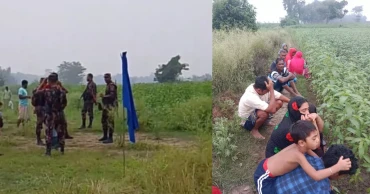
India should stop unlawfully expelling Bengali Muslims to Bangladesh: HRW
Urging India to stop brutal expulsions, the Human Rights Watch (HRW) on Wednesday said both Bangladesh and Indian governments should ensure that border management never again comes at the cost of basic human dignity.
The New York-based rights body said the Indian authorities are forcibly expelling ‘ethnic Bengali residents, mostly Muslims’ from West Bengal state, to Bangladesh without basic due process.
“No one, whatever their nationality, should be left to spend nights in an open field between two lines of armed border guards,” said Meenakshi Ganguly, deputy Asia director at Human Rights Watch.
Ganguly said the Indian authorities are cruelly dumping families into Bangladesh or leaving them stranded at the border, ignoring their basic human rights.
“The government (of India) should stop unlawfully expelling people, ensure procedural safeguards, engage with Bangladeshi authorities to verify citizenship, and end this dismaying animosity toward Muslims.”
Bangladeshi border guards have reported that since June 1, 2026, they have foiled 21 attempts by the BSF to push more than 200 people, including children, into Bangladesh’s border districts.
The chief minister of India’s West Bengal state, Suvendu Adhikari, who took office after the Hindu-majoritarian Bharatiya Janata Party (BJP) won the March elections, said that the government under his “detect, delete and deport” policy had detained hundreds of “Bangladeshi infiltrators” and forced nearly 5,000 people “to go back.”
The Human Rights Watch interviewed nine people who witnessed Indian border security troops bring groups of people to the border at night and push them through cuts in the barbed wire fencing into Bangladeshi territory.
In several cases, Indian border guards eventually allowed people to return after the Bangladesh border force denied them entry, it said in a statement.
Just ahead of March elections in West Bengal, India’s election commission had carried out a hurried and controversial revision of voter lists that dropped over nine million names, triggering threats of detention and deportation, said HRW.
A flawed and discriminatory citizenship verification process in Assam state in 2019 had already left over 1.9 million people stateless and thousands of Bengali-speaking residents of the state have been held in detention centers, while many were expelled unlawfully.
The BJP chief minister in Assam, Himanta Biswa Sarma, has repeatedly lashed out at Bengali-speaking Muslims in the state, calling them “illegal immigrants.” Recently he said: “We take them to a convenient location near the border, and literally push them across the border. Now, such an atmosphere has been created in Assam that several illegal Bangladeshis have started going back on their own.”
Indian officials contend that numerous Bangladeshis are living in India illegally and have offered to help them return voluntarily.
Genuinely voluntary repatriation, including with assistance, is compatible with international human rights standards, but India should not coerce repatriation or forcibly expel people, the HRW said.
“Nor should they, as some of those interviewed allege, strip them of documentation, money, and personal belongings.”
Bangladeshi authorities have said they will not accept people pushed across the border outside legal channels, insisting that any returns must follow proper verification and established repatriation procedures, according to the HRW.
Leaving people without food, water, shelter, or medical care may amount to cruel, inhuman, or degrading treatment, it said.
The Indian government should ensure access to fundamental procedural safeguards for anyone subject to expulsion.
This includes access to full information about the grounds for deportation, the right to legal representation, and an opportunity to appeal a decision to expel them.
Expelling or stranding children violates the Convention on the Rights of the Child, which obligates states to respect children’s right to preserve their nationality and prohibits their arbitrary deprivation of liberty.
India and Bangladesh have bilateral mechanisms that provide for verification of nationality and orderly transfer of nationals.
Indian authorities’ circumvention of these procedures has repeatedly left people trapped between two border forces in conditions that violate their fundamental rights, Human Rights Watch said.
5 hours ago

Korea keen to invest in Bangladesh’s electronics manufacturing and technology sectors
Appreciating Bangladesh's rapid economic growth and investment-friendly environment, South Korean Ambassador Kim Ji-joon on Wednesday expressed his country's interest in investing in Bangladesh's electronics manufacturing and technology sectors.
He also highlighted South Korea's interest in expanding cooperation and investment in renewable energy, information technology, manufacturing, and other promising sectors.
The Ambassador discussed the issues during a meeting with the Prime Minister's Foreign Affairs Adviser Humaiun Kobir at the Prime Minister's Office in Tejgaon.
During the meeting, the two sides discussed ways to further strengthen the longstanding friendly relations and enhance bilateral cooperation between Bangladesh and South Korea.
The Ministry of Foreign Affairs said both sides emphasised the importance of deepening collaboration in trade, investment, technology, industrialization, infrastructure development, human resource development, and skills enhancement.
Humaiun Kobir praised the growing economic and development partnership between Bangladesh and South Korea and underscored the need to boost trade and investment, facilitate technology transfer, and further strengthen industrial cooperation.
He welcomed increased South Korean investment in Bangladesh and assured the government's full support in facilitating such initiatives.
Both sides reaffirmed their commitment to maintaining close cooperation on issues of mutual interest and expressed optimism about elevating Bangladesh-South Korea relations to new heights.
6 hours ago
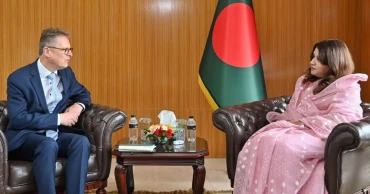
Germany, Europe willing to engage more with Bangladesh: German foreign ministry official
Director General for Asia and the Pacific at Federal Foreign Office of Germany Frank Hartmann has said Germany and Europe are willing and eager to engage more with Bangladesh and get to know the country better.
“To that end, I would like to invite our Bangladeshi counterparts to come visit us in Germany,” he said reflecting on his recent visit to Bangladesh.
With a packed two-day itinerary, Hartmann and Head of the South Asia Division Steffen Koch engaged with representatives from the government of Bangladesh, civil society organisations, the private sector, diplomatic missions and more, said the German Embassy in Dhaka on Tuesday.
The two senior officials from Germany’s Federal Foreign Office (FFO) visited Bangladesh from June 9 to 11.
“This is my first visit to Bangladesh. I had very good talks to political and economic leaders here, as well as civil society organizations. Bangladesh has gone through a difficult political transition in recent years, but it led to a successful outcome of a new democratically elected government,” Hartmann said.
“Visits like these open doors for deepened collaboration between Germany and Bangladesh,” said German Ambassador to Bangladesh Dr Rüdiger Lotz.
“It was an honour to host Hartmann and Koch and accompany them on their engagements throughout this trip. I hope Bangladesh’s beauty, hospitality and immense potential will inspire our guests from Berlin to visit again,” he said.
1 day ago
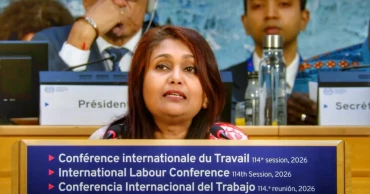
Without peace, there can be no social justice: Ambassador Nahida Sobhan
Bangladesh’s Ambassador and Permanent Representative in Geneva Nahida Sobhan, on Tuesday said Bangladesh remains proud to champion social justice, multilateralism, the democratization of global labour governance, and a ‘Culture of Peace’ within the United Nations system and beyond.
In a speech that resonated across the conference hall, Ambassador Sobhan reminded delegates that without peace, there can be no social justice.
“Peace remains the most fundamental precondition for decent work,” she said while speaking at the closing session of the 114th International Labour Conference (ILC).
The Ambassador spoke in her capacity as Vice-President of the Government Group of the Conference. The ILC is the world’s largest gathering focused on the world of work, bringing together more than 5,000 delegates from 187 countries.
She called for a more democratic and representative ILO, human-centred governance of artificial intelligence, greater focus on job creation and decent work, stronger support for developing and least-developed countries, and a global Culture of Peace among workers, employers, and governments.
Drawing inspiration from the Albert Thomas Monument in Geneva, she reminded the Conference that “labour is not a commodity.”
In one of the most memorable moments of the Conference, she highlighted a stark global paradox: “We spend more than USD 350 per person on guns and bullets, yet fail to provide even USD 2 a day to millions living in poverty or searching for work.”
Ambassador Sobhan has become the first Bangladeshi to be elected Vice-President of the International Labour Conference (ILC), representing the Government Group of the ILO’s Member States.
1 day ago
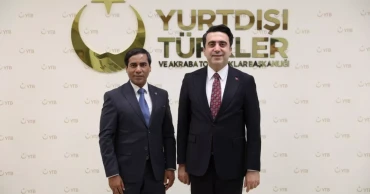
Türkiye reaffirms support for Bangladeshi youth through scholarships, leadership progs
President of the Presidency for Turks Abroad and Related Communities (YTB) Abdulhadi Turus has highlighted the huge potential of the youth in Bangladesh and reaffirmed YTB’s commitment to supporting Bangladeshi students and young professionals through scholarships, training, and leadership programmes.
Ambassador of Bangladesh to Türkiye Amanul Haq called on Abdulhadi Turus in Ankara on Monday when they discussed expanding cooperation in education, youth development, cultural exchange, and people-to-people connectivity.
Ambassador Haq appreciated YTB's continued support for Bangladeshi students and proposed increasing scholarship opportunities, as many Bangladeshi students are now interested in studying in Türkiye, and establishing a formal framework of cooperation through a memorandum of understanding, said the Bangladesh Embassy in Türkiye.
Both sides agreed to explore opportunities to deepen cooperation in areas of mutual interest.
The meeting wrapped up with a mutual pledge to further consolidate the age-old brotherly relations between Bangladesh and Türkiye.
1 day ago
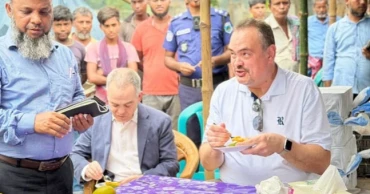
US Ambassador visits Rajshahi to taste famous mangoes
US Ambassador to Bangladesh Brent T. Christensen visited Rajshahi on Tuesday to experience the region’s renowned mangoes firsthand and learn about the district’s mango industry, agricultural potential and local development initiatives.
The ambassador, accompanied by a four-member delegation, arrived at Shah Makhdum Airport in Rajshahi on a US-Bangla Airlines flight from Dhaka’s Hazrat Shahjalal International Airport in the morning.
From the airport, the delegation travelled by road to the historic Baneshwar Mango Market in Puthia upazila before heading to the Bangladesh Police Academy.
At around 9 am, the US Ambassador visited Baneshwar Mango Market, one of the largest mango trading hubs in northern Bangladesh.
During the visit, the ambassador visited several wholesale outlets, exchanged views with mango growers and traders, and learned about different varieties of mangoes produced in the region.
He also sampled several locally grown mango varieties.
Traders and farmers briefed him on mango production, marketing and export prospects in Rajshahi.
Speaking to journalists, the US Ambassador said, “This is my first visit to Rajshahi as ambassador, although I visited the city once in 2020. This time, I specifically came during mango season because I wanted to taste Rajshahi’s famous mangoes. I am truly delighted to be here.”
The ambassador said he comes from an agricultural state in the United States and therefore values the opportunity to visit places where agricultural products are grown and to experience them firsthand.
Highlighting the export potential of Bangladeshi mangoes, he said Americans are very fond of mangoes, but most mangoes available in the US market are sold in frozen form.
“Fresh mangoes like those available in Rajshahi are not easily found in the United States,” he said.
He also stressed the importance of developing an improved cold-chain system and storage facilities to expand mango exports, saying enhanced preservation and export infrastructure could create greater opportunities for Bangladeshi mangoes in international markets.
Local traders and farmers expressed hope that the US ambassador’s visit would help promote Rajshahi mangoes globally and contribute to expanding their export market.
1 day ago
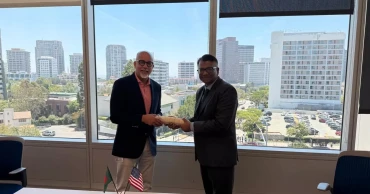
Bangladesh eyes stronger health sector ties with UCLA
Bangladesh Consul General in Los Angeles Kazi M. Jabed Iqbal has recently visited the University of California, Los Angeles (UCLA) and held a meeting with senior representatives of the David Geffen School of Medicine’s Global Health Program and the UCLA International Institute.
The discussions focused on exploring potential areas of collaboration between UCLA and relevant institutions in Bangladesh in healthcare, medical education, research, and capacity building.
Iqbal highlighted Bangladesh’s priorities in cancer management and research, child health and development, thalassemia prevention and treatment, medical technology transfer, research development, and professional training for healthcare professionals.
The UCLA team shared insights into their global health initiatives, emphasizing capacity building, academic exchanges, evidence-based research, and long-term institutional partnerships.
Both sides expressed strong interest in developing collaborative programmes that could contribute to strengthening Bangladesh’s healthcare sector and research capabilities.
The meeting ended on a positive note, with discussions on future exchange visits, faculty engagement, joint research initiatives, and the potential development of formal institutional partnerships.
Iqbal expressed appreciation for the warm hospitality extended by Dr. Sadath Sayeed, Director of the Global Health Program; Zoe Stathopoulos, Director of Operations; Kathryn Paul, Assistant Vice Provost and Director for International Collaborations; and Kevan Wilbanks, Special Assistant to the Vice Provost.
The visit marks an encouraging step towards enhancing Bangladesh-UCLA cooperation in health and medical sciences and reflects a shared commitment to advancing healthcare through international collaboration, said the Bangladesh Mission in a media release.
1 day ago
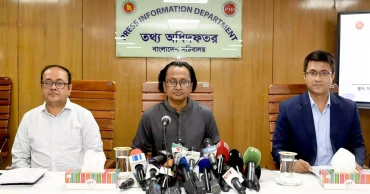
Returned from India as an instant protest: Adviser Zahed
Prime Minister’s Adviser on Policy and Strategy Affairs Dr Zahed Ur Rahman on Tuesday said he decided to return home from New Delhi as an instant protest, stressing that this is a government with an overwhelming majority and popular mandate, not the Sheikh Hasina government.
“I did not go there as an individual; I went as a representative of the government. Therefore, what happened to me there required an instant protest…. just to give a message that I was maltreated and was not treated appropriately. That is why I decided to return,” he told reporters at a press conference at the Press Information Department (PID) conference room at the Secretariat.
He said that after a certain point, the Indian authorities made repeated efforts sincerely to persuade him to enter the country and continue with his scheduled engagements.
“As the Prime Minister’s adviser, I felt that there should be a clear signature or position from the state or the government regarding the incident,” he added.
Friends May Change, Neighbours Do Not
The adviser said he does not believe the incident will have any impact on future Dhaka-Delhi engagement.
“I want to engage with India. There is an opportunity to improve relations in trade and commerce on the basis of equality,” he said.
The adviser said one can change a friend but cannot change his or her neighbour, and it is true for both Bangladesh and India.
Stating that it is not the intention to create any negative situation through this incident, the adviser said he hopes the incident will not affect future engagement between the two countries.
In response to a question on whether he would visit India in the future, he said, “I will definitely go. I am making this very clear: if I receive a proper invitation, I will definitely go. I want to engage with India logically and rationally.”
“When I talk about engaging with India, some people think that I am going to sell out the country. This government will never have relations with India by selling out Bangladesh. First of all, we are saying - Bangladesh First,” he added.
Dr Zahed also said Bangladesh continues to maintain important cooperation with India on water-sharing and regional issues, including the Ganges Water Treaty, the Teesta agreement, and other transboundary river discussions.
The adviser also appreciated the efforts of Bangladesh High Commissioner to India, M. Riaz Hamidullah, who, according to him, did his utmost to resolve the matter.
“I never intended for this to create any kind of reciprocal negative situation. I felt that a message needed to be conveyed to everyone in this country and outside the country, which is that this is not the Sheikh Hasina government. This is a government with a popular mandate.”
The adviser said a government with a popular mandate must operate both inside and outside the country with that in mind. “At the same time, others must also take that into cognizance.”
Bangladesh has a clear policy in its future engagements not only with India but with any other country, he said. “We do not want any kind of very bad situation with any country, let alone hostility.”
Not Carrying Diplomatic Passport Isn’t An Issue
He dismissed claims that the issue was related to holding a diplomatic passport, saying such a document is optional and not mandatory for foreign travel.
“There is no specific reason (for not availing of a diplomatic passport),” the adviser said, indicating that the issue of a diplomatic passport is not relevant in this case.
He said a SAARC sticker was attached to his passport, which was supposed to be effective in the same way as a diplomatic passport in such situations. “So, it is not a reason at all.”
“If I do not avail of a diplomatic passport, does that mean I cannot travel abroad? Holding a diplomatic passport is not mandatory. It is a privilege that I can avail of. It is not that I must hold or use a diplomatic passport,” the adviser said.
Bangladesh had informed the Indian Ministry of External Affairs about Dr Zahed’s visit to Delhi at least two days in advance. Despite this, he was kept waiting for two hours at Delhi’s Indira Gandhi International Airport.
After landing at the airport, he was received by Bangladesh High Commissioner in Delhi M Riaz Hamidullah and taken to the immigration desk.
The adviser was scheduled to attend the 28th meeting of the Committee of Senior Officials (CSO) of the Indian Ocean Rim Association (IORA). India hosted the meeting (June 15-16) in New Delhi.
The Ministry of Foreign Affairs on Monday summoned Indian Deputy High Commissioner and Chargé d’Affaires to Bangladesh Pawan Badhe and conveyed Dhaka’s displeasure to New Delhi regarding the incident involving PM’s Adviser Dr Zahed Ur Rahman at Delhi airport.
Earlier, Foreign Minister Dr Khalilur Rahman described the incident as “unexpected and unfortunate” and said the Ministry of Foreign Affairs is taking appropriate steps regarding the matter.
“It is an unexpected incident, unfortunate too,” he said while briefly talking to reporters at the Ministry of Foreign Affairs.
While responding to a question, State Minister for Foreign Affairs Shama Obaed Islam said the incident is certainly not “welcoming”, and they do not expect this kind of incident to happen.
“Our ministry is looking into this and communicating with India, and will certainly take action, if required, once the full details of the incident are known,” she said.
1 day ago