Others

BEELIA demands reclassification of elevators as capital machinery and rationalization of duties
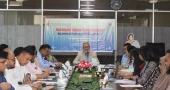
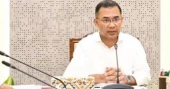
The Bangladesh Elevator, Escalator and Lift Importers Association (BEELIA) on Wednesday called upon the government to reclassify elevators and escalators as Capital Machinery and rationalize the existing duty structure to ensure sustainable growth of the country’s housing, industrial, and infrastructure sectors.
Speaking at a press conference held in the Dhaka Reporters Unity (DRU), BEELIA President Md. Shafiul Alam Uzzwal stated that elevators are no longer luxury items in the context of modern urbanization, high-rise construction, industrialization, and inclusive infrastructure development. Rather, they are essential capital equipment that support economic growth and public accessibility.
He noted that elevators were removed from the Capital Machinery category in 2023 and subsequently classified as commercial products. Since then, import duties have increased consecutively in the fiscal years 2024 and 2025. As a result, the total duty burden on elevator imports has risen from approximately 11% in FY2023 to nearly 46% in FY2025. This significant increase has raised construction costs across various sectors, particularly the housing industry, forcing many elevator companies to scale down operations and resulting in substantial job losses.
The recommendations were also presented during a press conference organized by the association, where industry leaders highlighted a number of challenges facing elevator importers, manufacturers, and consumers.
Among its key proposals, BEELIA urged the government to reclassify elevators and escalators as capital machinery, arguing that such a move would facilitate investment and help modernize the country's infrastructure.
The association also called for reducing the load factor value used in customs assessment from USD 3.00 per kilogram to USD 1.50 per kilogram, saying the current rate significantly increases import costs.
To protect legitimate businesses and ensure fair competition, BEELIA recommended stronger monitoring mechanisms to prevent the misuse of imported raw materials under the guise of local manufacturing.
The association further sought simplification and faster processing of port-level scaling, valuation, and customs clearance procedures, which it said would reduce delays and lower business costs.
Highlighting public safety concerns, BEELIA stressed the need for reforms to the existing duty and tax structure to facilitate the import of internationally certified and safety-compliant elevators.
The organization also called for a rationalization of duties and taxes to discourage the growing use of low-quality and reconditioned elevators, warning that such equipment poses significant risks to public safety.
REHAB Senior Vice President Abdur Razzaq highlighted the importance of government support for the elevator sector in the interest of planned urbanization, smart city development, and safe infrastructure growth.
Other speakers at the press conference included BEELIA general secretary Eadul Haque, BEELIA Advisor Emdad Ur Rahman, vice president of BEELIA Asim Sarkar, director of BEELIA Mohammad Zakirul Haque, and BEELIA Chattogram Representative Yusuf Nobi.
1 hour ago
Allocation for defense, agriculture should be increased in budget: Speakers
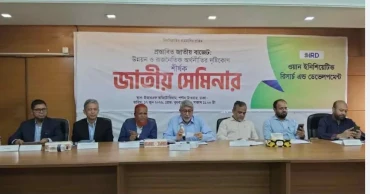
Security and financial experts at a seminar today emphasized that budgetary allocations for the country's defense and agricultural sectors must be increased substantially to ensure national sovereignty and long-term economic resilience.
They expressed deep concern that despite an overall 17 to 18 percent increase in the proposed national budget, the core farming sector saw an increase of only 6 percent, which they termed highly insufficient for the country’s food security.
The remarks were made during a seminar organized by the Organization for International Relations and Development (OIRD). The session was presided over by OIRD Chairman and Vice-Chancellor of Manarat International University, Professor Dr. Mohammad Abdur Rob.
Speaking at the event as a key discussant, security analyst Dr. Md. Mizanur Rahman criticized the country's current foreign policy and defense framework, describing them as structurally weak.
He strongly urged the government to significantly expand its military and defensive capabilities to navigate escalating regional and global geopolitical shifts.
Turning to the farming economy, Dr. Rahman alleged that a major portion of the Tk 17,000 to Tk 18,000 crore subsidy allocated for the agricultural sector is routinely siphoned off by middlemen.
"The ordinary grassroots farmers receive only a negligible fraction of the state subsidy. A radical structural overhaul is needed to ensure that state assistance directly reaches the actual producers," he pointed out.
Presenting the keynote paper at the seminar, prominent economist and Associate Professor of the Bangladesh Institute of Governance and Management (BIGM), Dr. Zubayer Ahmed, raised serious questions regarding the feasibility of the fiscal milestones set in the proposed budget.
Dr. Ahmed argued that the targets are heavily detached from the country's real macroeconomic ground realities. "While the country's actual GDP growth rate currently stands at 4.14 percent, the government has set an overly ambitious GDP growth target of 6.5 percent for the upcoming fiscal year," he stated.
The economist further noted that the revenue collection target for the National Board of Revenue (NBR) has been elevated by nearly 47 percent compared to the previous year. He cautioned that the historic gap between target setting and actual revenue realization has been steadily widening every year due to limited structural enforcement capacity.
Other speakers at the seminar urged the government to review the allocations for both defense equipment modernization and grassroots agricultural development before passing the Finance Bill in Parliament, describing them as the twin pillars of national security and survival.
2 hours ago
NGO Affairs Bureau Office declared tobacco-free to protect public health
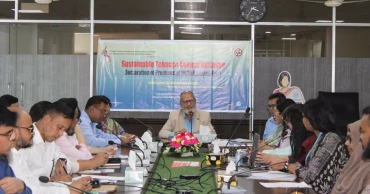
The NGO Affairs Bureau has officially declared its office premises a completely smoke and tobacco-free zone in accordance with national guidelines to safeguard public health and protect non-smokers from the harmful effects of second-hand smoke.
The declaration was made on Wednesday (17 June) by Dr. Mohammed Jakaria, Director General of the NGO Affairs Bureau, during an event titled “Sustainable Tobacco Control Initiative: Declaration of Premise of NGO Affairs Bureau Tobacco-Free” held at the Bureau’s meeting room.
Under the declaration, the sale, purchase, and use of all tobacco products within the NGO Affairs Bureau premises are strictly prohibited. This measure aims to ensure that employees and visitors are protected from the harmful effects of second-hand smoke.
The Director General further stated that all activities within the office will be conducted in compliance with national tobacco control guidelines, maintaining a completely smoke and tobacco-free environment.
During the event, it was highlighted that Bangladesh remains one of the largest consumers of tobacco in the world. Among South Asian countries, Bangladesh has the highest tobacco use prevalence at 35.3 percent, compared to 28.6 percent in India and 19.1 percent in Pakistan.
According to the Global Adult Tobacco Survey (GATS) 2017, approximately 37.8 million adults in Bangladesh currently use tobacco. Data from the Tobacco Atlas 2025 indicate that nearly 200,000 people die each year in Bangladesh from tobacco-related diseases, while several hundred thousand more suffer from disability and illness.
Recent research conducted by the Health Economics Institute of the University of Dhaka found that tobacco tax revenue amounted to approximately BDT 41,000 crore during the 2024–25 fiscal year. In contrast, the economic cost of tobacco-related deaths, health damage, and environmental degradation reached nearly BDT 87,000 crore—more than double the revenue generated. Overall, tobacco use continues to pose a growing threat to public health, the economy, and the environment in Bangladesh.
Bangladesh became a signatory to the World Health Organization’s Framework Convention on Tobacco Control (WHO FCTC) in 2003. Building upon this commitment, the Smoking and Tobacco Products Usage (Control) (Amendment) Act, 2026 was enacted. Key provisions of the law include the prohibition of smoking and tobacco use in all public places and both motorized and non-motorized public transport; the prohibition of designated smoking areas (DSAs) in public places and public transport.
In this context, the NGO Affairs Bureau office has been declared a completely smoke and tobacco-free zone to protect public health and shield non-smokers from the harmful effects of second-hand smoke.
As Chief Guest, Dr. Mohammed Jakaria stated: “Smoking harms not only smokers but also non-smokers who are exposed to second-hand smoke. Ensuring a tobacco-free environment is essential for protecting public health."
Speaking as special guest, Shivani Bhattacharya, Convener of the Anti-Tobacco Mothers’ Forum, said: “it is undoubtedly a far-sighted and public health-friendly initiative. Through this declaration, the Bureau has not only taken an administrative decision but has also demonstrated its strong commitment to health protection and tobacco control.”
Co-Convener of the Anti-Tobacco Teachers’ Forum Tanushree Haldar said the NGO Affairs Bureau will serve as a model and inspiration for other public and private institutions across the country."Declaring workplaces smoke and tobacco-free will not only ensure a healthier and safer environment but will also strengthen the government’s ongoing tobacco control efforts," he said
Expressing gratitude to the NGO Affairs Bureau authorities, Executive Director of Nari Maitree and Chair of the event Shaheen Akter Dolly that the initiative by the NGO Affairs Bureau is a highly positive and significant step toward tobacco control.
"However, it should not remain merely a declaration. Its effective implementation requires the collective efforts of all officers and staff of the Bureau. I believe that commitment already exists among everyone in this office,” she said.
The event was also attended by Barrister Md. Khalilur Rahman Khan, NDC, Director (Joint Secretary) of the NGO Affairs Bureau, officials from various departments of the Bureau, and members of the Anti-Tobacco Mothers’, Teachers’, and Youth Forums. All participants emphasized the importance of maintaining a tobacco-free workplace and welcomed the initiative.
2 hours ago

2,369 people pushed into Bangladesh by BSF since Aug, 2024: Home Minister
Home Minister Salahuddin Ahmed on Wednesday told Parliament that among 2,369 people, pushed into Bangladesh by Indian BSF since August 5, 2024, 2,175 were handed over to respective police stations, 11 were returned to the BSF and 183 were pushed back through border.
Replying to a starred question from lawmaker Mohammad Abdul Malik (Sylhet-3), he also said the Border Guard Bangladesh (BGB) has thwarted 36 attempted push-ins by the BSF following the West Bengal Assembly elections in India.
Responding to a question from MP Shamsur Rahman Shimul Biswas (Pabna-5), the Minister said initiatives have been taken to construct barbed-wire fencing along the Myanmar border to strengthen security and curb border killings, illegal infiltration, drug trafficking, arms smuggling and other transnational crimes.
He said fencing at sensitive points along the Bangladesh-India border is currently under consideration.
Answering a question from reserved-seat MP Nipun Roy Chowdhury, Salahuddin said smuggled goods worth Tk 19.79 billion have been seized from June 2025 to May 2026.
During the period, the BGB conducted 375,519 drives along border areas and recovered 18.38 million Yaba pills, 55,908 bottles of Phensidyl, 18,463 kilograms of cannabis and 106,709 bottles of foreign liquor.
The force also seized 15.577 kilograms of crystal methamphetamine, commonly known as Ice, 2.08 kilograms of cocaine and 62 bottles of LSD. A total of 2,189 suspects were arrested during the drives, he added.
In response to a question from MP Sheikh Mujibur Rahman Iqbal (Kishoreganj-5), the Minister said the Department of Narcotics Control conducted 30,744 anti-drug operations nationwide between February 17 and May 31, filed 9,251 cases and arrested 9,685 drug traffickers.
He said a nationwide special operation against drugs and terrorism has been underway since May 1 following the government directives.
Up to June 8, law enforcement agencies have arrested 10,865 people in 7,688 drug-related cases and recovered large quantities of narcotics.
The operation also led to the recovery of 125 illegal firearms and the arrest of 269 people in connection with arms-related offences, he added.
Replying to a question from MP A E Sultan Mahmud (Jamalpur-2), Salahuddin said Dhaka Metropolitan Police (DMP) has taken various measures to curb juvenile gang activities and ensure public safety in the capital.
He said the DMP's cyber unit has been monitoring Facebook pages, secret groups and TikTok accounts operated by juvenile gangs.
The Minister also informed Parliament that Rapid Action Battalion (RAB)-2 has conducted 119 anti-mugging drives in Mohammadpur since August 5, 2024 and arrested 252 suspected muggers.
Responding to a question from MP Abul Hasnat (Cumilla-4), Salahuddin said the country's 75 prisons have an approved capacity of 45,136 inmates, including 43,107 men and 2,029 women.
However, the current prison population stands at 77,040, comprising 74,963 men and 2,077 women, which is about 1.7 times more than the authorised capacity.
In reply to a question from reserved-seat MP Selina Sultana, he said prisoners receive 50 per cent of the profits generated from the sale of goods produced inside prisons.
Answering a question from reserved-seat MP Arifa Sultana, the Minister said the government, along with the Bangladesh Police, the Bangladesh Telecommunication Regulatory Commission, intelligence agencies and other relevant organisations, is working to block online gambling and betting platforms and protect the public, particularly young people, from their harmful effects.
He said the government has initiated the process of enacting a new law titled the Gambling Prevention Act 2026, replacing the century-old Public Gambling Act of 1867, to curb the spread of online gambling, betting apps and websites across the country.
3 hours ago
Ex-minister’s former Facebook page admin arrested over fraud network
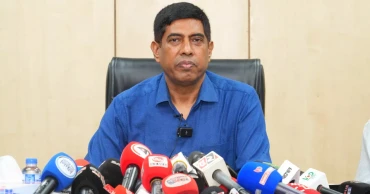
Detectives have arrested a man accused of defrauding multiple people by promising overseas investment opportunities and using purported political connections to gain their trust.
Police said they arrested Md Shishir Munna, 28, a former administrator of the Facebook pages of former Land Minister Narayan Chandra Chanda and former lawmaker Anupam Shahjahan Joy, in the capital early Wednesday on charges of fraud, forgery and embezzlement.
At a press briefing at the DMP Media Centre, Additional Commissioner Mohammad Shafiqul Islam said Munna had left Bangladesh after August 5, 2024, and travelled to Qatar.
After returning to the country in April 2025, he resumed fraudulent activities, he said.
Munna and his associates persuaded a businessman to invest in purported government projects in Qatar and collected Tk 11.27 lakh in several instalments.
They later provided the victim with a fake visa and a forged airline ticket.
When the businessman discovered the deception and demanded a refund, the accused allegedly delayed repayment and threatened him, police said.
A case was subsequently filed with Jatrabari Police Station on charges of fraud, forgery and misappropriation of funds.
The DB chief said that after the victim sought assistance from detectives, a team from the DB's Wari Division launched an investigation and identified 14 to 15 other victims.
Police said preliminary findings showed that Munna used to manage the Facebook pages of former minister Narayan Chandra Chanda and former MP Anupam Shahjahan Joy.
His responsibilities included producing campaign videos, managing social media publicity and conducting promotional activities.
He is wanted in another case and faces an arrest warrant issued by South Keraniganj Police Station, police said.
Responding to questions from journalists, Shafiqul Islam said Munna often claimed to have close ties with incumbent ministers and lawmakers. To bolster those claims, he used to invite victims to the South Plaza area of the Jatiya Sangsad Bhaban.
He added that four to five more individuals are believed to be involved in the fraud ring, including Munna’s sister, who is currently abroad and allegedly assisted the operation from outside the country.
Efforts are underway to identify and arrest the remaining suspects, police said.
4 hours ago
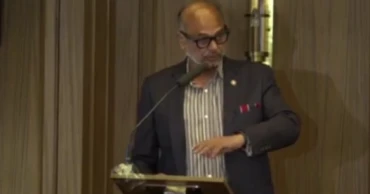
Titumir for three-tier revenue reform, warns of ADP operational spending imbalance
Prime Minister’s Adviser on Finance and Planning Rashed Al Mahmud Titumir on Wednesday said three major reform initiatives have been launched in the country’s revenue system, asserting that reducing tax evasion, tax exemptions and tax fraud will automatically boost revenue collection.
He made the remarks while addressing a dialogue on the proposed national budget for fiscal year 2026-27, jointly organised by the Metropolitan Chamber of Commerce and Industry (MCCI) and the Policy Research Institute (PRI) at the MCCI headquarters in Gulshan.
PRI Director Ahmad Ahsan presented the keynote paper titled "Macroeconomic Outlook and Budget Priorities: Stability as the Foundation for Restoring Growth" at the event. MCCI President Kamran T Rahman delivered the welcome address, while PRI Chairman Dr Zaidi Sattar and MCCI Vice President Habibullah N Karim also spoke.
Outlining the government's economic strategy, Titumir said Bangladesh is pursuing a three-phase recovery plan: Recovery, Restoration, and Reconstruction for Acceleration, with emphasis on consumption, investment, public expenditure and export diversification.
On fiscal reform, he said separate task forces are now operating in the income tax, customs and VAT sectors, each guided by monthly work plans and milestone targets, with progress reviewed every month.
The adviser acknowledged that revenue data presented in the past often did not reflect ground realities, and said efforts are underway to bring greater transparency to fiscal reporting.
He warned against the growing imbalance between operational and development spending, noting that while recurrent expenditure has been rising rapidly, the ADP or capital expenditure has not kept pace, a trend he described as a long-term challenge.
Criticising the slow pace of project implementation, Titumir said the country currently has around 1,300 projects at various stages of execution, some running for 12 to 14 years with multiple revisions.
He announced plans to introduce a dashboard-based real-time monitoring system for development projects and also emphasised implementing an open data policy, saying making BBS data and other institutional data publicly accessible will improve transparency in policymaking.
In his keynote presentation, Ahmad Ahsan described the FY27 budget as “ambitious, imaginative, and broadly inclusive”, essentially a budget for everybody, but raised significant concerns about the macroeconomic framework underpinning it.
He noted that the domestic economy is exhibiting stagflationary signs, with private investment growth turning sharply negative for the first time in decades, and warned that the current slowdown is not a one-year dip but “the latest, sharpest leg of a longer downturn.”
Ahmad Ahsan said the budget's revenue projections appear “out of norm,” noting that while the budget introduces several innovative tax policy measures, including mandatory TINs and BINs, turnover taxes for small businesses, quarterly e-VAT submissions and duty reductions on solar, EVs and semiconductors, it lacks high-impact reforms such as a unified VAT rate or a reduction in tax expenditures that could significantly improve compliance.
On foreign financing, he said the budget targets a gross external inflow of Tk 1,558 billion, some 89 percent above what FY26 actually delivered, calling the projection overly optimistic given fiscal stress in high-income countries and the FY26 pattern of significant underperformance against targets.
The PRI director urged the government to prepare a credible “Plan B”, a mid-term revised budget, with a clearly prioritised core expenditure package to be protected if revenues and foreign financing fall short.
The PRI paper flagged major unrecognised contingent liabilities in the energy and banking sectors. Ahmad Ahsan said the off-budget fuel import exposure through BPC and Petrobangla, estimated at around US$ 12 billion annually, remains entirely outside the fiscal framework.
On banking, he said the 2026 asset quality reviews put the true contingent liability at Tk 7.40 lakh crore, roughly 13.7 percent of GDP and about 18 times the Tk 40,000 crore allocated for bank recapitalisation this year, with no costed multi-year resolution framework in the budget.
Ahmad Ahsan also called for addressing Bangladesh’s persistent anti-export bias, particularly in light engineering, agro-processing, pharmaceuticals and leather goods, noting that the bias is worst exactly where diversification is most needed.
He drew comparisons with Vietnam's success in attracting export-oriented FDI as a model Bangladesh should emulate.
On public spending, the PRI director stressed the need to strengthen expenditure monitoring institutions, including giving the Implementation Monitoring and Evaluation Division (IMED) real enforcement powers, modernising BBS data systems, and cutting the roughly eight-month lag in monthly fiscal reporting to enable mid-year course correction.
He also proposed a public works programme targeting light infrastructure, upazila and rural roads, canal cleaning and sewage clearance to generate productive employment for several hundred thousand workdays while yielding strong economic returns.
4 hours ago
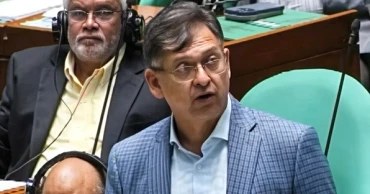
Govt reviewing proposal to cut passport fees for Bangladeshi expatriates: Salahuddin
The government is reviewing a proposal to reduce passport fees for Bangladeshis living abroad while continuing efforts to simplify passport services for migrant workers and expatriates, Home Minister Salahuddin Ahmed told Parliament on Wednesday.
Responding to a tabled starred question from ruling party lawmaker Khairul Kabir Khokon (Narsingdi-1), he said Bangladesh had a total of 25,433,063 active passport holders as of June 4, 2026.
Regarding passport services for migrant workers, Salahuddin said a proposal submitted by the Department of Immigration and Passports to lower passport fees for Bangladeshis residing in different countries is currently under review by the Ministry of Home Affairs.
He highlighted a number of initiatives already undertaken to make passport services more accessible for Bangladeshi expatriates.
The minister said arrangements have been made to process passport applications through Mobile Enrolment Kits (MEK) in remote areas under Bangladesh missions abroad, enabling Bangladeshis abroad to apply for passports conveniently.
He also said initiatives have been taken to provide passport services for expatriate workers through outsourcing companies engaged by Bangladesh missions overseas.
To ensure faster delivery, passports are being sent to Bangladeshi embassies and high commissions abroad through the international courier service FedEx, Salahuddin added.
He further informed the House that steps are underway to introduce home delivery services for passports through outsourcing companies, making passport collection easier for expatriates.
The minister also said the government has already introduced the issuance of 10-year passports for all Bangladeshi citizens aged 18 and above.
5 hours ago
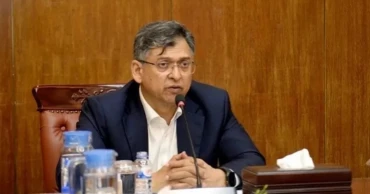
Killing by BSF extremely regrettable, clear violation of human rights: Salahuddin
Home Minister Salahuddin Ahmed on Wednesday described the killing of innocent Bangladeshi citizens by Indian Border Security Force (BSF) along the border as deeply unfortunate and a clear violation of human rights.
“The killing of innocent Bangladeshi nationals by the BSF is extremely regrettable and constitutes a clear violation of human rights,” he told Parliament.
Responding to a written question from ruling party MP Nilufar Chowdhury Moni (Women Seat-10), the Minister said Bangladesh has consistently protested the use of lethal weapons by the BSF along the border and has continued to press for accountability and compensation through diplomatic and bilateral engagements.
He said the issue has been raised strongly by Bangladesh during border conferences held between the chiefs of the Border Guard Bangladesh (BGB) and the BSF.
Salahuddin Ahmed said there has been no specific institutional discussion or formal agreement under which the Government of India directly provides financial assistance to the families of Bangladeshis killed in BSF firing incidents along the border.
However, he said Bangladesh has repeatedly voiced strong objections during bilateral meetings to the BSF’s practice of using lethal weapons under the pretext of self-defence.
Through these engagements, Bangladesh has also indirectly exerted pressure regarding compensation and accountability for such incidents.
Highlighting the outcomes of discussions between the two countries on border killings, the Minister said Bangladesh’s sustained diplomatic and strategic efforts have yielded some positive commitments from the Indian side.
Under continued pressure from Bangladesh, the BSF has on several occasions pledged to refrain from using lethal weapons and instead employ non-lethal means in managing border situations.
He also said that cooperation between the BGB and BSF has been strengthened to reduce border deaths and curb cross-border crimes.
As part of these efforts, night-time joint patrols have been increased in vulnerable and sensitive border areas to enhance surveillance and prevent untoward incidents.
The Minister further informed Parliament that mechanisms have been put in place to address any unexpected border incidents promptly through flag meetings at the company and battalion commander levels.
“Whenever any undesirable incident occurs along the border, local-level flag meetings between the respective commanders are convened swiftly to bring the situation under control and prevent escalation,” he said.
Bangladesh has long maintained that the use of deadly force against unarmed civilians along the border is unacceptable and has repeatedly called on India to adopt a policy of zero deaths at the frontier.
5 hours ago
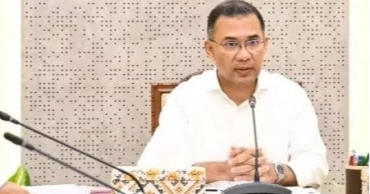
Govt plans to reduce Hajj package costs in future: PM
Prime Minister Tarique Rahman on Wednesday said the government will make all possible efforts to lower or rationalise the Hajj package prices for 2027 as part of its plan to develop an affordable Hajj system.
“The government has a plan to reduce the cost of Hajj in the future. In our election manifesto it has been pledged to develop an affordable, accessible, humane and expatriate-friendly Hajj system for religious citizens. State and diplomatic initiatives will be taken to reduce the cost of performing Hajj,” he said.
The Prime Minister made the remarks while replying to a starred question from opposition lawmaker Salah Uddin (Gazipur-4) in Parliament.
He said Hajj is managed through a bilateral arrangement between Saudi Arabia and Bangladesh government with expenses divided into two components.
Tarique Rahman said the three-fourths of the total cost is determined by the Saudi authorities, while the remaining one-fourth of the expenditure is incurred in Bangladesh, mainly covering airfares and other local expenses.
He said the minimum Hajj package for 2026 was fixed at Tk 467,167, including the cost of Qurbani.
Of the amount, Tk 300,797 was spent on the Saudi Arabia portion while the rest was spent in Bangladesh including Tk 154,830 for airfare.
The PM said the minimum Hajj package in 2025 was Tk 478,242, but it was reduced by Tk 11,075 for 2026, allowing pilgrims to benefit from the decrease.
“Considering the global situation and the expenses announced for the Saudi segment, the government will make every effort to reduce or rationalise the Hajj package prices for 2027 for the benefit of common religious Muslims,” he said.
5 hours ago

Purchase body clears proposals for Tk 704.7 cr fertiliser, sulphur imports
The Cabinet Committee on Government Purchase on Wednesday approved procurement proposals worth more than Tk 704.7 crore including the import of urea fertiliser and sulphur for the country's agricultural and industrial needs.
The decisions were taken at a meeting of the committee atSecretariat with Finance Minister Amir Khosru Mahmud Chowdhury in the chair.
Import of 40,000 metric tonnes of urea fertiliser through the Direct Procurement Method (DPM) at a cost of Tk 348.56 crore was among the proposals.
The proposal submitted by the Ministry of Industries involves the purchase of urea from UAE-based Delta Star Trading FZ-LLC through its local agent Ibedita Trading, Dhaka.
The per-metric-tonne price has been fixed at US$707.01.
The committee also recommended approval of another fertiliser import proposal under a government-to-government arrangement.
Under the proposal, 25,000 metric tonnes of bulk granular urea will be imported from Saudi Arabia's SABIC Agri-Nutrients Company .
The Ministry of Industries estimated the procurement cost at Tk 185.13 crore, with the fertiliser to be supplied at a price of US$600.83 per metric tonne.
The committee approved another proposal for importing 15,000 metric tonnes of rock sulphur/bright yellow sulphur for TSP Complex Limited (TSPCL) at a cost of Tk 171.01 crore.
The proposal was also submitted by the Ministry of Industries, with Seychelles-based M/s Fabsco Construction Limited selected as the supplier.
According to the proposal, the sulphur may be sourced from a range of internationally recognised producers and refiners, including Formosa Petrochemical Corporation of Taiwan, Turkmengas of Turkmenistan, Mongstad Refinery of Norway, ADNOC of the UAE, Duqm Refinery of Oman, SOMO of Iraq and Reliance Industries of India, among others.
6 hours ago