World
G7 leaders pledge more support for Ukraine: Zelenskyy
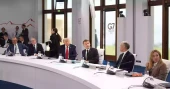
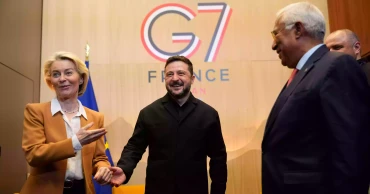
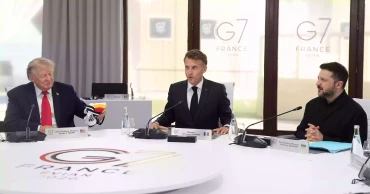
Ukrainian President Volodymyr Zelenskyy said Wednesday that Ukraine had secured important commitments from Group of Seven (G7) leaders for additional military, energy and economic support as the country continues to defend itself against Russia’s invasion.
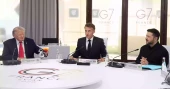
Following the G7 summit in Evian-les-Bains, France, Zelenskyy said world leaders agreed to strengthen Ukraine’s air defence capabilities, support its energy resilience and impose further sanctions on Russia.
“The G7 Summit in France delivered important results for Ukraine. Most importantly, we agreed on additional strengthening of Ukraine’s air defense,” Zelenskyy wrote on X.
He said Ukraine’s partners had pledged continued support for the country’s defence sector and energy infrastructure while also increasing pressure on Moscow through new sanctions.
French President Emmanuel Macron said the summit demonstrated what he described as an “unprecedented convergence” among G7 leaders, including US President Donald Trump, on maintaining support for Ukraine.
The summit came as Zelenskyy continues efforts to rally international backing and diplomatically isolate Russian President Vladimir Putin amid the war, which began with Russia’s full-scale invasion in 2022 and is now in its fifth year.
Zelenskyy is expected to attend a European Union summit in Brussels on Thursday. Earlier this week, Ukraine officially launched negotiations for membership in the EU, beginning a process that could take years to complete.
The ongoing conflict involving Iran has diverted some international attention from efforts to resolve the war in Ukraine. Against that backdrop, Zelenskyy sought to engage with Trump during the G7 gathering, where several key European leaders were also present.
According to observers, Putin has sought to sideline both Kyiv and European partners by pursuing direct discussions with Washington regarding the future of the conflict.
33 minutes ago
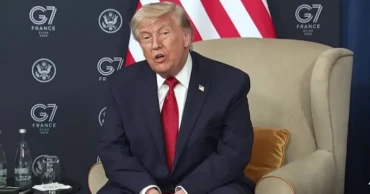
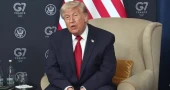
Trump warns of renewed bombing if Iran deal fails
US President Donald Trump said the proposed agreement with Iran remains unfinished and warned that military action could resume if Tehran fails to comply with its commitments.
Speaking during a meeting with Egyptian President Abdel Fattah al-Sisi on the sidelines of the G7 summit on Wednesday, Trump stressed that Washington retained the option of returning to military operations if the agreement proves unsatisfactory.
He also dismissed reports suggesting the United States would invest in Iran or support a reconstruction fund for Tehran as part of a broader settlement.
Earlier in the summit, Trump reiterated that Iran would not be allowed to obtain a nuclear weapon under any future agreement.
On regional security issues, the US president criticised Israeli Prime Minister Benjamin Netanyahu over the ongoing conflict in Lebanon, saying Israel needed to act more responsibly.
During a joint appearance with the Emir of Qatar, Trump said the fighting between Israel and the Iran-backed Hezbollah group had continued for too long and was causing excessive loss of life.
His remarks came as Israel and Hezbollah continued exchanging attacks despite the US-Iran agreement announced on Sunday night.
Turning to the war in Ukraine, Trump said he held a productive meeting with Ukrainian President Volodymyr Zelensky and renewed his call for Russia to reach a peace agreement.
He also indicated that additional sanctions targeting Russian oil exports could be imposed in the near future if efforts to end the conflict fail to progress.
The comments came as G7 leaders wrapped up discussions in France, with global security issues, including Iran, Ukraine and the Middle East, dominating the summit agenda.
Source: BBC
1 hour ago
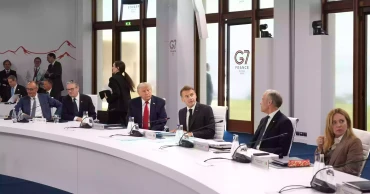
G7 leaders endorse Trump’s Iran deal, urge swift implementation
Leaders of the Group of Seven (G7) nations have voiced support for US President Donald Trump’s proposed agreement with Iran aimed at reopening the Strait of Hormuz and extending a fragile ceasefire, although details of the deal remain largely undisclosed.
In a joint declaration issued at the summit in France, G7 leaders described the proposed agreement as a “historic opportunity” to prevent Iran from acquiring nuclear weapons and address concerns related to its regional influence and ballistic missile programme.
The leaders pledged support for implementing the agreement, despite the fact that neither Washington nor Tehran has officially released the text.
According to leaked versions of the interim accord, Iran would immediately move to reopen the Strait of Hormuz after the deal is signed and would be permitted to resume unrestricted oil exports. The agreement is expected to be formally signed in Switzerland on Friday.
The proposed framework also envisions the United States working toward lifting American and United Nations sanctions on Iran if a comprehensive agreement on Tehran’s nuclear programme is reached.
Speaking on the sidelines of the summit during a meeting with Egyptian President Abdel-Fattah el-Sissi, Trump said the agreement remained confidential but described it as a strong memorandum of understanding.
“Nobody knows what it is but it’s very strong,” Trump told reporters, adding that the United States could abandon the deal if it proves unsatisfactory.
While backing the initiative, G7 leaders acknowledged the importance of restoring maritime traffic through the Strait of Hormuz, through which around one-fifth of globally traded oil and natural gas passed before the conflict began.
The summit declaration said a maritime mission led by France and the United Kingdom could help secure commercial shipping routes, protect merchant vessels and support efforts to clear any remaining threats in the waterway.
The proposed agreement also includes an immediate halt to hostilities in Lebanon between Israel and the Iran-backed Hezbollah group. However, questions remain over Israel’s military presence in parts of southern Lebanon, a point that has generated disagreement between Tehran and Tel Aviv.
G7 leaders expressed support for efforts to strengthen Lebanon’s sovereignty and implement a robust ceasefire while advancing the disarmament of Hezbollah.
Trump also criticised the prolonged fighting in Lebanon, saying too many lives had been lost during the conflict.
The final day of the summit focused on economic growth, artificial intelligence and concerns over global trade, with leaders from India, South Korea, Kenya and Brazil also participating in discussions.
3 hours ago
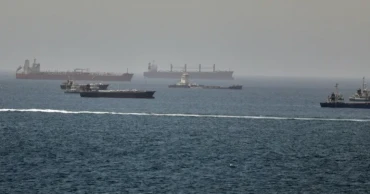
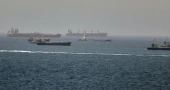
Iran to reopen Strait of Hormuz, resume unrestricted oil exports under proposed US deal
Iran is expected to reopen the Strait of Hormuz and regain the ability to export oil without restrictions under a proposed interim agreement with the United States aimed at ending the ongoing conflict between the two countries, according to leaked versions of the accord and officials familiar with the negotiations.
The agreement, which is scheduled to be formally signed in Switzerland on Friday, reportedly outlines a framework for ending hostilities and launching a two-month period of negotiations on Iran’s nuclear programme.
Under the proposed arrangement, Iran would immediately reopen the strategically important Strait of Hormuz, a key route for global oil and natural gas shipments, while the United States would allow Tehran to resume oil exports. The accord also reportedly includes plans for Iran to receive at least $300 billion for post-war reconstruction and a US commitment to work toward lifting American and United Nations sanctions if a comprehensive nuclear agreement is ultimately reached.
The conflict began on February 28 when the United States and Israel launched military operations against Iran, citing concerns over Tehran’s nuclear ambitions. The interim deal would halt the fighting before any final resolution of those concerns, instead opening the door for further diplomatic negotiations.
The reported concessions to Iran, particularly the immediate resumption of oil exports and the prospect of broader sanctions relief, are expected to draw criticism in Washington. Analysts say the terms appear more favourable to Tehran than those contained in the 2015 nuclear agreement, from which President Donald Trump withdrew during his first term.
The proposed accord would also seek to end hostilities in Lebanon involving Israel and the Iran-backed Hezbollah group, although differences remain over the future of Israeli forces in southern Lebanon.
Several officials and individuals familiar with the discussions said leaked versions of the agreement published by regional and international media outlets largely reflect the contents of the final document. However, neither the White House nor the Iranian government has released an official text.
White House Communications Director Steven Cheung said leaked versions published by media outlets do not fully represent the language of the final agreement but provided no further details.
President Trump, speaking during the G7 summit in France, praised the proposed arrangement, describing it as a strong memorandum of understanding. However, he also warned that the United States could abandon the agreement if it proves unsatisfactory.
“It’s a memorandum of understanding and if I don’t like it, we’ll go back to shooting at them, dropping bombs,” Trump said.
The agreement remains subject to formal signing and could still face political opposition from both US and Israeli leaders, as well as critics concerned about Iran’s nuclear programme and regional influence.
3 hours ago
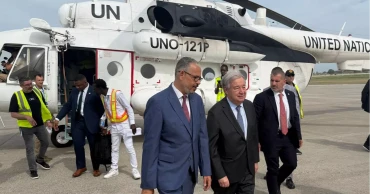
UN chief visits Haiti as new international force prepares to tackle gang violence
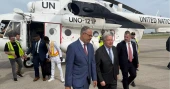
UN Secretary-General António Guterres visited Haiti on Tuesday as the country faces worsening gang violence that has displaced millions and left thousands dead or homeless.
According to new UN figures, around 2,300 people have been killed in Haiti so far this year, while another 100 have been kidnapped. The violence has forced about 1.5 million people from their homes. Among the latest kidnapping victims is James Boyard, chief of staff at the Defense Ministry, who was abducted last week in what was considered one of the safer areas of the capital.
Guterres arrived in Port-au-Prince for a one-day visit days after a violent weekend in the seaside slum of Cité Soleil, where more than 30 people were killed, injured or reported missing, according to a local human rights group.
His convoy passed through areas heavily damaged by years of gang violence, including abandoned homes, destroyed businesses and buildings scarred by gunfire. Graffiti on walls reflected public frustration, with messages supporting police and condemning the powerful gang coalition known as Viv Ansanm, which is believed to control about 70% of Port-au-Prince.
The UN chief also saw large numbers of displaced people living in makeshift shelters under tarpaulins and temporary structures.
More than 300,000 people have been displaced by gang violence in Port-au-Prince alone, the highest number ever recorded. The UN's migration agency said over 18,000 people fled Cité Soleil in May.
"Haiti's displacement crisis is entering an even more alarming phase," said Gregoire Goodstein, the International Organization for Migration's chief in Haiti.
During his visit, Guterres toured the headquarters of a newly formed international force that is expected to begin operations in the coming weeks. The force was approved by the UN Security Council and will replace the previous UN-backed mission led by Kenyan police, which struggled with limited funding and manpower.
Troops from Jamaica, Chad, El Salvador and Guatemala have joined the force, although total deployment remains below 1,000 personnel.
The international force is expected to work alongside Haiti's National Police and armed forces to combat gangs and restore security.
Guterres later held talks with Prime Minister Alix Didier-Fils-Aimé, who is under growing pressure to organize elections in the Caribbean nation of nearly 12 million people.
Haiti has been without a president since Jovenel Moïse was assassinated at his private residence in July 2021.
Following the meeting, Fils-Aimé said security remained the government's top priority to allow elections to take place and restore constitutional governance. He also called on countries supporting the international force to fulfill their commitments.
Guterres also visited a temporary shelter set up in a former school, where more than 1,200 displaced people are living in overcrowded conditions.
Many residents said they had fled gang attacks years ago and still could not safely return home. Women living at the shelter complained about the lack of privacy, poor sanitation and concerns for their children.
One resident described the cramped conditions, while others said only one meal a day was guaranteed.
"We're going to do our best," Guterres told a group of women during a private discussion.
Outside the shelter, some residents voiced frustration and demanded a safe return to their communities.
Wendy Cejour, who has lived at the shelter with his family for about 18 months, said conditions remained extremely difficult.
"As long as we're alive we have hope, but things are difficult," he said, calling for the chance to return home.
Ahead of the visit, Human Rights Watch urged the UN chief to focus on protecting civilians and addressing the root causes of violence and human rights abuses.
After meeting displaced families, Guterres said he was deeply moved by what he witnessed.
"What I saw will not leave me," he said. "Each day is a fight to survive. The women and the children pay the highest price."
11 hours ago
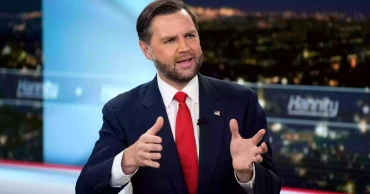
Interim US-Iran deal leaves major nuclear dispute unresolved
The interim agreement between the United States and Iran has opened the door for further negotiations, but the most difficult issue between the two longtime rivals — Iran’s nuclear programme remains unresolved.
The deal, expected to be formally signed in Switzerland on Friday, provides a 60-day window for talks aimed at addressing Tehran’s nuclear activities. However, analysts and lawmakers from both major US political parties have expressed doubts about whether such a complex issue can be resolved within such a short timeframe.
US President Donald Trump has said preventing Iran from developing a nuclear weapon was one of the key reasons behind the military campaign launched alongside Israel earlier this year. Yet the agreement announced so far offers only a limited framework for future negotiations.
While full details of the deal have not been made public, it reportedly includes reopening the Strait of Hormuz for global oil shipments, offering Iran economic incentives if it meets certain conditions, and launching talks on its nuclear programme.
The agreement has drawn skepticism from Republican and Democratic lawmakers, pro-Israel groups and Israeli officials, many of whom question whether it is practical or capable of producing meaningful progress.
Republican Senator Lindsey Graham, a close ally of Trump, said the ultimate goal should be ending Iran’s uranium enrichment activities but acknowledged uncertainty over whether negotiators could achieve that objective.
Experts say reaching a nuclear agreement requires sustained diplomatic engagement and technical expertise.
David Schenker, a former senior State Department official during Trump’s first administration, questioned whether the current administration could maintain the focus needed to negotiate such a detailed accord.
According to Schenker, nuclear agreements demand close attention to technical details and continuous involvement from specialists, making the process difficult to complete quickly.
The Trump administration has defended the agreement. Vice President JD Vance said Iran would receive benefits, including possible sanctions relief, only if it took concrete steps to dismantle its nuclear weapons programme.
Vance stressed that the US would judge Iran by its actions rather than its promises, saying incentives under the agreement would be tied directly to Tehran’s compliance.
Iran has consistently maintained that its nuclear programme is intended for peaceful purposes.
Observers note that the previous landmark nuclear agreement, known as the Joint Comprehensive Plan of Action (JCPOA), took more than 18 months to negotiate before being signed in 2015.
That deal placed strict limits on Iran’s nuclear activities, including uranium enrichment and centrifuge development, in exchange for significant sanctions relief. Trump later withdrew the United States from the agreement in 2018.
Many experts argue that the complexity of the nuclear issue makes it unlikely that a comprehensive new deal can be reached within only a few months.
Several Republican senators have also insisted that any future nuclear agreement should be submitted to Congress for approval, as required under US law.
Some lawmakers believe the shorter timeline could help prevent Iran from dragging out negotiations, while others remain doubtful that Tehran would fully comply with any new agreement.
Democratic Senator Tim Kaine noted that negotiators could benefit from the groundwork laid by the Obama-era talks but acknowledged that the original agreement involved years of negotiations and extensive participation from international experts and major world powers.
Trump envoys Steve Witkoff and Jared Kushner reportedly made several attempts to secure a deal through Omani mediation during the early months of Trump’s second term, but those efforts failed to produce an agreement.
Negotiations became more complicated after US-Israeli strikes on Iranian nuclear facilities in June 2025. Pakistan later emerged as a key mediator between the two sides.
Beyond the nuclear issue, uncertainty remains over whether future talks will address Iran’s ballistic missile programme, its support for armed groups across the Middle East and concerns over human rights within the country.
Analysts say these issues could prove just as challenging as the nuclear dispute itself.
Brian Katulis, a senior fellow at the Middle East Institute, said the agreement may help reduce tensions and avoid further conflict, but argued that the military campaign against Iran did not fully achieve its stated goals.
He described the interim deal as an effort to manage the aftermath of the conflict while presenting the outcome in the most positive light possible.
11 hours ago
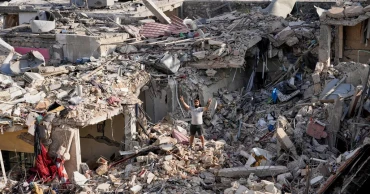
Iran says Israeli withdrawal from Lebanon key condition for ending war with US
Iran's top diplomat on Tuesday said any agreement to end the war with the United States would require Israel to withdraw from southern Lebanon, a condition already rejected by Israel and one that could jeopardize efforts to secure a lasting ceasefire.
The proposed agreement between Washington and Tehran has not yet been made public, and officials involved have at times offered differing interpretations of its terms. Although Israel is not a party to the deal, it has been directly involved in the conflict after joining US strikes against Iran on Feb. 28. Israel has also been engaged in fighting with the Iran-backed Hezbollah group in Lebanon and has taken control of large areas in the country's south.
Iranian Foreign Minister Abbas Araghchi said Israel's continued presence in southern Lebanon would violate the spirit of the agreement.
"Without the withdrawal of Israeli forces from the territories they occupied during this war, the war has not fully come to an end," Araghchi said.
However, a US official familiar with the framework of the agreement said it does not include any requirement for Israel to leave Lebanon. Israeli Prime Minister Benjamin Netanyahu also reiterated on Monday that Israeli forces would remain there "as long as necessary."
Previous attempts to end the conflict have been hindered by similar disagreements, resulting in a fragile ceasefire that failed to evolve into a permanent peace arrangement. The uncertainty has also affected the Strait of Hormuz, a key route for global energy shipments, which remains effectively closed.
Switzerland's foreign ministry said a signing ceremony for the agreement is scheduled for Friday at the Bürgenstock resort near Luzern.
Lebanon issue adds complexity
Pakistan, which helped facilitate negotiations, has said the agreement calls for an end to military operations, including those in Lebanon, in line with Iran's longstanding position. Araghchi's latest remarks, however, have highlighted fresh differences over the issue.
The dispute places Israel in a difficult position as it seeks to weaken Hezbollah's military capabilities while avoiding tensions with its closest ally, the United States. Israel launched its operation in southern Lebanon after Hezbollah fired missiles across the border during the early stages of the war. Since then, Israeli forces have expanded their presence in the area and carried out strikes deep inside Beirut.
Although Hezbollah has suffered significant setbacks, it still retains the ability to launch attacks against Israel, raising questions about the long-term effectiveness of Israel's campaign.
As of Tuesday evening, Netanyahu had not reviewed the memorandum of understanding between the US and Iran, according to a person familiar with the matter who spoke on condition of anonymity. Another source said Israeli officials had not requested a copy of the document from US negotiators.
Netanyahu's office did not immediately comment, while the White House declined to say whether Israeli leaders had been briefed on the agreement.
Israel's ambassador to the United States, Yechiel Leiter, told NPR that while Israel has not seen the details of the agreement, the reported inclusion of Lebanon was "unnecessary and unhelpful."
Differences over Lebanon have also exposed tensions between Washington and Tel Aviv. US President Donald Trump said Tuesday he was dissatisfied with Israel's handling of the conflict with Hezbollah.
"It just goes on forever," Trump said, referring to Israel's strategy.
Israeli military operations in Lebanon have killed nearly 4,000 people, including hundreds of civilians, and displaced more than one million others.
"Israel's fighting Hezbollah too long, and too many people are being killed," Trump said.
Lebanon welcomes ceasefire prospects
Israel and the Lebanese government have held separate US-mediated negotiations that excluded Hezbollah. While several ceasefires were announced during those talks, none were fully implemented.
Lebanese officials initially sought to keep Lebanon separate from the broader US-Iran negotiations but later welcomed indications that a future agreement could include a ceasefire in Lebanon.
Araghchi's comments appear consistent with the understanding of two regional officials familiar with the negotiations. According to them, the draft agreement would require Israel to withdraw from nearly all territory it currently occupies in Lebanon, except for a few strategic hilltop positions along the border.
The officials said Iran pushed for Lebanon to be included in the final phase of negotiations.
The United Nations peacekeeping mission in Lebanon, UNIFIL, reported that exchanges of fire between Israel and Hezbollah continue, though at a significantly reduced level, according to UN spokesman Stephane Dujarric.
Key issues remain unresolved
Several important questions remain ahead of the planned signing ceremony.
The agreement is intended to establish a meaningful truce in a conflict that has killed thousands across the Middle East and contributed to higher prices for fuel, food and other essentials.
According to a senior US official, the deal would provide for the immediate reopening of the Strait of Hormuz and the lifting of the American naval blockade on Iranian ports.
At least two Iranian oil tankers left the country on Tuesday and crossed the US naval blockade without interference, according to shipping-tracking data. The vessels marked Iran's first crude oil exports in two months.
Shipping-monitoring service TankerTrackers.com said the Iranian-flagged tankers Diona and Hero II were carrying a combined 3.8 million barrels of crude oil. US Central Command declined to comment.
Under the agreement, Washington and Tehran are expected to begin a 60-day negotiation process focused on Iran's nuclear programme and the possible easing of sanctions, Pakistani officials involved in mediation said.
The proposed deal also includes the possible release of Iran's frozen assets and the creation of a $300 billion reconstruction fund if Tehran meets certain conditions, according to senior US officials. Trump later clarified that the United States would not directly invest money in Iran.
Questions also remain about how the agreement would address Iran's nuclear activities, including who would verify compliance and what would happen to highly enriched uranium believed to be stored beneath nuclear facilities damaged in US strikes last year.
Regional officials said Iran has agreed to discuss options to dilute or remove the uranium stockpile. However, it remains uncertain whether Tehran's hard-line factions would support such a move.
Trump said he would consider submitting the agreement to the US Congress for review. Some Republican lawmakers have called for more details, while others have expressed doubts that the deal would be sufficient to prevent Iran from pursuing a nuclear weapon.
13 hours ago
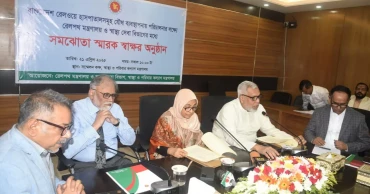
G7 leaders back US-Iran deal, say it’s a ‘historic opportunity’
The G7 leaders have welcomed the announcement of a deal between the US and Iran as a “breakthrough” and an “opportunity” to prevent Iran from acquiring a nuclear weapon.
The leaders said they support the deal and “are ready to contribute to its implementation”.
They called for passage through the Strait of Hormuz without “restrictions or tolls” and said they strongly support a “robust and comprehensive diplomatic follow-on agreement” to the deal to “bring peace and security for all in the region”.
On Lebanon, the G7 leaders expressed support for “an immediate robust ceasefire” and for the Lebanese state’s efforts to disarm Hezbollah.
On Palestine, they pledged to “accelerate humanitarian and reconstruction efforts [in Gaza] and the swift implementation of relevant political and security measures,” while also calling for an end to the “violence in the West Bank”. #From Al Jazeera
13 hours ago
G7 considers alternatives to Strait of Hormuz for global energy security
Leaders of the Group of Seven (G7) nations are exploring alternative routes for transporting global energy supplies as concerns grow over dependence on the Strait of Hormuz, a key maritime passage for oil and gas shipments.
French Foreign Ministry spokesman Pascal Confavreux said discussions at the G7 summit in France included identifying other supply corridors that could help move energy resources from the Persian Gulf without relying heavily on the strategically important strait.
Speaking to the Associated Press, Confavreux said leaders discussed ways to reduce long-term dependence on the waterway and improve energy security.
He noted that proposals under consideration include financing and developing new infrastructure projects, particularly land-based transport routes, that could bypass the Strait of Hormuz.
Before the conflict involving Iran disrupted regional stability, roughly 20 percent of the world’s crude oil shipments passed through the narrow maritime corridor, making it one of the most critical energy transit routes globally.
The discussions reflect growing international efforts to diversify energy supply chains and reduce vulnerability to disruptions in the Gulf region.
23 hours ago
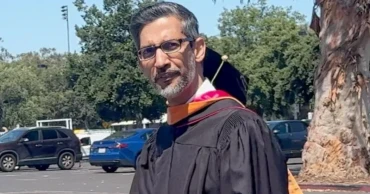
Dozens walk out as Google CEO Sundar Pichai addresses Stanford graduates
Dozens of students walked out of Stanford University's graduation ceremony as Google CEO Sundar Pichai took the stage to deliver the keynote address.
Video footage recorded by the BBC showed students leaving the event in protest against Google's controversial work with the US government. The demonstration was encouraged by a group called Stanford Students for Justice in Palestine.
The protest follows other recent campus demonstrations targeting technology leaders, although many of those have focused on artificial intelligence and concerns about its impact on jobs.
During his speech, Pichai largely avoided discussing AI, though he appeared to joke about the anticipated protests.
"People thought it would be really difficult for me," he said. "It is the last two letters of my last name, after all."
Pichai, a Stanford alumnus, did not respond to the BBC's request for comment.
The exact number of students who participated in the walkout remains unclear, but local news outlet SFGate estimated that as many as 200 students may have left the ceremony.
Some students carried signs as they exited. One sign read, "ICE spies with Google AI," while others waved Palestinian flags.
The Stanford chapter of Students for Justice in Palestine (SJP) organized the walkout and urged students to protest Google's connections with US Immigration and Customs Enforcement (ICE) and Israel.
It remains unclear whether all of the students who left the ceremony were protesting for the same reasons.
This year's protests against graduation speakers in the United States have also highlighted growing concerns among students about artificial intelligence. Speakers who discuss AI are increasingly facing negative reactions from audiences on college campuses.
Former Google CEO Eric Schmidt was booed by students during his commencement address at the University of Arizona in May after speaking about the rise of AI, reflecting growing worries about its impact on employment.
"I know what many of you are feeling about that. I can hear you," Schmidt told graduates as boos echoed through the venue during remarks comparing today's AI boom to the rise of computers four decades ago.
A similar reaction greeted real estate executive Gloria Caulfield at the University of Central Florida.
"The rise of artificial intelligence is the next industrial revolution," she said as members of the audience booed.
At Middle Tennessee State University's commencement ceremony, Big Machine Records CEO Scott Borchetta also faced jeers after mentioning AI.
His response to graduates was straightforward: "Deal with it, like I said, it's a tool."
#Reports BBC
1 day ago