Environment
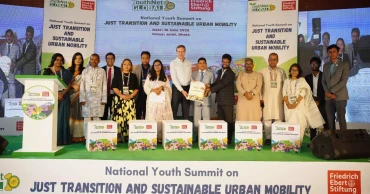
No one should be left behind in green transition: MoEFCC official
Bangladesh’s transition to greener transport systems must ensure protection for workers, vulnerable communities, and informal operators so that no one is left behind, said Additional Secretary (Climate Change Wing) of the Ministry of Environment, Forest and Climate Change, Mohammad Navid Safiullah.
He made the remarks while addressing the National Youth Summit on Just Transition and Sustainable Urban Mobility in Bangladesh, organised by YouthNet Global in partnership with Friedrich-Ebert-Stiftung (FES) Bangladesh on Tuesday at Aloki Convention Centre in Dhaka, according to a press release issued on Wednesday.
The summit brought together around 150 participants, including youth leaders, policymakers, climate experts, diplomats, academics, and trade union representatives.
European Union (EU) Ambassador to Bangladesh Michael Miller joined the concluding session to underline the EU's commitment to Bangladesh.
"The European Union, together with the European Investment Bank and EU member states, is a strong and reliable partner for Bangladesh in helping shape a just, efficient, and clean transition," he said.
Executive Coordinator of YouthNet Global Sohanur Rahman stressed the need to place young people at the centre of climate and transport governance.
Speaking as the chief guest, Safiullah said Bangladesh is at a critical crossroads, as rapid urbanisation, rising traffic congestion, deteriorating air quality, and unequal access to transport continue to challenge sustainable development.
Reflecting on the challenges of conventional transport systems, he highlighted the need to accelerate the transition towards cleaner mobility solutions while ensuring social protection for affected communities.
Highlighting the progress of green mobility, Safiullah said millions of electric three-wheelers are already operating across Bangladesh. However, he stressed that the transition must be supported by clean energy generation, stronger charging infrastructure, and environmentally safe battery management systems.
“A transition is only truly green if it is both safe and clean,” he said, warning that unsafe battery recycling continues to create serious environmental and public health risks.
Speakers linked transport reform directly to public health, noting that air pollution has become one of Bangladesh’s most urgent urban challenges, affecting children, workers, and vulnerable communities.
“For the Ministry of Environment, Forest and Climate Change, sustainable urban mobility is more than a transport issue. It is also about public health, equity, and social justice,” Safiullah said.
“When a low-income worker, a woman, or a person with a disability cannot access safe and affordable transport, they are denied opportunity and dignity.”
He stressed that an equitable transition must include reskilling opportunities for transport workers, recognition of informal operators, and improved access to safe and affordable mobility services for all citizens.
Youth engagement and collaboration across society, he added, will be essential for implementing NDC 3.0 and advancing Bangladesh’s climate ambitions ahead of COP31.
Opening the summit, Dr Felix Gerdes, Resident Representative of FES Bangladesh, underscored the importance of inclusive dialogue and cooperation among stakeholders to address urban mobility and environmental challenges.
Participants adopted a set of youth-led policy recommendations calling for cleaner public transport, stronger labour protections, expanded green jobs, improved air quality, and greater youth participation in decision-making as Bangladesh advances towards a low-carbon and climate-resilient future.
1 hour ago
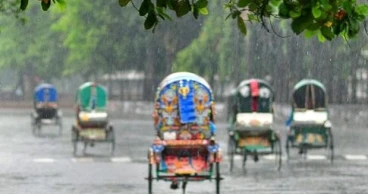
Light to moderate rain likely in parts of country
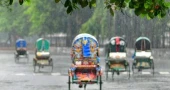
Bangladesh Meteorological Department (BMD) has forecast rains in parts of the country in 24 hours commencing 9 am on Wednesday.
According to the latest Met Office bulletin, rains may occur at many places over Rangpur, Mymensingh, Chattogram and Sylhet divisions and at a few places over Rajshahi, Dhaka, Khulna & Barishal divisions with moderately heavy to heavy falls at places over Rangpur, Mymensingh, Chattogram & Sylhet divisions.
Meanwhile, a mild heat wave is sweeping over Khulna division as well as Manikganj, Nilphamari and Rajshahi districts, and it may continue, the Met Office added.
9 hours ago

Dhaka's air quality turns ‘moderate’
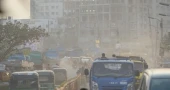
Dhaka ranked 24th among the world’s most polluted cities on Wednesday morning, recording an Air Quality Index (AQI) of 123 at 09:09 am.
The air quality was classified as ‘moderate’, indicating the air may pose a moderate health concern for a small number of unusually sensitive individuals, such as people with asthma or other respiratory issues, according to the AQI scale.
Santhiago in Chile, Lahore in Pakistan, and Jakarta in Indonesia occupied the first, second, and third spot with AQI scores of 172, 163, and 158 respectively.
According to AQI standards, a reading between 101 and 150 is considered ‘unhealthy for sensitive groups’, 151 to 200 ‘unhealthy’, 201 to 300 ‘very unhealthy’, while levels above 301 are deemed ‘hazardous’, posing serious health risks.
The AQI, which provides daily updates on air quality, indicates how clean or polluted the air is and highlights potential health impacts.In Bangladesh, the AQI is calculated based on five major pollutants: particulate matter (PM10 and PM2.5), nitrogen dioxide (NO2), carbon monoxide (CO), sulfur dioxide (SO2), and ozone.
Dhaka has long struggled with air pollution, with air quality typically worsening in winter and improving during the monsoon season.The World Health Organization estimates that air pollution causes around seven million deaths globally each year, mainly due to stroke, heart disease, chronic obstructive pulmonary disease, lung cancer and acute respiratory infections.
11 hours ago

UNICEF warns of growing climate threats to children worldwide
Drought, extreme heat and heatwaves have emerged as the most widespread combination of climate-related hazards threatening millions of children around the world, according to a newly released report by the UN Children’s Fund (UNICEF).
The Children’s Climate Risk Report 2026 found that approximately 1.1 billion children are currently exposed to at least three overlapping climate hazards, putting their health, education and overall wellbeing at risk.
“The lives of children continue to be upended by the impact of heatwaves, wildfires, droughts and floods,” said UNICEF Executive Director Catherine Russell. “Half of the world’s children are now living with at least three overlapping climate threats shaping their daily lives.”
New Report Maps Multiple Climate Risks
For the first time, the report identifies where children are facing multiple and overlapping climate threats, how severe these threats are, and the impact they have on essential services that children depend on. It also outlines practical measures governments can take to address these challenges.
According to the report, nearly every child worldwide is exposed to at least one climate hazard, while more than four million children could experience as many as six overlapping threats. The analysis uses the latest available data to assess children's exposure to eight major climate hazards: coastal flooding, droughts, extreme heat, fires, heatwaves, river flooding, sand and dust storms, and tropical storms.
Hundreds of Millions Face Multiple Hazards
The findings show that more than 296 million children live in areas affected simultaneously by drought, extreme heat and heatwaves. The second most common combination of threats—drought, extreme heat and tropical storms—affects more than 115 million children globally.
Air Pollution and Malaria Add to the Burden
Beyond the eight major climate hazards, the report also examined children's exposure to air pollution and malaria, both of which are highly influenced by climate change.
The data revealed that air pollution impacts almost every child worldwide, while around one billion children are exposed to malaria. These additional risks further increase the vulnerability of children already facing multiple climate-related threats.
Climate Change Expected to Intensify Risks
The report warns that without immediate and substantial reductions in greenhouse gas emissions, climate hazards will become more frequent and severe. This would place additional pressure on public services and government resources while increasing risks to children's wellbeing.
Africa’s Sahel and Parts of Asia Among Hardest-Hit Regions
Among the regions most severely affected is Africa’s Sahel, where more than four million children face a combination of heatwaves, extreme heat and sand and dust storms.
Children in several Asian countries, including Bangladesh, Myanmar and Pakistan, are exposed to a greater number of climate hazards and at higher levels of intensity than anywhere else in the world.
Wealthy Nations Also Face Climate Risks
The report notes that high-income countries are also vulnerable to climate-related threats. In Italy, for example, more than six million children are exposed to prolonged heatwaves and drought conditions.
However, the country demonstrates how investments in climate adaptation measures can help reduce some of the risks facing children, while also underscoring the need for stronger action as climate impacts continue to worsen.
UNICEF Calls for Urgent Global Action
To safeguard children and help communities adapt to environmental changes, UNICEF is urging governments, businesses and other stakeholders to take action in three key areas:
Reduce greenhouse gas emissions and fulfil existing international climate commitments based on scientific evidence.
Strengthen climate adaptation, disaster risk reduction and responses to climate-related loss and damage, while ensuring children and essential services are prioritised in national planning and preparedness efforts.
\Support meaningful participation of children and young people in climate action through investments in climate education, skills development and stronger protection of children's rights to be heard and involved in decisions affecting their future.Better Planning Can Protect Future Generations
“This analysis can help governments and decision makers plan better and invest more effectively in resilient services,” UNICEF’s chief said.
“When we strengthen health and education systems and improve infrastructure with children in mind, we protect them from today’s climate threats and help secure their future.
1 day ago
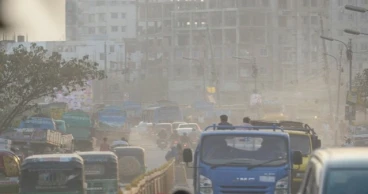
Dhaka ranks 10th among world’s most polluted cities
Dhaka ranked 10th among the world’s most polluted cities on Tuesday morning, recording an Air Quality Index (AQI) of 123 at 10:15 am.
The air quality was classified as ‘unhealthy for sensitive groups’, indicating the air can cause breathing and irritation issues for at-risk individuals, even though the general public remains largely unaffected, according to the AQI scale.
Delhi in India, Kinshasa in Democratic Republic of the Congo, Jakarta in Indonesia occupied the first, second, and third spot with AQI scores of 167, 166, and 153 respectively.
According to AQI standards, a reading between 101 and 150 is considered ‘unhealthy for sensitive groups’, 151 to 200 ‘unhealthy’, 201 to 300 ‘very unhealthy’, while levels above 301 are deemed ‘hazardous’, posing serious health risks.
The AQI, which provides daily updates on air quality, indicates how clean or polluted the air is and highlights potential health impacts.In Bangladesh, the AQI is calculated based on five major pollutants: particulate matter (PM10 and PM2.5), nitrogen dioxide (NO2), carbon monoxide (CO), sulfur dioxide (SO2), and ozone.
Dhaka has long struggled with air pollution, with air quality typically worsening in winter and improving during the monsoon season.The World Health Organization estimates that air pollution causes around seven million deaths globally each year, mainly due to stroke, heart disease, chronic obstructive pulmonary disease, lung cancer and acute respiratory infections.
1 day ago

Rains likely in parts of country as monsoon approaches
Rain accompanied by temporary gusty winds and lightning flashes may drench parts of Bangladesh in 24 hours from 9 am on Monday, according to the Bangladesh Meteorological Department (BMD).
Light to moderate rain or thundershowers are likely at many places over Rangpur, Dhaka, Mymensingh, Chattogram and Sylhet divisions, said a Met office bulletin.
The Met office also forecast rain at a few places over Rajshahi, Khulna and Barishal divisions, with moderately heavy to heavy falls in some areas across the country.
Day and night temperatures are expected to remain nearly unchanged nationwide, it added.
The country’s highest 24-hour rainfall was recorded at 79mm in Netrokona till 6 am on Monday.
Meanwhile, the maximum temperature was recorded at 36.3°C in Pabna’s Ishwardi on Sunday.
The BMD said a trough persists from Gangetic West Bengal to the northwest Bay of Bengal.
It added that the monsoon is fairly active over Bangladesh and weak to moderate over the North Bay.
2 days ago

Dhaka's air quality turns ‘moderate’
Dhaka, the capital of Bangladesh, ranked 22nd among the world’s most polluted cities on Monday morning, with an Air Quality Index (AQI) of 79.
According to the AQI scale, the city’s air quality was classified as ‘moderate’ at 10:05am.
The Democratic Republic of Congo’s Kinshasa, Pakistan’s Lahore and Chile’s Santiago were the three most polluted cities, with AQI scores of 167, 161 and 157 respectively.
An AQI between 101 and 150 is considered ‘unhealthy for sensitive groups’, while a score between 151 and 200 is classified as ‘unhealthy’. AQI readings between 201 and 300 are termed ‘very unhealthy’, and anything above 301 is considered ‘hazardous’, posing serious health risks.
The AQI is a daily indicator of air quality, showing how clean or polluted the air is and the possible health effects people may experience.
In Bangladesh, the AQI is calculated based on five major pollutants: particulate matter (PM10 and PM2.5), nitrogen dioxide, carbon monoxide, sulphur dioxide and ozone.
Dhaka has long struggled with severe air pollution. Air quality usually worsens during winter and improves in the monsoon season.
According to the World Health Organization, air pollution causes around seven million deaths globally each year, mainly from stroke, heart disease, chronic respiratory diseases, lung cancer and acute respiratory infections.
2 days ago
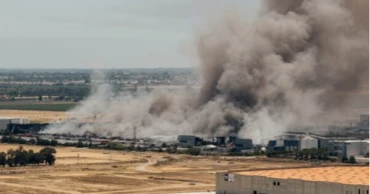
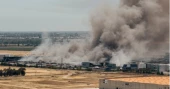
Unhealthy air in California city as massive warehouse fire burns for third day
Air quality in a Northern California city has turned unhealthy as firefighters continued for a third day on Saturday to contain a large blaze at a medical equipment warehouse.
Authorities in Tracy, a city of around 100,000 residents, urged people sensitive to smoke to stay indoors as thick smoke spread from the Medline warehouse fire, which has been burning since Thursday. Air monitoring stations in the southern part of the city recorded pollution levels in the “unhealthy” range.
Officials said smoky conditions are likely to continue over the next few days as crews work to fully extinguish the fire inside the massive facility, according to South San Joaquin County Fire Authority Fire Chief Randall Bradley.
Investigators, including the local fire marshal, are examining the cause of the blaze. Fire officials are also coordinating with company representatives and structural engineers to assess damage to the building.
Plans are being made to allow employees to safely retrieve their vehicles from the site. Authorities have urged the public to stay away from the area and warned against touching or moving debris.
Medline, the company operating the warehouse, is a major supplier of medical and surgical products, including gloves, masks and surgical instruments.
The fire broke out at the nearly 1 million-square-foot warehouse, located about 55 miles (88.5 kilometres) east of San Francisco, sending embers across a wide area.
Firefighters said their efforts were hampered by malfunctioning sprinklers and hydrants with little or no water flow. They believe the problem lies within the facility’s internal fire-suppression system, not the city’s water supply.
Officials added that an external inspection of the sprinkler system in January had found no problems.
3 days ago

Dhaka's air quality ‘moderate’ this morning
Bangladesh's capital Dhaka ranked 22nd among cities with the worst air quality on Sunday morning at 9:15 am, recording an Air Quality Index (AQI) score of 81.
India's capital, Delhi, topped the list with an AQI score of 195, making it the most polluted city in the world. Pakistan's Lahore ranked second with an AQI score of 187, while Santiago occupied the third position with a score of 165.
An AQI score between 51 and 100 is considered "moderate," indicating acceptable air quality, although some pollutants may pose a moderate health concern for a small number of unusually sensitive individuals.
An AQI reading between 101 and 150 is considered ‘unhealthy for sensitive groups’, while 151–200 is categorised as ‘unhealthy’. Readings between 201 and 300 are regarded as ‘very unhealthy’, and levels above 301 are considered ‘hazardous’, posing serious health risks to the population.
In Bangladesh, the AQI is calculated based on five major pollutants: particulate matter (PM2.5 and PM10), nitrogen dioxide (NO₂), carbon monoxide (CO), sulphur dioxide (SO₂), and ozone.
Dhaka frequently experiences deteriorating air quality, particularly during the dry winter months, while conditions generally improve during the monsoon season.
Experts say prolonged exposure to polluted air can cause respiratory illnesses, cardiovascular diseases and other health complications, particularly among children, older adults and people with existing health conditions.
3 days ago

Alaska glaciers melting faster as temperatures rise, study finds
Alaska’s glaciers are highly vulnerable to rising temperatures, with new research showing that every 1 degree Celsius increase in average summer temperatures can extend glacier melting by about three weeks.
The study, published in the journal Nature, also found that advanced satellite radar technology can track glacier changes more accurately and consistently than traditional optical methods.
Led by researcher Albin Wells of Carnegie Mellon University, the study analysed data from nearly all Alaska glaciers larger than half a square mile between 2016 and 2024. Co-authors included David Rounce and Mark Fahnestock.
Using radar data from Europe's Sentinel-1 satellites, researchers measured the number of "melt days" experienced by glaciers. More melt days mean a longer melting season and greater loss of ice.
Unlike optical imaging, which depends on clear skies and daylight, synthetic aperture radar (SAR) can collect data through clouds and darkness, allowing scientists to monitor glaciers throughout the year.
The study also found that short periods of extreme heat can significantly reduce the snow cover that protects glaciers. During unusually warm spells, glaciers lost up to 28% more protective snow than they do in normal years, exposing more ice to melting.
Researchers said snowlines, which separate areas where glaciers gain snow from areas where they lose ice, are important indicators of glacier health. Rising temperatures push these snowlines higher, increasing the amount of exposed ice.
One striking example came during Alaska’s 2019 heat wave, which lasted from late June to early July. Temperatures in many areas were 20 to 30 degrees Fahrenheit above average, and several records were broken, including a temperature of 90°F in Anchorage.
According to the study, the heat wave pushed glacier snowlines nearly 350 feet higher than normal. Typically, glaciers would not reach those levels until about two months later, leading to greater ice loss.
The findings also showed that glaciers near Alaska’s coast behave differently from those located farther inland. Coastal glaciers generally experience more summer melting but also receive more snowfall during winter, while inland glaciers respond differently to changing climate conditions.
Researchers say the results provide a clearer picture of how glaciers are likely to respond to future warming and highlight the sensitivity of Alaska’s ice fields to both long-term climate change and short-term heat waves.
Source: Science Daily
4 days ago