Science-&-Innovation

China launches rocket carrying 8 satellites into orbit
China successfully launched a Lijian-1 Y14 carrier rocket on Monday, sending eight satellites into their planned orbit.
The rocket lifted off at 11:44 am Beijing time from a commercial space innovation pilot zone in northwest China.
According to Chinese authorities, all eight satellites were successfully deployed into their designated orbit, marking another successful mission for the Lijian-1 launch vehicle.
The launch is part of China's ongoing efforts to expand its space programme and strengthen its satellite capabilities.
2 days ago
Sonar technology sparks debate among anglers over the future of fishing
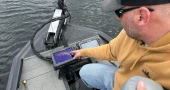
A new fish-finding technology known as forward-facing sonar is becoming increasingly popular among anglers across the United States, helping them locate and catch fish more easily. However, the technology is also fueling debate over whether high-tech equipment is changing the true spirit of fishing and its long-term impact on fish populations.
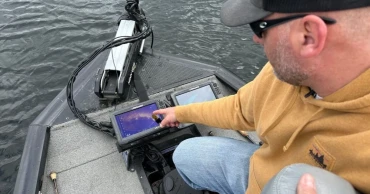
Forward-facing sonar provides real-time images of fish underwater, allowing anglers to track their movements and cast directly toward them. Unlike older sonar systems that only showed where fish might be located, the latest technology offers a live view beneath the water.
According to Dave Dunn, a sales executive at Garmin, anglers can attach the device to a trolling motor and accurately locate fish at any moment. A complete setup typically costs around $2,500.
The technology has become particularly attractive for anglers who have limited time on the water. Minnesota angler Terry Rehm said the sonar helps him quickly find fish and make the most of his fishing trips despite a busy work and family schedule.
Recreational fishing remains one of the most popular outdoor activities in the United States, attracting tens of millions of participants each year. However, many anglers enjoy fishing for relaxation and the experience of being outdoors rather than simply catching more fish.
As the use of forward-facing sonar grows, opinions among anglers have become increasingly divided. Surveys in Minnesota indicate that around 30% of anglers now use the technology, while usage on some lakes has reached more than 60%.
The debate has spread across social media, fishing forums, podcasts and fishing tournaments. Supporters view the technology as a useful tool that improves efficiency, while critics argue that it shifts attention away from the traditional skills and enjoyment associated with fishing.
Veteran fishing writer Gary Korsgaden said some anglers worry that fishing has become more focused on numbers and results rather than the overall experience and decision-making involved in the sport.
Despite those concerns, scientific studies have so far found little evidence that forward-facing sonar is causing overfishing.
A study conducted by researchers in Wisconsin compared anglers using sonar with those relying on traditional methods. Surprisingly, anglers without the technology caught fish at a slightly higher rate, although sonar users tended to catch somewhat larger fish.
Greg Sass, a fisheries research leader with the Wisconsin Department of Natural Resources, said the findings challenged many assumptions about the technology's effectiveness.
Officials in Minnesota have also found no significant negative impact from sonar use. Surveys showed anglers using forward-facing sonar generally caught similar numbers and varieties of fish as those fishing without it.
Marc Bacigalupi, a regional fisheries supervisor with the Minnesota Department of Natural Resources, said public perceptions about the technology do not always match reality.
However, Minnesota authorities have proposed reducing the daily walleye catch limit from six fish to four. Officials cited several factors, including advances in fish-finding technology, growing ice-fishing participation, social media attention on popular fishing locations and stricter regulations in neighboring states.
For many anglers, the technology has improved their understanding of fish behavior. North Dakota angler Daren Schneider said the sonar revealed surprising habits of walleye that he had never observed before.
Schneider believes fishing is about more than simply catching fish.
"Fishing isn't necessarily about catching fish or reaching your limit," he said. "It's about being outdoors and creating memories. If forward-facing sonar helps people enjoy that experience, I don't see it as a bad thing."
2 days ago
Green energy takes center stage at 10th China-South Asia Expo in Kunming
Green energy innovation and regional cooperation were in focus as the 10th China-South Asia Expo opened on Thursday in Kunming, capital of southwest China’s Yunnan Province.
The six-day expo is themed “Solidarity and Coordination for Common Development” and aims to strengthen trade ties and industrial cooperation across the region.
This year’s event features 13 exhibition halls showcasing sectors including green energy, manufacturing, service trade and the coffee industry.
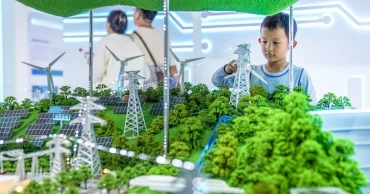
A major attraction is the Green Energy Pavilion, covering around 10,000 square metres, where visitors are introduced to advanced technologies in the energy sector. These include digital inspection systems, drone-based monitoring, smart operations and maintenance, as well as virtual reality demonstrations.
Exhibits highlight innovations such as hydrogen energy business models, photovoltaic power generation, and large-scale energy infrastructure, including hydropower stations. Interactive displays and digital sand tables are being used to explain how modern energy systems operate.
Visitors, including children and industry professionals, are seen engaging with models and demonstrations that showcase the future of clean and smart energy solutions.
Organisers say the expo is designed to promote regional economic integration while encouraging cooperation in emerging industries, particularly in sustainable and green technologies.
3 days ago

Turbine dispute threatens major US offshore wind project
The developer of a large offshore wind project in Massachusetts has filed a lawsuit against its turbine supplier to prevent it from withdrawing from the project.
Vineyard Wind initiated legal action against GE Renewables after its parent company, GE Vernova, announced plans to end its turbine service and maintenance contracts by the end of April.
GE Vernova claims Vineyard Wind owes about $300 million for completed work. However, Vineyard Wind argues that the company is instead responsible for roughly $545 million in damages linked to a major turbine blade failure in July 2024 and the resulting delays.
During that incident, fragments from a broken blade washed ashore on Nantucket beaches at the height of the tourist season, causing disruption to local businesses. GE Vernova later agreed to pay $10.5 million in compensation to affected businesses.
In its lawsuit, Vineyard Wind accuses GE Renewables of poor performance and warns that allowing the company to exit the project now would cause serious and lasting harm. A company spokesperson said the legal action aims to ensure GE fulfills its responsibilities to both the project and the region, which is expected to deliver significant economic benefits and long-term savings for electricity customers.
GE Vernova, however, maintains it has the right to terminate the agreement due to nonpayment and said it will defend its position in court while continuing to prioritize safety and contractual obligations.
Although construction of Vineyard Wind was completed in March and the project has already been supplying electricity to the grid, full operations are expected soon. The lawsuit notes that GE Renewables is uniquely qualified to complete the remaining work, making it difficult to find a replacement.
The blade failure was attributed by GE Vernova to a manufacturing issue at a Canadian facility rather than a design flaw. Following the incident, most of the installed blades were replaced, delaying the project by nearly two years.
The project has also faced political scrutiny, particularly from the Trump administration, which temporarily halted several offshore wind projects over national security concerns before courts allowed construction to resume.
Located off the coast of Massachusetts, Vineyard Wind is a joint venture between Avangrid and Copenhagen Infrastructure Partners. With 62 turbines, it is expected to generate enough renewable energy to power around 400,000 homes.
2 months ago
Chinese firm unveils humanoid robot powered by advanced action model
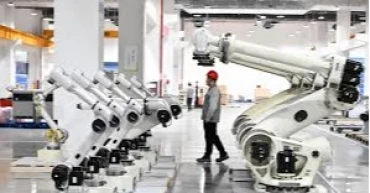
Chinese robotics company Westlake Robotics has introduced its humanoid robot, Titan o1, driven by a self-developed large-scale model known as General Action Expert (GAE), capable of replicating human movements in real time without constraints of time or space.
The company said the model allows multiple robots to carry out identical tasks simultaneously under the control of a single operator.
During a demonstration in Hangzhou, an operator wearing a motion-capture suit performed actions such as waving, turning and kicking a ball, while Titan o1 mirrored each movement within milliseconds.
The robot’s motions including arm swings, torso rotations, step length and leg lift during the kick remained closely synchronized with the operator’s rhythm.
“These actions were instant responses to the operator’s spontaneous movements,” said Westlake Robotics founder Professor Wang Donglin, adding that Titan o1 can quickly adjust to different operators and variations in movement.
He compared the GAE model to the human cerebellum, which coordinates movement, balance and precision, noting that it enables the robot to execute appropriate actions immediately upon receiving signals, even if the movements have not been performed before.
Westlake Robotics also said the GAE model supports cross-embodiment deployment, meaning it can be applied to various robots with differing designs and sizes.
2 months ago

Service dog Alfred helps secure nationwide rights for disabled lyft riders
Lyft has agreed to a settlement ensuring that blind and other disabled passengers can travel with their service animals nationwide, following a complaint in Minnesota.
College student Tori Andres contacted the Minnesota Department of Human Rights after several Lyft drivers refused to let her guide dog, Alfred, accompany her. The department found that Lyft had violated the state’s Human Rights Act. Under the settlement, Lyft will update its driver training and app features to make the protections apply across the U.S., not just in Minnesota.
"This case is deeply personal because I travel almost everywhere with my guide dog," Andres said at a news conference, with Alfred lying quietly at her feet. "He is my eyes, my freedom, and why I can live independently."
The settlement requires Lyft to educate drivers about passengers’ rights and warns that drivers could be deactivated for violating the law. Drivers are prohibited from refusing rides to passengers who use service animals, wheelchairs, or have low or no vision. Minnesota will monitor Lyft’s compliance for three years, and Andres will receive $63,000 as part of the settlement.
Rebecca Lucero, the state’s Human Rights Commissioner, said, "We expect all riders in Minnesota and across the country will benefit from these changes."
Lyft, however, downplayed the settlement, stating that it had already enforced policies to protect service animal users and that alleged violations were by independent drivers. The company emphasized that discrimination has no place in its platform.
Recent app updates allow riders to notify drivers about service animals and report refusals. Drivers who try to cancel such rides receive an immediate in-app warning that refusing service animals is illegal and could lead to termination.
The settlement was reached without a lawsuit. Although Uber is not part of the agreement, Minnesota’s Human Rights Act applies to all ride-share companies. Lucero urged all businesses to review their policies to ensure compliance.
The federal government is also pursuing a separate lawsuit against Uber over alleged discrimination against disabled riders, including those with service dogs.
"Access to ride shares like Lyft is not a convenience it is a civil right," Lucero said.
3 months ago
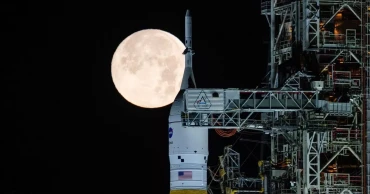
NASA postpones crewed moon mission to March after hydrogen leaks
NASA has delayed its much-anticipated crewed mission around the moon until at least March after hydrogen fuel leaks disrupted a key fueling test of its new mega rocket.
The problem surfaced during a full dress rehearsal at Kennedy Space Center, forcing officials to stop the countdown. Similar hydrogen leaks had also delayed the debut of the Space Launch System (SLS) rocket three years ago. Hydrogen, while efficient, is highly flammable and difficult to manage.
“This issue caught us by surprise,” said John Honeycutt, NASA’s SLS program manager, speaking hours after Monday’s test was halted. Before the leaks, NASA had hoped to launch as early as this weekend, marking humanity’s first return to the moon since 1972.
According to NASA, the delay of about a month will give engineers time to run another fueling test before committing the four-member crew three Americans and one Canadian to the lunar flyby mission. It remains unclear when the next rehearsal will take place.
Officials said any damaged seals or parts can likely be fixed at the launch pad. Moving the rocket back to the Vehicle Assembly Building would cause a much longer delay.
The leaks appeared early during the loading of super-cold liquid hydrogen and reappeared later, eventually stopping the countdown at five minutes. Controllers aimed to reach the final 30 seconds, but hydrogen levels rose above safety limits.
NASA teams tried several fixes, including pausing the fuel flow to warm the area and adjusting hydrogen flow rates methods that helped during the uncrewed SLS launch in 2022. This time, however, the leaks persisted.
NASA research plane makes emergency landing in Texas after gear failure
With the launch now pushed to at least March 6, mission commander Reid Wiseman and his crewmates have been cleared to exit quarantine in Houston. They will reenter quarantine two weeks before the next launch attempt. Wiseman said he was proud of the launch team’s work despite the challenges.
NASA officials said cold weather did not cause the leaks. Heaters kept the Orion capsule warm, while protective systems safeguarded the rocket.
Amit Kshatriya, NASA’s associate administrator, reminded reporters that the SLS is still an experimental vehicle and that long gaps between tests add to the challenge.
The nearly 10-day mission will send astronauts around the moon to test life-support and other critical systems. They will not land or enter lunar orbit. The Artemis program ultimately aims to return astronauts to the lunar surface this time near the moon’s south pole—and support longer stays in the years ahead.
4 months ago
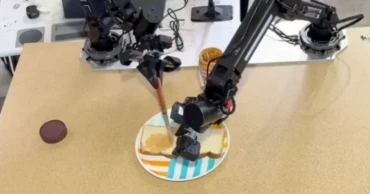
AI-powered domestic robots set to enter homes, but human control still key
The dream of having a robot butler handle household chores is inching closer to reality as Silicon Valley prepares to launch the first multi-purpose domestic robots this year. Robots like Eggie, NEO, Isaac, and Memo are being trained to fold laundry, load dishwashers, water plants, and clean, promising to reduce daily household drudgery.
During a recent visit to robot start-ups, BBC reporter Joe Tidy observed Eggie of Tangible AI slowly hanging jackets, stripping beds, and wiping spills, while NEO from 1X watered plants, fetched drinks, and tidied kitchenware. Despite these capabilities, both bots relied heavily on human operators controlling them remotely, a detail often downplayed in promotional videos.
Bipasha Sen, founder of Tangible AI, expressed optimism about the technology’s pace of improvement, saying, “Today people aspire to own a car and a house. In the future, they’ll want a robot too.” Similarly, 1X CEO Bernt Børnich highlighted that NEO combines autonomous action with human assistance, with AI learning from extensive data to navigate complex home environments.
Other start-ups are also pushing the boundaries. Weave Robotics is testing Isaac in laundromats, folding clothes autonomously, while Sunday AI’s Memo robot demonstrated handling fragile items and preparing coffee, albeit slowly. Physical Intelligence, meanwhile, focuses on developing AI software that can give “intelligence” to any robot body, aiming for broader adaptability in households.
Experts note that cost and privacy could limit early adoption, with NEO priced around $20,000 or $500 a month. While domestic robots may initially appeal to wealthy early adopters, engineers remain confident that AI-driven household assistants could become a common sight in homes in the coming decades.
With inputs from BBC
5 months ago
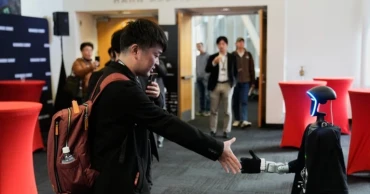
Humanoid robots draw spotlight at Silicon Valley summit
Humanoid robots took center stage at a major Silicon Valley gathering this week as advances in artificial intelligence renewed investor interest, though doubts remain about how soon humanlike machines will become a practical reality.
More than 2,000 people, including engineers from Disney, Google and dozens of startups, attended the Humanoids Summit to showcase emerging technology and debate how to speed up development of robots designed to move and work like humans. Summit founder Modar Alaoui said many researchers now see humanoids or other physical forms of AI as inevitable, with the main uncertainty being how long it will take.
The recent boom in AI, fueled by systems such as ChatGPT and Google’s Gemini, has injected fresh momentum into a field long considered too complex and expensive for investors. Supporters argue that the same breakthroughs that improved language-based AI are also helping robots better understand their surroundings and perform tasks using vision and language models.
Disney highlighted its progress with a walking robotic version of the “Frozen” character Olaf, which is expected to roam independently in Disneyland parks in Hong Kong and Paris early next year. While such entertainment-focused machines already exist, experts said truly general-purpose robots capable of contributing meaningfully in homes or workplaces are still years away.
Skepticism was evident even among conference participants. Cosima du Pasquier, co-founder of Haptica Robotics, said the humanoid sector still faces major scientific and engineering hurdles, noting that much research remains unresolved.
According to consultancy McKinsey, around 50 companies worldwide have raised at least $100 million to develop humanoid robots, with China leading the race. Government incentives, a push to build a full humanoid ecosystem by 2025 and strong manufacturing capacity have given Chinese firms an edge, reflected in their dominance at the summit’s exhibition area.
In contrast, U.S. efforts have been driven largely by private investment and excitement around AI. High-profile skeptics remain, including robotics pioneer Rodney Brooks, who has argued that current humanoids are unlikely to achieve true dexterity despite massive funding.
Some practical deployments are already under way. Agility Robotics recently announced that its warehouse robot Digit is being tested at a Texas distribution center run by Mercado Libre, showing how robots with limited humanlike features are entering workplaces.
Industry leaders said competition between countries is intensifying. Jeff Burnstein, head of the Association for Advancing Automation, said the United States has strong AI expertise but acknowledged that China currently has greater momentum in humanoid development, leaving the question of global leadership still open.
5 months ago
The bacteria turning plastic waste into painkillers
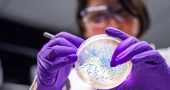
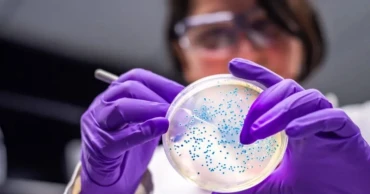
Earlier this year, scientists reported a breakthrough in biotechnology. A common bacterium was genetically engineered to convert plastic waste into the widely used painkiller paracetamol.
The bacterium, Escherichia coli (E. coli), was modified by Stephen Wallace, professor of chemical biotechnology at the University of Edinburgh, to digest a plastic-derived molecule and transform it into the drug.
While E. coli is often associated with food poisoning, non-pathogenic strains are widely used in laboratories as the field’s main “workhorse.”
Prof Wallace has previously engineered E. coli to turn plastic waste into vanilla flavoring and sewer “fatberg” waste into perfume. “If you want to prove something is possible with biology, E. coli is a natural first stage,” he said.
Beyond laboratories, vats of engineered E. coli serve as living factories, producing vital substances such as insulin, which is essential for diabetes treatment, as well as chemicals for fuels and solvents.
Why E. coli dominates biotechnology
According to Princeton University professor Thomas Silhavy, E. coli’s dominance began with its use as a model organism to understand basic biology. First isolated in 1885 by German pediatrician Theodor Escherich, its rapid growth and ease of handling made it a natural choice for research.
In the 1940s, studies using a harmless E. coli strain revealed that bacteria could exchange genes through a process akin to “bacterial sex,” reshaping the understanding of microbial genetics. Since then, E. coli has been central to major discoveries, from deciphering the genetic code to becoming the first organism genetically engineered with foreign DNA in the 1970s.
The bacterium was also behind a breakthrough in 1978, when synthetic human insulin was first produced using E. coli, eliminating the reliance on animal-derived insulin that sometimes caused allergic reactions. Nearly two decades later, in 1997, E. coli was among the first organisms to have its entire genome sequenced.
E. coli’s strengths
Adam Feist, professor at the University of California, San Diego, highlights the bacterium’s speed, reliability, and versatility. It thrives on a wide variety of substrates, can be frozen and revived easily, and efficiently hosts foreign DNA. “The more I work with other microorganisms, the more I appreciate just how robust E. coli is,” he said.
Cynthia Collins of Ginkgo Bioworks notes that while more organisms are now available for industrial use, E. coli remains cost-effective and adaptable. Even when producing potentially toxic substances, scientists can often engineer tolerance into the bacterium.
Calls for alternatives
Some experts warn that E. coli’s dominance may limit exploration of other promising microbes. Paul Jensen, a microbiologist at the University of Michigan, argues that undiscovered bacteria in landfills or natural environments might naturally perform valuable processes, such as breaking down plastics or even producing new materials like cement or rubber.
One emerging alternative is Vibrio natriegens (V. nat), first isolated in the 1960s but largely overlooked until recently. With a growth rate twice as fast as E. coli and superior ability to absorb foreign DNA, V. nat could offer significant industrial advantages. Cornell University’s Buz Barstow, who is developing tools to engineer it, compares the leap from E. coli to V. nat as “going from a horse to a car.”
His team has launched a company, Forage Evolution, to advance its applications, with ambitions ranging from producing jet fuel from carbon dioxide to extracting rare earth metals. “Simply put, E. coli won’t get us to any of these visions. V. natriegens might,” Dr Barstow said.
Still, experts like Prof Feist caution that V. nat is not yet ready to replace E. coli at scale, as the essential genetic tools and industrial track record are still lacking. “E. coli is a tough thing to replace,” he said.
Source: Agency
8 months ago