NEWS ON DATE - 17-06-2026
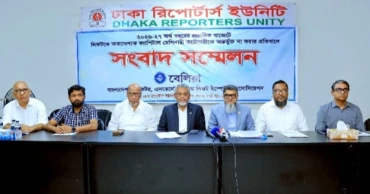
BEELIA demands reclassification of elevators as capital machinery and rationalization of duties
The Bangladesh Elevator, Escalator and Lift Importers Association (BEELIA) on Wednesday called upon the government to reclassify elevators and escalators as Capital Machinery and rationalize the existing duty structure to ensure sustainable growth of the country’s housing, industrial, and infrastructure sectors.
Speaking at a press conference held in the Dhaka Reporters Unity (DRU), BEELIA President Md. Shafiul Alam Uzzwal stated that elevators are no longer luxury items in the context of modern urbanization, high-rise construction, industrialization, and inclusive infrastructure development. Rather, they are essential capital equipment that support economic growth and public accessibility.
He noted that elevators were removed from the Capital Machinery category in 2023 and subsequently classified as commercial products. Since then, import duties have increased consecutively in the fiscal years 2024 and 2025. As a result, the total duty burden on elevator imports has risen from approximately 11% in FY2023 to nearly 46% in FY2025. This significant increase has raised construction costs across various sectors, particularly the housing industry, forcing many elevator companies to scale down operations and resulting in substantial job losses.
The recommendations were also presented during a press conference organized by the association, where industry leaders highlighted a number of challenges facing elevator importers, manufacturers, and consumers.
Among its key proposals, BEELIA urged the government to reclassify elevators and escalators as capital machinery, arguing that such a move would facilitate investment and help modernize the country's infrastructure.
The association also called for reducing the load factor value used in customs assessment from USD 3.00 per kilogram to USD 1.50 per kilogram, saying the current rate significantly increases import costs.
To protect legitimate businesses and ensure fair competition, BEELIA recommended stronger monitoring mechanisms to prevent the misuse of imported raw materials under the guise of local manufacturing.
The association further sought simplification and faster processing of port-level scaling, valuation, and customs clearance procedures, which it said would reduce delays and lower business costs.
Highlighting public safety concerns, BEELIA stressed the need for reforms to the existing duty and tax structure to facilitate the import of internationally certified and safety-compliant elevators.
The organization also called for a rationalization of duties and taxes to discourage the growing use of low-quality and reconditioned elevators, warning that such equipment poses significant risks to public safety.
REHAB Senior Vice President Abdur Razzaq highlighted the importance of government support for the elevator sector in the interest of planned urbanization, smart city development, and safe infrastructure growth.
Other speakers at the press conference included BEELIA general secretary Eadul Haque, BEELIA Advisor Emdad Ur Rahman, vice president of BEELIA Asim Sarkar, director of BEELIA Mohammad Zakirul Haque, and BEELIA Chattogram Representative Yusuf Nobi.
10 minutes ago
Lawmaker seeks household appliances for MPs’ flats
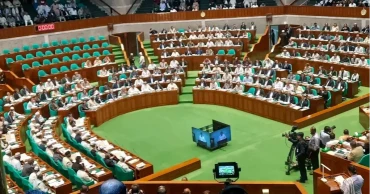
While lawmakers spent Wednesday debating the proposed national budget, one MP drew attention to a matter much closer to home: curtains, microwaves and washing machines.
Taking part in the discussion on the proposed 2026-27 budget, Bangladesh Jamaat-e-Islami lawmaker Md Mizanur Rahman urged the authorities to equip MPs' residential flats with the promised household conveniences.
The MP lamented that although Parliament has already passed a hefty supplementary budget, the curtains for lawmakers' flats have yet to get a grand appearance.
“We are discussing the budget. We have also passed the supplementary budget involving large sums of money. But the curtains meant for the residential flats of MPs have still not been hung,” he said.
Addressing the Speaker, the lawmaker went on to press his case for a package of domestic upgrades.
“We heard that each flat would receive a washing machine and a microwave oven. Through you, I strongly demand that we receive the curtains, microwaves and washing machines,” he said.
The remarks briefly shifted the focus of the budget debate from fiscal policy and development spending to the more immediate challenges of parliamentary living, where apparently the absence of curtains remains a pressing concern.
No immediate response was given regarding when the long-awaited curtains, microwaves and washing machines might arrive, leaving MPs to continue their legislative duties while keeping one eye on the budget and the other on their curtain-less windows.
15 minutes ago
Teacher recruitment, promotions stalled due to pending cases: Milon
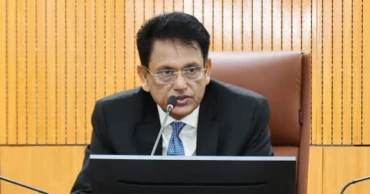
Education Minister Dr ANM Ehsanul Hoque Milon on Wednesday told Parliament that the recruitment and promotion of thousands of teachers, as well as appointments to key administrative positions in educational institutions across the country, have remained stalled for a prolonged period due to various legal complications.
Making a statement under Rule 300 of the Rules of Procedure in the Jatiya Sangsad, the minister said thousands of cases related to the education sector are pending in courts, creating significant obstacles to recruitment and administrative processes.
The statement came after ruling party lawmaker Zainul Abdin Farroque raised concerns on a point of order regarding the acute shortage of teachers and the legal complexities surrounding recruitment.
Milon, who also oversee the Ministry of Primary and Mass Education, said the recruitment process for 32,500 teachers, along with separate initiatives to appoint 2,600 and 17,000 teachers, has remained suspended because of pending cases.
“Since assuming office, I have been working to resolve these legal complications. From the very first week after taking charge, I personally visited the court premises and made efforts to address these issues,” he said.
However, the minister noted that the cases have yet to be listed before the Appellate Division, making it impossible to proceed with recruitment despite an acute teacher shortage nationwide.
He said appointments of heads of institutions through the Non-Government Teachers’ Registration and Certification Authority (NTRCA), as well as the recruitment of college principals and heads of educational institutions, have also been halted because of ongoing litigation.
Milon added that the recruitment of office assistants-cum-night guards at primary schools has similarly been suspended.
He told Parliament that thousands of education-related cases are currently under judicial consideration, seriouslyhampering administrative activities in both the education and primary education sectors.
The minister further said nearly 33,000 headteacher posts have already fallen vacant across the country. Yet many qualified teachers are retiring before receiving promotions due to legal disputes and complications related to promotion processes.
“There are many teachers across Bangladesh who have attained the qualifications required to become headteachers, yet they are not receiving promotions. The legal complexities are preventing these issues from being resolved,” he said.
Regarding administrative transfers in primary schools, Milon said authority for such transfers has been decentralised to the upazila, district and divisional levels.
Reiterating the government's commitment to resolving the situation, he said achieving the desired progress in recruitment and promotion activities will remain difficult until the pending court cases are disposed of. “The government is making its highest efforts to address the situation. However, meaningful progress in recruitment and promotion will be difficult until these cases are settled.”
15 minutes ago

Trump warns of renewed bombing if Iran deal fails
US President Donald Trump said the proposed agreement with Iran remains unfinished and warned that military action could resume if Tehran fails to comply with its commitments.
Speaking during a meeting with Egyptian President Abdel Fattah al-Sisi on the sidelines of the G7 summit on Wednesday, Trump stressed that Washington retained the option of returning to military operations if the agreement proves unsatisfactory.
He also dismissed reports suggesting the United States would invest in Iran or support a reconstruction fund for Tehran as part of a broader settlement.
Earlier in the summit, Trump reiterated that Iran would not be allowed to obtain a nuclear weapon under any future agreement.
On regional security issues, the US president criticised Israeli Prime Minister Benjamin Netanyahu over the ongoing conflict in Lebanon, saying Israel needed to act more responsibly.
During a joint appearance with the Emir of Qatar, Trump said the fighting between Israel and the Iran-backed Hezbollah group had continued for too long and was causing excessive loss of life.
His remarks came as Israel and Hezbollah continued exchanging attacks despite the US-Iran agreement announced on Sunday night.
Turning to the war in Ukraine, Trump said he held a productive meeting with Ukrainian President Volodymyr Zelensky and renewed his call for Russia to reach a peace agreement.
He also indicated that additional sanctions targeting Russian oil exports could be imposed in the near future if efforts to end the conflict fail to progress.
The comments came as G7 leaders wrapped up discussions in France, with global security issues, including Iran, Ukraine and the Middle East, dominating the summit agenda.
Source: BBC
21 minutes ago
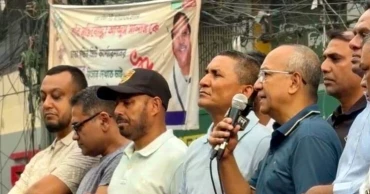
Jubo Dal chief urges Jamaat to return to ‘healthy politics’
Jatiyatabadi Jubo Dal President Abdul Monayem Munna on Wednesday called on Bangladesh Jamaat-e-Islami to abandon what he termed “cheap politics” and return to “healthy political practices.”
He made the call while addressing a protest rally held in front of the BNP’s central office at Nayapaltan in the capital in the afternoon, organised against what the party described as misinformation and indecent political practices.
The programme was organised by Dhaka South city Jubo Dal. After the rally, a protest march was brought out from Nayapaltan.
Munna alleged that a speech by a BNP lawmaker was being misrepresented and circulated as an anti-hijab statement.
He claimed that the MP did not mention hijab in his remarks, but that the issue was being deliberately distorted and used to create agitation in different places.
The Jubo Dal chief said the people of Bangladesh are religious, adding that late President Ziaur Rahman had inserted the phrase “Bismillahir Rahmanir Rahim” into the Constitution, and therefore a party founded by him could not be anti-Islamic in nature.
He also said BNP holds sincere respect for Islam, citing the suspension of their programme during the call to prayer as an example.
Munna urged Jamaat not to seek political advantage through misleading statements and propaganda, and to return to constructive political practices instead of what he called “cheap politics.”
He also warned that if any indecent or offensive remarks are made about Prime Minister and BNP Chairman Tarique Rahman, Jubo Dal will respond politically.
Leaders of Jubo Dal central and city units were present at the programme.
41 minutes ago
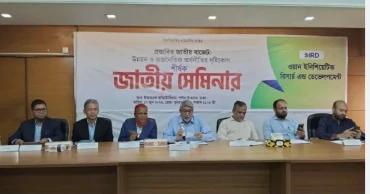
Allocation for defense, agriculture should be increased in budget: Speakers
Security and financial experts at a seminar today emphasized that budgetary allocations for the country's defense and agricultural sectors must be increased substantially to ensure national sovereignty and long-term economic resilience.
They expressed deep concern that despite an overall 17 to 18 percent increase in the proposed national budget, the core farming sector saw an increase of only 6 percent, which they termed highly insufficient for the country’s food security.
The remarks were made during a seminar organized by the Organization for International Relations and Development (OIRD). The session was presided over by OIRD Chairman and Vice-Chancellor of Manarat International University, Professor Dr. Mohammad Abdur Rob.
Speaking at the event as a key discussant, security analyst Dr. Md. Mizanur Rahman criticized the country's current foreign policy and defense framework, describing them as structurally weak.
He strongly urged the government to significantly expand its military and defensive capabilities to navigate escalating regional and global geopolitical shifts.
Turning to the farming economy, Dr. Rahman alleged that a major portion of the Tk 17,000 to Tk 18,000 crore subsidy allocated for the agricultural sector is routinely siphoned off by middlemen.
"The ordinary grassroots farmers receive only a negligible fraction of the state subsidy. A radical structural overhaul is needed to ensure that state assistance directly reaches the actual producers," he pointed out.
Presenting the keynote paper at the seminar, prominent economist and Associate Professor of the Bangladesh Institute of Governance and Management (BIGM), Dr. Zubayer Ahmed, raised serious questions regarding the feasibility of the fiscal milestones set in the proposed budget.
Dr. Ahmed argued that the targets are heavily detached from the country's real macroeconomic ground realities. "While the country's actual GDP growth rate currently stands at 4.14 percent, the government has set an overly ambitious GDP growth target of 6.5 percent for the upcoming fiscal year," he stated.
The economist further noted that the revenue collection target for the National Board of Revenue (NBR) has been elevated by nearly 47 percent compared to the previous year. He cautioned that the historic gap between target setting and actual revenue realization has been steadily widening every year due to limited structural enforcement capacity.
Other speakers at the seminar urged the government to review the allocations for both defense equipment modernization and grassroots agricultural development before passing the Finance Bill in Parliament, describing them as the twin pillars of national security and survival.
53 minutes ago
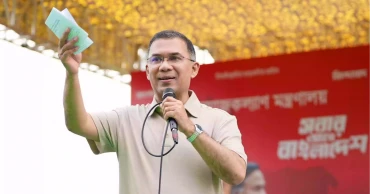
Remain alert to those saying govt should not be given time: PM
Prime Minister Tarique Rahman on Wednesday alleged that those calling for not giving the government time to work are acting out of self-interest, not in the interest of the people, and urged people to remain vigilant.
“The people have decided that the BNP will run the country for the next five years and work to implement its promises,” he said while addressing a Family Card distribution programme at the Moulvibazar Govt High School ground.
The Prime Minister said a quarter that united with Awami League against BNP, and conspired against democracy and voting rights in the past are now saying the government should not be given time.
He asked whether those who say the government should not be given time are speaking against the people’s interests and are driven by their own self-interest.
“Those who say BNP should not be given time are not speaking in the interest of the people; they are speaking in their own interest. What should be done against them? People must remain vigilant against them,” Tarique Rahman said.
He said BNP’s promises and plans are, in fact, the people’s plans, and urged all to remain alert to those who want to derail this.
“BNP does not need to do anything. If the people remain alert, BNP’s job is done. Because the people of this country are the real owners. If the owners remain alert, no one else needs to worry.… I am entrusting the security, development and future of this country to the hands of its people,” the Prime Minister said.
In an oblique reference to the main opposition Bangladesh Jamaat-e-Islami, he said many of those now speaking against the government had not been visible during key democratic struggles.
“Do you remember what happened in ’86? Do you remember that even during the one-decade-long movement, we did not see them anywhere,” said Tarique Rahman.
Referring to the February 12 parliamentary election, he said the people entrusted the BNP with the responsibility of rebuilding the country after years of misrule. “The people have told the BNP to rebuild the country. They have given us five years to put things right,” he said.
The Prime Minister arrived in Moulvibazar from Sreemangal in the afternoon and distributed Family Cards among women from low-income families.
He handed over cards to 10 beneficiaries and formally inaugurated the third phase of the programme by pressing a button.
The programme was launched simultaneously in 19 wards of Moulvibazar and in several upazilas across 21 other districts through an online platform.
Earlier, Tarique Rahman planted saplings at the Moulvibazar Govt High School ground. He also planted trees at Victoria High School ground in Sreemangal earlier in the day.
At the event, he distributed grants for tea workers' housing, scholarships for their children and one-time financial assistance for underprivileged people, persons with disabilities and other vulnerable groups.
Responding to critics who question how programmes such as Family Card scheme will be financed, the Prime Minister said Bangladesh witnessed large-scale siphoning of money abroad over the past one and half decades.
“From now on, with the support of the people, we will stop that. The wealth and resources of this country will remain in this country and be used for the welfare of its people,” he said.
Tarique Rahman said public money will be spent on improving people's lives rather than being siphoned abroad.
Looking ahead, the Prime Minister said the coming years should be devoted to work, nation-building. “The time ahead is a time for work. It is a time to build the country and change the lives of the people.”
He called upon people from all walks of life to contribute to national development, saying Bangladesh's future depends on the collective efforts of its people.
Tarique Rahman recalled that the people had won the country's independence in 1971 and also freed the nation from authoritarian rule in 2024. “The people built this country before and they will build it again,” he said.
Calling for unity, he urged people to pledge that their future politics, hopes and plans will revolve around the country and its citizens. “Building the country must be the politics of the future,” he said.
The Prime Minister also highlighted several initiatives launched since his government assumed office on February 17, including the Family Card and Farmers’ Card programmes, loan waivers for small farmers, allowances for religious leaders, free school uniforms and sports competitions.
“The benefits of these programmes will reach everyone, regardless of political affiliation,” he said.
Tarique Rahman said the current administration belongs to all citizens and is committed to serving people from every walk of life.
“Our government is a government for all. The people of Bangladesh are at the centre of everything we do,” he added.
The Prime Minister also remembered the development work carried out in the region by former Finance Minister M Saifur Rahman and said Moulvibazar did not receive adequate development attention over the past decade and a half.
The programme was chaired by Social Welfare and Women and Children Affairs Minister AZM Zahid Hossain. Expatriates' Welfare and Overseas Employment Minister Ariful Haque Choudhury, State Minister for Social Welfare Farhana Sharmin, Chief Whip Md GK Gouse, Moulvibazar-3 lawmaker M Naser Rahman and BNP Standing Committee member Gayeshwar Chandra Roy, who joined virtually from Keraniganj, also spoke.
56 minutes ago
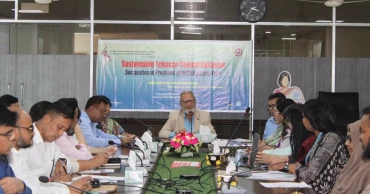
NGO Affairs Bureau Office declared tobacco-free to protect public health
The NGO Affairs Bureau has officially declared its office premises a completely smoke and tobacco-free zone in accordance with national guidelines to safeguard public health and protect non-smokers from the harmful effects of second-hand smoke.
The declaration was made on Wednesday (17 June) by Dr. Mohammed Jakaria, Director General of the NGO Affairs Bureau, during an event titled “Sustainable Tobacco Control Initiative: Declaration of Premise of NGO Affairs Bureau Tobacco-Free” held at the Bureau’s meeting room.
Under the declaration, the sale, purchase, and use of all tobacco products within the NGO Affairs Bureau premises are strictly prohibited. This measure aims to ensure that employees and visitors are protected from the harmful effects of second-hand smoke.
The Director General further stated that all activities within the office will be conducted in compliance with national tobacco control guidelines, maintaining a completely smoke and tobacco-free environment.
During the event, it was highlighted that Bangladesh remains one of the largest consumers of tobacco in the world. Among South Asian countries, Bangladesh has the highest tobacco use prevalence at 35.3 percent, compared to 28.6 percent in India and 19.1 percent in Pakistan.
According to the Global Adult Tobacco Survey (GATS) 2017, approximately 37.8 million adults in Bangladesh currently use tobacco. Data from the Tobacco Atlas 2025 indicate that nearly 200,000 people die each year in Bangladesh from tobacco-related diseases, while several hundred thousand more suffer from disability and illness.
Recent research conducted by the Health Economics Institute of the University of Dhaka found that tobacco tax revenue amounted to approximately BDT 41,000 crore during the 2024–25 fiscal year. In contrast, the economic cost of tobacco-related deaths, health damage, and environmental degradation reached nearly BDT 87,000 crore—more than double the revenue generated. Overall, tobacco use continues to pose a growing threat to public health, the economy, and the environment in Bangladesh.
Bangladesh became a signatory to the World Health Organization’s Framework Convention on Tobacco Control (WHO FCTC) in 2003. Building upon this commitment, the Smoking and Tobacco Products Usage (Control) (Amendment) Act, 2026 was enacted. Key provisions of the law include the prohibition of smoking and tobacco use in all public places and both motorized and non-motorized public transport; the prohibition of designated smoking areas (DSAs) in public places and public transport.
In this context, the NGO Affairs Bureau office has been declared a completely smoke and tobacco-free zone to protect public health and shield non-smokers from the harmful effects of second-hand smoke.
As Chief Guest, Dr. Mohammed Jakaria stated: “Smoking harms not only smokers but also non-smokers who are exposed to second-hand smoke. Ensuring a tobacco-free environment is essential for protecting public health."
Speaking as special guest, Shivani Bhattacharya, Convener of the Anti-Tobacco Mothers’ Forum, said: “it is undoubtedly a far-sighted and public health-friendly initiative. Through this declaration, the Bureau has not only taken an administrative decision but has also demonstrated its strong commitment to health protection and tobacco control.”
Co-Convener of the Anti-Tobacco Teachers’ Forum Tanushree Haldar said the NGO Affairs Bureau will serve as a model and inspiration for other public and private institutions across the country."Declaring workplaces smoke and tobacco-free will not only ensure a healthier and safer environment but will also strengthen the government’s ongoing tobacco control efforts," he said
Expressing gratitude to the NGO Affairs Bureau authorities, Executive Director of Nari Maitree and Chair of the event Shaheen Akter Dolly that the initiative by the NGO Affairs Bureau is a highly positive and significant step toward tobacco control.
"However, it should not remain merely a declaration. Its effective implementation requires the collective efforts of all officers and staff of the Bureau. I believe that commitment already exists among everyone in this office,” she said.
The event was also attended by Barrister Md. Khalilur Rahman Khan, NDC, Director (Joint Secretary) of the NGO Affairs Bureau, officials from various departments of the Bureau, and members of the Anti-Tobacco Mothers’, Teachers’, and Youth Forums. All participants emphasized the importance of maintaining a tobacco-free workplace and welcomed the initiative.
59 minutes ago
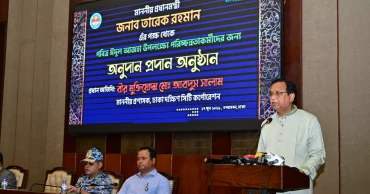
DSCC may scrap current waste collection system next year over complaints
Administrator of the Dhaka South City Corporation (DSCC) Abdus Salam on Wednesday said the existing household waste collection system may be abolished and replaced with a new mechanism next year if residents continue to be deprived of the expected level of service.
"We have received various complaints regarding the ward-based tender system currently used for household waste collection. In some areas, waste is not being collected on time, while in others there are allegations of excessive charges. Whether the current system will continue next year is being seriously considered," he said.
The DSCC administrator made the remarks while addressing a ceremony as chief guest at the Nagar Bhaban auditorium where special Eid grants from the Prime Minister were distributed among city corporation sanitation workers.
A total of 4,950 sanitation workers each received Tk 5,000 as a special Eid assistance grant.
In his speech, Salam described sanitation work as one of the most difficult and demanding services performed by city corporation employees.
"If citizens remain conscious and sanitation workers continue their sincere efforts, it will be possible to transform the face of Dhaka within the next two years," he said, urging both sanitation workers and media professionals to play an active role in raising public awareness about cleanliness.
1 hour ago
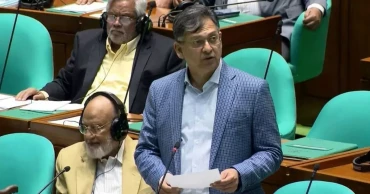
Minister highlights tech-based policing to ensure public security
Home Minister Salahuddin Ahmed on Wednesday said Bangladesh Police has adopted a number of technology-driven plans and is implementing them through multifaceted activities to ensure public safety and maintain law and order across the country.
The minister said this while responding to a starred tabled question placed by ruling party lawmaker Nilufar Chowdhury Moni (Women seat-10) in the House.
He said regular and special police drives are continuing on the basis of intelligence information to recover illegal firearms, explosives, narcotics and other prohibited items, while legal action is being taken against those involved.
Salahuddin said visible police patrols have been strengthened alongside enhanced intelligence surveillance to prevent theft, mugging and robbery.
To curb extremism, he said, law enforcement agencies are maintaining regular communication with leaders of mosques, temples, churches and other religious institutions to ensure that no form of extremism can gain ground.
The minister also said modern technologies, including location tracking and mobile call-list analysis, are being effectively used to identify and arrest criminals.
Highlighting efforts to combat cybercrime, he said regular monitoring is being conducted using information technology tools.
Besides, CCTV cameras are being installed at important locations, while technology-assisted systems are helping law enforcement agencies identify offenders and bring them under the law, Salahuddin said.
He further said close monitoring is being carried out on social media platforms, including Facebook and X, to prevent the spread of hateful images, videos, comments and rumours that could create unrest or undesirable situations.
The minister noted that online data entry systems and information technology are being utilised in ongoing operations to apprehend criminals.
At the same time, state-of-the-art technologies are being incorporated to further enhance the operational capabilities of the Rapid Action Battalion (RAB), he said.
Salahuddin added that modernisation work on the National Emergency Service 999 is also underway to ensure prompt access to police, ambulance and fire service assistance for the public.
1 hour ago