Science

Children’s reactions to smiles and frowns may signal future depression risk, study finds
How children respond to simple facial expressions such as smiles and frowns may provide early clues about their risk of developing depression, according to a new study by researchers at Binghamton University.
The research found that depression can affect the way children pay attention to emotional faces, and these patterns differ depending on whether they have a family history of depression.
Researchers at Binghamton University's Mood Disorders Institute are studying how depression develops during childhood and adolescence. They hope that identifying early warning signs could help doctors and families detect and address mental health problems before they become more serious.
“Many of the risk factors we study are still developing during childhood,” said Brandon Gibb. “This gives us a chance to identify problems early rather than waiting until they become more established.”
Previous studies have shown that people with depression often pay more attention to sad facial expressions. However, scientists have long debated whether this attention pattern causes depression or is a result of it.
The new study is the first to examine how depressive symptoms and attention to emotional faces may influence each other over time in children.
Lead researcher Kelly Gair said the study explored how attention patterns and depressive symptoms continuously affect one another as children grow.
The research followed 242 children and their mothers over a two-year period. Participants were assessed every six months.
During each assessment, children were shown pairs of faces on a screen. One face displayed a neutral expression, while the other showed a happy, sad or angry expression. Researchers used eye-tracking technology to measure which faces attracted the children's attention and how long they looked at them.
The findings revealed different patterns based on family history.
Among children whose mothers had experienced major depression, increasing depressive symptoms were linked to greater attention to sad faces.
Researchers said that as these children became more depressed, they appeared to have greater difficulty shifting their attention away from negative emotional cues.
Gibb suggested that children exposed to more sadness at home may become especially sensitive to sad facial expressions when they experience depressive symptoms themselves.
For children whose mothers had no history of depression, the pattern was different.
Instead of focusing more on sad faces, they spent less time looking at happy faces when their depressive symptoms increased.
Researchers believe this may reflect the loss of a protective factor, as attention to positive emotions could help buffer against depression.
The team is continuing to follow the children as they enter adolescence to determine whether these attention patterns increase the likelihood of developing clinical depression later in life.
The findings were published in the scientific journal Journal of Psychopathology and Clinical Science.
Researchers say the study could help improve early detection and prevention efforts by identifying subtle behavioural signs that emerge before depression becomes severe.
Source:Science Daily
6 hours ago

Chinese scientists uncover key reason why many IVF embryos stop developing
Chinese scientists have identified a major cause behind the early developmental failure of human embryos, a breakthrough that could improve the success rate of in vitro fertilization (IVF) treatments in the future.
The findings, published in the journal 'Cell', come from a study led by researchers at Tsinghua University, who captured the first high-resolution images of human embryos during the first five days after fertilization.
Many couples undergoing IVF face disappointment as more than half of fertilized eggs fail to develop into blastocysts, the stage at which embryos are ready to be implanted in the uterus. The reasons behind this high failure rate have long remained unclear.
To investigate, researchers developed a new imaging tool called a dual-view light-sheet microscope. The technology allowed them to observe living embryos for extended periods without causing damage.
The team analyzed more than 2,000 cell divisions in over 150 human and monkey embryos. They found that more than 70 percent of embryos that stopped developing experienced problems during their second cell division.
According to the researchers, the issue was linked to abnormalities in a cellular structure known as the spindle, which helps distribute genetic material evenly when cells divide. Defects in the spindle led to chromosome separation errors, causing embryo development to halt within a few cell divisions.
The study also revealed that centrosomes, cell structures responsible for organizing the spindle, play a critical role. When embryos had an abnormal number of centrosomes, the spindle could not function properly, increasing the risk of developmental failure.
Building on this discovery, the researchers tested a low dose of a drug designed to regulate centrosome replication during the second cell division. The treatment significantly improved embryo quality, increasing the proportion of embryos with normal centrosomes from 40 percent to 80 percent.
Importantly, the drug did not affect embryos that already had normal centrosomes, suggesting it may offer a targeted way to reduce developmental errors.
Chun So, an assistant professor at Tsinghua University, said the findings could eventually help IVF clinics reduce cases of early embryo arrest and improve pregnancy outcomes.
He added that the research team plans to continue developing advanced imaging technologies to better understand human embryo development after implantation, with the goal of finding new ways to increase the chances of successful pregnancies.
1 day ago

Study finds honey bees follow their own flight routes with remarkable accuracy
Honey bees are much more skilled at navigation than previously believed, with new research showing that individual bees follow their own preferred flight routes and repeat them with impressive precision using landmarks in the environment.
Researchers at the University of Freiburg tracked honey bees flying between their hive and a food source about 120 metres away and found that each bee consistently used nearly the same path on every trip.
The study was led by Andrew Straw, whose team used a drone-based tracking system to observe the insects in a natural agricultural setting.
To monitor the bees, researchers attached tiny reflective markers to them and used a technology called Fast Lock-On (FLO) Tracking. The system enabled the drone to identify and follow individual bees within milliseconds, allowing scientists to record highly detailed three-dimensional flight paths.
The findings showed that each bee preferred a specific route and was able to follow it with exceptional accuracy while travelling both to and from the food source.
“Our recordings show that each bee has its own preferred route and flies it very precisely,” Straw said, adding that the behaviour is so distinct that “each bee has its own personality.”
The research team analysed 255 flight paths near the Kaiserstuhl region. The study area included hedges, a cornfield and a large tree located between the hive and the feeding site, forcing bees to take indirect routes.
Scientists found that bees often flew only a few centimetres away from their previous paths, demonstrating a surprisingly high level of consistency.
The most accurate navigation occurred near noticeable landmarks, particularly the tree. In contrast, bees showed greater variation when flying over the cornfield, where the landscape offered fewer visual references.
According to the researchers, the findings suggest that honey bees rely heavily on visual landmarks to guide their journeys and improve navigation accuracy.
The study also offers new insights into the famous “waggle dance,” the method honey bees use to communicate the location of food sources to other members of the colony.
Previous studies showed that the directional information shared through the waggle dance is not always highly accurate and can vary by about 30 degrees for food sources located around 100 metres away.
However, the new research indicates that this imprecision is not due to poor navigation skills.
Researchers found that bees travelling to locations they already know can stay extremely close to their established routes, deviating by only a few degrees even in areas where flight paths vary the most.
The findings suggest that honey bees possess much stronger navigational abilities than their dance communication alone would indicate, making them among nature’s most precise insect navigators.
Source: Science Daily
2 days ago

Study suggests parrots may use names to identify individuals
Parrots may do more than simply mimic human speech. A new study suggests the birds could be using names to identify specific people, animals and even themselves, much like humans do in everyday communication.
The research, published in the journal PLOS ONE, examined hundreds of recordings of captive parrots and found evidence that some birds use names in meaningful ways rather than just repeating words they hear.
The study was led by Lauryn Benedict of the University of Northern Colorado, working with longtime collaborator Christine Dahlin and researchers from Austria.
Instead of studying parrots in the wild, the team focused on pet parrots living alongside humans. These birds are regularly exposed to human conversations and often hear names being used in daily life.
Using data from the ManyParrots Project, researchers analyzed survey responses and audio recordings from more than 880 parrots.
Nearly half of the participants provided examples of parrots saying names. Among 413 recordings containing names, researchers identified 88 cases in which birds appeared to use names to refer to specific people or animals.
The findings suggest that some parrots associate particular names with individual people rather than using them as general labels for all humans.
Researchers say names play an important role in helping humans manage social relationships, and some animals may use similar vocal signals to recognize or address one another.
However, Dahlin cautioned that scientists cannot yet say parrot naming behavior is the same as human naming systems because the intentions behind animal communication remain unclear.
The recordings also showed that parrots use names in different ways. Some birds repeatedly said their own names to attract attention, indicating that names may serve various social purposes depending on the situation.
According to the researchers, the study suggests parrots have both the mental ability and vocal skills needed to use names flexibly. In some cases, they may even refer to individuals who are not present at the time.
The findings add to growing evidence that parrots possess sophisticated communication abilities, while also highlighting how much scientists still have to learn about how animals use sounds to identify and communicate about one another.The researchers say further studies are needed to better understand when and why parrots and other animals use name-like vocal signals.
Source: Science Daily
3 days ago

Short-term fasting may help reduce gum disease inflammation, study finds
A short-term low-calorie diet may help reduce inflammation linked to gum disease and improve oral health, according to a new study by researchers at King's College London.
The findings suggest that lifestyle changes, including temporary calorie restriction, could complement regular brushing, plaque removal and other standard treatments for gum disease.
Published in the Journal of Clinical Periodontology, the study is believed to be the first to show a link between fasting and reduced markers of gum disease. Previous research had already indicated that fasting can lower inflammation throughout the body.
Lead researcher Giuseppe Mainas said the results indicate that lifestyle changes could play an important role in managing gum disease alongside good oral hygiene practices.
Periodontitis, a severe form of gum disease, affects millions of people worldwide and has been linked to other health problems, including heart disease and diabetes. Current treatments mainly focus on cleaning infected areas around the teeth and controlling plaque buildup.
To examine whether diet could influence gum health, researchers recruited 28 patients from hospitals in Spain and divided them into two groups. One group followed a calorie-restricted diet for five days at a time, while the other continued their normal eating habits.
Participants in the fasting group consumed about 1,100 calories per day for the first two days and 750 calories per day for the following three days. The cycle was repeated three times over six months.
After the study period, researchers found that participants who followed the fasting plan had lower levels of inflammation-related markers in both their blood and gum tissue compared with those in the control group.
They also showed reduced levels of C-reactive protein, a common indicator of inflammation in the body, as well as lower levels of substances directly linked to gum inflammation.
Senior researcher Luigi Nibali said fasting may help by reducing oxidative stress, a process that can damage cells and trigger inflammation. Limiting high-calorie foods and refined carbohydrates such as cakes and biscuits may also contribute to these benefits.
Researchers believe fasting could also positively affect the body's microbiome, although further studies are needed to confirm this link.
The team said fasting-mimicking diets could eventually become a useful addition to conventional gum disease treatments, including professional dental cleaning and oral health guidance.
However, researchers cautioned that fasting may not be suitable for everyone, particularly people with certain medical conditions such as diabetes. They plan to conduct larger studies to better understand the benefits and identify safe approaches for different patient groups.
The findings add to growing evidence that oral health is closely connected to overall health and that dietary habits may play a greater role in preventing and managing disease than previously thought.
Source: Science Daily
4 days ago

Japan's H3 rocket returns to action with cheaper new version after earlier setbacks
Japan's flagship H3 rocket successfully returned to flight on Friday, marking an important milestone for the country's space program with the debut of a lower-cost version aimed at improving its position in the increasingly competitive global space industry.
The rocket lifted off from the Tanegashima Space Center in southwestern Japan and successfully placed its second stage into the planned orbit, according to the Japan Aerospace Exploration Agency (JAXA), which broadcast the launch live.
JAXA also said six small satellites developed by universities and other organizations were believed to have been successfully deployed.
The mission was the first launch of the H3's new "30 configuration," a more affordable version powered by three liquid-fuel LE-9 engines and no rocket boosters. The model is designed to reduce launch costs and make the H3 more attractive to customers. It is one of three planned versions of the rocket intended to serve different mission requirements.
Friday's launch was the sixth successful mission for the H3 program and came after two earlier failures, raising confidence in Japan's next-generation launch vehicle.
The H3 replaced the long-serving H-2A rocket, which had built an impressive record of successful launches. Japan developed the H3 to offer a more cost-effective option in the global launch market, where competition is led by Elon Musk's SpaceX.
Japanese officials consider a reliable and commercially competitive launch system essential for both the country's space ambitions and national security.
The H3 faced difficulties during its first launch in March 2023 when its second-stage engine failed to ignite. Another setback occurred in December when a malfunction in the same stage prevented a navigation satellite from reaching its intended orbit.
The rocket had remained grounded since that December failure, and another unsuccessful mission would have dealt a serious setback to Japan's future space plans, including a Mars mission targeted for 2028.
Japan's smaller Epsilon S rocket program has also faced delays after a test vehicle caught fire in 2024.
JAXA and co-developer Mitsubishi Heavy Industries hope to increase the launch rate of the H3 rocket to between six and eight missions a year in the future.
5 days ago

What investors should know as SpaceX prepares for a retail-heavy IPO
SpaceX is preparing for what could become one of the largest initial public offerings in market history, and the company is inviting everyday investors to take part alongside big financial institutions.
The firm, officially known as Space Exploration Technologies Corp., is planning to direct a larger-than-usual portion of its IPO shares to “retail” investors — people who buy and sell stocks through mobile apps or brokerage accounts, rather than large funds like pension or investment firms.
Typically, only a small share of IPO stock goes to retail buyers, but in SpaceX’s case it could be as high as 30%. Investors may be able to participate through platforms such as Charles Schwab, Fidelity, Robinhood, SoFi and E-Trade. At Fidelity, some investors with as little as $2,000 in their accounts could qualify, far lower than the usual entry thresholds for similar offerings. However, demand is expected to be so strong that many applicants may not receive shares.
Experts also warn that short-term trading could carry risks. Some brokerages may restrict access to future IPOs if investors quickly sell newly acquired shares, especially within days or weeks of listing.
Volatility is another concern. With heavy interest from retail traders, analysts expect sharp price swings, similar to so-called “meme stock” rallies seen in recent years, where sudden enthusiasm drove extreme market movements.
Historically, IPOs often rise on their first trading day — by an average of about 7% — but long-term performance tends to lag comparable companies over time, according to IPO researcher Jay Ritter.
SpaceX also enters the market with significant financial exposure. The company carries about $29.1 billion in debt and reported losses of $4.9 billion last year and another $4.3 billion in early 2026. It has also cautioned investors that it may not achieve profitability in the future, noting the high cost of rocket launches and advanced infrastructure development.
Ownership structure is another key issue. The IPO will offer Class A shares with one vote each, while founder Elon Musk will retain control through high-vote Class B shares. After the listing, Musk is expected to hold more than 82% of total voting power, giving him dominant influence over company decisions.
Some major institutional investors, including public pension funds in the US, have raised concerns about this structure, warning that it gives Musk excessive control and limits accountability to shareholders.
There is also a chance that even people who do not directly invest in the IPO could still end up owning shares indirectly. Large index funds such as those tracking the Nasdaq 100 could add SpaceX soon after listing, depending on eligibility rules, meaning millions of investors may gain exposure automatically.
Finally, investors should be careful not to confuse SpaceX with similar tickers. The company is expected to trade under the symbol “SPCX,” which is close to other existing listings in the market.
7 days ago

Exercise may help cancer patients stay mentally sharp during chemotherapy: Study
Many cancer patients undergoing chemotherapy struggle with memory lapses, poor concentration and mental fog, a condition commonly known as “chemo brain.” Now, a new study suggests that regular exercise may help reduce some of these cognitive problems during treatment.
The findings come from a Phase II clinical trial published in ‘CANCER’, a peer-reviewed journal of the American Cancer Society.
Researchers say cancer-related cognitive impairment affects up to 80% of people receiving chemotherapy. Symptoms can include difficulty focusing, remembering information and managing multiple tasks at once.
To explore possible solutions, scientists tested whether exercise, low-dose ibuprofen, or a combination of both could help protect brain function during chemotherapy.
The study involved 86 cancer patients who reported cognitive difficulties while receiving chemotherapy. Participants were randomly divided into four groups for six weeks: a home-based exercise programme combined with low-dose ibuprofen, exercise with a placebo, ibuprofen only, and placebo only.
The exercise programme, known as Exercise for Cancer Patients (EXCAP), included low-to-moderate intensity walking and resistance exercises that participants could do at home.
After six weeks, researchers found that patients who followed the exercise programme without ibuprofen performed significantly better on attention-related tests compared to those who received only a placebo.
Patients who took low-dose ibuprofen alone also showed some improvement in attention, although the benefits were less consistent than those seen with exercise.
The study also found that participants in the exercise groups were less likely to have cognitive problems noticed by family members, friends or colleagues.
However, researchers observed mixed results for ibuprofen. Patients taking the medication showed less improvement in short-term verbal memory compared to those who were not taking it, suggesting that more research is needed to understand its effects.
Overall, the findings indicate that exercise may help preserve cognitive function and reduce some symptoms of chemo brain during chemotherapy treatment.
Lead researcher Michelle C. Janelsins said the results were encouraging, particularly because exercise offers many additional health benefits for cancer survivors.
She noted that this is among the first studies specifically designed to examine the impact of exercise and anti-inflammatory medication on chemotherapy-related cognitive impairment using both cognitive tests and patient feedback.
Researchers stressed that larger Phase III trials will be needed to confirm the findings and determine the most effective exercise routines and ibuprofen doses.
They also advised patients experiencing cognitive difficulties during cancer treatment to consult their healthcare providers before starting any new exercise programme or medication.
Source: Science Daily
7 days ago
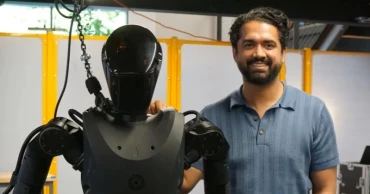
Could humanoid robots become the next soldiers on the battlefield?
Humanoid robots have long been a staple of science fiction, but some technology companies are now actively exploring whether they could one day play a role in military operations.
Inside a San Francisco robotics facility, a humanoid robot named Phantom is being trained not for combat today, but for basic tasks such as interacting with objects and understanding its surroundings. The robot, developed by startup Foundation Robotics, is designed for both civilian and military use.
The company says it is the only US-based firm currently building humanoid robots specifically for a wide range of defense applications.
Potential military roles include transporting supplies, conducting reconnaissance missions, inspecting dangerous areas, recovering equipment or injured personnel, and eventually supporting combat operations. The idea is that robots could take on high-risk tasks, reducing danger for human soldiers.
Foundation Robotics CEO Sankaet Pathak argues that humanoid robots could help keep troops out of harm's way, particularly in dangerous environments such as urban combat zones and buildings where ambushes are common.
However, the technology remains far from battlefield-ready.
The company's current model, Phantom MK-1, still faces major limitations. It lacks a battery, cannot operate in harsh weather, cannot stand up on its own after falling, and has limited hand movement and strength.
A more advanced version, Phantom MK-2, is now under development. According to the company, it will be weather-resistant, capable of operating for about six hours on a single charge, and able to recover after falling. Engineers are also working on more advanced robotic hands that could eventually handle tools and other equipment.
Foundation aims to produce up to 40,000 robots annually by the end of 2027 and eventually reduce costs to below $20,000 per unit.
The company has already secured $24 million in research contracts linked to the US military and says two of its robots are currently being tested by the Ukrainian military. While US military trials focus on handling and logistics tasks, weapon-related testing is reportedly taking place in Ukraine.
The startup drew additional attention after Eric Trump joined the company as an investor and adviser earlier this year.
Military interest in humanoid robots appears to be growing. Experts say armed forces are exploring whether such machines could assist troops in a variety of roles.
According to Dean Fankhauser of robotics advisory firm Robozaps, it is unsurprising that some companies see military applications as a business opportunity.
Modern battlefields already make extensive use of autonomous drones and robotic systems, particularly in the war in Ukraine. Some companies have also explored arming four-legged robotic systems, although they have not yet been widely deployed in combat.
Still, many robotics firms oppose weaponising humanoid robots, citing ethical concerns and the potential risks of autonomous weapons.
Pathak argues that humanoid robots offer unique advantages because they are built to operate in environments designed for humans. Existing tools, vehicles and equipment could potentially be used without significant redesign.
He insists humans should remain responsible for decisions involving lethal force, although he acknowledges there could be situations where autonomous responses are considered necessary.
Despite the growing interest, experts say significant technical barriers remain.
One of the biggest challenges is developing artificial intelligence capable of operating safely in unpredictable real-world environments. Robots must be able to interpret complex situations, adapt to changing conditions and make decisions in real time.
Phantom relies on an AI system called Cortex, which combines task-specific reasoning with broader environmental awareness. Cameras provide a 360-degree view, allowing the robot to navigate and react to its surroundings.
Yet specialists caution that current humanoid robots are still far from matching human abilities.
Fankhauser notes that many commercial humanoid robots today struggle with relatively simple tasks and remain largely untested in chaotic real-world conditions.
"If there were a conflict over Taiwan today, the idea that humanoid robots would play a major combat role is unrealistic," he said, although he believes the technology could advance significantly within the next decade.
Florida Institute for Human and Machine Cognition researcher Robert Griffin also sees potential benefits in reducing risks to soldiers but says unpredictable environments remain a major obstacle.
Tasks that humans perform naturally, such as navigating unfamiliar buildings or reacting to unexpected events, remain extremely difficult for robots.
Battery life is another major challenge. Moving on two legs and operating multiple joints consumes large amounts of energy, making long operating times difficult to achieve.
Experts say the vision of humanoid robot soldiers remains largely theoretical for now. While advances in artificial intelligence and robotics are moving quickly, turning humanoid machines into reliable battlefield assets will require overcoming major technological, practical and ethical challenges.
Source: BBC
8 days ago

New weekly diabetes injection shows strong results in clinical trial
A new once-weekly diabetes medication, retatrutide, has demonstrated significant improvements in blood sugar control and weight loss among adults with type 2 diabetes, according to a Phase 3 clinical trial published in The Lancet.
The study involved 930 adults with type 2 diabetes who received either varying doses of retatrutide or a placebo over a 40-week period. Researchers found that the drug substantially lowered long-term blood glucose levels while also producing considerable weight loss.
Participants treated with retatrutide lost an average of 11.5% to 15.3% of their body weight, compared with only 2.6% among those who received the placebo. These results suggest the drug could become a promising new option alongside current treatments such as Ozempic and Mounjaro.
Retatrutide works differently from existing diabetes medications because it targets three hormone pathways involved in appetite regulation, metabolism, and blood sugar management. It mimics the effects of GLP-1, GIP, and glucagon, a combination researchers believe contributes to its powerful impact on both weight reduction and glucose control.
In addition to lowering blood sugar and body weight, the medication was associated with improvements in cholesterol levels and blood pressure.
Although 14 participants experienced serious adverse events during the trial, researchers reported that most side effects were mild to moderate and tended to improve over time. The most common issues involved gastrointestinal symptoms such as nausea and digestive discomfort.
The study authors believe retatrutide could provide important benefits for people requiring more intensive treatment for type 2 diabetes and obesity, though additional research is still underway.
The findings build on earlier studies from the drug’s manufacturer, Eli Lilly, which indicated that retatrutide was highly effective for weight loss in people with obesity, reports Gulf News.
Medical experts have responded positively but remain cautious. Dr Kath McCullough described the results as encouraging and noted that such treatments could greatly improve the lives of people living with obesity and diabetes.
However, she emphasized that prevention of obesity and type 2 diabetes should remain a priority and that medication alone is not a complete solution.
Other experts highlighted the need for direct comparisons with current treatments such as Semaglutide and Tirzepatide. Dr Marie Spreckley noted that while the level of weight loss was impressive, it remains unclear whether retatrutide performs better, similarly, or worse than existing medications because no head-to-head trials have yet been conducted.
Meanwhile, Diabetes UK welcomed the results, saying the drug appears capable of delivering both meaningful weight loss and improved blood sugar control, while calling for further studies to assess its long-term safety and effectiveness.
9 days ago