Parliament
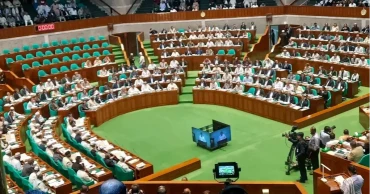
Lawmaker seeks household appliances for MPs’ flats
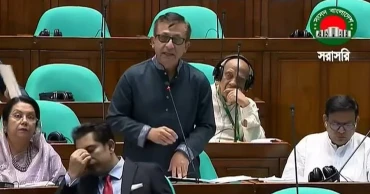
While lawmakers spent Wednesday debating the proposed national budget, one MP drew attention to a matter much closer to home: curtains, microwaves and washing machines.
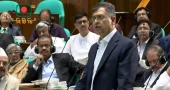
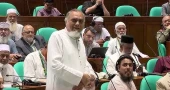
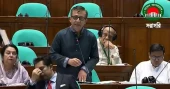
Taking part in the discussion on the proposed 2026-27 budget, Bangladesh Jamaat-e-Islami lawmaker Md Mizanur Rahman urged the authorities to equip MPs' residential flats with the promised household conveniences.
The MP lamented that although Parliament has already passed a hefty supplementary budget, the curtains for lawmakers' flats have yet to get a grand appearance.
“We are discussing the budget. We have also passed the supplementary budget involving large sums of money. But the curtains meant for the residential flats of MPs have still not been hung,” he said.
Addressing the Speaker, the lawmaker went on to press his case for a package of domestic upgrades.
“We heard that each flat would receive a washing machine and a microwave oven. Through you, I strongly demand that we receive the curtains, microwaves and washing machines,” he said.
The remarks briefly shifted the focus of the budget debate from fiscal policy and development spending to the more immediate challenges of parliamentary living, where apparently the absence of curtains remains a pressing concern.
No immediate response was given regarding when the long-awaited curtains, microwaves and washing machines might arrive, leaving MPs to continue their legislative duties while keeping one eye on the budget and the other on their curtain-less windows.
19 minutes ago
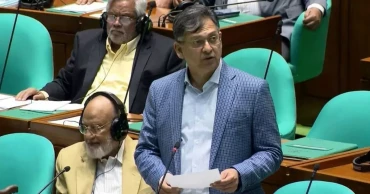
Minister highlights tech-based policing to ensure public security
Home Minister Salahuddin Ahmed on Wednesday said Bangladesh Police has adopted a number of technology-driven plans and is implementing them through multifaceted activities to ensure public safety and maintain law and order across the country.
The minister said this while responding to a starred tabled question placed by ruling party lawmaker Nilufar Chowdhury Moni (Women seat-10) in the House.
He said regular and special police drives are continuing on the basis of intelligence information to recover illegal firearms, explosives, narcotics and other prohibited items, while legal action is being taken against those involved.
Salahuddin said visible police patrols have been strengthened alongside enhanced intelligence surveillance to prevent theft, mugging and robbery.
To curb extremism, he said, law enforcement agencies are maintaining regular communication with leaders of mosques, temples, churches and other religious institutions to ensure that no form of extremism can gain ground.
The minister also said modern technologies, including location tracking and mobile call-list analysis, are being effectively used to identify and arrest criminals.
Highlighting efforts to combat cybercrime, he said regular monitoring is being conducted using information technology tools.
Besides, CCTV cameras are being installed at important locations, while technology-assisted systems are helping law enforcement agencies identify offenders and bring them under the law, Salahuddin said.
He further said close monitoring is being carried out on social media platforms, including Facebook and X, to prevent the spread of hateful images, videos, comments and rumours that could create unrest or undesirable situations.
The minister noted that online data entry systems and information technology are being utilised in ongoing operations to apprehend criminals.
At the same time, state-of-the-art technologies are being incorporated to further enhance the operational capabilities of the Rapid Action Battalion (RAB), he said.
Salahuddin added that modernisation work on the National Emergency Service 999 is also underway to ensure prompt access to police, ambulance and fire service assistance for the public.
1 hour ago

Treasury bench members defend proposed budget
Treasury bench lawmakers on Tuesday strongly defended the proposed national budget for fiscal year 2026-27, describing it as people-oriented and welfare-focused, while dismissing opposition criticism as unfounded during a lively debate in Parliament.
Participating in the budget discussion, ruling party MPs praised the proposed budget and thanked Prime Minister Tarique Rahman for what they termed a pro-people fiscal plan aimed at ensuring inclusive development.
The debate saw sharp exchanges between treasury and opposition lawmakers over taxation, revenue targets and the overall direction of the budget.
Opposition MPs argued that the revenue collection target set in the proposed budget was overly ambitious and warned that the burden of taxation on the middle class will increase.
Responding to the criticism, BNP lawmaker Shariful Alam from Kishoreganj-6 said the opposition is criticising the budget merely for the sake of criticism. “The budget has increased taxes on alcohol and cigarettes, and that is perhaps why they do not like it,” he said.
Reserved seat BNP MP Momtaj Alo also expressed frustration over the opposition’s stance, saying they were focusing only on selected aspects of the budget while ignoring its broader benefits.
The discussion also featured a debate on the country’s road infrastructure. After an opposition MP raised concerns about dilapidated roads, BNP reserved seat member Zeeba Amina Khan blamed corruption during the previous administration for the current condition.
Speaking largely in English during her 11-minute speech, she said, “The roads are in a very, very bad situation. This is due to corruption that you have seen from the previous regime.”
Her remarks, which included occasional Bengali expressions, later attracted attention and humourous reactions on social media.
Bangladesh Jamaat-e-Islami MP Md Moktar Ali from Jashore-6 also delivered his speech in English, arguing that the proposed budget will increase the tax burden on citizens.
Another Jamaat lawmaker, Md Abdus Sattar, criticised the budget, saying high inflation and ambitious revenue collection targets could place additional pressure on consumers through indirect taxation.
He warned that opportunities to legalise undisclosed money remained in the budget and echoed economists’ concerns about potential risks and negative impacts on the economy.
During his speech, Speaker Hafiz Uddin Ahmad intervened and asked the MP to refrain from using inappropriate expressions.
The Speaker subsequently ordered an objectionable colloquial term to be expunged from the parliamentary record.
Independent MP AZM Rezwanul Haque, elected after failing to secure a BNP nomination, praised the budget but proposed reductions in certain taxes.
BNP MP Md Maminul Haque said the budget reflected the core commitments outlined in the BNP’s election manifesto.
Another BNP lawmaker Mohammad Abu Sufian claimed the proposed budget was accepted by Parliament, the public and the international community.
He noted that unlike previous years, prices of essential commodities did not go up immediately after the budget announcement. He also highlighted reductions in source taxes on around 60 essential items, including rice, wheat, potatoes, fish, onions, garlic, edible oil and sugar.
Responding to opposition criticism, BNP reserved seat member Nipun Roy Chowdhury described the budget as a roadmap for building a non-discriminatory and welfare-oriented state.
23 hours ago
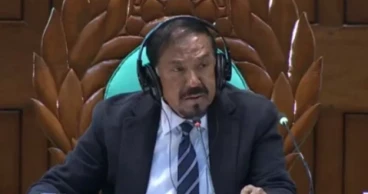
Speaker irked at Jamaat MP's use of unparliamentary language
Speaker Hafiz Uddin Ahmad on Tuesday cautioned a Jamaat-e-Islami lawmaker against using indecent language during parliamentary proceedings, stressing that Parliament should remain free from offensive and vulgar expressions.
While presiding over the budget discussion in the House, the Speaker intervened after Bangladesh Jamaat-e-Islami (BJEI) lawmaker Md Abdus Sattar, elected from Nilphamari-1, used a colloquial expression containing a vulgar term while making a point through an analogy.
“Honourable Member, please exercise caution while speaking in Parliament. We do not want any indecent or vulgar words to be uttered in this House,” the Speaker said.
He further informed the House that certain objectionable expressions used by the MP had been expunged from the official parliamentary record.
During his speech, Abdus Sattar attempted to illustrate his argument by recounting a conversation between a sieve and a needle.
In the analogy, the needle points out a hole in the sieve, while the sieve responds by highlighting the many holes in the needle’s counterpart.
As the MP narrated the story, he used a crude Bengali term referring to a person's buttocks, prompting immediate intervention from the Speaker after finishing his speech.
After ordering the offensive words to be removed from the record, the Speaker reminded lawmakers to uphold the dignity and decorum of Parliament while participating in debates.
The incident occurred during the ongoing discussion on the national budget in the Jatiya Sangsad.
1 day ago
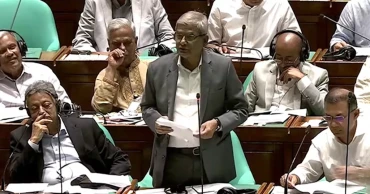
Phased local body polls likely to begin in Sept-Oct, Fakhrul tells Parliament
Local Government, Rural Development and Co-operatives Minister Mirza Fakhrul Islam Alamgir on Tuesday said the countrywide local government elections, to be held in phases, may begin in September or October this year after the end of the monsoon season.
Replying to a question from ruling party lawmaker Md Mustafizur Rahman Babul (Jamalpur-3) during the question-answer session in Parliament with Speaker Hafiz Uddin Ahmad in the chair, he said the government plans to complete elections to all tiers of local government bodies within the next year.
The minister said elections to Union Parishads, municipalities, Upazila Parishads, Zila Parishads and city corporations will be held gradually, subject to the availability of budgetary allocations.
“The Union Parishad elections may be held first, followed by elections to other local government institutions in phases,” he said.
Mirza Fakhrul also said elections to all 13 city corporations, including the newly established Bogura City Corporation, are expected to be completed within the same timeframe.
Replying to another question from ruling party MP Mohammad Shamim Kaiser, he said the Local Government Division has already allocated Tk 6 lakh to each Upazila Parishad for constructing an inspection room within the Parishad premises for lawmakers and senior government officials.
Responding to a question from reserved seat MP Nilufar Chowdhury Moni, the minister said the daily water demand in Dhaka North City Corporation (DNCC) and Dhaka South City Corporation currently stands at 3.2-3.25 billion litres, with fluctuations during summer and winter seasons.
He said the present daily water production capacity of Dhaka Water Supply and Sewerage Authority (WASA) is around 2.95-3.0 billion litres.
According to the minister, water is treated using advanced chemicals, including PAC, alum sulphate and chlorination, and supplied through the network only after quality testing in WASA laboratories in line with World Health Organization guidelines.
He added that Dhaka WASA collects 40-50 water samples daily from different parts of the city and tests them against various parametres to ensure quality standards.
In response to a question from reserved seat MP Selima Rahman, Mirza Fakhrul said household waste collection in the DNCC areas is currently carried out by private operators, who transport waste by vans to secondary transfer stations.
He said efforts are underway to bring these operators under formal contracts with the city corporation. Once the contracting process is completed, the use of smaller covered vans for environment-friendly waste transportation will be considered.
Replying to a question from reserved seat MP Nipun Roy Chowdhury, the minister said the government has taken steps to develop Version-2 of the Birth and Death Registration software.
The upgraded system will include online payment facilities and blockchain-based tracking features, enabling authorities to identify any changes made to records and determine at which level such modifications occurred, he said.
Mirza Fakhrul also said regular training is being provided for registrars and registration assistants across the country to simplify services and reduce public inconvenience.
1 day ago
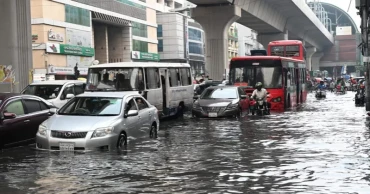
Steps underway to end Dhaka’s waterlogging: Fakhrul
Local Government, Rural Development and Co-operatives Minister Mirza Fakhrul Islam Alamgir on Tuesday told Parliament that the government has adopted a comprehensive short-, medium- and long-term action plan to address Dhaka's persistent waterlogging problem, including canal restoration, drainage infrastructure upgrades and the construction of new pump stations.
Replying to a written question from ruling party lawmaker Md Abul Kalam (Cumilla-9) in the House, which sat with Speaker Hafiz Uddin Ahmad in the chair, he said Dhaka's drainage crisis has worsened over the years due to the loss of rivers, canals and water bodies.
Under the short-term programme, silt and waste are being removed from drains, box culverts and canals, while rainwater is being discharged through existing pump stations, Mirza Fakhrul said.
He said portable pumps are also being used to drain accumulated rainwater from waterlogging-prone areas during heavy rainfall, while additional catchpits and iron gratings are being installed to improve drainage.
To strengthen emergency response, ward-based teams have been formed to take immediate action in waterlogged areas, and obstructions hindering water flow are being removed, the minister said.
He added that awareness programmes are being conducted to discourage the dumping of waste into drainage channels.
On medium-term measures, Mirza Fakhrul said development work on four major canals are underway under a canal restoration, rehabilitation and beautification project.
Construction of outlets is underway to discharge water from the Zia Sarani and Shyampur canals into the nearby Buriganga River, he said.
The minister said new drains are also being constructed, while existing drainage infrastructure is being repaired and renovated to improve overall water discharge capacity.
Regarding long-term plans, he said the government has adopted an extensive programme to modernise Dhaka's drainage network. The plan includes the development of around 50 kilometres of canals, including the Zia Sarani, Kajla and Mridhabari canals, along with other waterways.
Mirza Fakhrul also said drainage and road infrastructure will be improved in 18 newly incorporated wards to reduce waterlogging.
In the Dhaka South City Corporation area, additional outlets and pump stations will be built under the drainage master plan for 57 wards to ensure the quick discharge of rainwater, he said.
The government also plans to assess the capacity of existing drainage facilities and undertake necessary upgrades to increase water flow, the minister said.
In addition, utility ducts for electricity, gas, water supply and internet services will be constructed, while a sustainable and modern solid waste management system will be developed to support long-term drainage improvements and urban resilience, he added.
1 day ago
Search committee soon to constitute a strong ACC: Salahuddin
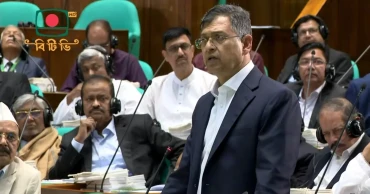
Home Minister Salahuddin Ahmed on Monday told Parliament that a search committee will be formed anytime to recommend names for reconstituting the Anti-Corruption Commission (ACC), expressing optimism that a stronger anti-graft body will be established.
"Maybe you think the government is not sincere. However, the government is truly sincere. A search committee will be formed to constitute the Anti-Corruption Commission,” he said.
The home minister said this while speaking during the discussion on the cut-motions over additional demands for the ACC in the supplementary budget for the 2025-26 fiscal year in the House.
He said the Chief Justice on Sunday sent the name of his representative for the search committee, clearing the way for its formation. “Now, the search committee will be formed," he said.
Salahuddin said a strong ACC will be established with a chairman and commissioners through the search committee.
He said though an ordinance related to the ACC, which was promulgated during the interim government, was not ratified by current Parliament, the earlier law had been revived, which also includes provisions for a search committee.
The minister further said the current arrangement is an interim step and that a more powerful ACC will be formed once the proposed ACC Bill is passed in Parliament.
Responding to the remarks made by independent lawmaker Rumeen Farhana, he said corruption is widespread across society, but the politicians are blamed for all faults.
In most cases, politicians have to sign off on the final stage of files, so they are blamed for all irregularities, Salahuddin said.
Earlier in her speech, Rumeen Farhana criticised the ACC’s effectiveness, alleging that corruption remains deeply entrenched in the country and questioning the political will to strengthen the commission.
Noting that bureaucracy and politics are top most corrupt professions in Bangladesh, she said, “Politics generates money, which is probably only possible in a country like Bangladesh.”
Bangladesh Jamaat-e-Islami lawmaker Md Shafiqul Islam also expressed concern over the independence of the ACC, saying political and administrative influence continues to affect its functioning.
1 day ago
Parliament passes Tk 56,117cr supplementary budget
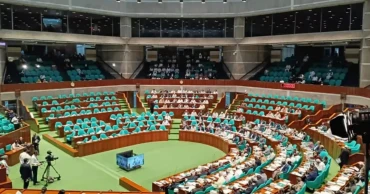
Parliament on Monday passed the supplementary budget of Tk 56,117 crore for the fiscal 2025-26 to meet the increased expenditures under different ministries and divisions.
Finance Minister Amir Khosru Mahmud Chowdhury placed the supplementary budget in the House on June 11 along with the national budget for the next fiscal year.
In the FY26 financial year, the total budget was Tk 7,90,000 crore in favour of 62 ministries and divisions.
In the supplementary budget, the expenditure in 27 ministries and divisions increased by Tk 56,117.59 crore while expenditures in 35 ministries and divisions were cut by Tk 59,348.67 crore.
As a result, the budget allocations for these ministries and divisions got reduced by Tk 2,000 crore and the total allocation now stands at Tk 7,78,000 crore.
On Monday, the finance minister moved the Appropriation Bill, 2026 in the House following general discussion on the supplementary budget. Later, the bill was passed by a voice vote.
Different ministries, divisions and institutions sought an increased amount under 25 demands for grant. As many as 304 cut-motions were moved by 11 members.
Discussions were held on three cut-motions – on Finance Division, Planning Division, Commerce Ministry, Science and Technology Ministry, Local Government Division, Water Resources Ministry, Food Ministry and Anti-Corruption Commission.
These motions were brought by Bangladesh Jamaat-e-Islami MPs Shahjahan Chowdhury, Md Mujibur Rahman, GM Nazrul Islam, Md Abdul Gafur, Md Quamrul Hassan, Muhammad Nazibur Rahman, M Abdul Aleem, Al Faruq Abdul Latif, Md Ruhul Amin, Muhammad Ali Asgar, M Amir Hamza, Md Afjal Hossain, M Shafiqul Islam, Shaikh Monzurul Haque (Rahad), Md Masud Parves and Independent MPs Rumeen Farhana, and Sk Mozibur Rahman Iqbal.
However, those cut-motions were rejected by voice vote.
The Finance Division got the highest allocation of Tk 28,655 crore while the Textiles and Jute Ministry the lowest Tk 0.45 crore.
The Parliament Secretariat got Tk 16.59 crore while Cabinet Division Tk 15.67 crore, Supreme Court Tk 19.77 crore, Election Commission Tk 1,389.65 crore, Public Service Commission Tk 30.01 crore, Financial Institutions Division Tk 1690.81 crore, Planning Commission Tk 12,407.83 crore, IMED Tk 21.97 crore, Commerce Ministry 301.93 crore, Foreign Ministry Tk 59.97 crore, Law Ministry Tk 84.74 crore, Public Security Division Tk 171.68 crore, Legislative and Parliamentary Affairs Division Tk 0.87 crore, Science and Technology Ministry Tk 4,923.48 crore, ICT Division Tk 722.46 crore, Women and Children Affairs Ministry Tk 293.35 crore, Information and Broadcasting Ministry Tk 112.58 crore, Religious Affairs Ministry Tk 220.41 crore, Local Government Division Tk 1,809.56 crore, Expatriates’ Welfare and Overseas Employment Ministry Tk 75.61 crore, Land Ministry Tk 97.71 crore, Water Resources Ministry Tk 2,177.04 crore, Food Ministry Tk 683.91 crore, Liberation War Affairs Ministry 122.19 crore and ACC Tk 11.68 crore.
2 days ago
Jamaat MP demands statement in JS over adviser’s denied entry to India
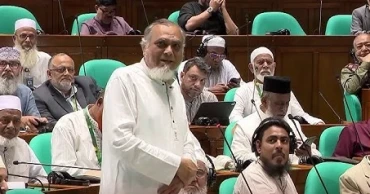
Bangladesh Jamaat-e-Islami lawmaker Saiful Alam on Monday demanded a statement under Rule 300 of the Rules of Procedure in Parliament over an incident in which Prime Minister’s Adviser Dr Zahed Ur Rahman was reportedly prevented from entering India and kept waiting for two hours at a Delhi airport.
Raising the issue on a point of order in the House, he said the adviser was not initially allowed to enter India despite the submission of the necessary diplomatic communication.
“Yesterday (Sunday), our Prime Minister’s Information Adviser was not allowed to enter India. As far as I know, despite proper diplomatic correspondence, he was kept waiting for two hours at Delhi’s Indira Gandhi International Airport,” Saiful Islam said.
He alleged that although permission was eventually granted, the adviser decided to return to Bangladesh instead of proceeding with the visit.
Questioning whether there had been any diplomatic failure on Bangladesh’s part, the lawmaker urged the government to explain the circumstances surrounding the incident and sought a ministerial statement under Rule 300 of the Rules of Procedure.
“I demand a statement from the minister concerned under Rule 300 on whether there was any diplomatic failure and what measures have been taken in this regard,” he said.
In response, Speaker Hafiz Uddin Ahmad said the matter did not qualify as a point of order. “If a notice is submitted, it will be considered,” he told the House.
2 days ago
Bangladeshi jute products losing ground against cheap synthetic fibres in global market: Commerce Minister
The growing availability of low-cost synthetic fibres worldwide have put the country's jute products under threat in the global market, said Textiles and Jute Minister Khandaker Abdul Muqtadir in Parliament on Monday.
“Jute products are under threat in the global market due to the increasing availability and use of low-cost artificial fibres worldwide,” he said, while replying to a scripted question from ruling party lawmaker Selina Sultana (Women Seat-35). Speaker Hafiz Uddin Ahmad, Bir Bikram, tabled the question-answer session at the outset of the day's business in the House.
Move afoot to bolster mechanism to curb market dominance: Muktadir
The textile and jute minister said although there is significant potential for exporting jute products to international markets, the sector continues to face a number of challenges, including the easy availability and increasing use of inexpensive synthetic fibres worldwide.
Raising other challenges, he said, most jute mills are struggling to remain competitive internationally due to outdated technologies and machinery in the country. Besides, exporters face obstacles in shipping jute and jute goods because Bangladesh lacks internationally accredited laboratory testing facilities, he said.
Khandaker Abdul Muqtadir said the country is also lagging behind in exploring new markets and carrying out branding activities for jute products.
However, he highlighted various government initiatives aimed at overcoming these challenges.
In reply to a separate question from treasury bench member Mostafizur Rahman Babul (Jamalpur-3), the Textiles and Jute Minister said the production operation of 25 mills under the Bangladesh Jute Mills Corporation (BJMC) were shut down on July 1, 2020 in line with a government decision and later 20 mills were selected to be reopened under private management through lease agreements.
He said lease agreements have already been signed for 14 mills, of which nine have resumed operations.
Out of the 20 mills, the process is underway to lease out the remaining six mills, he said.
The minister expressed hope that the remaining mills would also be brought under private management and become operational by December this year in line with the government's 31-point reform agenda.
2 days ago