Others
G7 leaders endorse Trump’s Iran deal, urge swift implementation
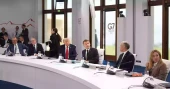
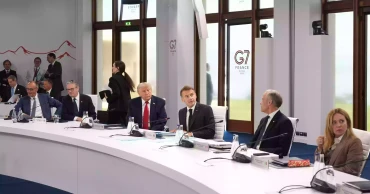
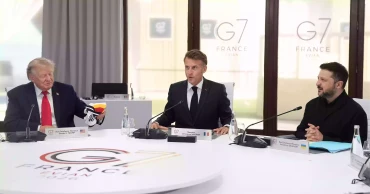
Leaders of the Group of Seven (G7) nations have voiced support for US President Donald Trump’s proposed agreement with Iran aimed at reopening the Strait of Hormuz and extending a fragile ceasefire, although details of the deal remain largely undisclosed.
In a joint declaration issued at the summit in France, G7 leaders described the proposed agreement as a “historic opportunity” to prevent Iran from acquiring nuclear weapons and address concerns related to its regional influence and ballistic missile programme.
The leaders pledged support for implementing the agreement, despite the fact that neither Washington nor Tehran has officially released the text.
According to leaked versions of the interim accord, Iran would immediately move to reopen the Strait of Hormuz after the deal is signed and would be permitted to resume unrestricted oil exports. The agreement is expected to be formally signed in Switzerland on Friday.
The proposed framework also envisions the United States working toward lifting American and United Nations sanctions on Iran if a comprehensive agreement on Tehran’s nuclear programme is reached.
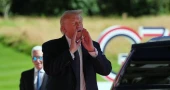
Speaking on the sidelines of the summit during a meeting with Egyptian President Abdel-Fattah el-Sissi, Trump said the agreement remained confidential but described it as a strong memorandum of understanding.
“Nobody knows what it is but it’s very strong,” Trump told reporters, adding that the United States could abandon the deal if it proves unsatisfactory.
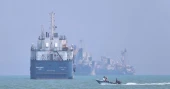
While backing the initiative, G7 leaders acknowledged the importance of restoring maritime traffic through the Strait of Hormuz, through which around one-fifth of globally traded oil and natural gas passed before the conflict began.
The summit declaration said a maritime mission led by France and the United Kingdom could help secure commercial shipping routes, protect merchant vessels and support efforts to clear any remaining threats in the waterway.
The proposed agreement also includes an immediate halt to hostilities in Lebanon between Israel and the Iran-backed Hezbollah group. However, questions remain over Israel’s military presence in parts of southern Lebanon, a point that has generated disagreement between Tehran and Tel Aviv.
G7 leaders expressed support for efforts to strengthen Lebanon’s sovereignty and implement a robust ceasefire while advancing the disarmament of Hezbollah.
Trump also criticised the prolonged fighting in Lebanon, saying too many lives had been lost during the conflict.
The final day of the summit focused on economic growth, artificial intelligence and concerns over global trade, with leaders from India, South Korea, Kenya and Brazil also participating in discussions.
1 hour ago
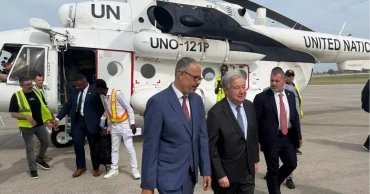
UN chief visits Haiti as new international force prepares to tackle gang violence
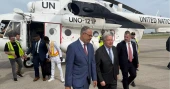
UN Secretary-General António Guterres visited Haiti on Tuesday as the country faces worsening gang violence that has displaced millions and left thousands dead or homeless.
According to new UN figures, around 2,300 people have been killed in Haiti so far this year, while another 100 have been kidnapped. The violence has forced about 1.5 million people from their homes. Among the latest kidnapping victims is James Boyard, chief of staff at the Defense Ministry, who was abducted last week in what was considered one of the safer areas of the capital.
Guterres arrived in Port-au-Prince for a one-day visit days after a violent weekend in the seaside slum of Cité Soleil, where more than 30 people were killed, injured or reported missing, according to a local human rights group.
His convoy passed through areas heavily damaged by years of gang violence, including abandoned homes, destroyed businesses and buildings scarred by gunfire. Graffiti on walls reflected public frustration, with messages supporting police and condemning the powerful gang coalition known as Viv Ansanm, which is believed to control about 70% of Port-au-Prince.
The UN chief also saw large numbers of displaced people living in makeshift shelters under tarpaulins and temporary structures.
More than 300,000 people have been displaced by gang violence in Port-au-Prince alone, the highest number ever recorded. The UN's migration agency said over 18,000 people fled Cité Soleil in May.
"Haiti's displacement crisis is entering an even more alarming phase," said Gregoire Goodstein, the International Organization for Migration's chief in Haiti.
During his visit, Guterres toured the headquarters of a newly formed international force that is expected to begin operations in the coming weeks. The force was approved by the UN Security Council and will replace the previous UN-backed mission led by Kenyan police, which struggled with limited funding and manpower.
Troops from Jamaica, Chad, El Salvador and Guatemala have joined the force, although total deployment remains below 1,000 personnel.
The international force is expected to work alongside Haiti's National Police and armed forces to combat gangs and restore security.
Guterres later held talks with Prime Minister Alix Didier-Fils-Aimé, who is under growing pressure to organize elections in the Caribbean nation of nearly 12 million people.
Haiti has been without a president since Jovenel Moïse was assassinated at his private residence in July 2021.
Following the meeting, Fils-Aimé said security remained the government's top priority to allow elections to take place and restore constitutional governance. He also called on countries supporting the international force to fulfill their commitments.
Guterres also visited a temporary shelter set up in a former school, where more than 1,200 displaced people are living in overcrowded conditions.
Many residents said they had fled gang attacks years ago and still could not safely return home. Women living at the shelter complained about the lack of privacy, poor sanitation and concerns for their children.
One resident described the cramped conditions, while others said only one meal a day was guaranteed.
"We're going to do our best," Guterres told a group of women during a private discussion.
Outside the shelter, some residents voiced frustration and demanded a safe return to their communities.
Wendy Cejour, who has lived at the shelter with his family for about 18 months, said conditions remained extremely difficult.
"As long as we're alive we have hope, but things are difficult," he said, calling for the chance to return home.
Ahead of the visit, Human Rights Watch urged the UN chief to focus on protecting civilians and addressing the root causes of violence and human rights abuses.
After meeting displaced families, Guterres said he was deeply moved by what he witnessed.
"What I saw will not leave me," he said. "Each day is a fight to survive. The women and the children pay the highest price."
10 hours ago
Interim US-Iran deal leaves major nuclear dispute unresolved
The interim agreement between the United States and Iran has opened the door for further negotiations, but the most difficult issue between the two longtime rivals — Iran’s nuclear programme remains unresolved.
The deal, expected to be formally signed in Switzerland on Friday, provides a 60-day window for talks aimed at addressing Tehran’s nuclear activities. However, analysts and lawmakers from both major US political parties have expressed doubts about whether such a complex issue can be resolved within such a short timeframe.
US President Donald Trump has said preventing Iran from developing a nuclear weapon was one of the key reasons behind the military campaign launched alongside Israel earlier this year. Yet the agreement announced so far offers only a limited framework for future negotiations.
While full details of the deal have not been made public, it reportedly includes reopening the Strait of Hormuz for global oil shipments, offering Iran economic incentives if it meets certain conditions, and launching talks on its nuclear programme.
The agreement has drawn skepticism from Republican and Democratic lawmakers, pro-Israel groups and Israeli officials, many of whom question whether it is practical or capable of producing meaningful progress.
Republican Senator Lindsey Graham, a close ally of Trump, said the ultimate goal should be ending Iran’s uranium enrichment activities but acknowledged uncertainty over whether negotiators could achieve that objective.
Experts say reaching a nuclear agreement requires sustained diplomatic engagement and technical expertise.
David Schenker, a former senior State Department official during Trump’s first administration, questioned whether the current administration could maintain the focus needed to negotiate such a detailed accord.
According to Schenker, nuclear agreements demand close attention to technical details and continuous involvement from specialists, making the process difficult to complete quickly.
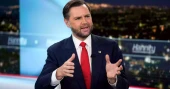
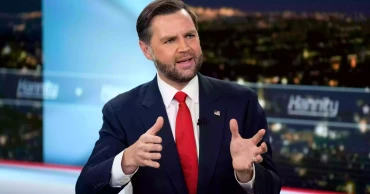
The Trump administration has defended the agreement. Vice President JD Vance said Iran would receive benefits, including possible sanctions relief, only if it took concrete steps to dismantle its nuclear weapons programme.
Vance stressed that the US would judge Iran by its actions rather than its promises, saying incentives under the agreement would be tied directly to Tehran’s compliance.
Iran has consistently maintained that its nuclear programme is intended for peaceful purposes.
Observers note that the previous landmark nuclear agreement, known as the Joint Comprehensive Plan of Action (JCPOA), took more than 18 months to negotiate before being signed in 2015.
That deal placed strict limits on Iran’s nuclear activities, including uranium enrichment and centrifuge development, in exchange for significant sanctions relief. Trump later withdrew the United States from the agreement in 2018.
Many experts argue that the complexity of the nuclear issue makes it unlikely that a comprehensive new deal can be reached within only a few months.
Several Republican senators have also insisted that any future nuclear agreement should be submitted to Congress for approval, as required under US law.
Some lawmakers believe the shorter timeline could help prevent Iran from dragging out negotiations, while others remain doubtful that Tehran would fully comply with any new agreement.
Democratic Senator Tim Kaine noted that negotiators could benefit from the groundwork laid by the Obama-era talks but acknowledged that the original agreement involved years of negotiations and extensive participation from international experts and major world powers.
Trump envoys Steve Witkoff and Jared Kushner reportedly made several attempts to secure a deal through Omani mediation during the early months of Trump’s second term, but those efforts failed to produce an agreement.
Negotiations became more complicated after US-Israeli strikes on Iranian nuclear facilities in June 2025. Pakistan later emerged as a key mediator between the two sides.
Beyond the nuclear issue, uncertainty remains over whether future talks will address Iran’s ballistic missile programme, its support for armed groups across the Middle East and concerns over human rights within the country.
Analysts say these issues could prove just as challenging as the nuclear dispute itself.
Brian Katulis, a senior fellow at the Middle East Institute, said the agreement may help reduce tensions and avoid further conflict, but argued that the military campaign against Iran did not fully achieve its stated goals.
He described the interim deal as an effort to manage the aftermath of the conflict while presenting the outcome in the most positive light possible.
10 hours ago
G7 considers alternatives to Strait of Hormuz for global energy security
Leaders of the Group of Seven (G7) nations are exploring alternative routes for transporting global energy supplies as concerns grow over dependence on the Strait of Hormuz, a key maritime passage for oil and gas shipments.
French Foreign Ministry spokesman Pascal Confavreux said discussions at the G7 summit in France included identifying other supply corridors that could help move energy resources from the Persian Gulf without relying heavily on the strategically important strait.
Speaking to the Associated Press, Confavreux said leaders discussed ways to reduce long-term dependence on the waterway and improve energy security.
He noted that proposals under consideration include financing and developing new infrastructure projects, particularly land-based transport routes, that could bypass the Strait of Hormuz.
Before the conflict involving Iran disrupted regional stability, roughly 20 percent of the world’s crude oil shipments passed through the narrow maritime corridor, making it one of the most critical energy transit routes globally.
The discussions reflect growing international efforts to diversify energy supply chains and reduce vulnerability to disruptions in the Gulf region.
21 hours ago
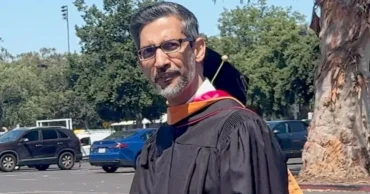
Dozens walk out as Google CEO Sundar Pichai addresses Stanford graduates
Dozens of students walked out of Stanford University's graduation ceremony as Google CEO Sundar Pichai took the stage to deliver the keynote address.
Video footage recorded by the BBC showed students leaving the event in protest against Google's controversial work with the US government. The demonstration was encouraged by a group called Stanford Students for Justice in Palestine.
The protest follows other recent campus demonstrations targeting technology leaders, although many of those have focused on artificial intelligence and concerns about its impact on jobs.
During his speech, Pichai largely avoided discussing AI, though he appeared to joke about the anticipated protests.
"People thought it would be really difficult for me," he said. "It is the last two letters of my last name, after all."
Pichai, a Stanford alumnus, did not respond to the BBC's request for comment.
The exact number of students who participated in the walkout remains unclear, but local news outlet SFGate estimated that as many as 200 students may have left the ceremony.
Some students carried signs as they exited. One sign read, "ICE spies with Google AI," while others waved Palestinian flags.
The Stanford chapter of Students for Justice in Palestine (SJP) organized the walkout and urged students to protest Google's connections with US Immigration and Customs Enforcement (ICE) and Israel.
It remains unclear whether all of the students who left the ceremony were protesting for the same reasons.
This year's protests against graduation speakers in the United States have also highlighted growing concerns among students about artificial intelligence. Speakers who discuss AI are increasingly facing negative reactions from audiences on college campuses.
Former Google CEO Eric Schmidt was booed by students during his commencement address at the University of Arizona in May after speaking about the rise of AI, reflecting growing worries about its impact on employment.
"I know what many of you are feeling about that. I can hear you," Schmidt told graduates as boos echoed through the venue during remarks comparing today's AI boom to the rise of computers four decades ago.
A similar reaction greeted real estate executive Gloria Caulfield at the University of Central Florida.
"The rise of artificial intelligence is the next industrial revolution," she said as members of the audience booed.
At Middle Tennessee State University's commencement ceremony, Big Machine Records CEO Scott Borchetta also faced jeers after mentioning AI.
His response to graduates was straightforward: "Deal with it, like I said, it's a tool."
#Reports BBC
23 hours ago
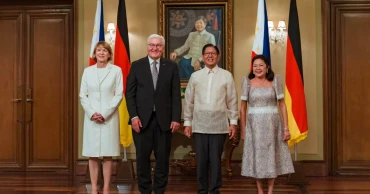
Europe concerned over South China Sea tensions, German president says
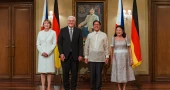
German President Frank-Walter Steinmeier on Tuesday expressed concern over rising tensions in the disputed South China Sea, warning that any major conflict in the region could threaten freedom of navigation and disrupt global trade.
Speaking alongside Philippine President Ferdinand Marcos Jr. during a state visit to Manila, Steinmeier said Europe is closely monitoring developments in the South China Sea, particularly ongoing confrontations between the Philippines and China.
Referring to the recent disruption in the Strait of Hormuz linked to the Iran conflict, Steinmeier said such incidents show how regional disputes can have global economic consequences.
“The situation in the South China Sea remains tense, and that is a cause for concern,” he said through an interpreter. “The Indo-Pacific, especially Southeast Asia, is one of the world’s most dynamic economic regions. Any serious incident there would also affect Europe.”
He warned that violations of international maritime law could jeopardize freedom of navigation, similar to the impact caused by the closure of the Strait of Hormuz, which led to sharp increases in global fuel and fertilizer prices.
The Strait of Hormuz situation was among the topics discussed during a private meeting between Steinmeier and Marcos.
Although Steinmeier did not directly name any country, Germany has previously criticized China’s actions in the South China Sea, saying they undermine the rights of coastal states such as the Philippines and threaten free navigation along one of the world’s busiest trade routes.
The territorial disputes involve China, the Philippines, Vietnam, Malaysia, Brunei and Taiwan.
The United States, while not a claimant in the South China Sea, has repeatedly stated that it is committed to defending the Philippines under their mutual defense treaty if Filipino forces, vessels or aircraft come under armed attack.
China, meanwhile, has urged Washington not to interfere in the regional disputes.
During a visit to Manila in 2024, then German Foreign Minister Annalena Baerbock voiced concern over China's actions in the disputed waters, including incidents involving Philippine vessels. She said such actions violated the rights of coastal nations and hindered their economic development.
Baerbock also said China’s sweeping claims in the South China Sea were not supported by international law and called for a peaceful settlement of the disputes.
On Tuesday, Steinmeier reaffirmed Germany’s support for the Philippine Coast Guard, which has played a key role in protecting the country’s maritime interests and has been involved in several confrontations with Chinese vessels.
Marcos thanked Germany for consistently backing the Philippines’ efforts to uphold international law in the South China Sea and for supporting compliance with the 2016 international arbitration ruling.
The ruling, based on the 1982 United Nations Convention on the Law of the Sea, rejected China’s broad claims in the South China Sea. China refused to participate in the arbitration process, rejected the decision and continues to oppose it.
1 day ago
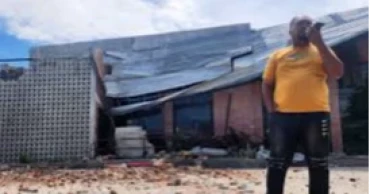
6.7-magnitude quake jolts Indonesia’s Sulawesi, injuring several and damaging buildings
A powerful 6.7-magnitude earthquake struck Indonesia’s Sulawesi island on Tuesday, injuring at least eight people, damaging buildings and triggering panic among residents still haunted by the devastating earthquake and tsunami that hit the region in 2018.
The tremor shook Palu, the capital of Central Sulawesi province, prompting residents to rush into open spaces for safety. Hospitals in the city also moved patients, including those receiving intravenous treatment, outside as a precaution.
Authorities said at least eight people were injured in Sigi regency, with two suffering serious injuries. Rescue officials noted that full assessments of the affected areas near the epicenter, home to around 1.2 million people, were still underway.
Photographs from the region showed damaged houses and buildings, including collapsed roofs, cracked walls and debris strewn across roads. Disaster management officials said they were continuing to collect information on the extent of damage, casualties and possible displacement.
Hotel manager Effendi Natali said all guests at his four-star hotel in Palu were safely evacuated after the quake.
“People panicked, which is understandable during such a strong earthquake, but everyone is safe,” he said, adding that the hotel sustained only minor damage.
According to the US Geological Survey, the earthquake’s epicenter was located about 43 kilometres southeast of Palu at a depth of roughly 10 kilometres. Several aftershocks followed, the strongest measuring 5.2 in magnitude.
Fearing a possible tsunami, many residents moved away from coastal areas immediately after the quake. However, Indonesia’s Meteorology, Climatology and Geophysical Agency later confirmed there was no tsunami threat, although aftershocks could continue.
Residents said memories of the catastrophic 2018 earthquake and tsunami remain fresh.
“The shaking was very intense,” said Palu resident Muhtar Ahmad. “Many of us are still traumatised by the previous disaster, so we stayed outside because we feared more aftershocks.”
Indonesia, located along the seismically active Pacific “Ring of Fire,” frequently experiences earthquakes and volcanic eruptions due to its position atop multiple tectonic fault lines.
The region is still recovering from the 7.5-magnitude earthquake that struck Palu in 2018, triggering a tsunami and widespread liquefaction that killed more than 4,000 people.
Another major quake measuring 6.2 magnitude hit Sulawesi in January 2021, killing at least 100 people and forcing thousands to spend days outdoors amid fears of further tremors.
1 day ago
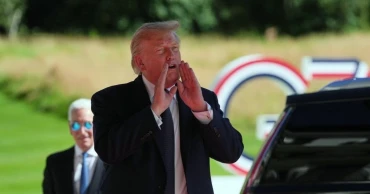
G7 leaders begin talks on Ukraine and Middle East as Zelenskyy joins summit in France
Leaders of the Group of Seven (G7) nations began their first full day of summit talks on Tuesday with major global crises at the top of the agenda, including Russia’s war in Ukraine and efforts to stabilize the Middle East.
Ukrainian President Volodymyr Zelenskyy joined the discussions at the invitation of host nation France, as world leaders looked for ways to advance peace efforts in Ukraine and maintain momentum following a recent US-Iran agreement.
The talks come after US President Donald Trump announced a deal aimed at ending the 3½-month conflict between the United States and Iran. The crisis in the Middle East has dominated international attention in recent weeks, pushing the Ukraine war lower on the global agenda.
Trump said he held productive phone conversations on Sunday with both Zelenskyy and Russian President Vladimir Putin and indicated that Washington would now focus more closely on efforts to end the Ukraine conflict.
French President Emmanuel Macron said he would urge Trump to maintain support for Ukraine and increase pressure on Russia to move toward a peace agreement.
Just hours before the summit opened, Russia launched hundreds of drones and dozens of missiles at major Ukrainian cities. The attacks killed at least 11 people and damaged several sites, including a religious landmark.
A key session on Tuesday focused on ending regional conflicts and promoting stability in the Middle East. Leaders from Egypt, Qatar and the United Arab Emirates were invited to join those discussions.
Trump has repeatedly expressed frustration over the slow progress in efforts to end the war in Ukraine. During his presidential campaign, he said he could resolve the conflict quickly, but later acknowledged that reaching a settlement has proven more difficult than expected.
Macron stressed that any lasting peace process must involve both Ukraine and Russia, with European and American participation.
Meanwhile, Ukraine officially launched negotiations on Monday to join the European Union, beginning what is expected to be a lengthy process requiring major political and institutional reforms.
Kyiv views EU membership as an important safeguard for its future after the war. Ukraine also seeks membership in NATO, but the Trump administration has ruled out that possibility while the conflict continues.
The summit is also taking place against the backdrop of recent tensions between Trump and several European leaders over US military action against Iran. Differences emerged after Washington moved ahead without consulting key allies, including France, Britain, Germany and Italy.
Despite those disagreements, leaders in Evian appeared eager to work together, particularly as they seek to reduce the economic impact of higher energy prices caused by disruptions in the Strait of Hormuz.
Trump said recent developments in the Middle East were encouraging, noting that oil prices had fallen and stock markets had responded positively.
Ahead of the summit, France, Germany, Italy and the United Kingdom, joined by Canada, issued a joint statement welcoming the US-Iran agreement and calling it a diplomatic breakthrough. The countries urged rapid implementation of the deal to allow the reopening of the Strait of Hormuz, a critical route for global oil shipments.
Macron said France and its partners stand ready to help restore safe navigation through the strait, while France and Britain continue to support plans for a maritime security mission in the region.
Trump, however, suggested that a large international military deployment may not be necessary, although he welcomed limited support from allied countries.
In addition to the Ukraine and Middle East discussions, Trump’s schedule on Tuesday includes meetings with Qatar’s emir and the president of the UAE, followed by a cultural event and a dinner with fellow G7 leaders.
The G7 comprises France, the United States, Canada, Germany, Italy, Japan and the United Kingdom. Several non-member countries, including Brazil, India, Kenya and South Korea, were also invited to participate in selected discussions as partner nations.
1 day ago
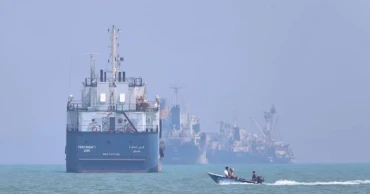
US allies propose naval mission to help secure Strait of Hormuz after Iran deal
Several US allies are pushing for a naval security mission in the Strait of Hormuz to support the recently announced Iran ceasefire framework, aiming to restore confidence among shipping companies and insurers and ensure the safe movement of global oil and gas supplies.
The proposed mission, led by France and the United Kingdom, would focus on clearing sea mines and could include military escorts for commercial vessels passing through the strategic waterway, one of the world's most important energy shipping routes.
The idea was first raised by Emmanuel Macron in March when fighting between the United States and Iran was still ongoing. He suggested that naval forces could escort oil tankers and cargo ships once hostilities eased.
At the Group of Seven summit on Monday, US President Donald Trump said he did not believe extensive international assistance would be necessary because the Strait of Hormuz is expected to reopen under the tentative agreement with Iran. However, he said having a small number of ships from allied countries in the area could still be useful.
In a joint statement, France, the United Kingdom, Germany, Japan, Italy and later Canada welcomed the ceasefire framework and expressed support for reopening the waterway with unrestricted freedom of navigation.
The countries proposed what they described as a strictly defensive mission aimed at reassuring commercial shipping and carrying out mine-clearing operations.
France already has significant military assets in the region, including the aircraft carrier Charles de Gaulle. Macron said French fighter jets could begin surveillance missions over the strait almost immediately, followed by frigates and the carrier group within days if requested.
Mine-clearing vessels would search for and remove underwater explosives that could threaten commercial ships. Trump said some mines had already been found and removed, while efforts were continuing to locate others. He added that the strait had already been partially reopened.
European allies have experience protecting commercial shipping in conflict zones. French, British and American naval forces have previously escorted merchant vessels through the Red Sea during attacks by Yemen's Iran-backed Houthi rebels.
French warships successfully intercepted several missile and drone threats during those operations. One French frigate, the Alsace, shot down three ballistic missiles while escorting a container ship in 2024.
Security experts say a naval presence could help discourage renewed conflict and reassure shipping firms and insurers. However, analysts caution that the mission's role would be more limited if the ceasefire remains in place.
According to Max Bergmann of the Center for Strategic and International Studies, a French-British naval deployment could strengthen regional security and demonstrate support for Gulf nations, though its overall impact should not be overstated.
Planning for the mission has involved a broad coalition of countries, including Australia, South Korea, Japan, Bahrain, Qatar, Canada and more than a dozen European nations.
A meeting organized by France and Britain last month brought together representatives from 38 countries to discuss the proposal and possible contributions to the operation.
1 day ago
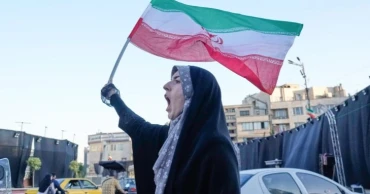
US, Iran reach preliminary accord to extend ceasefire, reopen Hormuz Strait
The United States and Iran have reached a preliminary agreement aimed at prolonging their fragile ceasefire and paving the way for the reopening of the strategically vital Strait of Hormuz, though several key issues continue to threaten the deal’s success, particularly ongoing tensions involving Israel and Lebanon.
The agreement, brokered by Pakistan, is expected to be formally signed in Geneva on Friday. Until then, restrictions on maritime traffic through the Strait of Hormuz are likely to remain in place. The waterway, a critical route for global oil and gas shipments, has been largely disrupted during the conflict, contributing to a worldwide energy crunch.
While the framework has been welcomed internationally, uncertainty remains over Israel’s military operations in Lebanon. Israeli Defense Minister Israel Katz reiterated on Monday that Israeli forces would not withdraw from territory captured in Lebanon and signaled that military operations against the Iran-backed Hezbollah group would continue.
Although Israel joined the United States in launching military action against Iran on February 28, it is not a signatory to the newly announced agreement. Officials in Prime Minister Benjamin Netanyahu’s office said Israel would continue taking measures it deems necessary to protect its security.
Iran has repeatedly maintained that any comprehensive agreement to end the conflict must include a halt to fighting in Lebanon, making Israel’s position a potential stumbling block.
Another major challenge concerns Iran’s nuclear program. Under the tentative arrangement, negotiators have just 60 days to determine the future of Iran’s stockpile of highly enriched uranium and address broader concerns surrounding its nuclear activities. The issue has long been a source of tension, with Washington and Israel fearing the material could be used to develop nuclear weapons, a claim Tehran denies.
The compressed timeline contrasts sharply with the years of negotiations that led to the 2015 nuclear agreement between Iran and world powers. That deal later unraveled after President Donald Trump withdrew the United States from it during his first term.
Despite unresolved questions, leaders across Europe, Asia and the Middle East broadly welcomed the breakthrough, viewing it as a potential step toward ending a conflict that has claimed thousands of lives and triggered economic disruptions well beyond the region.
Still, some observers cautioned against premature optimism. Luxembourg Foreign Minister Xavier Bettel noted that considerable uncertainty remains before the expected signing date.
Trump, under growing domestic political pressure ahead of November's congressional elections, celebrated the agreement online, announcing that he had authorized the reopening of the Strait of Hormuz and the lifting of the U.S. blockade on Iranian ports. He later clarified that those measures would only take effect after the agreement is formally signed.
Iranian Deputy Foreign Minister Kazem Gharibabadi also confirmed the existence of the agreement but stressed that Tehran would not begin implementation until the signing ceremony takes place.
The closure of the Strait of Hormuz and the subsequent U.S. blockade significantly disrupted global energy markets. Before the conflict, roughly one-fifth of the world's oil and natural gas exports passed through the narrow maritime corridor. Industry analysts say it may take months for global energy supplies to fully stabilize even if shipping resumes.
Diplomatic preparations are set to continue this week in Doha, where Iranian and American officials are expected to hold preliminary meetings ahead of Friday’s signing.
Meanwhile, the situation in Lebanon remains a critical test for the agreement’s durability. Israeli airstrikes on Beirut’s southern suburbs over the weekend nearly disrupted negotiations, underscoring the fragility of the ceasefire effort.
Katz said Israel intends to maintain a military presence indefinitely in territories under its control in Lebanon, Syria and Gaza. He also warned that any Iranian retaliation linked to Israeli operations in Lebanon would be met with a forceful response.
Officials in Netanyahu’s office reiterated that Israel and the United States remain aligned in preventing Iran from acquiring nuclear weapons, while emphasizing that Israel will continue acting against threats posed by Hezbollah.
Hezbollah has yet to publicly respond to the proposed agreement.
2 days ago