Local-Business
Ambitious revenue target may trigger taxpayers’ harassment : MCCI
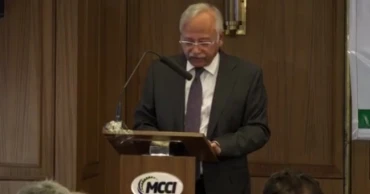
Metropolitan Chamber of Commerce and Industry (MCCI) on Wednesday cautioned that the government's ambitious revenue mobilisation target for fiscal year 2026-27 could expose taxpayers to harassment at the field level as the National Board of Revenue (NBR) collected only 65 percent of its revised target in the outgoing fiscal year.
MCCI President Kamran T. Rahman raised the concern while delivering the welcome address at a post-budget discussion jointly organised by MCCI, Standard Chartered Bangladesh and the Policy Research Institute of Bangladesh (PRI) at the M. Anis Ud Dowla Conference Hall of MCCI's Gulshan office in the city.
The budget has set a revenue collection target of Tk 6.95 lakh crore, which represents a growth of over 18.2 percent compared to the current fiscal year's revised target.
“NBR managed to collect only Tk 3.27 lakh crore, or 65 percent of the revised target, up to April of FY2025-26,” Kamran said. “Achieving the new revenue target without comprehensive structural reforms will be extremely difficult, and the pressure to do so may lead to harassment of taxpayers at the field level.”
He, however, acknowledged that the proposed budget, the first full-year budget of the newly elected government contains several business-friendly reform proposals, including modernisation of tax and revenue administration, digitalisation, and ease of doing business measures.
The MCCI president stressed that the key objective of the day's forum was not to examine isolated budget proposals, but to explore how the budget can be successfully implemented by broadening the tax base rather than imposing additional burdens on specific sectors or existing taxpayers.
“The national budget is not merely a statement of government income and expenditure, it is a reflection of a country's economic priorities, development strategy, and future direction,” Kamran said.
The budget comes at a time when the global economy continues to grapple with geopolitical uncertainty, trade tensions, and structural economic challenges, he added.
He said MCCI remains committed to fostering open and constructive dialogue among the government, private sector, and other stakeholders on key national economic issues.
Kamran expressed hope that the deliberations from the forum, held ahead of the budget's final approval in parliament, would enrich the policymaking process and provide actionable guidance to the relevant authorities.
6 hours ago

Islami Bank announces special facility for losses incurred from pre-matured deposit closures
In a bid to regain public trust, Islami Bank Bangladesh PLC on Monday announced a special financial assistance program for depositors who incurred heavy losses by prematurely closing their savings and term-deposit accounts during the recent banking crisis.
According to a circular issued by the bank management, the special facility will apply to clients who closed or cashed out their various deposit schemes—including MTDR, MSB, MMPDS, and MSSA accounts—prematurely between June 1 and June 15.
The bank announced that affected customers will be given a window of the next seven working days to reopen their closed accounts.
If reopened within this timeframe, the bank management will waive all associated fees and administrative charges considering the extraordinary situation.
Furthermore, these accounts will be treated as continuously active, allowing depositors to enjoy their original profit rates and previously committed benefits without any disruption.
Banking sector insiders view this move as highly customer-friendly. Amid intense panic, rumors, and leadership uncertainties surrounding the country's largest Shariah-based commercial lender over the last two weeks, thousands of clients rushed to branches to break their term deposits and savings schemes ahead of maturity, suffering significant financial losses and forfeiting accumulated profits.
The special initiative aims to mitigate those financial losses and restore depositor confidence following the central bank's direct intervention in dissolving the bank's controversial board and injecting emergency liquidity.
The bank management urged clients not to be swayed by unverified anxieties and advised them to contact their respective branches within the designated period to avail themselves of the policy. Financial analysts believe the move will play a positive role in rebuilding the bank's relationship with its clients and safeguarding long-term public deposits.
1 day ago

Gold prices see two consecutive hikes after days of decline
Gold prices in Bangladesh have surged by Tk 12,072 per bhori over two consecutive days, reversing a prolonged declining trend, as the Bangladesh Jewellers Association (BAJUS) cited rising pure gold prices in the local market.
BAJUS raised the price of 22-carat gold by Tk 5,482 per bhori on Monday, setting the new rate at Tk 2,30,422. The revision took effect from 10:00am.
The hike follows a Tk 6,590 increase announced on Sunday, when the rate was fixed at Tk 2,24,940 per bhori for 22-carat gold.
BAJUS said the adjustments reflect an increase in the price of tejabi (pure) gold in the domestic market, which necessitated a comprehensive revision of rates.
Under the revised pricing, the per-bhori (11.664 grams) rates now stand as follows: 22-carat at Tk 2,30,422; 21-carat at Tk 2,19,983; 18-carat at Tk 1,88,549; and traditional (sanatan) method gold at Tk 1,53,557.
Gold prices in Bangladesh have been adjusted 75 times so far in 2026, raised on 39 occasions and reduced on 36.
Alongside gold, silver prices also increased on Monday. The 22-carat silver rate rose by Tk 233 per bhori to Tk 5,365.
Other silver rates: 21-carat at Tk 5,132, 18-carat at Tk 4,432, and traditional method at Tk 3,324 per bhori.
Silver pricing has been revised 46 times in 2026 so far, with 24 increases and 22 reductions.
2 days ago

Sweeping deregulatory measures in budget to lower cost of doing business: NBR Chairman
National Board of Revenue (NBR) Chairman Md. Abdur Rahman Khan on Sunday said that unprecedented steps have been taken in the proposed budget for fiscal year FY2026-27 to create a deregulated environment for businesses.
"For a long time, export-oriented businesses have been demanding the expansion of bonded warehouse facilities. Previously, those who did not own a bonded warehouse faced numerous complications in collecting raw materials from bond-facilitated institutions. The new budget has eliminated these limitations," the NBR chief said.
He made the remarks as the chief guest while addressing a seminar titled "Analysis of Finance Bill 2026-27" at the Economic Reporters' Forum (ERF) auditorium in the capital on Sunday afternoon.
The NBR Chairman explained that apparel exporters with bonded warehouses can now smoothly sell raw materials to other exporters who lack such facilities. "This decision will immensely benefit the country's backward linkage industries and enhance the capability of local industries," he added.
He further noted that the previous continuous bond facility was restricted, requiring approval from the commissionerate to import raw materials for another institution. This facility has now been expanded to the inter-commissionerate level.
Furthermore, bond licenses will now be accessible to entrepreneurs across any sector upon application, moving away from the previous practice where only a few selected sectors enjoyed the privilege.
For businesses that do not wish to take a bond license but are interested in duty-free imports, the NBR has introduced a new option allowing them to import duty-free raw materials against bank guarantees, the Chairman announced.
Highlighting reforms in the Authorized Economic Operator (AEO) facility, which allows businesses fast-track customs clearance without regular physical inspections at ports, the NBR chief said that the mandatory requirement of submitting audit reports has been relaxed. This relaxation aims to encourage more businesses to apply, as audit reports are often delayed outside the taxpayers' control.
The NBR Chairman also disclosed a major revenue-protection initiative, stating that the revenue board will introduce QR codes on cigarette packets to verify tax compliance.
He revealed that around 15 percent of cigarettes in the market currently go untaxed due to false manufacturing or import declarations. "Once the QR codes are implemented on cigarette packets, the scope for tax evasion will be eliminated, enabling the state to realize an additional Tk 2,000 crore in revenue," Dr. Khan stated.
The seminar was presided over by ERF President Doulat Akhter and moderated by the organization's General Secretary Abul Kashem. NBR Second Secretary (VAT) Badruzzaman Munshi and First Secretary (Customs Policy) Tareq Hassan, among other high officials, were also present at the event.
2 days ago
BB provides Tk 2,500cr liquidity support for Islami Bank
Bangladesh Bank (BB) has provided an emergency liquidity support of Tk 2,500 crore for Islami Bank Bangladesh PLC to help the Shariah-based lender mitigate its severe cash crunch and resume suspended clearing operations.
The central bank approved the liquidity support on Sunday, allocating the special fund directly into Islami Bank’s current account maintained with the BB, according to sources in both institutions.
Following the financial injection, the bank's halted cheque clearing system has resumed.
According to a top executive at Islami Bank, the bank has been facing an exceptional spike in cash demand. "Deposits are almost non-existent at the moment, while everyone is rushing to withdraw their funds," the official said on condition of anonymity.
The liquidity strain escalated further following recent leadership shifts and administrative disputes.
Before Eid-ul-Azha holidays on May 24, bank's then-chairman M Zubaidur Rahman resigned. Later that evening, former Bangladesh Bank Deputy Governor Md Khurshid Alam was appointed as an independent director and new chairman of the bank.
Currently, five independent directors on Islami Bank's board, including the chairman, are central bank appointees.
Following these changes, protests broke out under the banner of the "Islami Bank Sachetan Grahak Forum", pressing a seven-point demand that includes the removal of the new chairman.
The unfolding situation at Islami Bank also triggered heated debates between treasury and opposition benches in Parliament.
Amid growing public discourse, panic withdrawals intensified among clients, prompting Islami Bank to formally seek Tk 10,000 crore in emergency financial assistance from the central bank.
Sunday's Tk 2,500 crore fund injection marks the first major deployment to stabilise the institution.
3 days ago

MCCI flags revenue target risk, calls for structural tax reforms budget reaction
The Metropolitan Chamber of Commerce and Industry, Dhaka (MCCI) has welcomed Bangladesh's largest-ever national budget for FY 2026–27 as a bold initiative to rebuild the economy, while flagging serious concerns over the achievability of an ambitious revenue collection target and the risk of taxpayer harassment without meaningful structural reforms.
In a press statement issued on Saturday, MCCI President Kamran T. Rahman congratulated Finance and Planning Minister Amir Khosru Mahmud Chowdhury for presenting the 55th national budget, the first of the newly elected government, amounting to Tk 938,000 crore, equivalent to 13.73 percent of GDP.
The chamber described the Tk 695,000 crore revenue collection target,18.20 percent higher than the revised target of the outgoing fiscal year as ambitious and expressed doubt over its feasibility.
Of the total, Tk 604,000 crore has been assigned to the National Board of Revenue (NBR), representing a 20.08 percent increase over the revised target.
MCCI noted that the NBR collected only Tk 326,928 crore, about 65 percent of its revised target through April of the current fiscal year, while ADP implementation stood at just 41.41 percent during the July–April period.
“Without structural reforms, efforts to meet this target may lead to increased pressure and harassment of taxpayers,” the chamber warned, adding that additional taxation could raise prices of essential commodities and burden ordinary citizens.
MCCI expressed concern over a sharp decline in total investment, which fell to 27.93 percent of GDP in FY 2025–26, the lowest in a decade. Private investment accounted for only 21.53 percent, with public investment at 6.40 percent.
The chamber said the investment slump was eroding employment opportunities and heightening poverty risks.
The chamber welcomed a Tk 144,338 crore allocation for social safety net programmes, up Tk 17,607 crore or 13.89 percent from the previous fiscal year, including dedicated funds for the Family Card Programme (Tk 14,500 crore), Farmer Card Programme (Tk 1,062.50 crore), and religious allowances (Tk 1,081 crore).
MCCI also praised plans to raise education spending from 1.39 percent to 2.0 percent of GDP and health expenditure from 0.58 percent to 1.01 percent, calling them reflective of long-term commitment to human capital development.
Among the welcome measures, MCCI commended proposed reforms to Tax Deducted at Source (TDS), reduced mandatory deposit requirements for tax appeals at tribunal and high court levels, quarterly VAT return filing, paperless VAT administration, and inclusion of labour within the VAT input definition.
However, the chamber raised concerns over the abolition of the 5 percent minimum income tax slab in favour of a 10 percent rate, reduction of individual investment tax rebates from 15 percent to 10 percent, and the proposed increase in the highest tax rate from 30 percent to 35 percent from tax year 2028–29.
It also flagged the absence of any proposal to rationalise or reduce the Minimum Turnover Tax on companies.
MCCI warned that a proposed data connectivity and information-sharing framework could pose serious threats to data privacy without adequate legal and technological safeguards.
Welcoming the Tk 60,000 crore “Stimulus Package 2026,” the BanglaBiz one-stop digital service platform, and expanded FTA, PTA and EPA trade agreements, MCCI said these would play an important role in attracting foreign investment and generating employment.
The chamber called for quarterly reviews of budget implementation given prevailing global economic uncertainties, and reaffirmed its commitment to partnering with the government to foster a business-friendly environment.
“The success of this mega budget will depend on institutional good governance, a harassment-free tax administration, and maintenance of macroeconomic stability,” the statement concluded.
4 days ago
FBCCI welcomes budget, flags revenue target, implementation as key challenges
Federation of Bangladesh Chambers of Commerce and Industry (FBCCI) on Saturday welcomed the proposed national budget for fiscal year 2026-27, describing it as pragmatic and implementable, while flagging revenue mobilisation and efficient execution as the two most critical challenges ahead.
In a written reaction to the Tk 9,38,000 crore budget, the country's largest ever and 18.7 per cent higher than the outgoing fiscal year, the apex trade body extended its congratulations to the Prime Minister and Finance Minister, noting that the budget gives priority to economic stability, investment, employment, production and social justice.
“The size of the budget is large but implementation is not impossible, what is needed is foresight, efficiency and transparency,” FBCCI said in its statement on Saturday.
FBCCI expressed optimism over the government's adoption of the "3R" framework: Recovery and Stabilisation, Restoration and Reconstruction, as the guiding economic strategy, saying it would help restore macroeconomic stability, boost investment and foster inclusive and sustainable growth.
The body also supported GDP growth and inflation targets set at 6.5 per cent and 7.5 per cent respectively, expressing hope that disciplined fiscal management would help ordinary citizens regain purchasing power.
FBCCI acknowledged that the total revenue target of Tk 6,95,000 crore, equivalent to 10.2 per cent of GDP, with the National Board of Revenue (NBR) assigned Tk 6,04,000 crore, represents a formidable challenge given current domestic and global economic conditions.
The federation urged structural reforms at NBR and a revenue management system conducive to growth, trade and investment to meet the target.
On the budget deficit of Tk 2,43,000 crore, 3.6 per cent of GDP, FBCCI cautioned the government to exercise restraint in borrowing from the banking sector, as it crowds out private sector credit and adversely affects investment and employment. It recommended greater reliance on concessional external financing at reasonable interest rates.
The total interest payment burden, Tk 1,05,000 crore in domestic interest and Tk 22,500 crore in foreign debt servicing was described as a significant fiscal pressure.
In a wide-ranging set of recommendations, FBCCI called on the government to focus on: Activation of investment-friendly economic zones; export diversification and new market exploration; human resource development in IT and electronics; reduction of administrative red tape and cost of doing business.
Besides, strengthening of the capital market and expansion of the bond market; improved accountability in ADP implementation; interest rate reduction and banking sector reform; uninterrupted power and energy supply; logistics and supply chain efficiency; and development of legal frameworks for free trade zones were among the recommendations.
FBCCI welcomed several budget provisions it said reflected its own prior proposals, including: mandatory online VAT return filing, quarterly VAT submission, online income tax return and refund systems, online single-window services, and an expanded plug-and-play industrial facility.
The body also praised the raising of the tax-free income ceiling from Tk 3,50,000 to Tk 3,75,000 with provisions for gradual future increases, though it urged the government to maintain the 5 per cent tax slab and reduce the top tax rate from 35 per cent to 25 per cent.
Welcoming the five-year lock-in on corporate tax rates, FBCCI also sought a 2.5 per cent reduction for listed companies to enhance competitiveness, and proposed lowering the minimum turnover tax on sales from 1 per cent to 0.5 per cent given the current slowdown.
Among specific measures appreciated, FBCCI highlighted: the reduction of advance income tax on industrial raw material imports from 5 per cent to 4 per cent; reduction of source taxes on basic agricultural commodities including rice, wheat, potato, onion, garlic, ginger, salt, sugar and edible oil to 0.5 per cent; complete withdrawal of the 5 per cent regulatory duty on import of dates and all cooking spices; and reduced withholding tax on foreign loan interest for industrial investment from 20 per cent to 10 per cent.
The federation also welcomed the full import duty waiver, along with VAT and supplementary duty on laptops, desktop computers, servers, printers and monitors, calling it a major push for IT sector development.
On social protection, FBCCI commended free train travel for senior citizens above 65 years of age, a 25 per cent metro rail discount, and expansion in the number and coverage of social safety net beneficiaries.
FBCCI welcomed the government's Tk 60,000 crore “Stimulus Package 2026” for easing credit flow to the private sector, along with a Tk 2,000 crore allocation for SME development through IDCOL, BIFFL and the SME Foundation. An additional Tk 500 crore allocation for women and youth entrepreneurship was termed a positive step.
Tax and VAT exemptions for startup companies — including zero turnover tax, and full VAT exemption on local purchases and premises rental for startups were also praised.
The proposed 20 per cent renewable energy target by 2030 and zero-import-duty on solar energy equipment until 2035 received FBCCI's support as part of a push for a sustainable energy framework.
On the gold and jewellery sector, FBCCI praised the reduction of source tax on gold imports from 5 per cent to 0.5 per cent under the new bonded warehouse regulations, and supported the proposed replacement of 5 per cent VAT on jewellery services with a fixed charge of Tk 2,500 per unit.
FBCCI said it is currently reviewing the Finance Bill and related income tax, VAT and customs notifications in consultation with its member organisations, and will submit a comprehensive set of post-budget recommendations to the government after the review is complete.
4 days ago

Gold prices in Bangladesh rise after four consecutive cuts
Gold prices in Bangladesh rebounded on Saturday after four consecutive reductions, with the Bangladesh Jewellers Association (BAJUS) raising the price of 22-carat gold by Tk 6,590 per bhori.
Under the revised rates, the price of 22-carat gold has been set at Tk 224,940 per bhori (11.664 grams), effective from 10am on Saturday, according to a BAJUS statement.
The association said the new prices were fixed in view of the increase in the price of pure gold (tejabi gold) in the local market and the overall market situation.
The price of 21-carat gold has been set at Tk 214,734 per bhori, while 18-carat gold will cost Tk 184,058 per bhori. Gold produced under the traditional method has been priced at Tk 149,882 per bhori.
BAJUS last adjusted gold prices on June 11, when it reduced the price of 22-carat gold by Tk 4,432 per bhori, setting it at Tk 218,350.
So far in 2026, gold prices have been revised 74 times in the domestic market. Of these, prices were increased on 38 occasions and reduced 36 times.
Alongside gold, BAJUS also increased silver prices. The price of 22-carat silver has been raised by Tk 291 per bhori to Tk 5,132, while 21-carat silver has been priced at Tk 4,899 per bhori.
The price of 18-carat silver has been fixed at Tk 4,199 per bhori, and silver produced under the traditional method at Tk 3,149 per bhori.
Silver prices have been adjusted 45 times so far this year, with increases recorded on 23 occasions and decreases on 22 occasions.
4 days ago

Tk 40,000cr bank rescue fund set aside in proposed budget
In a major financial intervention, the government has earmarked Tk 40,000 crore in the proposed national budget for FY 2026-27 to bail out and stabilize the struggling banking sector.
The massive financial package comes as a desperate measure to salvage several weak and distressed commercial banks and Non-Bank financial Institutions (NBFIs) currently grappling with severe liquidity crunches, rising non-performing loans (NPLs), and eroded capital adequacy.
According to Ministry of Finance sources, the allocation will be utilized to inject fresh capital, stabilize liquidity frameworks, and restore public confidence in the financial system. Economists and sector experts view this as one of the largest state-backed banking rescue operations in the country’s history.
The decision arrives at a critical juncture for Bangladesh’s economy. Recent central bank evaluations have flagged multiple commercial banks—particularly state-owned entities and several state-connected private sector Islami banks—as heavily "vulnerable."
According to financial reports, gross non-performing loans (NPLs) across the banking sector have spiked significantly over the past couple of years, bringing the system-wide Capital Adequacy Ratio down to precariously low levels. This capital erosion has effectively crippled the lending capacity of weaker banks, forcing the government to step in with taxpayer-funded fiscal support.
While the exact operational modalities are still being finalized, the broad framework outlines a phased recapitalization plan. The funds are expected to be routed through Bangladesh Bank to provide targeted capital injections and emergency liquidity lines to commercial institutions categorized under the "weak bank" list.
"The fundamental goal is to protect the interests of ordinary depositors and prevent a systemic collapse of the financial sector," said in the budget speech.
"However, this cash injection will be tied to strict conditionalities, including institutional restructuring and aggressive loan recovery targets,” according to the budget document.
6 days ago

Shopping malls, markets to stay open until 9pm
The government has decided to allow shopping malls, markets and retail shops across the country to remain open until 9pm from June 12, easing restrictions imposed earlier as part of power-saving measures.
The Power Division issued a notification on Thursday saying that the revised operating hours would be from 11am to 9pm.
Earlier, under a government decision that took effect on June 1, shopping malls, markets and shops were required to close by 7pm instead of 10pm to help manage electricity consumption.
According to the latest directive, the new schedule will also apply to fairs, trade fairs and cultural events currently being held or scheduled across the country.
However, restaurants, hospitals, pharmacies and other essential services will remain outside the purview of the restriction.
The Power Division also instructed the relevant authorities to ensure that all billboards switch off their lights by 9pm.
In addition, organisers of fairs, trade fairs and cultural programmes have been directed to conclude their activities by 9pm.
The government had introduced earlier restrictions amid efforts to ensure efficient electricity use and maintain a stable power supply during periods of high demand.
The latest decision comes as authorities adjust the measures in light of the prevailing power situation.
6 days ago