Middle-East
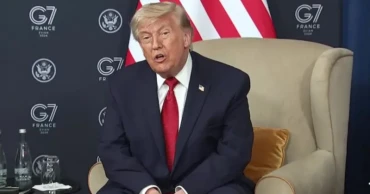
Trump warns of renewed bombing if Iran deal fails
US President Donald Trump said the proposed agreement with Iran remains unfinished and warned that military action could resume if Tehran fails to comply with its commitments.
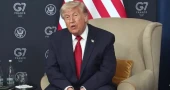
Speaking during a meeting with Egyptian President Abdel Fattah al-Sisi on the sidelines of the G7 summit on Wednesday, Trump stressed that Washington retained the option of returning to military operations if the agreement proves unsatisfactory.
He also dismissed reports suggesting the United States would invest in Iran or support a reconstruction fund for Tehran as part of a broader settlement.
Earlier in the summit, Trump reiterated that Iran would not be allowed to obtain a nuclear weapon under any future agreement.
On regional security issues, the US president criticised Israeli Prime Minister Benjamin Netanyahu over the ongoing conflict in Lebanon, saying Israel needed to act more responsibly.
During a joint appearance with the Emir of Qatar, Trump said the fighting between Israel and the Iran-backed Hezbollah group had continued for too long and was causing excessive loss of life.
His remarks came as Israel and Hezbollah continued exchanging attacks despite the US-Iran agreement announced on Sunday night.
Turning to the war in Ukraine, Trump said he held a productive meeting with Ukrainian President Volodymyr Zelensky and renewed his call for Russia to reach a peace agreement.
He also indicated that additional sanctions targeting Russian oil exports could be imposed in the near future if efforts to end the conflict fail to progress.
The comments came as G7 leaders wrapped up discussions in France, with global security issues, including Iran, Ukraine and the Middle East, dominating the summit agenda.
Source: BBC
25 minutes ago
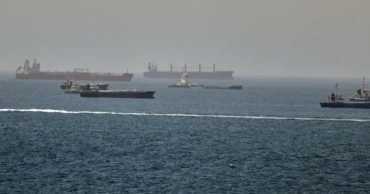
Iran to reopen Strait of Hormuz, resume unrestricted oil exports under proposed US deal
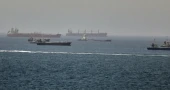
Iran is expected to reopen the Strait of Hormuz and regain the ability to export oil without restrictions under a proposed interim agreement with the United States aimed at ending the ongoing conflict between the two countries, according to leaked versions of the accord and officials familiar with the negotiations.
The agreement, which is scheduled to be formally signed in Switzerland on Friday, reportedly outlines a framework for ending hostilities and launching a two-month period of negotiations on Iran’s nuclear programme.
Under the proposed arrangement, Iran would immediately reopen the strategically important Strait of Hormuz, a key route for global oil and natural gas shipments, while the United States would allow Tehran to resume oil exports. The accord also reportedly includes plans for Iran to receive at least $300 billion for post-war reconstruction and a US commitment to work toward lifting American and United Nations sanctions if a comprehensive nuclear agreement is ultimately reached.
The conflict began on February 28 when the United States and Israel launched military operations against Iran, citing concerns over Tehran’s nuclear ambitions. The interim deal would halt the fighting before any final resolution of those concerns, instead opening the door for further diplomatic negotiations.
The reported concessions to Iran, particularly the immediate resumption of oil exports and the prospect of broader sanctions relief, are expected to draw criticism in Washington. Analysts say the terms appear more favourable to Tehran than those contained in the 2015 nuclear agreement, from which President Donald Trump withdrew during his first term.
The proposed accord would also seek to end hostilities in Lebanon involving Israel and the Iran-backed Hezbollah group, although differences remain over the future of Israeli forces in southern Lebanon.
Several officials and individuals familiar with the discussions said leaked versions of the agreement published by regional and international media outlets largely reflect the contents of the final document. However, neither the White House nor the Iranian government has released an official text.
White House Communications Director Steven Cheung said leaked versions published by media outlets do not fully represent the language of the final agreement but provided no further details.
President Trump, speaking during the G7 summit in France, praised the proposed arrangement, describing it as a strong memorandum of understanding. However, he also warned that the United States could abandon the agreement if it proves unsatisfactory.
“It’s a memorandum of understanding and if I don’t like it, we’ll go back to shooting at them, dropping bombs,” Trump said.
The agreement remains subject to formal signing and could still face political opposition from both US and Israeli leaders, as well as critics concerned about Iran’s nuclear programme and regional influence.
2 hours ago
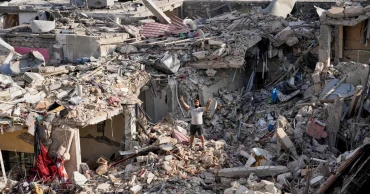
Iran says Israeli withdrawal from Lebanon key condition for ending war with US
Iran's top diplomat on Tuesday said any agreement to end the war with the United States would require Israel to withdraw from southern Lebanon, a condition already rejected by Israel and one that could jeopardize efforts to secure a lasting ceasefire.
The proposed agreement between Washington and Tehran has not yet been made public, and officials involved have at times offered differing interpretations of its terms. Although Israel is not a party to the deal, it has been directly involved in the conflict after joining US strikes against Iran on Feb. 28. Israel has also been engaged in fighting with the Iran-backed Hezbollah group in Lebanon and has taken control of large areas in the country's south.
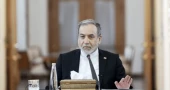
Iranian Foreign Minister Abbas Araghchi said Israel's continued presence in southern Lebanon would violate the spirit of the agreement.
"Without the withdrawal of Israeli forces from the territories they occupied during this war, the war has not fully come to an end," Araghchi said.
However, a US official familiar with the framework of the agreement said it does not include any requirement for Israel to leave Lebanon. Israeli Prime Minister Benjamin Netanyahu also reiterated on Monday that Israeli forces would remain there "as long as necessary."
Previous attempts to end the conflict have been hindered by similar disagreements, resulting in a fragile ceasefire that failed to evolve into a permanent peace arrangement. The uncertainty has also affected the Strait of Hormuz, a key route for global energy shipments, which remains effectively closed.
Switzerland's foreign ministry said a signing ceremony for the agreement is scheduled for Friday at the Bürgenstock resort near Luzern.
Lebanon issue adds complexity
Pakistan, which helped facilitate negotiations, has said the agreement calls for an end to military operations, including those in Lebanon, in line with Iran's longstanding position. Araghchi's latest remarks, however, have highlighted fresh differences over the issue.
The dispute places Israel in a difficult position as it seeks to weaken Hezbollah's military capabilities while avoiding tensions with its closest ally, the United States. Israel launched its operation in southern Lebanon after Hezbollah fired missiles across the border during the early stages of the war. Since then, Israeli forces have expanded their presence in the area and carried out strikes deep inside Beirut.
Although Hezbollah has suffered significant setbacks, it still retains the ability to launch attacks against Israel, raising questions about the long-term effectiveness of Israel's campaign.
As of Tuesday evening, Netanyahu had not reviewed the memorandum of understanding between the US and Iran, according to a person familiar with the matter who spoke on condition of anonymity. Another source said Israeli officials had not requested a copy of the document from US negotiators.
Netanyahu's office did not immediately comment, while the White House declined to say whether Israeli leaders had been briefed on the agreement.
Israel's ambassador to the United States, Yechiel Leiter, told NPR that while Israel has not seen the details of the agreement, the reported inclusion of Lebanon was "unnecessary and unhelpful."
Differences over Lebanon have also exposed tensions between Washington and Tel Aviv. US President Donald Trump said Tuesday he was dissatisfied with Israel's handling of the conflict with Hezbollah.
"It just goes on forever," Trump said, referring to Israel's strategy.
Israeli military operations in Lebanon have killed nearly 4,000 people, including hundreds of civilians, and displaced more than one million others.
"Israel's fighting Hezbollah too long, and too many people are being killed," Trump said.
Lebanon welcomes ceasefire prospects
Israel and the Lebanese government have held separate US-mediated negotiations that excluded Hezbollah. While several ceasefires were announced during those talks, none were fully implemented.
Lebanese officials initially sought to keep Lebanon separate from the broader US-Iran negotiations but later welcomed indications that a future agreement could include a ceasefire in Lebanon.
Araghchi's comments appear consistent with the understanding of two regional officials familiar with the negotiations. According to them, the draft agreement would require Israel to withdraw from nearly all territory it currently occupies in Lebanon, except for a few strategic hilltop positions along the border.
The officials said Iran pushed for Lebanon to be included in the final phase of negotiations.
The United Nations peacekeeping mission in Lebanon, UNIFIL, reported that exchanges of fire between Israel and Hezbollah continue, though at a significantly reduced level, according to UN spokesman Stephane Dujarric.
Key issues remain unresolved
Several important questions remain ahead of the planned signing ceremony.
The agreement is intended to establish a meaningful truce in a conflict that has killed thousands across the Middle East and contributed to higher prices for fuel, food and other essentials.
According to a senior US official, the deal would provide for the immediate reopening of the Strait of Hormuz and the lifting of the American naval blockade on Iranian ports.
At least two Iranian oil tankers left the country on Tuesday and crossed the US naval blockade without interference, according to shipping-tracking data. The vessels marked Iran's first crude oil exports in two months.
Shipping-monitoring service TankerTrackers.com said the Iranian-flagged tankers Diona and Hero II were carrying a combined 3.8 million barrels of crude oil. US Central Command declined to comment.
Under the agreement, Washington and Tehran are expected to begin a 60-day negotiation process focused on Iran's nuclear programme and the possible easing of sanctions, Pakistani officials involved in mediation said.
The proposed deal also includes the possible release of Iran's frozen assets and the creation of a $300 billion reconstruction fund if Tehran meets certain conditions, according to senior US officials. Trump later clarified that the United States would not directly invest money in Iran.
Questions also remain about how the agreement would address Iran's nuclear activities, including who would verify compliance and what would happen to highly enriched uranium believed to be stored beneath nuclear facilities damaged in US strikes last year.
Regional officials said Iran has agreed to discuss options to dilute or remove the uranium stockpile. However, it remains uncertain whether Tehran's hard-line factions would support such a move.
Trump said he would consider submitting the agreement to the US Congress for review. Some Republican lawmakers have called for more details, while others have expressed doubts that the deal would be sufficient to prevent Iran from pursuing a nuclear weapon.
12 hours ago
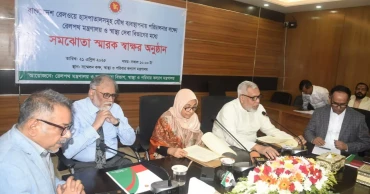
G7 leaders back US-Iran deal, say it’s a ‘historic opportunity’
The G7 leaders have welcomed the announcement of a deal between the US and Iran as a “breakthrough” and an “opportunity” to prevent Iran from acquiring a nuclear weapon.
The leaders said they support the deal and “are ready to contribute to its implementation”.
They called for passage through the Strait of Hormuz without “restrictions or tolls” and said they strongly support a “robust and comprehensive diplomatic follow-on agreement” to the deal to “bring peace and security for all in the region”.
On Lebanon, the G7 leaders expressed support for “an immediate robust ceasefire” and for the Lebanese state’s efforts to disarm Hezbollah.
On Palestine, they pledged to “accelerate humanitarian and reconstruction efforts [in Gaza] and the swift implementation of relevant political and security measures,” while also calling for an end to the “violence in the West Bank”. #From Al Jazeera
12 hours ago
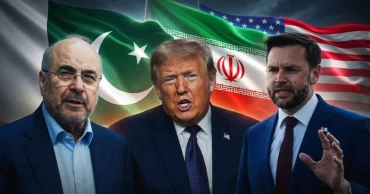
US, Iran electronically sign MoU to end conflict as questions remain over implementation
The United States and Iran have electronically signed a memorandum of understanding (MoU) aimed at ending their 109-day conflict, with US President Donald Trump saying the Strait of Hormuz would be fully reopened by Friday, although significant uncertainties remain over the agreement’s implementation and long-term prospects.
According to US officials quoted by international media, the agreement was electronically signed by Trump, Vice President JD Vance and Iran’s chief negotiator and Parliament Speaker Mohammad Bagher Ghalibaf.
The MoU comes after more than three months of hostilities triggered by US and Israeli strikes on Iran, with fighting extending to multiple fronts across the region, including Lebanon.
While the full text of the agreement has not been made public, officials from both sides have provided differing accounts of its provisions.
Iran’s National Security Council said the agreement would halt hostilities on all fronts, including Lebanon, and end the US naval blockade on Iranian ports. Follow-up negotiations on Iran’s nuclear programme and sanctions relief are expected to begin during a 60-day period following a formal signing ceremony scheduled in Switzerland on Friday.
Trump said the Strait of Hormuz, a critical global energy shipping route, would be “open to all” once the agreement takes effect, while Vance said no tolls would be imposed on vessels using the waterway during the negotiation period.
However, conflicting statements have emerged regarding economic concessions. A senior Iranian official told Reuters that Washington had agreed to release $25 billion in frozen Iranian assets and temporarily ease sanctions on Iranian oil exports. Vance denied the claim, saying no sanctions relief or asset releases had been approved.
He described the MoU as a brief framework document of approximately one-and-a-half pages, adding that more details could be released soon.
Before signing the agreement, Ghalibaf described it as a major step toward what he called Iran’s “final victory” following months of resistance against the United States and Israel.
Iranian media reported that several Iranian oil tankers and cargo vessels had already resumed movement through the Strait of Hormuz after the US lifted its maritime blockade.
Despite the agreement, Iranian shipping industry representatives cautioned that full normalisation of maritime traffic would take time, citing security concerns and months of disruption that left thousands of seafarers stranded in the Gulf.
In Washington, Trump rejected reports suggesting the US would provide direct financial assistance to Iran, dismissing such claims as “fake news.”
The deal has drawn mixed reactions in the United States. Democratic lawmakers criticised the agreement, while Republican leaders said they were awaiting further details before taking a position. Congressional briefings are expected in the coming days.
In Israel, Prime Minister Benjamin Netanyahu said Israeli forces would continue operating in southern Lebanon despite the US-Iran agreement. Several members of his cabinet also voiced opposition to any arrangement that could limit Israeli military operations against Hezbollah.
Iran has repeatedly insisted that any lasting settlement must include an Israeli withdrawal from occupied areas of southern Lebanon, a demand Israeli leaders have publicly rejected.
Fighting has continued in both Lebanon and Gaza, with casualties reported on both fronts even after the announcement of the agreement.
International reactions have largely welcomed the breakthrough. Ukraine expressed hope that the diplomatic progress could encourage renewed efforts to resolve other global conflicts, while Japan voiced concern over continued Israeli military operations in Lebanon.
The agreement also drew attention from pro-Israel advocacy groups in the United States, which argued that Israel should retain freedom of military action regardless of the deal.
Global energy markets responded cautiously, with oil prices rising modestly amid uncertainty over the pace of implementation. Brent crude rose to 83.42 dollar per barrel, while US West Texas Intermediate crude climbed to 81.12 dollar per barrel.
Analysts say the success of the agreement will largely depend on the outcome of upcoming negotiations on Iran’s nuclear programme, sanctions relief and regional security arrangements.
Source: Al Jazeera
1 day ago
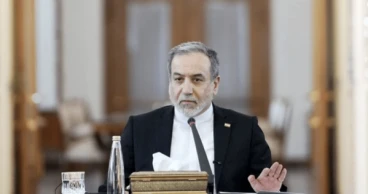
Any final US deal must include Israeli withdrawal from Lebanon: Iran
Iran’s Foreign Minister Abbas Araghchi said that any agreement aimed at ending the conflict between Iran and the United States must include the withdrawal of Israeli forces from southern Lebanon, a condition that Israel has already rejected, casting uncertainty over the prospects of a lasting settlement.
Speaking on Tuesday, Araghchi argued that the war could not be considered fully over while Israeli troops remained in territories occupied during the conflict.
“Without the withdrawal of Israeli forces from the territories they occupied during this war, the war has not fully come to an end,” he said.
The proposed agreement, brokered primarily by Pakistan, has not been publicly released, and differing interpretations by officials from various sides have highlighted unresolved issues. Although Israel is not a direct party to the US-Iran negotiations, it has been deeply involved in the wider conflict after joining US strikes against Iran in late February and continuing military operations against the Iran-backed Hezbollah group in Lebanon.
Pakistan, which has played a key mediating role, previously indicated that the agreement would bring an end to military operations across all fronts, including Lebanon. However, Araghchi’s insistence on an Israeli withdrawal introduces a new point of contention.
A US official familiar with the negotiations has said the agreement does not require Israel to withdraw from Lebanon. Israeli Prime Minister Benjamin Netanyahu also reiterated on Monday that Israeli forces would remain in Lebanon “as long as necessary.”
The disagreement highlights the fragile nature of the proposed settlement ahead of a planned signing ceremony in Geneva on Friday.
According to US and Pakistani officials, the framework agreement would involve the immediate reopening of the Strait of Hormuz and the lifting of blockades affecting Iranian ports. It would also initiate a 60-day negotiation process focused on Iran’s nuclear programme and the possible easing of sanctions.
The deal reportedly includes provisions for the release of frozen Iranian assets and the establishment of a potential $300 billion reconstruction fund for Iran, contingent on Tehran meeting agreed conditions. However, US President Donald Trump later said Washington would not directly invest funds in Iran.
Regional officials familiar with the negotiations told media outlets that Iran had pushed in the final stages to include Lebanon in the agreement. They said Tehran seeks the withdrawal of Israeli forces from nearly all occupied Lebanese territory, except for a limited number of border positions.
The officials also noted that the release of frozen Iranian funds would depend on Iran’s implementation of the agreement. Gulf Arab countries are also expected to provide substantial financial support to Iran’s economy under the broader framework.
Another unresolved issue concerns Iran’s stockpile of highly enriched uranium. The agreement reportedly envisages discussions on reducing or removing the stockpile, although Iranian hardliners remain opposed to relinquishing it.
Questions also remain over how compliance with any future nuclear arrangements would be verified and how highly enriched uranium stored at damaged nuclear facilities would be handled.
The proposed deal comes as leaders of the Group of Seven (G7) nations gather in France, where the Middle East conflict and its economic repercussions are expected to feature prominently in discussions.
European leaders have welcomed the diplomatic progress while stressing the need for rapid implementation of any agreement to restore stability and reopen the Strait of Hormuz, a vital route for global energy supplies.
Trump acknowledged ongoing concerns about Israel’s military operations in Lebanon, saying prolonged fighting could undermine broader diplomatic efforts.
“It just goes on forever,” he said. “And when that happens, it throws a negative light on the big deal. And that’s the deal with Iran.”
1 day ago
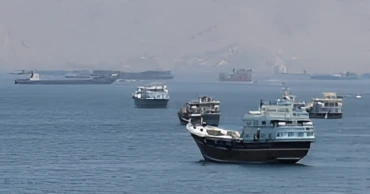
US-Iran deal reopens Strait of Hormuz; nuclear inspectors expected back
US Vice President JD Vance has said he expects United Nations nuclear inspectors to return to Iran and assured that there will be no restrictions on shipping through the Strait of Hormuz during the 60-day negotiation period with Tehran.
According to Iranian media reports, three Iranian oil tankers and two cargo vessels have already transited the strategic waterway after Washington lifted its naval blockade.
US-Iran ceasefire deal moves toward formal signing amid regional tensions
US President Donald Trump announced that a memorandum of understanding (MoU) with Iran has been fully signed electronically and said the Strait of Hormuz would be entirely reopened to maritime traffic by Friday.
Meanwhile, Israeli Prime Minister Benjamin Netanyahu said Israeli forces would maintain their presence in southern Lebanon despite the US-Iran agreement, signaling that regional security concerns remain unresolved.
Source : Al Jazeera
1 day ago
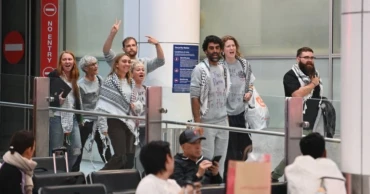
Australia to probe allegations of abuse against Gaza Flotilla activists in Israeli detention
Australia has pledged to conduct an independent investigation into allegations that Israeli forces assaulted, sexually abused and tortured activists detained from a Gaza-bound aid flotilla.
The Global Movement to Gaza Aotearoa-Australia said the commitment came after a meeting with Australian Foreign Minister Penny Wong, Minister for International Development Anne Aly, and senior representatives of the Australian Federal Police and the Department of Foreign Affairs and Trade.
Israeli strikes hit Beirut as US-Iran deal nears finalisation
The group said Australian officials agreed to look into claims of mistreatment of activists who were intercepted and taken into custody by Israeli forces while sailing in international waters as part of a humanitarian flotilla headed for Gaza.
The development follows similar moves in Europe, where Italy and France have launched investigations into Israel’s treatment of flotilla participants. Italian authorities are also reportedly examining actions involving far-right Israeli minister Itamar Ben-Gvir, including a video showing detainees being forced into humiliating positions aboard the vessel where they were held.
The allegations have added to growing international scrutiny over the handling of activists detained during Gaza-bound aid missions, as several countries consider legal and diplomatic responses.
With inputs from Al Jazeera
1 day ago
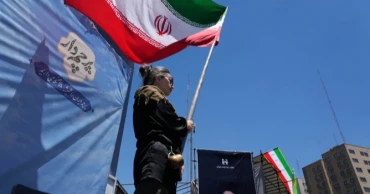
US-Iran ceasefire deal moves toward formal signing amid regional tensions
An initial agreement between the United States and Iran aimed at extending a fragile ceasefire moved closer to formal signing on Monday, although uncertainties surrounding Tehran’s nuclear program and Israel’s military operations in Lebanon continued to threaten the deal.
The electronically signed agreement, reached on Sunday, seeks to sustain a truce in a months-long conflict that has killed thousands across the Middle East, including senior Iranian leaders, and disrupted global fuel and food markets.
A key element of the pact is the reopening of the Strait of Hormuz, through which about one-fifth of the world’s oil and natural gas supplies pass. However, Iran said implementation would begin only after a formal signing ceremony scheduled for Friday in Geneva, while the US blockade remains in place until then.
The deal also requires Iran to decide within 60 days on the future of its stockpile of highly enriched uranium. Further details, expected within two days, may include the release of frozen Iranian assets, sanctions relief and a proposed $300 billion reconstruction fund tied to Iranian commitments.
Meanwhile, Israeli Prime Minister Benjamin Netanyahu said the agreement was US President Donald Trump’s decision, while reaffirming Israel’s determination to counter Iranian threats and maintain its military presence in parts of Lebanon. Continued fighting between Israel and Hezbollah remains a major challenge to the agreement’s success.
1 day ago
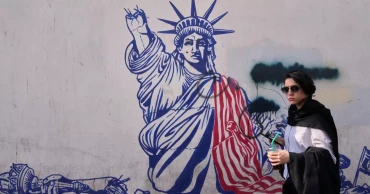
Possible Iran war deal: What we know so far
The United States and Iran appear close to a deal to end the war and open the Strait of Hormuz.
Pakistan’s Prime Minister Shehbaz Sharif said Saturday that a deal aimed at ending the war in the Middle East is closer than “ever before” and expected to be finalized within 24 hours. Pakistan is preparing for the electronic signing of the agreement, followed immediately by technical-level talks next week.
Previous declarations of an imminent breakthrough failed to materialize.
The apparent breakthrough in negotiations comes after Iran exchanged fire with the U.S. and Israel over three days this week, threatening to push the region into a full-scale war. U.S. Central Command late Friday said in a social media post that it intercepted several Iranian attack drones that were targeting commercial ships in the Strait of Hormuz.
The war launched by the U.S. and Israel on Feb. 28 has rattled the Middle East and virtually shut down oil and natural gas shipments from the Persian Gulf. A fragile ceasefire has been in place since April 7.
Here's what to know:
Iran's nuclear program terms to be finalized within 60 days of the agreement.
Iranian Foreign Minister Abbas Araghchi said Friday the terms of dealing with Iran’s nuclear program would be finalized in the 60 days after the initial agreement is signed and that the parties could decide to extend that period.
Iran’s nuclear program has been a key point of division. The U.S. and Israel fear it could lead to an atomic weapon — a main reason their leaders cited for going to war. Tehran has insisted its nuclear efforts are for peaceful purposes.
A senior U.S. administration official, who briefed reporters on condition of anonymity under ground rules set by the White House, said Friday that the emerging agreement would begin the process of destroying or removing Tehran’s highly enriched uranium.
The official said the 60-day period after both sides sign the deal would be used to work out technical details for removing Iran’s enriched uranium. The official did not detail who the U.S. envisions taking charge of removing the uranium, believed to be entombed under three nuclear sites that were battered by American strikes last year.
The deal will include conditions to reopen the Strait of Hormuz, official says
The U.S. official said the emerging agreement includes provisions for reopening the strait.
Araghchi said Iran wants a deal that allows Tehran to charge ships “for services rendered” when they transit the Strait of Hormuz. Iran has imposed a toll system during the war, which the U.S. and other nations say violates international law.
Transit through the Strait of Hormuz, a vital shipping lane for oil and natural gas, has been disrupted and crimped global energy supplies, driven up fuel prices and made food and other basics more expensive well beyond the region.
The agreement is set to include Iranian sanctions relief
Three regional officials said the emerging deal is also expected to include the phased lifting of sanctions on Iran and the release of frozen Iranian assets. The officials spoke on condition of anonymity because of the sensitivity of the negotiations.
They said they expect a signing ceremony for the agreement in the coming days after officials in Washington and Tehran approve it.
What will happen to Lebanon remains unclear
Iran has insisted throughout that any deal must also include a ceasefire in Lebanon, where Israel has been fighting Hezbollah, Iran’s proxy militia.
Israeli Defense Minister Israel Katz warned Friday that Israel could still act independently toward Iran and that the country would not pull out of the zones it is occupying in Lebanon, Syria and Gaza, nor would it withdraw from the northern refugee camps of the Israeli-occupied West Bank.
Fighting continued in southern Lebanon on Saturday.
4 days ago