World-Business

Pizza Hut sold for $2.7bn as Yum Brands reshapes portfolio
Yum Brands has agreed to sell Pizza Hut for a combined $2.7 billion, ending its ownership of the iconic pizza chain as the company seeks to focus on higher-performing brands amid declining sales at Pizza Hut.
The parent company of KFC, Taco Bell and Pizza Hut announced Tuesday that private equity firm LongRange Capital will acquire Pizza Hut’s operations outside mainland China for approximately $1.5 billion.
Pizza Hut’s mainland China business will be purchased by Yum China Holdings for about $1.2 billion. China is the chain’s second-largest market after the United States, accounting for nearly one-fifth of global sales.
Yum Brands began reviewing strategic options for Pizza Hut last November after the chain continued to lag behind the company’s other restaurant brands. While Yum’s global sales increased 5 percent last year, Pizza Hut recorded a 2 percent decline.
Earlier this year, Yum announced plans to shut down 250 Pizza Hut outlets in the United States. At the end of last year, the brand operated nearly 20,000 restaurants worldwide.
Industry analysts said Pizza Hut has struggled for years to regain momentum amid intense competition and changing consumer preferences.
Neil Saunders, managing director of GlobalData, described Pizza Hut as the weakest performer within Yum’s portfolio, saying efforts to revive the chain and close underperforming stores had failed to return the business to sustained growth.
Founded in 1958 in Wichita, Kansas, by two brothers using a $600 loan from their mother, Pizza Hut grew into the world’s largest pizza chain by sales in the early 1970s. The company became part of PepsiCo in 1977 before being spun off into what later became Yum Brands in 1997.
The chain’s business model came under pressure in the 1980s as rivals such as Domino’s expanded rapidly through home delivery services. Pizza Hut’s large dine-in restaurants became less suited to evolving consumer habits.
In recent years, the growth of food delivery platforms such as DoorDash and Uber Eats has further intensified competition by giving consumers access to a wider range of food options beyond pizza.
Yum Brands Chief Executive Officer Chris Turner said the sale would allow Pizza Hut to pursue growth under owners with extensive restaurant industry experience.
He added that LongRange Capital and Yum China are well positioned to support the brand’s future development in their respective markets.
The Louisville, Kentucky-based company expects both transactions to be completed during the third quarter of the year. Yum Brands’ shares rose about 3 percent following the announcement.
22 hours ago

Asian markets mostly rise; Japan’s Nikkei briefly crosses 70,000 after BOJ rate hike
Most Asian stock markets traded higher on Tuesday, with Japan’s benchmark Nikkei 225 briefly crossing the 70,000 mark for the first time before giving up some of its early gains following a rate hike by the Bank of Japan (BOJ).
The BOJ raised its key interest rate by 0.25 percentage points to 1%, taking the benchmark rate to its highest level in nearly 30 years.
By early afternoon, Japan’s Nikkei 225 was up 0.6% at 69,713.05. South Korea’s Kospi continued its record-setting run, gaining 2.1% to 8,721.64.
China’s Shanghai Composite edged up less than 0.1% to 4,100.53. However, Australia’s S&P/ASX 200 fell 0.3% to 8,892.10, while Hong Kong’s Hang Seng dropped 1.3% to 24,533.35.
Taiwan’s Taiex rose 0.6%, and India’s Sensex added 0.5%.
Global markets rallied on Monday after the United States and Iran reached a preliminary agreement aimed at restoring the smooth flow of oil supplies. The development helped ease concerns over disruptions in global energy markets.
On Wall Street, the S&P 500 climbed 1.7%, while the Dow Jones Industrial Average gained 0.9% to reach a record high. The technology-heavy Nasdaq surged 3.1%.
Oil prices also declined after the announcement, as investors hoped the deal could lead to the reopening of the Strait of Hormuz, a key route for global oil shipments and a major source of energy supplies for Asia.
Brent crude oil dropped 4.8% on Monday, although analysts cautioned that uncertainty remains and negotiations between Washington and Tehran are expected to continue over the next two months. They also noted that even if the strait reopens as expected, it could take several months before energy exports return to normal levels.
Oil prices have fallen from above $100 per barrel seen a few weeks ago during heightened tensions. Before the conflict, crude was trading near $70 a barrel.
Early Tuesday, US benchmark crude oil slipped 9 cents to $80.66 per barrel, while Brent crude, the international benchmark, fell 24 cents to $82.93 per barrel.
Technology shares led gains on Wall Street, particularly companies linked to artificial intelligence (AI). Micron Technology jumped 10.8%, while Advanced Micro Devices (AMD) rose 7%.
Nvidia, the world’s most valuable publicly traded company, gained 3.5%, providing the biggest boost to the S&P 500. Meanwhile, SpaceX, the rocket company owned by Elon Musk and parent of AI firm xAI, surged 19.6% in its second day of trading on Wall Street.
In the bond market, US Treasury yields edged lower as falling oil prices reduced concerns that central banks may need to keep raising interest rates. The yield on the 10-year Treasury note slipped to 4.47% from 4.48% on Friday.
In currency trading, the US dollar was little changed at 160.33 Japanese yen. The euro traded at $1.1580, slightly lower than $1.1592 in the previous session.
1 day ago
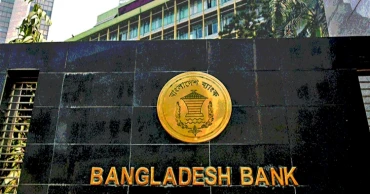
Rules allowing exporters to sell directly on global online marketplaces eased
Bangladesh Bank (BB) has relaxed foreign exchange regulations, allowing local exporters to sell products directly to foreign consumers through international online marketplaces and digital platforms.
The move is expected to expand cross-border e-commerce operations and significantly ease global market access for small and medium enterprises (SMEs).
Bangladesh Bank launches nationwide campaign ahead of Bangla QR rollout
The central bank issued a circular in this regard on Monday, stating that the initiative aims to facilitate business-to-consumer (B2C) export activities and boost the expansion of digital commerce.
Under the new directives, Bangladeshi exporters can now list and display their goods on internationally recognized online marketplaces, enabling foreign buyers to make direct purchases.
According to the circular, exporters will be allowed to ship small-scale goods valued up to US $5,000 per consignment under CFR (Cost and Freight) terms.
Furthermore, the requirement to submit the export form has been relaxed for export shipments valued up to $1,000.
However, the central bank mandated that the full payment for such exports must be received in advance through authorized banking channels or legitimate digital payment systems.
To streamline cross-border e-commerce logistics, shipping documents can now be issued directly in the name of the foreign buyer, making the direct delivery process faster and more efficient.
The BB guidelines also incorporate customer protection measures, allowing provisions for refunds to foreign buyers in cases of product returns, damaged goods, or quality disputes. Additionally, local businesses have been permitted to legally remit funds abroad to cover required subscription fees, registration costs, membership dues, and other service charges essential for operating on international digital platforms.
Industry insiders and e-commerce stakeholders welcomed the decision, noting that local entrepreneurs previously had to rely on a complex 'Business-to-Business and Business-to-Consumer' (B2B and B2C) model, which required pre-shipping goods abroad to be sold via local distributors or platform warehouses.
The new policy will pave the way for direct engagement with global consumers, benefiting sectors such as SMEs, handicrafts, leather goods, apparel, home decor, and agro-processed products, while accelerating product diversification and boosting foreign exchange earnings.
2 days ago
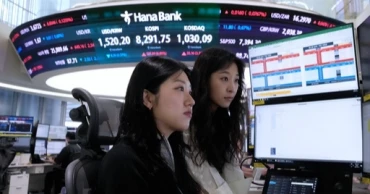
Asian shares rally, oil prices ease on hopes of Iran war settlement
Asian stock markets posted strong gains on Friday while oil prices fell after US President Donald Trump said progress had been made in efforts to end the Iran war, boosting investor confidence across global markets.
US stock futures also moved slightly higher following sharp gains on Wall Street.
South Korea's Kospi index surged 7.8 percent to 8,370.82, recovering much of the losses linked to recent sell-offs in artificial intelligence-related stocks. The benchmark index has nearly doubled over the past six months, though it remains below its record closing high reached on June 2.
Shares of Samsung Electronics jumped 11.2 percent, while chipmaker SK Hynix gained 7.2 percent.
Japan's Nikkei 225 advanced 3.5 percent to 66,442.95, led by technology stocks. SoftBank Group rose 2 percent and semiconductor equipment manufacturer Tokyo Electron soared 10.3 percent.
Hong Kong's Hang Seng index climbed 1.8 percent to 24,689.32, while China's Shanghai Composite gained 1.6 percent to 4,050.51.
Australia's S&P/ASX 200 rose 1.9 percent to 8,798.10. Taiwan's Taiex added 2.6 percent and India's Sensex increased 1.2 percent.
Investor sentiment improved after Trump said on Thursday that he had cancelled planned military strikes against Iran and claimed the United States had reached a significant understanding to end the conflict. He also suggested that an extension of the fragile ceasefire between the two sides could be agreed within days, although he provided few details.
Markets had come under pressure earlier this week as tensions between Washington and Tehran intensified. Rising oil prices have fueled inflation concerns worldwide, particularly as the Strait of Hormuz, a crucial route for global oil and gas shipments, remained largely closed.
Analysts at ING said there appeared to be more encouraging signs surrounding a possible agreement this time, although they cautioned that any ceasefire extension remained uncertain and could still prove fragile.
Oil prices retreated as hopes for a diplomatic breakthrough increased. Brent crude, the international benchmark, fell 1.7 percent to $88.87 per barrel, while US benchmark crude dropped 1.6 percent to $86.33 per barrel. Both remained significantly above pre-war levels of around $70 a barrel.
On Thursday, Wall Street recorded broad-based gains. The S&P 500 rose 1.8 percent to 7,394.30, the Dow Jones Industrial Average climbed 1.9 percent to 50,848.75, and the Nasdaq Composite gained 2.5 percent to 25,809.66.
Technology and AI-related stocks have experienced heightened volatility in recent days amid concerns that rapid share price increases and heavy investment spending could signal a market bubble.
Marvell Technology jumped 11.1 percent, while Oracle fell 8.5 percent despite reporting stronger-than-expected quarterly earnings, as investors worried about its growing spending commitments.
Investors were also watching the highly anticipated Wall Street debut of SpaceX, Elon Musk's rocket company, which is expected to become the largest initial public offering on record with plans to raise about $75 billion.
In currency trading, the US dollar strengthened to 160.22 Japanese yen from 159.93 yen, while the euro slipped slightly to $1.1574 from $1.1578.
5 days ago
Asian shares slip after tech sell-off on Wall Street; oil prices rise on Iran tensions
Asian shares mostly fell on Wednesday after a sharp sell-off in technology stocks on Wall Street, while global oil prices climbed following fresh U.S. airstrikes linked to escalating tensions with Iran.
The U.S. military carried out attacks early Wednesday after the crash of an Army helicopter near the Strait of Hormuz, an incident President Donald Trump blamed on Iran. Tehran rejected the accusation and warned it would respond, saying it “will leave no attack or threat unanswered.”
The renewed escalation has raised concerns over prospects for a lasting ceasefire in a conflict that has already dragged on for more than three months. The uncertainty has further unsettled global markets, which were already under pressure from heavy selling in technology firms tied to the artificial intelligence boom.
Oil prices resumed their upward trend amid fears over disruptions to the Strait of Hormuz, a key global shipping route. Brent crude rose 0.9 percent to 92.30 dollars per barrel after earlier fluctuations, having traded near 70 dollars before the conflict escalated in late February. U.S. benchmark crude gained 1 percent to 89.04 dollars per barrel.
ING commodities strategists Warren Patterson and Ewa Manthey said the situation remains “highly volatile,” noting that efforts by Iran and the United States to secure a stable ceasefire and ensure free movement through the Strait remain uncertain. They also pointed out that seasonal demand typically supports higher oil prices at this time of year.
In equities, U.S. futures edged lower after losses in major chipmakers including Micron Technology, Advanced Micro Devices and Marvell Technology.
In Asia, South Korea’s Kospi dropped 4.7 percent to 7,720.59 after a strong rally in the previous session. Samsung Electronics fell 5.8 percent, while SK Hynix slid 6.3 percent.
Japan’s Nikkei 225 declined 1.4 percent to 64,524.84 after data showed producer prices rose 6.3 percent in May, the fastest increase in more than three years. SoftBank Group shares fell 8.9 percent, while Tokyo Electron rose 5.3 percent.
Hong Kong’s Hang Seng lost 1.1 percent to 24,296.62 and the Shanghai Composite slipped 0.7 percent to 3,980.24. Official figures showed China’s producer prices climbed 3.9 percent in May, close to a four-year high.
Australia’s S&P/ASX 200 edged up 0.2 percent to 8,624.50. Taiwan’s Taiex was down 1.6 percent in early trade, while India’s Sensex rose 0.6 percent.
On Wall Street on Tuesday, the S&P 500 fell 0.3 percent, the Dow Jones Industrial Average gained 0.2 percent, and the Nasdaq composite dropped 1 percent as technology stocks led losses. Micron, Marvell Technology and AMD all declined sharply during trading.
Investors are also watching upcoming U.S. inflation data, with energy prices rising due to ongoing geopolitical tensions.
In currency markets, the U.S. dollar was steady at 160.36 yen, while the euro traded at 1.1550 dollars.
7 days ago

Pentagon adds Alibaba, BYD and Baidu to list of firms linked to Chinese military
The Pentagon has added several major Chinese companies, including Alibaba, BYD and Baidu, to its list of companies it says have ties to China's military, making them ineligible for US defense contracts.
The updated list, released Monday, expands US scrutiny beyond traditional defense firms to include some of China's best-known private-sector companies. The move reflects growing concerns in Washington that Beijing is using the expertise and technology of civilian businesses to strengthen its military capabilities.
The list was established in 2021 under a congressional mandate to identify Chinese companies believed to have links to the country's military. It includes not only firms directly controlled by military authorities but also those considered to support China's defense industry.
The Pentagon has previously said that China's military seeks access to advanced technologies and expertise developed by businesses, universities and research institutions that appear to operate as civilian entities.
China strongly criticized the decision. The Chinese Embassy in Washington accused the United States of misusing national security concerns to target Chinese businesses and called on Washington to provide a fair and non-discriminatory business environment for Chinese companies.
Alibaba and Baidu rejected the Pentagon's claims.
Alibaba said it is neither a military company nor part of any military-civil fusion program. Baidu, which has expanded into artificial intelligence and autonomous driving technology, described its inclusion on the list as completely unfounded.
The latest update increases the number of companies on the Pentagon's list to 188, up from about 130 last year. The list already included firms such as DJI, one of the world's leading makers of consumer drones.
Although companies on the list are not banned from operating in the United States, the designation can damage their reputation and may lead to additional restrictions in the future.
Following the announcement, the House Select Committee on the Chinese Communist Party described the list as a warning to American businesses, government agencies and the public. The committee argued that Chinese firms on the list should be removed from US stock exchanges and that American companies should avoid doing business with them.
The Pentagon said Alibaba supports China's defense industrial base through its ties to the country's Ministry of Industry and Information Technology. It also cited similar links involving BYD and Baidu.
BYD, one of the world's largest electric vehicle manufacturers, has become a dominant player in the global EV market. Earlier this year, US President Donald Trump said he would welcome Chinese automakers such as BYD if they built factories in the United States and hired American workers. However, several US lawmakers continue to push for restrictions on Chinese-made electric vehicles.
Another company newly added to the list is Unitree, known for its advanced robots that recently gained attention on the TV show America's Got Talent. The Pentagon said Unitree had received support from the Chinese government through programs designed to help innovative and globally competitive companies.
BYD and Unitree did not immediately respond to requests for comment.
8 days ago

Asian markets tumble as tech stock sell-off and rate hike fears shake investors
Asian stock markets fell sharply on Monday after a heavy sell-off in major technology shares dragged Wall Street to its worst day in months, while growing expectations of a possible U.S. interest rate hike added to investor concerns.
Japan's benchmark Nikkei 225 dropped 4.5 percent to 63,604.15. The decline came after the Japanese government revised its first-quarter annual economic growth rate to 1.8 percent from an earlier estimate of 2.1 percent. Despite the drop, the Nikkei remains more than double its level from five years ago.
Oil prices jumped after Israel carried out airstrikes early Monday targeting central and western Iran in response to missile attacks. Iranian state media reported explosions in Isfahan, Tabriz and Tehran.
The latest escalation comes despite U.S. and Iranian negotiators reaching a preliminary agreement last week to extend a ceasefire. However, the deal has yet to be finalized, and the renewed violence has raised doubts about efforts to end the conflict.
International benchmark Brent crude rose $4.55 to $97.64 per barrel, while U.S. benchmark crude gained $4.17 to $94.71 per barrel.
Elsewhere in Asia, South Korea's Kospi plunged 8.2 percent to 7,493.34. Shares of Taiwan's Taiex index declined 3.5 percent.
Hong Kong's Hang Seng Index fell 1.7 percent to 24,527.22, while China's Shanghai Composite Index dropped 1.8 percent to 3,955.72.
Markets in Australia were closed for the King's Birthday public holiday.
Analysts said the latest downturn reflects concerns that technology stocks, particularly those linked to artificial intelligence, may have risen too far too quickly.
On Friday, Wall Street closed sharply lower. The S&P 500 fell 2.6 percent to 7,383.74, marking its biggest one-day decline since October. The Dow Jones Industrial Average dropped 1.4 percent to 50,866.78, while the Nasdaq Composite slid 4.2 percent to 25,709.43.
Investor sentiment was hurt by a stronger-than-expected U.S. jobs report showing the economy added 172,000 jobs in May. The data reinforced expectations that the U.S. Federal Reserve could raise interest rates later this year.
Following the report, yields on U.S. government bonds rose. The yield on the 10-year Treasury note increased to 4.54 percent from 4.50 percent, while the two-year Treasury yield climbed to 4.16 percent from 4.04 percent.
The Federal Reserve has kept rates unchanged in recent months while assessing the impact of inflation and trade-related pressures. Concerns over global energy supplies have also increased as the conflict involving Iran continues to disrupt oil shipments through the Strait of Hormuz.
In currency trading, the U.S. dollar edged up to 160.27 Japanese yen from 160.25 yen, while the euro rose slightly to $1.1522 from $1.1515.
9 days ago

EATL hosts dinner for UK-China delegation to boost trade ties
EATL Innovation Hub Ltd on Saturday night hosted an exclusive dinner and strategic discussion in honour of a delegation of British and Chinese business leaders and investors visiting Bangladesh.
The event served as an important platform to strengthen international collaboration and explore new opportunities in trade, technology, infrastructure, education, healthcare, tourism and sustainable development.
China to invest in 1,000-bed hospital in Sylhet, minister says
The gathering brought together senior policymakers, government officials, international investors and business leaders committed to enhancing economic cooperation between Bangladesh, the United Kingdom and China.
Civil Aviation and Tourism Minister Afroza Khanam, BNP Standing Committee Member Dr Abdul Moyeen Khan and Vice Chairman Altaf Hossain Chowdhury, and Managing Director of EATL Innovation Hub MA Mubin Khan, among others, spoke at the event.
The visiting international delegation was led by Councillor Abdul Jabbar MBE, Deputy Leader of Oldham Council and Chairman of the Greater Manchester Bangladesh Partnership Board.
The delegation also included Andrew McCulley of EmirGreen Capital, Chris Baldwin of Arkitekton Construction, Hou Chunlin, Chief Executive Officer of Visient Holding Limited, and Qiu Run, Chief Executive Officer of Sheng Kai International Limited.
During the discussion, participants exchanged views on potential collaboration and investment opportunities in renewable energy, infrastructure development, education, healthcare, tourism and emerging technologies.
Members of the delegation expressed strong interest in supporting Bangladesh through green energy initiatives, innovative financing solutions, technology transfer and workforce development programmes.
Particular emphasis was placed on creating sustainable partnerships that can contribute to Bangladesh’s long-term economic growth and competitiveness in the global marketplace.
Speaking at the event, Civil Aviation and Tourism Minister Afroza Khanam highlighted the government’s continued efforts to attract foreign investment, expand trade opportunities, strengthen infrastructure, accelerate digital transformation and position the country as a regional hub for business, connectivity and innovation.
10 days ago
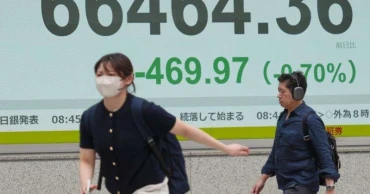
Asian shares mostly fall as renewed fighting hits US-Iran ceasefire hopes
Asian stock markets mostly declined on Tuesday as fresh fighting raised doubts over the stability of the US-Iran ceasefire, while US futures also slipped.
Japan’s benchmark Nikkei 225 fell 0.3% to close at 66,734.24, while South Korea’s Kospi dropped 0.2% to 8,772.08. Australia’s S&P/ASX 200 edged down less than 0.1% to 8,724.40.
In contrast, Hong Kong’s Hang Seng index rose 2.2% to 25,956.72 and China’s Shanghai Composite gained 0.4% to 4,075.34.
On Wall Street, US stocks had earlier reached new record highs on Monday. The S&P 500 rose 0.3% to 7,599.96, the Dow Jones Industrial Average gained 0.1% to 51,078.88, and the Nasdaq Composite climbed 0.4% to 27,086.81.
In bond markets, the yield on the 10-year US Treasury briefly climbed to 4.52% before easing to 4.46%.
Oil price movements continued to influence global markets. Airlines in the US came under pressure as fuel costs rose, with United Airlines shares falling 2.6% and Alaska Air Group down 3.3%.
In Asian trading, US crude oil fell 94 cents to $91.22 per barrel, while Brent crude dropped 90 cents to $94.08. Despite the decline, prices remain significantly higher than pre-conflict levels of around $70 per barrel.
Market analysts say much depends on whether Washington and Tehran can reach an agreement to reopen the Strait of Hormuz, a key route for global oil shipments from the Persian Gulf.
Analyst Stephen Innes said crude shortages have already forced refiners in Asia and Europe to cut production, warning that the impact is spreading across fuel supplies including petrol, diesel, jet fuel and other products.
The latest tensions follow ongoing military exchanges, with the United States saying it struck Iranian radar and drone facilities after an American drone was downed, while Iran claimed it targeted US forces in Kuwait—claims Washington says were intercepted.
In currency markets, the US dollar edged up to 159.72 Japanese yen, while the euro rose to $1.1654.
Meanwhile on Wall Street, Nvidia shares jumped 6.2% after new product announcements by CEO Jensen Huang, helping lift broader market sentiment.
15 days ago
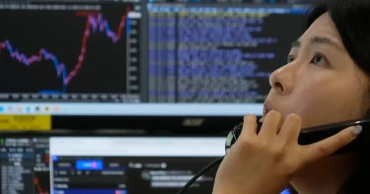
Japan, South Korea stocks hit records as oil rises on Iran ceasefire doubts
Stock markets in Japan and South Korea climbed to record highs on Monday, driven by strong gains in technology shares and optimism over the global artificial intelligence boom, while uncertainty over the Iran war ceasefire kept oil prices elevated.
Oil prices rose more than 2% as investors closely watched ongoing U.S.-Iran talks, including discussions on reopening the Strait of Hormuz, a key route for global oil and gas shipments.
Asian markets broadly advanced, with Japan’s and South Korea’s benchmark indexes hitting new intraday records. The rally was led by technology stocks, as investors continued to bet on strong demand for AI-related industries.
Japan’s Nikkei 225 rose more than 1.3% and crossed the 67,000 level for the first time, reaching 67,231.28. Shares of SoftBank Group surged more than 9%, adding to recent record gains.
In South Korea, the Kospi index jumped nearly 5% to an all-time high of 8,874.16. Shares of Samsung Electronics rose more than 9%. Official data also showed South Korea’s exports surged 53% in May, supported by strong global demand for semiconductors.
Over the past month, Japan’s Nikkei has gained more than 12%, while South Korea’s Kospi has surged over 27%, reflecting strong momentum in regional equities.
Elsewhere in Asia, Hong Kong’s Hang Seng index rose 0.9%, while China’s Shanghai Composite slipped slightly after weaker-than-expected factory activity data signaled slowing export demand. Australia’s S&P/ASX 200 also edged lower, while Taiwan’s Taiex and India’s Sensex posted gains.
Market sentiment remains influenced by uncertainty over the future of the Iran conflict. Investors are watching whether a proposed ceasefire extension will hold, even as optimism around artificial intelligence and corporate earnings continues to support global equities, including on Wall Street.
Brent crude oil rose 2.4% to $93.33 per barrel in early trading, up sharply from about $70 in late February before the conflict began. U.S. crude also climbed 2.8% to $89.76 per barrel.
On Friday, Wall Street indexes closed at record levels, supported by strong gains in major technology stocks. The S&P 500, Dow Jones Industrial Average and Nasdaq Composite all posted fresh highs, led by companies tied to AI-driven demand.
In currency markets, the U.S. dollar strengthened against the Japanese yen, while the euro weakened slightly.
16 days ago