India

5 killed in Assam aircraft crash in India
Five Indian Air Force (IAF) personnel were killed after an AN-32 transport aircraft crashed during a routine training mission in the northeastern Indian state of Assam on Saturday, officials said.
The aircraft went down near Jorhat in Assam, the Indian Air Force said in a statement posted on social media platform X.
Visuals from the crash site showed debris scattered across a field following the accident.
The IAF expressed condolences to the bereaved families and said it stood in solidarity with them during this difficult time.
Authorities have not yet disclosed the cause of the crash, and further details are awaited.
The incident comes months after two Indian Air Force pilots were killed in March when a Sukhoi Su-30MKI fighter jet crashed during a routine training sortie in Assam.
4 days ago
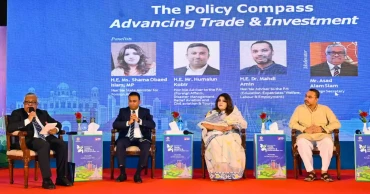
Dhaka wants cooperation with Delhi despite existing challenges: Humaiun Kobir
Prime Minister’s Foreign Affairs Adviser Humaiun Kobir on Saturday said Bangladesh wants cooperation and good working relations with India based on mutual respect despite the challenges that the relationship is facing.
"We want cooperation with India, but it must be based on mutual respect. We should have a good working relationship with India," he said while responding to a question during a panel discussion.
State Minister for Foreign Affairs Shama Obaed Islam and Prime Minister’s Adviser on Education Mahdi Amin also spoke, with the discussion moderated by Foreign Secretary Asad Alam Siam.
Local Government, Rural Development and Cooperatives Minister Mirza Fakhrul Islam Alamgir, Finance Minister Amir Khosru Mahmud Chowdhury, Foreign Minister Dr Khalilur Rahman and BIDA Executive Chairman Chowdhury Ashik Mahmud, among others, spoke at the event.
The Adviser said it is the norm of diplomacy to regularise working relationships within the neighborhood, and the government intends to do that.
"You know, we've made a visit. We expect visits to Dhaka, and either way, we will build the visibility of a working relationship with India. We intend to do that. But the environment must be conducive to accommodating this approach."
Adviser Humaiun Kobir said there are challenges in the relationship, and there has been a "tremendous deficit" in the relationship that they picked up over the last 15 years.
"It was one way, and it was not done with the interests of the people of Bangladesh in mind," he said.
He, however, said they remain positive, given the recent visit of Foreign Minister Dr Khalilur Rahman to New Delhi. Adviser Humaiun Kobir was part of the visit.
The Adviser highlighted the positive mindset of the leadership of both countries, who are committed to moving forward and making progress.
"We can do that. And it can be achievable. Of course, there are challenges. There are always challenges. When you have a terrorist who has fled from Bangladesh after killing one and a half thousand people, and who, to date, has shown no remorse and is trying to destabilise the country from over there, of course, there are challenges," Humaiun Kobir said.
4 days ago
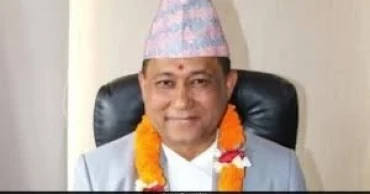
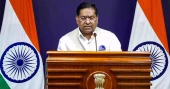
We look at India with an open heart: Nepalese FM
Nepalese Foreign Minister Shisir Khanal has said they refuse to look at India through the distorted, hypersensitive lens of 20th-century geopolitics.
Instead, he said, the Rastriya Swatantra Party wants to shift the entire vocabulary of Nepal-India relations away from geopolitical friction and square it firmly on development and diplomacy.
"We look at India with an open heart, clear eyes, and a single transparent agenda: the economic transformation of Nepal," said the Nepalese Foreign Minister in New Delhi on Sunday.
He had "productive" bilateral talks with his Indian counterpart Dr S. Jaishankar on June 6.
The Nepalese Foreign Minister said when they look across the border, they see a rising India, an India that has fundamentally and beautifully redefined itself on the global stage as a dynamic, fast-growing tech and economic powerhouse.
"We want to engage with this India of intense aspiration, cutting-edge technology, and relentless execution. In turn, we bring the energy of aspiring Nepal," he said.
The Nepalese Foreign Minister said their primary responsibility is to close the gap between old promises made on paper and the physical reality delivered on the ground, transitioning away from abstract political statements to deliver measurable, life-changing results.
The Minister for Foreign Affairs of Nepal undertook an official visit to India starting 5th June 2026 at the invitation of External Affairs Minister Dr. S. Jaishankar.
This was the first visit at the level of Foreign Minister between the two countries since the new government assumed office in Nepal in March 2026.
Nepal is a priority partner of India under its 'Neighbourhood First' policy and the visit reinforced the tradition of regular high-level exchanges between the two close and friendly neighbours.
It provided an opportunity to exchange views on enhancing the bilateral partnership to fulfill the aspirations of peoples from both countries, and has imparted fresh vigour to our efforts towards this objective.
The two Ministers reviewed the full spectrum of India-Nepal bilateral relations covering development cooperation, connectivity, trade and transit, energy, and people-to-people ties, according to the Ministry of External Affairs.
They also exchanged views on regional and multilateral issues of mutual interest.
The Ministers expressed satisfaction over the progress achieved in bilateral cooperation across diverse sectors and welcomed the recent initiatives to enhance co-operation in areas of innovation and startups; digital and financial technology; and training and capacity building.
They agreed to intensify efforts towards further enhancing the multifaceted India-Nepal partnership to take it to new heights.
Both Ministers welcomed the completion of internal processes for entry into force of the India-Nepal Mutual Legal Assistance Agreement in Criminal Matters (MLAA).
This agreement will benefit the people of India and Nepal by providing an institutional legal framework to enhance the effectiveness of investigation, prosecution and judicial proceedings relating to cross-border crimes.
Following the bilateral talks:
(i)External Affairs Minister of India handed over to Foreign Minister of Nepal, 72 health facilities and 12 cultural heritage sector projects, completed under India’s post-2015 ‘Earthquake Reconstruction Assistance’ to Nepal.
(ii)The Ministers jointly launched the Peer-to-Peer (P2P) linkage between Unified Payments Interface (UPI) of India and National Payments Interface (NPI) of Nepal for facilitating cross-border personal remittances between India and Nepal.
(iii)The Ministers witnessed the signing of MoU between Digital India Bhashini and Kathmandu University for co-creating National Digital Infrastructure for “Voice First” Language Translation platform;
The discussions were held in a warm, friendly and constructive atmosphere, reflecting the unique and special ties between the two countries.
During the visit, Foreign Minister Khanal also met National Security Advisor Ajit Doval.
9 days ago
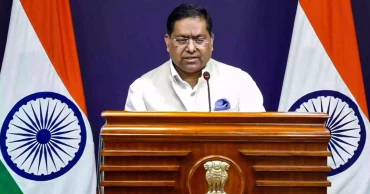
India says illegal foreign nationals including Bangladeshis to be dealt with under law
Amid push-in bids along the border, India has said all foreign nationals in India including those from Bangladesh will be dealt with as per the law if they are living there illegally.
"All foreign nationals in India, if they are here illegally, including those from Bangladesh, we have laws to deal with them and they will be dealt with accordingly," Spokesperson at the Indian Ministry of External Affairs Randhir Jaiswal told reporters in New Delhi during a regular briefing on Friday.
As far as the deportation of these people is concerned, he said, there is a bilateral mechanism in place.
"And once we refer these cases to the Bangladeshi side for verification of the nationality of these people, and once it is verified, then we take forward the deportation process," said the MEA spokesperson.
"We have several, or many, of these requests which are still pending with the Bangladeshi side," Jaiswal said, expressing hope that they will be expedited as soon as possible so that the deportation of people who are illegally staying in India can be carried out in a smooth and efficient manner.
Responding to a question, he said they want to further strengthen bilateral ties with Bangladesh and take them in a positive direction.
Border Guard Bangladesh (BGB) said they foiled attempts by India’s Border Security Force (BSF) to push 95 people into Bangladesh through separate border points in six districts over the past 24 hours until Saturday morning.
10 days ago
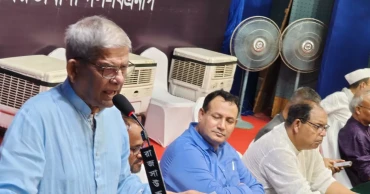
India ties hinge on Ganges treaty renewal: Fakhrul
BNP Secretary General and Local Government, Rural Development and Cooperatives Minister Mirza Fakhrul Islam Alamgir on Saturday said d the prospect of maintaining good relations between Bangladesh and India largely depends on the renewal or conclusion of the Ganges water-sharing agreement, commonly known as the Farakka Treaty.
He made the remarks while addressing a discussion organised by BNP marking the Historic Farakka Day as the chief guest.
The discussion was presided over by BNP Senior Joint Secretary General and Political Adviser to the Prime Minister Advocate Ruhul Kabir Rizvi.
Fakhrul said Farakka Day symbolises resistance and recalled the role of Maulana Abdul Hamid Khan Bhashani, who had led movements throughout his life for the welfare of people without compromising with power.
“Maulana Bhashani raised resistance to protect the livelihood, biodiversity and environment of the people of Bangladesh,” he said.
He said the Ganges or Padma River is directly linked to the lives and livelihoods of nearly one-third of Bangladesh’s population and the Farakka Barrage had long threatened the country’s ecology and environment.
Referring to BNP founder and former President Ziaur Rahman, Fakhrul said Zia had internationalised the issue by mobilising public opinion and raising it on the global stage.
Fakhrul alleged that Bangladesh’s problems began after then Prime Minister Sheikh Mujibur Rahman allowed India in 1973 to experimentally divert water through the Farakka Barrage.
He also mentioned that later efforts regarding water-sharing agreements were made by former president Ziaur Rahman and former Prime Minister Khaleda Zia.
Fakhrul said a short-term agreement would not be enough.“This treaty must be for an indefinite period and remain effective until any future agreement replaces it,” he said.
The BNP leader said no demand could ever be realised unless people become united behind it.
“Maulana Bhashani united people over the Farakka issue, which later made it possible for Ziaur Rahman to implement an agreement,” he said.
Fakhrul said the current Ganges Treaty is set to expire on December 2026 and warned that failure to renew the agreement or ensure water flow would create serious concerns for Bangladesh.
“I thank our Prime Minister Tarique Rahman, who has taken a quick decision to move forward with the Padma Barrage project.This is a historic decision that will help protect vast areas of the country,” he said.
Fakhrul claimed that the government led by Tarique Rahman is a people’s government elected through a legitimate democratic process.
He alleged that certain groups are carrying out propaganda against the government and trying to destabilise the country. “The people of Bangladesh who earned democracy through sacrifice will never allow any conspiracy to raise its head,” he said.
Fakhrul said Bangladesh expects immediate discussions over the Farakka Treaty in consideration of the interests of the Bangladeshi people.
He also asserted that Bangladesh would never allow any agreement that undermines the country’s interests.
“We believe Tarique Rahman’s government will always prioritise Bangladesh’s interests above everything else,” Fakhrul added.
Among the special guests were BNP Chairperson’s Advisory Council member Goyeshwar Chandra Roy, BNP Vice-Chairman Shamsuzzaman Dudu, BNP Chairperson’s Advisory Council member and Land Minister Mizanur Rahman Minu, and BNP Chairperson’s Advisory Council member Ataur Rahman Dhali.
Among the discussants were Emeritus Professor and water resources and climate change expert Dr Ainun Nishat, Dhaka University Vice-Chancellor Prof Dr ABM Obaidul Islam, BUET Professor Dr Md Ataur Rahman, and Jahangirnagar University Professor Dr Nahrin Islam Khan.
Vice-Chancellor of Dhaka Central University Prof Dr Md Nurul Islam presented the keynote paper at the event.
1 month ago
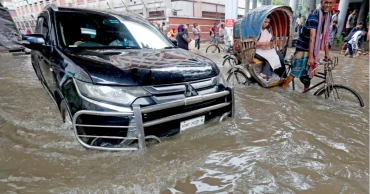
Bangladesh, India, Nepal, Pakistan among hardest-hit by monsoon disasters: ICIMOD
Bangladesh, India, Nepal and Pakistan were among the countries repeatedly battered by monsoon-triggered floods and landslides in 2025, as disaster risks continued to intensify across the Hindu Kush Himalaya (HKH) region, according to an analysis by the International Centre for Integrated Mountain Development (ICIMOD).
Four of the eight countries in the Hindu Kush Himalaya (HKH) region experienced more than 10 major disasters in 2025, according to data from ICIMOD analysis, highlighting the region’s growing exposure to hazard-related risks.
Asia accounted for a large share of disasters globally in 2025, a trend reflected in the HKH, which spans parts of South and East Asia.
Analysis of EM-Data (Emergency Events Database) shows that countries in the HKH region experienced economic losses of more than USD $6 billion in 2024 alone from these events, with most damage linked to water-related hazards such as floods, landslides and storms, said the HKH, noting that the situation continued into 2025.
Other hazards, such as glacial lake outburst floods, were also reported in select locations. Across the region, about 1.2 million people were displaced or directly affected by disasters during the year.
Globally, disaster-related economic losses in 2025 were estimated at more than USD $169 billion. In comparison, losses recorded across the HKH highlight how extreme events translate into disproportionate impacts in a region characterised by complex terrain and high exposure.
Data also shows that Myanmar, Pakistan, and China experienced a series of monsoon-induced floods in 2025, causing widespread damage to infrastructure and livelihoods.
Researchers link the increasing impact of disasters in the HKH to the growing prevalence of multi-hazard events.
Multi-hazards occur when more than one type of hazard, such as floods, landslides, or droughts, happen at the same time or when one hazard triggers another. Past examples in the region include the Kedarnath floods in Uttarakhand in 2013, and the South Lhonak glacial lake outburst flood in Sikkim in 2023, India, as well as the Melamchi flood in Nepal in 2021.
“Recent years show how floods, landslides, and other hazards are increasingly overlapping in mountain regions, amplifying damages to homes, infrastructure, and essential services,” said Pema Gyamtsho, Director General at ICIMOD, commenting on the regional trend.
Long-term data covering the period from 1975 to 2024 shows a decline in death rates and the number of people affected by disasters in the HKH after 2013.
Analysts caution that data gaps may influence this trend, but improvements in preparedness and early warning systems may also be contributing factors.
“The numbers are still worrying, but the post-2013 trend suggests fewer lives are being affected year on year, which may reflect better climate services and preparedness in parts of the region,” said Manish Shrestha, a hydrologist at ICIMOD. “Sustained investment in preparedness and planning remains critical as risks continue to rise.”
Early warning systems have been credited with reducing losses in some flood-prone areas. In eastern Nepal, alerts issued from a flood early warning system along the Khando River in 2024 helped inform and evacuate around 60,000 people living downstream.
Analysts note that reducing future disaster losses in the HKH will also depend on risk‑informed investments, where development and infrastructure planning take multi‑hazard risks into account.
Without integrating hazard and vulnerability data into investment decisions, exposed communities risk locking in higher losses as climate‑driven extremes intensify.
Experts warn that multi‑hazard risks are likely to intensify in the coming years as climate change alters weather patterns and increases the frequency and severity of extreme events, leaving exposed communities across the HKH vulnerable to escalating losses.
1 month ago
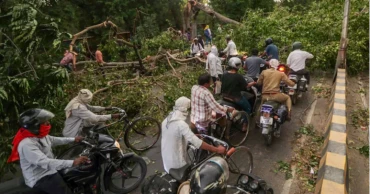
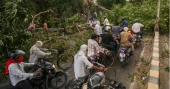
100 killed as storms and heavy rain batter Uttar Pradesh
At least 100 people were killed after powerful storms and heavy rain swept across India’s northern state of Uttar Pradesh, causing widespread damage to homes, roads and power lines, officials said.
The worst-hit district was Prayagraj, where 21 people died. Another 18 deaths were reported in Bhadohi, 15 in Mirzapur and 10 in Fatehpur.
Six people each were killed in Unnao and Badaun, while four deaths each were reported in Pratapgarh and Bareilly. Two people each died in Sitapur, Raebareli, Chandauli, Kanpur Dehat, Hardoi and Sambhal.
Single deaths were reported in Kaushambi, Shahjahanpur, Sonbhadra and Lakhimpur.
The weather changed suddenly on Tuesday evening, with dust storms and strong winds hitting large parts of the state.
Trees and electricity poles were uprooted, roads were blocked and several vehicles were crushed by falling trees. Many houses were also damaged.
Rescue teams worked to pull trapped people from collapsed structures.
One widely shared video from Bamiyana village in Bareilly showed strong winds lifting a man along with a tin shed and throwing him into a nearby field.
The injured man, identified as Nanhe Miyan, suffered fractures to his hands and legs. He said he had been holding onto a rope when the gusts swept him and the metal sheet into the air.
Uttar Pradesh Chief Minister Yogi Adityanath expressed sorrow over the deaths and directed officials to provide financial assistance to affected families within 24 hours.
The state Relief Commissioner’s office said district authorities had been instructed to quickly verify the deaths, injuries and property damage and ensure prompt support for victims.
Source: NDTV
1 month ago
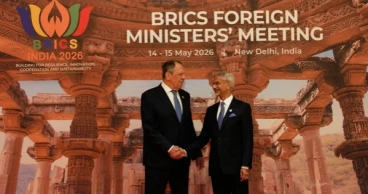
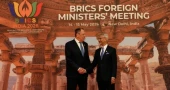
BRICS foreign ministers meet in India amid Iran war, energy concerns and internal divisions
Foreign ministers from BRICS countries began a two-day meeting in New Delhi on Thursday as the expanded bloc grapples with divisions over the Iran war, rising oil prices and wider global economic uncertainty.
The meeting brings together top diplomats from Brazil, Russia, India, China and South Africa, along with newly added member states. It comes at a time when the conflict in Iran has disrupted global energy supplies and pushed up oil prices, while also coinciding with U.S. President Donald Trump’s talks with Chinese leader Xi Jinping in Beijing.
Iranian Foreign Minister Abbas Araghchi and Russian Foreign Minister Sergey Lavrov are attending the discussions. China is represented by its ambassador to India, Xu Feihong, as Foreign Minister Wang Yi remains in Beijing during Trump’s visit.
Indian Foreign Minister Subrahmanyam Jaishankar said the talks would focus on global and regional challenges, as well as ways to strengthen cooperation among member countries.
Opening the meeting, Jaishankar said BRICS could play a stronger role in helping developing countries deal with rising pressures, including high energy, food and fertilizer prices, along with health and financial challenges.
He said the global situation is going through “considerable flux” and added that emerging economies increasingly expect BRICS to act as a “constructive and stabilizing force.”
Originally formed by Brazil, Russia, India and China, BRICS was created as a platform of major emerging economies seen as an alternative to Western-led institutions like the G7. South Africa joined in 2010, and the bloc expanded further in 2024 with Egypt, Ethiopia, Iran and the United Arab Emirates. Indonesia became a full member in 2025.
The grouping has tried to expand its global influence and push for a greater voice for developing countries in international decision-making. It has also gained support in parts of the Global South, where many countries have criticized Western-dominated financial systems.
However, internal divisions remain a major challenge.
India and China continue to compete for regional influence, while member states often differ in their foreign policy alignments with the West. Russia’s war in Ukraine has also exposed deep differences within the bloc.
The expansion of BRICS has further complicated consensus-building, as countries with competing regional interests now sit at the same table.
Tensions have become more visible amid the Middle East conflict. Iran and the United Arab Emirates are both BRICS members despite holding opposing positions in regional disputes.
Iran’s deputy foreign minister said on Wednesday that internal disagreements over the conflict had prevented the bloc from issuing a unified position.
Kazem Gharibabadi told the Press Trust of India that one member country had pushed for language condemning Iran, making consensus difficult.
“We want India’s BRICS chairship to be successful. It is not a good approach to send a signal to the world that BRICS is divided. One country is insisting on condemning Iran,” he said.
1 month ago
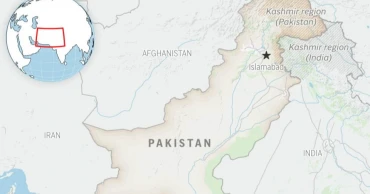
Pakistan warns of strong response to any attack on anniversary of clash with India
Pakistan on Thursday warned of a strong response to any future aggression as it marked the first anniversary of last year’s four-day military conflict with neighbouring India that pushed the two nuclear-armed rivals close to war before a US-brokered ceasefire ended the fighting.
In a statement, Pakistan’s military said any “hostile design” against the country would be met with “greater strength, precision and resolve” than during the May 2025 confrontation, which Islamabad named “Marka-e-Haq” or “Battle of Truth.”
The conflict erupted after gunmen attacked tourists in Indian-administered Kashmir, killing 26 people, most of them Hindu visitors. India accused Pakistan-backed militants of carrying out the attack, an allegation Islamabad denied while demanding an independent investigation.
On May 7 last year, India launched strikes inside Pakistan, prompting retaliatory attacks from Pakistan involving drones, missiles and artillery shelling. The clashes left dozens dead on both sides before a ceasefire was reached on May 10 through US mediation.
Pakistan had claimed during the conflict that it shot down at least seven Indian military aircraft, including a French-made Rafale fighter jet. India acknowledged losses but did not disclose details.
Donald Trump has repeatedly claimed credit for helping prevent a wider war between the two neighbours.
India and Pakistan have long maintained tense relations and have fought two of their three wars over the disputed Himalayan region of Kashmir, which both countries claim in full.
1 month ago
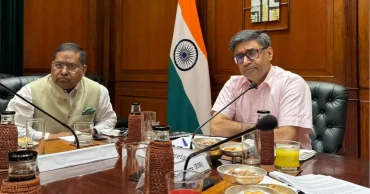
India moves to restore relations with Bangladesh through reactivating bilateral mechanisms
After weathering a "testing time" in its relations with Bangladesh, India is now willing to engage with the new government in Bangladesh by gradually reactivating all the bilateral mechanisms, pursuing a relationship that keeps 'people at the center' of everything.
"We weathered a testing time (Interim regime)," Indian Foreign Secretary Vikram Misri told a visiting Bangladesh media delegation at the Ministry of External Affairs, noting that they now see a "strong" government in place in Bangladesh with a strong people's mandate.
He said the new government in Bangladesh is perfectly capable of conducting its work domestically and internationally.
The Indian Foreign Secretary said they are getting down to reactivating all tools of bilateral relations and contacts are being made at various levels.
Bangladesh and India have over forty bilateral mechanisms including on water, trade, border management, and consular issues.
MEA Spokesperson Randhir Jaiswal, Joint Secretary (Bangladesh & Myanmar) B. Shyam, Diplomatic Correspondents Association, Bangladesh (DCAB) President AKM Moinuddin, and General Secretary Emrul Kayesh were also present at the interactive session held on Monday.
Members of the media delegation wanted to know about a range of issues including visas, energy, connectivity, LoC projects, water sharing, the status of Dhaka's request for extradition of former Prime Minister Sheikh Hasina and suspects in the Sharif Osman Hadi killing case and regional cooperation - SAARC and BIMSTEC issues.
Foreign Secretary Vikram Misri said they look forward to a 'constructive, positive, pragmatic, and forward-looking' relationship with Bangladesh, stressing that there is a vast menu of activities underway to engage meaningfully.
Bangladesh and India are scheduling a series of meetings in the coming weeks and months as they seek to re-engage following a period of strained relations during the interim government that took office after the fall of the Awami League administration on August 5, 2024.
Most of these mechanisms remained dormant during the interim government.
After the formation of the government by BNP, India demonstrated positive gestures to improve relations.
Bangladesh resumed issuing all categories of visas. India has yet to fully resume visas for Bangladeshis.
Misri has not made a specific comment on this but said that India is working on the matter and it will be known in the coming days.
Asked about the Bangladesh-India Ganga/Ganges Water Treaty, which is expiring in December this year, he said the Joint River Commission will be discussing these issues.
"We have the JRC... we will have to engage in a timely and constructive manner. We have three decades of successful cooperation (Ganga Treaty)," he said.
Bangladeshi experts say the treaty needs to be ‘reviewed and reformed comprehensively’ before going for a renewed treaty by engaging economists, urban planners, sociologists, and environmentalists in the planning, as Dhaka shares the ‘risk’ of not sharing it appropriately.
“MoFA (Ministry of Foreign Affairs) has to do a lot of homework and data sharing is key. We need to keep in mind that the situation in 1996 and 2026 is not the same. This can't be seen only from engineering or diplomatic prisms; they should include economists, urban planners, and sociologists in the planning,” international affairs expert Prof Shahab Enam Khan told UNB.
There were also trade restrictions on both sides during the interim government, and political rhetoric played out negatively on both sides.
The situation began changing after the elections in February.
Foreign Minister Khalilur Rahman visited India recently.
Misri said Bangladesh and India have more than 4,000 kilometers of border and share 54 transboundary rivers."We want to progress and modernise our economic partnership with Bangladesh," he said.
He agreed that bilateral relations faced challenges during the period of the interim government and that they could not be improved despite efforts.
However, now that Bangladesh has an elected government, India is re-engaging with Bangladesh.
"Meetings are being scheduled. Results will be known in the coming weeks and months," Misri said.
An official of the Bangladesh foreign ministry said a BGB-BSF level meeting will be held in late May.
Misri said the present world situation demands more cooperation among neighbouring countries, and India and Bangladesh have been working towards this end.
India's energy cooperation with Bangladesh - whether power or diesel - today is benefiting the people of Bangladesh, he said, assuring continued support in this regard.
Asked about the trade restrictions, Misri said India stands ready to take forward the discussions as the livelihoods of people in both countries are affected.
Trade will be something that will come up first in the discussions, he said, adding that "We want mutual benefits on both sides."
Asked about the projects under the Indian Line of Credit (LOC), Misri said Bangladesh has reviewed the LOC projects and both sides will discuss the projects that Bangladesh prioritises and India will consider financing accordingly, he said.
Asked if the victory of the BJP in West Bengal elections will work positively for the signing of the Teesta deal, he said foreign policy operates from the capital.
Asked how India looks at the BNP government's initiatives in activating SAARC while maintaining relations with Pakistan, Misri said it is up to Bangladesh how it maintains relations with other countries.
However, India hopes that Bangladesh does not do anything that negatively affects the positive agenda of India.
Misri rejected the notion that India engineered elections in Bangladesh and stressed that the bilateral relationship has always been people-centric and will always be so.
Responding to allegations that India maintained close ties with the Awami League, Misri said, “We have always worked with the government elected by people.”
He said people of a country may not be happy with any government but a foreign country cannot do anything about it.
The Indian FS said the relationship is built with the country, people, and the government, not with a particular political party.
"We have always respected people's desire in Bangladesh," he said.
India reiterated its intent to work closely with the people and the government of Bangladesh to strengthen people-centric cooperation in all domains, aligned with their respective national development priorities and based on mutual interest and mutual benefit.
India emphasised the need to leverage the geographical proximity between the two countries into tangible economic opportunities and wants to develop future-oriented economic engagement.
As the two largest economies of the region and close neighbours with a focus on building connectivity, India and Bangladesh are uniquely positioned to lead regional economic integration and build resilient and future-ready supply chains.
India reaffirmed the shared commitment to unlock new avenues of cooperation and elevate the economic partnership with Bangladesh to the next level.
On April 6, outgoing Indian High Commissioner to Bangladesh Pranay Verma paid a courtesy call on Prime Minister Tarique Rahman and discussed bilateral engagement with a focus on people-centric cooperation in multiple domains aligned with the national development priorities of the two countries.
The discussions focused on enhancing cooperation in a wide range of areas including public health, financial inclusion, women‘s empowerment, rural development, bilateral trade and investment, ease of doing business, technology partnerships, and power and energy cooperation.
The High Commissioner underlined that India-Bangladesh cooperation should transform their geographical proximity into new opportunities by strengthening economic and connectivity linkages and by enhancing cultural and people-to-people exchanges.
He conveyed India’s intent to work together with the Government and the people of Bangladesh in a positive, constructive, and forward-looking manner based on mutual interest and mutual benefit.
1 month ago