Australia
Bangladesh bat first in ODI series opener vs Australia
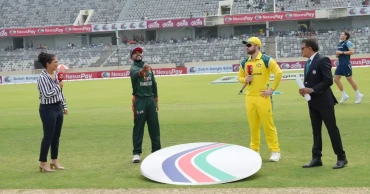
Australia have won the toss and asked Bangladesh to bat first in the opening match of the three-match ODI series in Dhaka on Tuesday.
With this match, Australia is playing their first ODI in Bangladesh since 2011.
Bangladesh fielded a three-bowler pace attack in that match that included Taskin Ahmed, Mustafizur Rahman and Nahid Islam.
They sidelined Rishad Hossain for this match, while Musaddek Hossain made a comeback after around four years.
Bangladesh have only one win against Australia, which came in 2005 in Cardiff.
In the last 15 years, Bangladesh played three ODIs against Australia in different venues and lost two of them, with the other match washed away due to rain.
In the last 15 years, Bangladesh has become a strong force in ODI cricket. So the chance is high for the hosts to win matches in this series.
Bangladesh: Tanzid Hasan, Saif Hassan, Najmul Hossain Shanto, Tawhid Hridoy, Litton Das (wk), Mosaddek Hossain, Mehidy Hasan Miraz (capt), Taskin Ahmed, Mustafizur Rahman, Nahid Rana, Tanvir Islam
Australia XI: Matt Short, Cooper Connolly, Josh Inglis (capt/wk), Marnus Labuschagne, Alex Carey, Cameron Green, Matthew Renshaw, Liam Scott, Xavier Bartlett, Nathan Ellis, Adam Zampa.
8 days ago

Australia confirms first day of Eid-ul-Fitr
The Australian Fatwa Council has announced that Ramadan 1447AH will end on Thursday, March 19, making Friday, March 20 the first day of Eid-ul-Fitr and the beginning of Shawwal 1447AH.
The decision was made following consultations with local and international moon observatories, using calculations of the new moon’s appearance, moonset, and visibility across Australia and neighbouring regions — a method recognised by many prominent global scholarly councils.
The Australian National Imams Council and the Fatwa Council noted that some scholars and Imams may follow alternative approaches and urged the community to respect differing opinions while fostering unity.
The Grand Mufti of Australia, Dr Ibrahim Abu Mohamad, along with member Imams, extended Eid greetings to the Muslim community. They encouraged Australians to remember Palestinians in Gaza through prayers, donations, and support, and to engage with neighbours to share the peaceful and authentic values of Islam.
The councils emphasised that the moon sighting calculations ensure an accurate and consistent start to Shawwal 1447AH while acknowledging diversity of opinions within the Muslim community.
Source: Gulf News
3 months ago

Scientists warn Australia’s “zombie tree” could disappear within a generation
Scientists have warned that a newly identified tree species in Australia, nicknamed the “zombie tree,” could disappear within a generation if urgent action is not taken.
Researchers say the tree, Rhodamnia zombi, is still alive in some places but cannot grow or reproduce normally because of a fungal disease known as myrtle rust.
Professor Rod Fensham, a botanist at the University of Queensland, said the species was first assessed in 2020 before it even had an official name. Since then, about 10 percent of the trees have died, and the remaining ones are unable to produce flowers or fruit due to the disease.
Rhodamnia zombi is a small to medium-sized rainforest tree with large dark green leaves, shaggy bark and fuzzy white flowers. It grows in the Burnett region of Queensland.
According to researchers, the bright yellow fungal pathogen repeatedly attacks and destroys the tree’s young shoots. As a result, infected trees cannot grow or reproduce properly and eventually die.
Myrtle rust was first detected in Australia in 2010 and has since threatened many plant species. Because of this risk, Rhodamnia zombi has been placed on a special list of plants considered potentially critically endangered.Fensham said the 17 species on this “Category X” list could disappear within a generation without intervention, as none appear to have resistance to the disease.
However, scientists remain hopeful. Fensham said related species in the Rhodamnia group have shown some resistance to myrtle rust, raising hopes that future generations may survive.
Researchers are collecting healthy cuttings from the wild and growing seedlings at protected sites in Lismore and Townsville. If some trees develop resistance, they may eventually be replanted in forests to restore the species.
The findings were published in the journal ‘Austral Ecology’.
Source: Science daily
3 months ago

Cosmic rays help unlock ancient Australian landscapes
Scientists have developed a new method to explore the deep history of Australia’s landscapes, offering insights into past climate changes, geological activity, and potential mineral deposits.
Researchers from Curtin University’s Timescales of Mineral Systems Group, in collaboration with the University of Göttingen and the University of Cologne, studied microscopic zircon crystals collected from
ancient beach sands. Zircon is an extremely durable mineral that can survive millions of years of weathering and erosion while preserving clues about its geological past.
The team focused on krypton gas trapped inside these zircon grains. This rare gas forms when cosmic rays — high-energy particles from space — strike minerals near the Earth’s surface. By measuring krypton levels, scientists could estimate how long zircon grains stayed near the surface before burial. This “cosmic clock” provides a timeline of how landscapes eroded and changed over millions of years.
Lead author Dr. Maximilian Dröllner said the method allows study of landscapes far older than previously possible. “Our planet’s history shows climate and tectonic forces shape landscapes over very long timescales. This research helps us understand the effects of sea-level changes and deep Earth movements,” he said.
The study found that when regions remain tectonically stable with high sea levels, erosion slows, and sediments can be reworked repeatedly for millions of years.
Professor Chris Kirkland, a co-author, said the findings are important for land management and planning. Associate Professor Milo Barham highlighted the implications for Australia’s mineral resources, noting that long-term sediment storage allows durable minerals to concentrate, helping explain the country’s rich mineral sand deposits.
The research, published in PNAS, offers a fresh perspective on landscape evolution and resource formation, providing scientists with a tool to better understand both past and future environmental changes.
Source: Science Daily
3 months ago
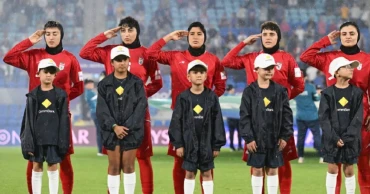
Most of Iranian women's soccer team leaves Australia, few accept asylum offers
Most of Iran's women's soccer team left Australia on Tuesday, with only seven players having accepted offers of permanent asylum. Tense scenes unfolded at Sydney Airport as Australian officials held last-minute private meetings with each player, explaining through interpreters that they could choose not to return to Iran.
Earlier, seven players had received humanitarian visas to stay in Australia permanently. Despite emotional appeals and tearful protests from the departing players, no additional team members chose to remain. Australian Home Affairs Minister Tony Burke described the airport meetings as "emotional," adding that one of the seven women who initially stayed behind later decided to return to Iran.
The episode drew national attention after the team’s first Asian Cup match, where some players remained silent during Iran's national anthem. Their silence was widely interpreted as a protest or act of defiance, while others viewed it as a form of mourning. Burke said the gesture had “been heard as a roar all around the world” and noted that Australia offered the players a safe choice.
The team arrived in Australia before the outbreak of the Iran war on Feb. 28. Following Iran’s exit from the tournament over the weekend, players faced the prospect of returning to a country under conflict. Iranian-Australian groups warned the players could face serious consequences for their actions, even as the players themselves did not publicly explain their silence.
U.S. President Donald Trump criticized Australia for not offering asylum, although Australian officials confirmed private discussions with the players had already been ongoing. Meanwhile, Iranian authorities insisted the players were safe and that the government would protect them.
Burke said Australian officials had made every effort to allow players to decide freely, arranging last-minute discussions, private phone calls, and separation from team minders to ensure decisions were made with dignity. The six players remaining in Australia were relocated for security, guaranteed permanent residency, and provided health, housing, and support.
The Asian Football Confederation confirmed the squad had moved to Kuala Lumpur, Malaysia, where it would continue to receive support until further travel arrangements.
3 months ago
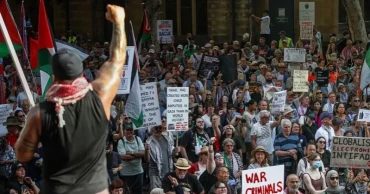
Police defend action after clashes at Sydney protest over Israeli president visit
Australian police have defended their response after violent clashes erupted during a pro-Palestinian protest in Sydney against a visit by Israeli President Isaac Herzog, with 27 people arrested as authorities enforced new restrictions on public demonstrations.
New South Wales Police Commissioner Mal Lanyon said officers showed “remarkable restraint” and acted as required after confrontations broke out near Sydney’s Town Hall on Monday night. Police said about 6,000 people attended the rally, which followed a failed last-minute court challenge by organisers seeking to overturn police powers limiting their right to march.
The federal government invited Herzog to Australia following a deadly antisemitic shooting at Bondi Beach in December, saying the visit would help the Jewish community heal. Fifteen people, including a 10-year-old girl, were killed when gunmen opened fire at a Hanukkah celebration on Dec 14. Pro-Palestinian groups opposed the invitation.
Video footage from the protest appeared to show physical confrontations, including police punching demonstrators and removing Muslim men who were praying. Josh Lees of the Palestine Action Group said the violence was the worst he had seen in years, adding that tensions could have been avoided if authorities had allowed a march from Town Hall to parliament or Hyde Park.
After the Bondi Beach attack, NSW introduced tighter protest rules and, days before Monday’s rally, invoked “major event” powers that allowed gatherings but banned marches and gave police authority to shut down parts of the city. Protesters lost a legal bid to overturn the measures shortly before the rally began.
NSW Premier Chris Minns backed police actions, saying officers were placed in an “impossible situation” and warning against judging events based on short video clips. Assistant Commissioner Peter McKenna said police were threatened and assaulted during multiple clashes and were significantly outnumbered.
The crowd included Jewish demonstrators opposing Herzog’s visit. Linda Feinberg held a placard reading “Jews say no to genocide” and criticised the government’s decision to invite him. Protester Sihal Jamila attended with her young daughter, saying the issue was deeply personal.
Speeches at Town Hall were initially peaceful, but tensions escalated when protesters demanded to march. Police moved in and used pepper spray, causing panic as demonstrators were unable to leave due to police lines. Minns later said officers needed to keep protesters away from a nearby event Herzog was attending.
Another protest was planned outside a Sydney police station on Tuesday, with organisers demanding charges be dropped and investigations into police conduct. The Australian National Imams Council condemned footage showing Muslim men being dragged away while praying as unacceptable.
NSW Greens MP Abigail Boyd said she was pushed and shoved by police despite identifying herself as a lawmaker. Prime Minister Anthony Albanese said he was devastated by the scenes and said they should not have occurred, but defended Herzog’s invitation and criticised protesters for undermining their cause.
Pro-Palestinian groups cited a UN commission report that accused Herzog and other Israeli leaders of inciting genocide through public statements. Herzog has rejected the findings, saying his words were taken out of context, while Israel’s foreign minister dismissed the report as false.
With inputs from BBC
4 months ago
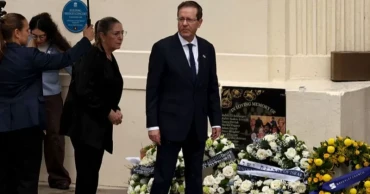
Israeli president begins Australia visit amid protests
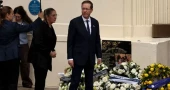
Israeli President Isaac Herzog on Monday laid a wreath and placed two stones brought from Jerusalem at Sydney’s Bondi Beach, marking the start of a tightly secured and controversial four-day visit to Australia.
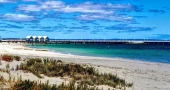
Bondi Beach was the site of a deadly shooting in December during a Jewish Hanukkah festival, in which 15 people, including a 10-year-old girl, were killed. Paying tribute to the victims, Herzog said he had come to “embrace and console the bereaved families,” adding that pain felt by one Jew resonates across the global Jewish community.
Herzog’s visit, which includes stops in Canberra and Melbourne and meetings with Prime Minister Anthony Albanese, has drawn mixed reactions. Senior Jewish leaders welcomed the trip, saying it would bring comfort to a traumatised community. However, several civil society groups and activists have criticised the invitation, citing allegations that the Israeli president has incited violence in Gaza.
Albanese said the visit was intended to promote social cohesion and unity following the Bondi attack. Despite this, nationwide protests were planned, including a large demonstration in central Sydney, where organisers estimated around 5,000 participants.
Security measures were heightened across Sydney, particularly at Bondi Beach. The New South Wales government invoked rarely used “major event” powers, granting police expanded authority to restrict movement, conduct searches and impose fines for non-compliance. Shortly before the protest was due to begin, the Palestine Action Group lost a legal challenge against the use of these powers.
Police said they dealt with several individuals during the operation. One man who shouted at Herzog was issued a move-on direction, while another was arrested and charged with intimidation and offensive behaviour after allegedly abusing passengers on a bus.
Leaders of Australia’s Jewish community said Herzog’s presence carried deep symbolic meaning. Alex Ryvchin, co-chief executive of the Executive Council of Australian Jewry, said the visit would help lift the spirits of victims’ families and survivors and could help reset strained bilateral ties between Australia and Israel.
However, opposition to the visit has been vocal. The Jewish Council of Australia and the Australian National Imams Council said Herzog should not have been invited, arguing that his presence risks conflating Jewish identity with the actions of the Israeli state. A letter signed by around 600 Australian Jews was published in local media stating that Herzog did not represent them and was not welcome.
Human rights groups also pointed to a UN commission report that accused Herzog and other Israeli leaders of inciting genocide through public statements related to the Gaza war. Herzog has rejected the findings, saying his remarks were taken out of context, while Israel has denied committing genocide.
Responding to the protests, Herzog said he had come in goodwill, stressing the long-standing alliance between Australia and Israel. He also warned that rising antisemitism worldwide posed a serious global threat, saying hatred directed at Jews rarely stops with them.
With inputs from BBC
4 months ago
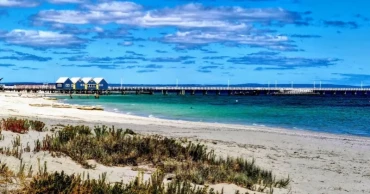
Teen swims 4km to save mother, siblings
A 13-year-old boy has been widely praised for his courage after swimming for hours through rough seas to get help for his mother and two siblings who were swept out to sea off the coast of Western Australia.
Police said the family were paddle boarding and kayaking in Geographe Bay on Friday when strong winds blew their inflatables off course.
As conditions worsened, the teenager set off toward shore to raise the alarm, but his kayak began taking on water, forcing him to swim the rest of the way.
Read More: 145 pilot whales die in stranding on New Zealand beach
The boy swam about 4km to reach land and alert authorities, triggering a large-scale search by marine rescue teams. He managed to raise the alarm by 6:00pm local time, reports BBC.
Rescue crews later found the boy’s 47-year-old mother, his 12-year-old brother and eight-year-old sister clinging to a paddleboard roughly 14km offshore. A rescue helicopter located them around 8:30pm, and a volunteer marine rescue vessel brought them safely back to shore.
Naturaliste Volunteer Marine Rescue Group commander Paul Bresland described the teenager’s effort as “superhuman”, noting that he swam for hours in difficult conditions. Police and rescue officials said the family’s use of life jackets played a crucial role in their survival.
Inspector James Bradley said the incident showed how quickly ocean conditions can change and praised the boy’s determination and bravery, saying his actions ultimately saved the lives of his family members.
The family were checked by paramedics and taken to hospital as a precaution before being discharged. They later returned to thank the volunteer marine rescue crew for their efforts.
Read More: Rush-hour storm floods New York City area, swamping streets and stranding people in traffic
4 months ago
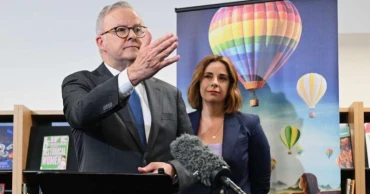
Australia cracks down on child social media use, 4.7 million accounts taken down
Social media platforms have taken down about 4.7 million accounts identified as belonging to children in Australia since the country enforced a ban on under-16s using major platforms, officials said.
Communications Minister Anika Wells said the government had proven critics wrong by compelling some of the world’s biggest tech companies to comply. “Now Australian parents can be confident their kids can have their childhoods back,” she told reporters on Friday.
The figures, submitted to the government by 10 platforms, offer the first indication of the impact of the landmark law, which came into force in December amid concerns about harmful online environments for young people. The move triggered heated debate over technology use, privacy, child safety and mental health and has prompted other countries to consider similar measures.
Under the law, Facebook, Instagram, Kick, Reddit, Snapchat, Threads, TikTok, X, YouTube and Twitch can be fined up to A$49.5 million ($33.2 million) if they fail to take reasonable steps to remove accounts of Australian users under 16. Messaging services such as WhatsApp and Facebook Messenger are exempt.
Platforms can verify age by requesting identification, using third-party facial age-estimation tools, or drawing inferences from existing account data, such as how long an account has been active.
Australia’s eSafety Commissioner Julie Inman Grant said about 2.5 million Australians are aged 8 to 15 and previous estimates showed 84% of 8- to 12-year-olds had social media accounts. While it is unclear how many accounts existed across the 10 platforms, she said the 4.7 million “deactivated or restricted” accounts was an encouraging sign.
“We’re preventing predatory social media companies from accessing our children,” Inman Grant said, adding that the companies covered by the ban had complied and reported removal figures on time. She said enforcement would now focus on stopping children from creating new accounts or evading the restrictions.
Read more: Wikipedia turns 25, announces AI partnerships with tech giants
Australian officials did not release platform-by-platform numbers. However, Meta, which owns Facebook, Instagram and Threads, said it removed nearly 550,000 accounts believed to belong to under-16s by the day after the ban took effect. In a blog post, Meta criticised the policy and warned that smaller platforms not covered by the ban might not prioritise safety.
The law has been widely backed by parents and child-safety advocates, though privacy groups and some youth organisations oppose it, arguing that vulnerable or geographically isolated teenagers find support online. Some young users say they have bypassed age checks with help from parents or older siblings.
5 months ago
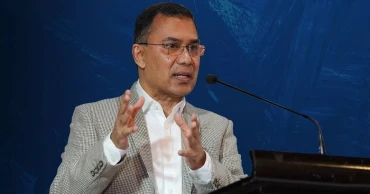
Tarique hails Australian MPs’ call for democracy, election integrity in Bangladesh
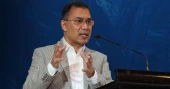
BNP Acting Chairman Tarique Rahman has expressed heartfelt gratitude to members of the Australian Parliament for speaking out on democracy, human rights and electoral integrity in Bangladesh, saying their position echoes the hopes and concerns of millions of Bangladeshis.
In a post on his verified Facebook page on Saturday (November 15), he said, “Many Bangladeshis, including myself, extend our sincere appreciation to the Australian parliamentarians who have spoken with clarity and conscience on the issues of democracy, human rights, and electoral integrity in Bangladesh. Their thoughtful intervention reflects a deep commitment to universal democratic principles and to the wellbeing of the Bangladeshi people.”
Across Bangladesh, the BNP leader said many citizens are expressing genuine concern about political uncertainty, security, and the need for an electoral process in which every voice can be heard without fear or restriction.
Tarique warns against political volatility, urges election participation
“These concerns come from ordinary people who wish only for stability, justice, and the opportunity to choose their future through a peaceful and credible democratic process,” he said.
At this pivotal moment, Tariaue said the call from Australian MPs to ensure the safety, dignity, and political rights of all election participants resonates strongly with the hopes of Bangladeshis at home.
“Their message acknowledges what millions have been saying for months: that democracy is strongest when it is inclusive, transparent, and safeguarded from violence or intimidation,” he said.
Tarique Rahman likely to return home by end of November: Salahuddin
The BNP leader also praised the Bangladeshi diaspora in Australia for their role in raising these issues internationally, noting their contributions to Australian society and their continuing commitment to Bangladesh. “Their advocacy, driven by love for their homeland, has helped ensure that the challenges and aspirations of Bangladeshis are understood globally,” he said.
Tarique also said Australia and Bangladesh share long-standing ties based on respect and cooperation.
He thanked the Australian representatives who have expressed solidarity, saying their support highlights the collective global commitment to democracy.
Tarique’s 31-point plan offers path to democratic revival: Ndileka Mandela
“When nations come together, we can encourage one another toward peace, justice, and progress,” he said.
7 months ago