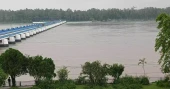
Teesta Barrage

Another barrage on Teesta River under consideration: PM
Prime Minister Tarique Rahman on Wednesday told Parliament that the government is considering construction of another barrage on the Teesta River to conserve water during the dry season.
“Technical and financial aspects are being examined for constructing another barrage on the Teesta River to conserve water during the dry season,” he said while replying to a tabled question from NCP lawmaker Akhter Hossen (Rangpur-4).
He said the Teesta is vital for livelihoods in northern Bangladesh, but upstream dams and other limitations reduce water flow during the dry season, affecting irrigation and agriculture, while excessive rainfall upstream often causes sudden floods and riverbank erosion during the monsoon.
The Prime Minister said riverbank protection works covering 42.5 kilometres are underway in five Teesta basin districts—Rangpur, Nilphamari, Kurigram, Gaibandha and Lalmonirhat—at a cost of Tk 230 crore and are scheduled for completion this month.
He said a feasibility study for a sustainable and integrated Teesta development plan has already been completed, he said.
According to the study, the proposed Teesta Master Plan includes river training and protection works along 110 kilometres, dredging of another 110 kilometres, construction of 224 kilometres of flood control embankments with roads on top, and reclamation and development of 170 square kilometres of land.
Replying to a tabled question from treasury bench lawmaker Robiul Awal (Tangail-6), the Prime Minister said implementation of the Tk 34,347-crore Padma Barrage project will add an extra 0.45 percent growth to the country's Gross Domestic Product (GDP).
“Once the project is implemented, it will be possible to generate 113 MW of hydropower and achieve an additional 0.45 percent GDP growth,” he said.
The Prime Minister said the current government's election manifesto has attached importance to tackling climate change and that a number of multi-dimensional programmes have been undertaken in the water resources sector to address its adverse impacts.
These include implementation of the Padma Barrage project, the Teesta Master Plan, riverbank erosion prevention, flood protection measures and reduction of salinity in agricultural lands, he said.
Noting that the first phase of the Padma Barrage project involving Tk 34,347 crore was approved on May 13 last, he said, "Through the implementation of this project, the river system in the Padma-dependent areas will be revitalised by conserving water in the Padma River during the dry season and increasing the flow of water."
Besides, it would reduce salinity intrusion in the southern region, restore the ecological balance of the Sundarbans, improve drainage systems, reduce waterlogging, expand irrigation facilities and strengthen water security, said Tarique Rahman.
Highlighting different climate initiatives, he said a programme has been undertaken to plant 25 crore trees in the next five years.
He said the Bangladesh Climate Change Trust has prioritised research, innovation, training and extension activities to address climate risks and has taken several initiatives, including the creation of rural natural reservoirs in coastal districts to preserve rainwater and ensure drinking water security.
The Prime Minister said the government has taken an initiative to formulate a National Adaptation Plan (NAP) Investment Roadmap with support from the Asian Development Bank (ADB) to implement the NAP under the United Nations Framework Convention on Climate Change to combat the adverse impacts of climate changes.
Alongside adaptation efforts, he said, the government has started preparing the Third Nationally Determined Contributions (NDC 3.0) to reduce greenhouse gas emissions.
Under the NDC 3.0, some 25 percent of the country's total electricity demand will be met from renewable sources by 2035, four waste-to-energy plants and 26 integrated landfill and resource recovery facilities will be established, while afforestation and reforestation programmes covering 100,000 hectares in coastal, island and degraded areas will be implemented.
He said work has also begun on formulating Long-Term Low Emission Development Strategies to reduce emissions.
Replying to a question from BNP lawmaker Md Abdullah (Munshiganj-1), the Prime Minister said the government has adopted various measures to increase the tax-to-GDP ratio and the National Board of Revenue has already adopted a Medium and Long-Term Revenue Strategy (MLTRS) in this regard.
“We hope that implementation of these plans will increase the tax-to-GDP ratio by two percentage points within one year and raise it to 10 percent within five years,” he said.
He added that various initiatives, including the Strengthening Domestic Revenue Mobilisation Project and gradual rationalisation of tax exemptions, have been undertaken with a target of increasing the tax-to-GDP ratio to 15 percent by 2035.
Responding to a question from BNP lawmaker Mobasser Alam Bhuiyan (Cumilla-10), Tarique Rahman said the government’s electoral manifesto put importance on the improvement of road and rail connectivity.
To improve the road connectivity, he said plans have been taken to gradually establish an expressway grid on national highways and develop a multimodal transport system to reduce pressure on roads.
Regarding railways, the PM said 24 projects have been identified under short-term (up to 2026-27), medium-term (2027-2030) and long-term (2031-2045) action plans to implement the Railway Master Plan and establish Bangladesh Railway as the backbone of the national transport system.
According to the formulated Railway Master Plan, railway services will be gradually brought to the doorsteps of every district and major towns with the aim of establishing Bangladesh Railway as the backbone of the national transport system, he said.
The government has also decided to introduce electric traction on major routes to reduce travel time and ensure safer and environment-friendly transportation, he added.
Replying to a question from treasury bench lawmaker Shamsur Rahman Simul Biswas (Pabna-5), the Prime Minister said the government is working to gradually increase the use of surface water in Dhaka and all divisional cities to reduce pressure on groundwater.
He said Dhaka WASA currently collects around 65 to 70 percent of its water from groundwater sources and the remaining 30 to 35 percent from surface water sources such as the Padma, Meghna and Shitalakkhya rivers.
To address alarming depletion of groundwater levels in Dhaka, water treatment plants at Gandharbpur in Rupganj and Saidabad are increasing the supply of treated water from the Meghna and Shitalakkhya rivers, he said.
Tarique Rahman said Chattogram WASA now sources about 92 percent of its water from surface sources, while only eight percent comes from groundwater.
He said Rajshahi WASA currently supplies two percent of its water from surface sources and 98 percent from groundwater.
Responding to a question from BNP lawmaker Mostafizur Rahman Babul (Jamalpur-3), the Prime Minister said the government is attaching the highest priority to implementing the Expanded Programme on Immunisation (EPI) to prevent measles outbreaks.
He said the causes and spread of measles, as well as the impact of policy and operational issues on vaccination activities, are being regularly reviewed and evaluated.
He said the matter will be examined based on necessary data and technical assessments to determine whether any changes in vaccine procurement procedures have negatively affected immunisation activities.
If any negligence of any person or institution is found, necessary action will be taken in accordance with existing laws and regulations, he said.
2 hours ago
Mismanagement, extortion threaten Teesta barrage, farmers’ livelihoods at risk
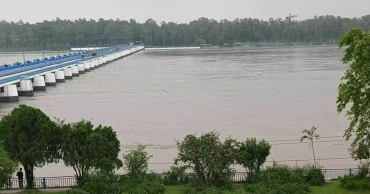
The Teesta Barrage, the largest irrigation project in Bangladesh, has allegedly become a center of mismanagement, corruption, extortion, and land grabbing, putting the lives and livelihood in the northern region under risk.
Located at the Lalmonirhat-Nilphamari junction, the barrage was constructed in 1988 with 52 gates to protect five northern districts—Rangpur, Lalmonirhat, Kurigram, Gaibandha, and Nilphamari—from Indian water aggression and to ensure irrigation.
Officials tasked with protecting state resource are allegedly involved in these illegal activities under political protection.
Experts said unless action is taken immediately, the barrage may fail to fulfill its core purpose—ensuring irrigation and saving farmers’ livelihoods in drought-prone areas.
Political party leaders of successive governments have collected tolls illegally from the vehicles over the years and the situation has not changed after political changeover, alleged locals.
According to engineering design, the barrage can handle a maximum load of 20 tons but 300–350 trucks carrying 30–40 tons pass through daily.
An official involved in the barrage’s maintenance, speaking on condition of anonymity, said, “Around Tk 15 lakh is extorted daily. We cannot intervene as our jobs would be at risk.”
The official said the reckless toll collection threatens the barrage’s structural integrity, with cracks appearing in several points.
An Ansar member said, “They collect a big amount of toll from each truck. We only do our duty; the real share goes up the chain.”
In 2014, heavy vehicles passing through gates 24, 27, and 28 of the barrage was prohibited after cracks appeared.
Read: Teesta, Dharla erosion leaves thousands in Lalmonirhat at risk
Although toll collection was officially halted on paper a new chapter of extortion began.
Several people preferring anonymity said after political changeover in August last year, leaders of different political parties from Hatibandha, Patgram, and Dimla formed alliances to continue extortion.
DIG Aminul Islam of the Rangpur police range said, “Since 2024 July uprising we have not received credible reports of extortion at the barrage. Appropriate measures will be taken if we get information.”
Ahsan Habib, Superintending Engineer of the Rangpur region under WDB, said, “We are trying to prevent any misuse of the barrage.”
Besides, irrigation canals have allegedly been occupied by influential people.
Although mineral extraction is prohibited within a one-kilometer radius of the barrage sand is being extracted from the barrage site, altering river paths and endangering the structure.
A Water Development Board official said repeated written complaints were ignored due to the syndicate’s influence.
Police and RAB records show over 1,200 bottles of Phensedyl and thousands of Yaba pills were recovered from the barrage area last year.
Read more: Lalmonirhat flood: Teesta water recedes, miseries mount
Local residents question how drugs can bypass CCTV, Ansar battalions, and police patrols.
Two weighing scales built at a cost of Tk 1.5 crore remain nonfunctional for years as political influence and corrupt officials allegedly delayed repairs intentionally.
Locals said if the barrage was properly managed it could support farmers and attract tourists but it has now become a stronghold of corruption.
Monirul Islam, Executive Engineer of the Mechanical Division at Dalia WDB, said, “Vehicles should not exceed 20 tons. Requests for scale repair have been submitted.”
Amitabh Chowdhury, Executive Engineer of the Power Division at Dalia WDB, said, “Heavy vehicles are not allowed. We are working on 35 packages for canal renovation and 10 have been completed. We will take step for land acquisition once we get the budget. We are helpless in stopping extortion.”
Read more: Govt is prioritising efforts to prevent erosion along the Teesta: Adviser Rizwana
Dr. Tuhin Wadud, Chairman of river research institute Riverain People, said, “Improper Teesta flow causes nearly Tk 1 lakh crore in annual flood damages. Mismanagement of the barrage endangers the entire region including Nilphamari, Lalmonirhat, and Kurigram. Authorities must act now and the extortion around the barrage must be stopped immediately.”
9 months ago
Teesta flowing 20cm above danger level in Lalmonirhat, several hundred families stranded
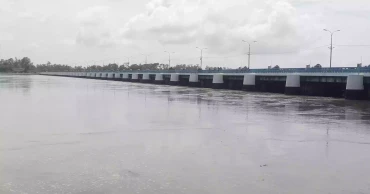
Low-lying areas in Lalmonirhat district have been flooded as the Teesta River is flowing 20 cm above the danger level at Dalia point due to continuous rainfall for the last few days until Monday (August 14, 2023) and the onrush of upstream water.
The water flow at Dalia point of Teesta Barrage, the country's largest irrigation project, was recorded at 52.35 cm at 6:00 am on Monday, 20 cm above the normal level of 52.15 cm.
Read: Untimely Teesta River erosion perplexes people in Lalmonirhat
People living near the barrage and on the river’s banks said the water flow of the river increased due to heavy downpour and the onrush of upstream water for the last few days.
All sluice gates were opened to control the water flow of the river, they said.
They said several hundred families have already been stranded and low-lying areas of the left banks of the river inundated after the river swelled.
Mominur Rahman, a resident from Mahiskhoca union under Gobordhan area, said they have to take boats to go to others' houses due to flood.
Read: Flood situation improves in Bandarban
Amsar Ali, who lives on the left river bank, said they are passing nights amid fear as the water is increasing in the river alarmingly.
Asfa-Ud-Doula, executive engineer of Water Development Board at Teesta Barrage’s Dalia Zone, said the low-lying areas on the banks of the river were inundated and all gates of the Teesta Barrage were opened to control the flow of water.
Read more: Flood situation in Ctg, Feni, Bandarban and Cox`s Bazar may improve in 24 hrs: FFWC
2 years ago
.jpg)
Red alert issued as Teesta flows 60 cm above danger level
The Water Development Board (WDB) has issued a red alert in the Teesta Basin after the river swelled above danger level due to onrush of water from upstream.
Teesta crossed 60 cm above danger level since Wednesday afternoon due to the onrush of hill water and heavy rainfall upstream in India. The authorities in Bangladesh have ordered an evacuation of the people living in villages along the river’s banks.
Extreme panic is prevailing among the residents of Teesta bank due to the sudden rise of Teesta water. In addition, flood fuses on the north side of the Teesta Barrage are reported to be under threat of getting damaged.
Due to the rise in Teesta, 15 villages of Purba Chhatnai, Tapa Kharibari, Khagakharibari, Khalisha Chapani, Jhunagach Chapani and Gayabari Union of Dimla upazila of Nilphamari and six villages of sandbar of Jaldhaka upazila have been flooded.
The residents of those areas have evacuated to safer places, said the people's representatives of those unions. Hundreds of hectares of crop land have been inundated.
READ: Teesta flowing above danger level, 44 barrage gates opened
Abdul Latif Khan, Purbachhatnai UP chairman of Dimla upazila in Nilphamari, said the right bank of the Teesta at Zero Point in the area and the Groen dam is under threat of getting damaged. Water is flowing especially over the Groen dam. If the Groen collapses, hundreds of houses in the area, including the dam on the right bank of the Teesta, will be washed away by the Teesta River.
Tepakharibari UP chairman Moinul Haque said the Teesta Bazar, Telirbazar, Dolapara and Charkharibari areas have already been submerged. All crop lands in the sandbars are under water.
In Lalmonirhat, the Barakhata to Hatibandha bypass road has collapsed at various places due to sudden rise in water level of Teesta river. As a result, thousands of families in this union have been marooned. Thousands of acres of crop land on the banks of Teesta in five upazilas of Lalmonirhat district have been submerged in water.
Lalmonirhat Deputy Commissioner Abu Jafar said he has instructed the union chairmen and UNOs to look over the flood situation in these areas.
The Teesta river was flowing 52.70 cm above the danger level at Dalia point on Tuesday night while it was flowing 60 cm above the danger level around 10 am on Wednesday. This is due to the onrush of hill water and heavy rainfall, according to Board officials.
READ: Teesta turns turbulent in Kurigram; leaves 100 families homeless
The low-lying areas of Dahgram in Patgram upazila, Gaddimari, Singamari, Sinduna, Patikapara, Dauabari in Hatibandha upazila and Bhotmari, Soilmari, Nohli, Char Boirati in Kaliganj upazilas of Lalmonirhat district have been flooded, affecting some 10,000 families.
Asfaudoula, executive engineer of the Water Development Board at Dalia point, said “The Teesta water is flowing 60 cm above its danger mark and the authorities concerned have opened all the 44 gates of the barrage.”
Besides, the residents along the river have been asked to take shelter in safer places issuing red alert.
4 years ago

Teesta flowing above danger level, 44 barrage gates opened
The Water Development Board (WDB) opened all the 44 gates of Teesta Barrage on Friday to rein in the high water pressure, with the river flowing 35cm above the danger level.
Around 11am on Friday, water flow in the barrage was recorded at 52.95 cm, said WDB officials.
"Due to heavy rains, most of the gates of Gajal Doba barrage on the Indian side were opened, which increased the water level of the Teesta and adjoining small rivers," said Executive Engineer Mizanur Rahman.
But the official said the water level may decrease by afternoon.
Also read: Teesta turns turbulent in Kurigram; leaves 100 families homeless
Flood-like situation triggered by the increased water level of the river is giving several residents of the district sleepless nights.
The worst-hit are around 3,000 families in Angarpota-Dahagram of Patgram upazila, Gaddimari, Singimari, Sinduna, Patikapara, Dauabari union sandbar area, Mahishkhocha union of Aditmari upazila, Rajpur of Sadar upazila, Khuniagach, Gokunda union and the Sandbar area of Kaliganj upazila.
Also read: Teesta flowing above danger level with India opening barrage gates
These families have demanded speedy implementation of the Teesta mega project as this is the fourth time this year that they have been hit.
4 years ago

Teesta flowing above danger level with India opening barrage gates
Water level of the Teesta River in Lalmonirhat and surrounding areas is flowing above the danger level triggered by onrush of water from upstream.
According to the source of the Flood Forecasting Warning Center of Water Development Board, “Water level at the river crossed the danger mark and is flowing 8 cm above its danger mark around 9am."
The low-lying areas around the Teesta Barrage including Dahagram of Patgram Upazila, Gaddimari of Hatibandha Upazila, Singimari, Sinduna, Dauabari of Patikapara, Votmari of Kaliganj Upazila, Shailmari, Nohali, Charbairati, Choraha of Mahishkhocha Union of Aditmari Upazila, Rajpur of South Balapara and Gokunda Union have been inundated as a result.
Read: Teesta water flowing above danger level in Nilphamari
Meanwhile, 44 gates of the Teesta Barrage on the Indian side have been kept open to control the flow of water. Abdullah Al Mamun, an executive of the Water Development Board confirmed the information to UNB.
4 years ago
Upstream water, rain trigger floods in Lalmonirhat, Kurigram
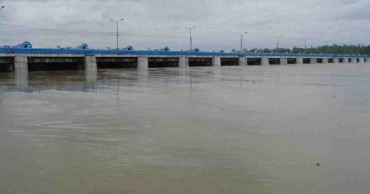
Floods triggered by onrush of water from the upstream and heavy rains have inundated low-lying areas in different upazilas of Lalmonirhat and Kurigram districts, rendering several thousand people marooned.
5 years ago

Make transit for India conditional on water-sharing deal: Dr Nazrul Islam
Describing the government’s “Bangladesh Delta Plan 2100” as totally confusing, initiator of Bangladesh Poribesh Andolon (BAPA) Dr Nazrul Islam on Sunday said the actual plan needs to be clarified to protect the country’s environment and save people’s lives.
5 years ago
.jpg)
Erosion takes serious turn in Lalmonirhat as flood water recedes
As water started to recede, erosion on the left bank of the Teesta River in Lalmonirhat upazila has taken a serious turn.
Strong current is devouring houses and farmlands as the water level of the river has been receding for the last two days.
Locals are passing days in panic.
Though, the Teesta water was flowing above the danger level for four days, the water level has started to recede from Monday and now flowing below the danger level.
The water level of the river at the Dalia Point of Hatibandha upazia has been marked 52.5cm which is 2cm lower than normal flow, said Rabiul Islam, executive engineer of Teesta Barrage Project of Dalia.
From Monday morning, the flood situation started to improve in the district.
5 years ago
Flood: More areas inundated in Kurigram, Nilphamari
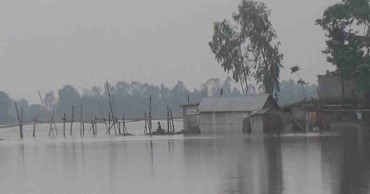
Flood situation in Nilphamari and Kurigram deteriorated further on Sunday as water levels of Teesta, Brahmaputra and Dharla rivers marked rise inundating fresh areas.
5 years ago