Strait of Hormuz

G7 considers alternatives to Strait of Hormuz for global energy security
Leaders of the Group of Seven (G7) nations are exploring alternative routes for transporting global energy supplies as concerns grow over dependence on the Strait of Hormuz, a key maritime passage for oil and gas shipments.
French Foreign Ministry spokesman Pascal Confavreux said discussions at the G7 summit in France included identifying other supply corridors that could help move energy resources from the Persian Gulf without relying heavily on the strategically important strait.
Speaking to the Associated Press, Confavreux said leaders discussed ways to reduce long-term dependence on the waterway and improve energy security.
He noted that proposals under consideration include financing and developing new infrastructure projects, particularly land-based transport routes, that could bypass the Strait of Hormuz.
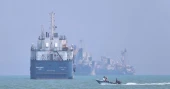
Before the conflict involving Iran disrupted regional stability, roughly 20 percent of the world’s crude oil shipments passed through the narrow maritime corridor, making it one of the most critical energy transit routes globally.
The discussions reflect growing international efforts to diversify energy supply chains and reduce vulnerability to disruptions in the Gulf region.
1 day ago
US allies propose naval mission to help secure Strait of Hormuz after Iran deal
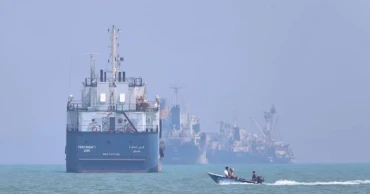
Several US allies are pushing for a naval security mission in the Strait of Hormuz to support the recently announced Iran ceasefire framework, aiming to restore confidence among shipping companies and insurers and ensure the safe movement of global oil and gas supplies.
The proposed mission, led by France and the United Kingdom, would focus on clearing sea mines and could include military escorts for commercial vessels passing through the strategic waterway, one of the world's most important energy shipping routes.
The idea was first raised by Emmanuel Macron in March when fighting between the United States and Iran was still ongoing. He suggested that naval forces could escort oil tankers and cargo ships once hostilities eased.
At the Group of Seven summit on Monday, US President Donald Trump said he did not believe extensive international assistance would be necessary because the Strait of Hormuz is expected to reopen under the tentative agreement with Iran. However, he said having a small number of ships from allied countries in the area could still be useful.
In a joint statement, France, the United Kingdom, Germany, Japan, Italy and later Canada welcomed the ceasefire framework and expressed support for reopening the waterway with unrestricted freedom of navigation.
The countries proposed what they described as a strictly defensive mission aimed at reassuring commercial shipping and carrying out mine-clearing operations.
France already has significant military assets in the region, including the aircraft carrier Charles de Gaulle. Macron said French fighter jets could begin surveillance missions over the strait almost immediately, followed by frigates and the carrier group within days if requested.
Mine-clearing vessels would search for and remove underwater explosives that could threaten commercial ships. Trump said some mines had already been found and removed, while efforts were continuing to locate others. He added that the strait had already been partially reopened.
European allies have experience protecting commercial shipping in conflict zones. French, British and American naval forces have previously escorted merchant vessels through the Red Sea during attacks by Yemen's Iran-backed Houthi rebels.
French warships successfully intercepted several missile and drone threats during those operations. One French frigate, the Alsace, shot down three ballistic missiles while escorting a container ship in 2024.
Security experts say a naval presence could help discourage renewed conflict and reassure shipping firms and insurers. However, analysts caution that the mission's role would be more limited if the ceasefire remains in place.
According to Max Bergmann of the Center for Strategic and International Studies, a French-British naval deployment could strengthen regional security and demonstrate support for Gulf nations, though its overall impact should not be overstated.
Planning for the mission has involved a broad coalition of countries, including Australia, South Korea, Japan, Bahrain, Qatar, Canada and more than a dozen European nations.
A meeting organized by France and Britain last month brought together representatives from 38 countries to discuss the proposal and possible contributions to the operation.
1 day ago

US-Iran deal aims to reopen Strait of Hormuz, Israel hurdles remain
The United States and Iran have reached a tentative agreement aimed at extending their fragile ceasefire and reopening the Strait of Hormuz, a key global shipping route, though major uncertainties remain as Israel continues military operations and refuses to pull back from occupied territory in Lebanon.
Details of the understanding were not immediately made public. The deal is expected to allow the flow of oil and gas through the Strait of Hormuz, which is vital for global energy supplies. Iran, however, said the agreement would only take effect after it is formally signed, which Pakistan, acting as a key mediator, said would happen on Friday in Switzerland.
Despite the announcement, the agreement quickly faced obstacles. Israel’s ongoing fighting with the Iran-backed Hezbollah group in Lebanon continued, including Israeli strikes on Beirut’s southern suburbs on Sunday. Israel joined the US in launching the war on February 28.
In its first response after the deal was announced, Israeli Defence Minister Israel Katz said Israel would not withdraw from territories it has seized in Lebanon under any interim arrangement. He said Israel intends to remain in occupied areas in Lebanon, Syria and the Gaza Strip indefinitely. Iran has linked progress on the deal to an end to Israeli attacks on Hezbollah positions in Lebanon.
Katz also warned that any Iranian attack in response to Israeli strikes would trigger a strong Israeli retaliation.
Over the past two and a half years, Israel has taken control of roughly 1,000 square kilometres of territory across Gaza, Lebanon and Syria, an area slightly smaller than New York City.
The agreement between the US and Iran also sets a 60-day timeline to address Iran’s stockpile of highly enriched uranium and its nuclear programme, a long-standing point of dispute. The issue had earlier been addressed in the 2015 nuclear deal, from which the US withdrew during President Donald Trump’s first term, worsening tensions that later escalated into conflict.
Trump, celebrating his 80th birthday, announced the development on social media and said the Strait of Hormuz would be reopened and a US naval blockade lifted. He later clarified that the opening would depend on the signing scheduled for Friday.
Iran’s Deputy Foreign Minister Kazem Gharibabadi also confirmed the agreement on state television, saying Tehran would not begin implementing it until it is signed. He said the talks involved mediation by Qatar.
The announcement was welcomed by several world leaders, including those in China and Europe, who said reopening the Strait of Hormuz was crucial for stabilising global energy prices and trade. Chinese officials urged both sides to proceed with signing the memorandum as planned.
France said the agreement could help end hostilities across the region, including in Lebanon, while urging all parties to respect the deal. European Union foreign policy chief Kaja Kallas expressed hope that the signing would go ahead and said reopening the strait was essential for global stability, although some leaders, including Luxembourg’s foreign minister, remained cautious about the outcome.
British Prime Minister Keir Starmer also welcomed the breakthrough, calling for efforts to restore free navigation in the strategic waterway and to build lasting peace in the region.
Pakistan announced the agreement first, with Prime Minister Shehbaz Sharif saying both sides had agreed to an immediate halt to military operations on all fronts, including Lebanon. Pakistani officials said broader technical negotiations on Iran’s nuclear programme would continue over the next 60 days, with the possibility of an extension if needed.
Iranian state media, citing the Supreme National Security Council, said the war would end immediately once implementation begins and that the US blockade would be lifted in full.
Qatari mediators later left Tehran after lengthy talks, while further preparatory meetings are expected in Doha this week. It remains unclear who will sign the agreement on Iran’s behalf.
US Vice President JD Vance said preparations were still underway for Friday’s signing, adding that President Trump could also attend. However, some Republican lawmakers in the US expressed concern, including Senator Lindsey Graham, who said Iran’s interpretation of the deal appeared to differ from that of US negotiators.
2 days ago
Pakistan renews mediation efforts as US downs Iranian drones over Hormuz
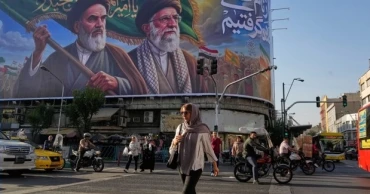
Pakistan's interior minister arrived in Tehran on Sunday in a renewed effort to help revive talks between Iran and the United States, as the US military said it shot down two more Iranian drones over the Strait of Hormuz after they posed a threat to international shipping.
The latest development comes as Washington continues to push Tehran toward an agreement aimed at ending the ongoing Middle East conflict, which has put pressure on the global economy and raised concerns about worsening hunger in some of the world's most vulnerable countries.
Although the most intense phase of the fighting ended with a preliminary ceasefire on April 8, the parties have yet to reach a lasting agreement to formally end the conflict.
At the same time, clashes between Israel and the Lebanese armed group Hezbollah continued despite the extension of a US-brokered ceasefire announced last week.
Pakistani Interior Minister Mohsin Naqvi is visiting Tehran to deliver a message from Pakistan Army Chief Field Marshal Asim Munir to Iran's Supreme Leader Ayatollah Mojtaba Khamenei, according to Iran's state news agency IRNA.
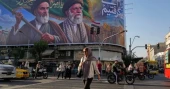
Khamenei has not appeared in public since becoming Iran's leader after the death of his father during the opening day of the war on Feb. 28, when the United States and Israel launched a major bombardment campaign against Iran.
Naqvi met Iranian Interior Minister Eskandar Momeni on Saturday and held talks with Foreign Minister Abbas Araghchi on Sunday, Iranian media reported.
Officials did not disclose details of the message. Pakistan has previously said it is working with regional countries including Qatar, Turkey and Egypt to help narrow differences between Washington and Tehran, reduce tensions and support efforts to reopen the Strait of Hormuz.
Meanwhile, hopes for a sustained ceasefire in Lebanon appeared uncertain.
Hezbollah, which is backed by Iran, has rejected the US-mediated proposal and instead supports Tehran's position that any agreement to end the broader conflict should also include Lebanon.
Israel said it carried out strikes on more than 150 Hezbollah targets across southern Lebanon over the weekend, including rocket launchers and command centres.
On Sunday, the Israeli military said at least five projectiles were fired from Lebanon toward northern Israel. The projectiles were either intercepted or landed in open areas. Hezbollah did not immediately claim responsibility but said it had attacked Israeli troops in southern Lebanon.
The Israeli military said two soldiers were killed during fighting in southern Lebanon on Saturday.
The ongoing violence in Lebanon threatens efforts to secure a broader regional truce and reopen the Strait of Hormuz, a vital route for global oil and gas supplies. Disruptions in the waterway have already shaken international energy markets.
Iran insists that any long-term ceasefire must also cover Lebanon. Israeli Prime Minister Benjamin Netanyahu has indicated that military operations will continue until Israel believes Hezbollah no longer poses a security threat.
In a related development, Lebanese Army Commander Gen. Rodolphe Haikal travelled to Pakistan on Saturday at the invitation of Pakistan's army chief. Lebanese authorities did not provide further details about the visit.
The US military said on Saturday it intercepted several Iranian missiles and drones heading toward the Strait of Hormuz and Gulf Arab states, and later struck Iranian coastal radar sites used for surveillance.
US Central Command said the drones posed an immediate threat to maritime traffic in the region.
Iran's Revolutionary Guard said it had targeted the Ali Al Salem Air Base in Kuwait, where US forces are stationed, as well as the US Navy's Fifth Fleet headquarters in Bahrain, according to IRNA.
The US military said there were no reports of casualties among American personnel.
Earlier this month, Iranian drone attacks heavily damaged a passenger terminal at Kuwait's main airport, killing one person and injuring dozens more.
Washington has maintained its blockade of Iranian ports in response to Tehran's control over the Strait of Hormuz, a key route for global energy exports.
The conflict has driven up energy prices, creating political challenges for US President Donald Trump's Republican Party ahead of congressional midterm elections later this year.
10 days ago
Iran war: Deals remain elusive
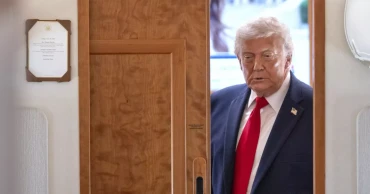
President Donald Trump increasingly appears to be boxed in. U.S. and Iranian negotiators reached a tentative agreement a week ago to extend the ceasefire by 60 days and start a new round of talks on Iran’s nuclear program.
Trump, however, has called for unspecified changes, and Iranian officials have shown no public sign of agreeing to the deal.
The fighting in Lebanon, where Israeli forces have seized large swaths of the south while saying it targets the Iranian-backed Hezbollah militant group, also challenges efforts to end the Iran war and reopen the Strait of Hormuz. Iran has demanded that any lasting truce extends to Lebanon.
The Trump administration has touted the latest ceasefire agreed to earlier in the week by the Lebanese government and Israel after U.S.-brokered talks in Washington. However, Hezbollah has rejected the agreement.
Meanwhile, Iran fired ballistic missiles and drones toward Bahrain and Kuwait that were intercepted early Saturday, Bahrain’s government said, and called on Tehran to halt attacks on Gulf neighbors that test a fragile ceasefire in the Middle East conflict.
Iran said that it targeted American military assets in both countries, after the U.S. attacked surveillance facilities on Qeshm Island and near Sirik that Iran said were used to protect borders and “ensure the security of navigation in international waters.” Tehran called the attack a ceasefire violation.
Later Saturday, U.S. Central Command said U.S. forces had shot down two Iranian attack drones over the Strait of Hormuz.
The latest exchanges came as the Trump administration presses Iran to make a deal to end the war, which has strained the global economy and threatened a hunger crisis in some of the world’s most vulnerable countries.
10 days ago
Britain, allies prepare mine-clearing mission in Strait of Hormuz
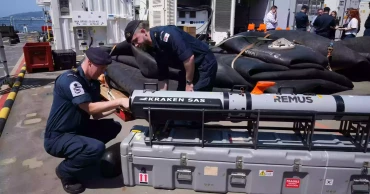
Britain’s Royal Navy is preparing for a possible mine-clearing operation in the Strait of Hormuz as tensions remain high over the conflict involving Iran, though deployment will depend on a peace agreement being finalized.
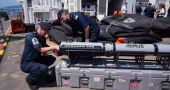
Hundreds of British sailors aboard the RFA Lyme Bay, currently docked near Gibraltar, are on standby for the mission. The vessel is being loaded with ammunition and advanced mine-hunting sea drones equipped with sonar technology.
The preparations come after US President Donald Trump criticized allies for not doing enough to support Washington’s military campaign linked to Iran. Tehran’s actions in the Strait of Hormuz have disrupted global shipping and sharply increased energy prices.
In March, Trump urged NATO allies to secure the strategic waterway themselves, saying they should “go get your own oil.”
Britain’s Armed Forces Minister Al Carns told reporters during a visit to the ship that Britain and France are preparing for a possible international operation to reopen the vital shipping route once fighting ends.
Trump said Saturday that a peace deal involving Iran had been “largely negotiated” following discussions with Israel and regional allies, though final details are still being worked out.
The RFA Lyme Bay is expected to join the British destroyer HMS Dragon and other allied ships before heading through the Suez Canal toward the Persian Gulf.
Carns defended Britain’s role after Trump questioned the strength of the British military and criticized Prime Minister Keir Starmer.
“Which other country can pull together 40 nations and come up with a solution to deal with a complex problem?” Carns said.
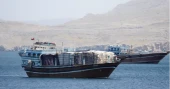
According to British officials, around 6,000 ships have been unable to pass through the Strait of Hormuz since the conflict began.
Royal Navy officials warned that Iran could have deployed several types of sea mines in the strait, including mines attached to cables, rocket-propelled devices, or mines hidden on the seabed and triggered by sound, movement or light.
Commander Gemma Britton, head of the Royal Navy’s Mine and Threat Exploitation Group, said the navy is using autonomous underwater systems that can scan the seabed much faster and more safely than traditional crewed vessels.
The drones use sonar to create images of underwater objects, helping crews identify possible mines. Some systems can operate remotely from smaller unmanned boats launched from the RFA Lyme Bay, reducing risks for sailors.
Britton said the immediate goal would be to clear safe shipping lanes so stranded vessels could move through the strait again. However, fully clearing the entire waterway could take months or even years.
Despite the preparations, British officials admitted it is still unclear whether mines are actually present in the strait or whether the international mission will ultimately be needed.
Carns said commercial shipping companies and insurers require complete assurance that the route is safe before normal trade can resume.
“We don’t know when the Americans, Iranians and Israelis are going to reach a suitable solution,” Carns said.
Until then, he added, the RFA Lyme Bay and its crew will remain on standby and “really, really ready.”
24 days ago
Trump’s Iran pressure campaign stalls as Strait of Hormuz tensions deepen
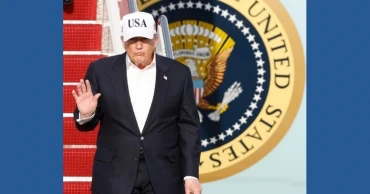
President Donald Trump’s hardline approach toward Iran is facing a major setback as diplomatic efforts and military pressure fail to shift Tehran’s long-standing positions, while tensions remain high over the strategic Strait of Hormuz.
Trump, who often presents himself as a strong dealmaker, has alternated between threats of military action and claims that a breakthrough with Iran is close. His aides have suggested the United States is gaining the upper hand and that a deal is within reach amid fragile ceasefire conditions and rising pressure on Tehran.
However, Trump on Monday said he had paused plans for an imminent resumption of strikes after requests from Gulf Arab allies, who said serious negotiations were underway. He added that a potential agreement would benefit the United States and countries across the Middle East.
Despite that pause, Trump warned he had instructed military officials to be ready for a “large scale assault” if talks fail, underscoring his repeated pattern of setting deadlines for Iran and then stepping back from immediate action.
There is little sign that Iran is ready to meet US demands, which include ending its nuclear programme, scaling back ballistic missile development and cutting support for allied groups in Gaza, Iraq, Lebanon and Yemen. Iranian officials have largely maintained their positions despite economic pressure and internal challenges.
The White House defended Trump’s strategy, saying he prioritises diplomacy but will only accept a deal that serves US interests. A spokesperson said the president “holds all the cards” and is keeping all options open to prevent Iran from obtaining a nuclear weapon.
A key factor in the standoff is Iran’s influence over the Strait of Hormuz, a critical global oil shipping route. Even amid US pressure, Tehran’s leverage over the waterway has contributed to volatility in global energy markets and higher fuel prices, adding political pressure on Trump domestically.
The economic impact has also affected Trump’s standing at home, with recent polling showing weaker approval on economic issues as rising energy costs concern voters ahead of upcoming elections.
Analysts say Trump’s pressure strategy, which has worked in other countries, has not produced similar results with Iran. Tehran continues to resist concessions beyond what was discussed in earlier nuclear negotiations during the Obama administration, from which Trump withdrew in 2018, calling it a flawed agreement.
Since a fragile ceasefire took effect last month, Trump has repeatedly criticised the pace of negotiations. Iran, meanwhile, has responded by insisting its military remains prepared while diplomacy continues.
Experts say both sides appear locked in a stalemate, with neither believing it is close to defeat and both hoping time will strengthen their position. Some analysts note that ongoing pressure in the Strait of Hormuz is increasing costs for both Washington and Tehran while delaying a resolution.
Former US officials and policy experts remain divided, with some describing the situation as a deadlock and others arguing that Trump still holds strategic leverage despite market instability and regional concerns.
29 days ago
US disables two more Iranian tankers as Strait of Hormuz tensions escalate
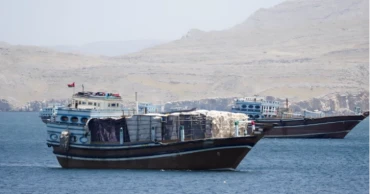
U.S. forces disabled two more Iranian oil tankers on Friday after an overnight exchange of fire with Iranian troops in the Strait of Hormuz, while the UAE reported fresh Iranian missile and drone attacks.
The developments have raised further doubts about the fragile ceasefire that the U.S. says remains in place as Washington waits for Iran’s response to a proposed agreement aimed at ending the conflict, reopening the strait, and limiting Tehran’s nuclear activities.
U.S. Secretary of State Marco Rubio said he expects a “serious offer” from Iran soon. According to the U.S. military, the tankers were targeted because they allegedly attempted to break an American blockade on Iranian ports. Earlier, the military also claimed it had intercepted attacks on three U.S. Navy vessels and retaliated by striking Iranian military sites in the strait.
Since the war began on Feb. 28 between Iran, the U.S., and Israel, Iran has largely obstructed the strategically important Strait of Hormuz, disrupting global energy supplies and increasing fuel prices worldwide. In response, the U.S. has enforced its own blockade on Iranian ports.
The UAE’s Defense Ministry reported that air defense systems intercepted two ballistic missiles and three drones launched by Iran, though it remains unclear whether every projectile was destroyed. Three people were injured in the incident.
The U.S. military released footage showing American fighter jets striking the smokestacks of the two Iranian tankers. Earlier this week, another Iranian tanker reportedly had its rudder disabled by a U.S. jet after attempting to breach the blockade.
Following the overnight clashes, the U.S. said it had successfully defended its Navy ships in the Strait of Hormuz and carried out retaliatory strikes without suffering any damage. Rubio warned that any threats against Americans would be met with force.
Iran strongly criticized the U.S. military actions, calling them hostile and a violation of the ceasefire. Iranian Foreign Minister Abbas Araghchi accused Washington of choosing military escalation over diplomacy whenever negotiations appear possible.
Meanwhile, an overnight U.S. strike reportedly killed one sailor and injured 10 others aboard a cargo ship that caught fire, according to an Iranian judiciary-linked news outlet. It was unclear whether the ship was among the two tankers hit by U.S. forces.
President Donald Trump maintained that the ceasefire is still holding but repeated warnings that the U.S. could resume heavy bombing if Iran refuses a deal to reopen the strait and curb its nuclear program.
Pakistan’s Prime Minister Shehbaz Sharif said Islamabad has been working continuously with both Tehran and Washington in an effort to preserve the ceasefire and secure a broader peace agreement.
Satellite images reviewed by AP revealed what appears to be a significant oil spill near Iran’s Kharg Island export terminal in the Persian Gulf. Maritime intelligence analysts estimate around 80,000 barrels of oil may have leaked since Tuesday. The exact cause remains uncertain, with possibilities including technical failure or military strikes.
Experts warned that the spill could spread toward the coasts of the UAE, Qatar, or Saudi Arabia within weeks, though Greenpeace researchers suggested the slick may disperse offshore without severely affecting land areas.
The Pentagon declined to comment on whether it was monitoring the spill or if recent U.S. strikes had targeted Kharg Island.
Rubio also criticized Iran’s reported creation of a new authority to regulate and tax ships passing through the Strait of Hormuz, saying it was unacceptable for Iran to control such a crucial international waterway.
Shipping concerns have intensified as hundreds of commercial vessels remain stuck in the Persian Gulf. Iran’s restrictions on the strait continue to disrupt global trade in oil, gas, and petroleum products, while the U.S. blockade has further increased tensions.
China also expressed concern after a Chinese-crewed oil tanker near the strait was attacked. Despite the instability, China continues importing Iranian oil. South Korea, another country heavily reliant on the strait for crude oil imports, has introduced fuel price controls amid growing uncertainty in global energy markets.
1 month ago

Global stocks rise on hopes of Strait of Hormuz reopening, oil holds above $100
World stock markets rose on Thursday amid growing optimism that a potential US–Iran agreement could reopen the Strait of Hormuz and allow oil shipments to resume, while Brent crude prices remained just above the $100 mark.
Japan’s benchmark Nikkei 225 surged nearly 6% to a record high, with the index jumping more than 3,300 points to 63,086.00 after trading resumed following the “Golden Week” holiday. The rally was driven largely by strong gains in technology and semiconductor stocks.
Elsewhere in Asia, Hong Kong’s Hang Seng Index rose 1.7%, while South Korea’s the kospi climbed 1.4% to another record close. Taiwan’s Taiex also advanced 1.9%, boosted by gains in major chipmaker TSMC.
European markets showed mixed trends, with Germany’s DAX edging higher and France’s CAC 40 posting slight gains, while Britain’s FTSE 100 slipped.
Investor sentiment improved after reports that Washington and Tehran are nearing a deal that could ease restrictions on shipping through the Strait of Hormuz, a critical global oil route. The prospect lifted Wall Street on Wednesday, with US stocks posting strong gains and oil prices falling sharply.
However, crude oil remained volatile. Brent crude traded around $100 per barrel on Thursday after fluctuating in early Asian trading, reflecting continued uncertainty over supply disruptions linked to the conflict and US military pressure on Iran.
The Strait of Hormuz, a key passage for global energy shipments, has been at the centre of tensions amid the ongoing war, which has disrupted tanker movement and contributed to inflationary pressure worldwide.
US markets had previously rallied after comments suggesting the waterway could reopen under a potential agreement, while strong corporate earnings from major technology firms also supported investor confidence.
Currency markets showed limited movement, with the US dollar trading slightly lower against the Japanese yen and the euro edging higher.
1 month ago
Global trade must remain open to avoid economic fallout: FM
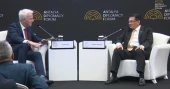
Foreign Minister Dr Khalilur Rahman has said that international commerce and global trade channels should be free and open, stressing that everybody suffers if the free flow of international commerce is impeded.
“It’s very important that the Strait of Hormuz is open for navigation. Not only the Strait of Hormuz, but international commerce should also be free and open. If they are not open and are impeded, everybody suffers. Global growth suffers, countries suffer. So it’s very important that these channels of global trade remain open,” he said.
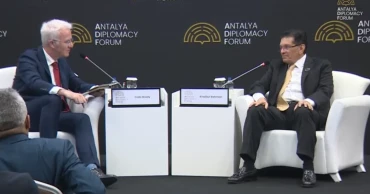
During an interview titled ADF Talks on the sidelines of the Antalya Diplomacy Forum recently, the Foreign Minister said the news that the Strait of Hormuz would remain open was very welcome. “You saw the impact on oil prices immediately.”
He called for coordinated international action to contain the global energy crisis, warning that developing countries could face severe economic shocks if supply disruptions persist.
Referring to past experiences, Dr Khalilur said they do not want a repetition of history, and it is very important that countries around the world work not only to bring peace but also to minimide the effects that the crisis might have on various countries, especially developing nations.
He said the International Energy Agency has already indicated that the scope of the current crisis could be much larger than that of the 1970s.
“So if the impact is very similar, then we have very rough days ahead. It is only through collective action that we will be able to withstand the negative effects emanating from the crisis and its impact on the energy market,” said the Foreign Minister.
He said the world is currently facing a serious energy crisis and significant energy challenges and expressed hope that the situation would improve soon so that countries can return to normal economic activities.
The 5th edition of the Antalya Diplomacy Forum (ADF 2026), hosted by the Ministry of Foreign Affairs of the Republic of Türkiye under the auspices of President Recep Tayyip Erdoğan, took place on April 17–19 in Antalya, Türkiye.
In the face of geopolitical tensions, shifting balances of power, rising trade barriers and mounting pressure on multilateralism, the current global landscape is marked by increasing unpredictability.
This year’s theme, “Mapping Tomorrow, Managing Uncertainties,” emphasized the importance of anticipating and addressing emerging issues in order to shape a better future. The theme underscored the need to stay ahead of future developments by identifying risks and opportunities, developing strategies, and turning insights into action.
“Young nations and developing economies suffered deeply in the 1980s after earlier oil shocks. We do not want a repetition of history,” said the Foreign Minister.
1 month ago