Air pollution

Dhaka's air quality turns ‘moderate’
Dhaka, the capital of Bangladesh, ranked 22nd among the world’s most polluted cities on Monday morning, with an Air Quality Index (AQI) of 79.
According to the AQI scale, the city’s air quality was classified as ‘moderate’ at 10:05am.
The Democratic Republic of Congo’s Kinshasa, Pakistan’s Lahore and Chile’s Santiago were the three most polluted cities, with AQI scores of 167, 161 and 157 respectively.
An AQI between 101 and 150 is considered ‘unhealthy for sensitive groups’, while a score between 151 and 200 is classified as ‘unhealthy’. AQI readings between 201 and 300 are termed ‘very unhealthy’, and anything above 301 is considered ‘hazardous’, posing serious health risks.
The AQI is a daily indicator of air quality, showing how clean or polluted the air is and the possible health effects people may experience.
In Bangladesh, the AQI is calculated based on five major pollutants: particulate matter (PM10 and PM2.5), nitrogen dioxide, carbon monoxide, sulphur dioxide and ozone.
Dhaka has long struggled with severe air pollution. Air quality usually worsens during winter and improves in the monsoon season.
According to the World Health Organization, air pollution causes around seven million deaths globally each year, mainly from stroke, heart disease, chronic respiratory diseases, lung cancer and acute respiratory infections.
2 days ago
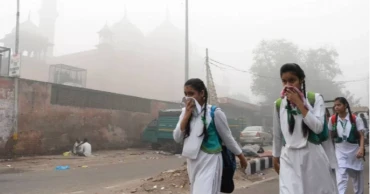
Dhaka ranks 5th among world’s most polluted cities
Dhaka ranked as the world's fifth most polluted city on Friday morning, with an Air Quality Index (AQI) score of 117 at 9:30am.
According to the AQI scale, the capital's air quality was categorised as "unhealthy for sensitive groups". While the general public is unlikely to be affected, children, older people, and those with heart or respiratory conditions may face health risks if exposed for long periods.
Indonesia's Jakarta topped the list with an AQI score of 187, followed by Kinshasa in the Democratic Republic of Congo with 162 and Kampala in Uganda with 151.
An AQI score between 101 and 150 is considered “unhealthy for sensitive groups,” while readings between 151 and 200 are classified as “unhealthy.” Scores ranging from 201 to 300 are deemed “very unhealthy,” and readings above 301 are considered “hazardous,” posing serious health risks.
The AQI serves as a daily measure of air quality, indicating how clean or polluted the air is and the potential health effects associated with exposure.
In Bangladesh, the AQI is calculated based on five major pollutants: particulate matter (PM10 and PM2.5), nitrogen dioxide, carbon monoxide, sulphur dioxide and ozone.
Dhaka has long struggled with severe air pollution. Air quality generally worsens during the winter months and improves during the monsoon season.
According to the World Health Organization, air pollution is responsible for around seven million deaths globally each year, primarily due to stroke, heart disease, chronic respiratory diseases, lung cancer and acute respiratory infections.
5 days ago

Dhaka's air quality turns ‘moderate’
Dhaka ranked 21st among the world's most polluted cities on Monday morning, recording an Air Quality Index (AQI) score of 73 at 9:15 am.
According to the AQI ranking, the capital's air quality was classified as ‘moderate’.
Lahore in Pakistan topped the list with an AQI score of 169, followed by Santiago in Chile with 147 and Kinshasa with 144.
Under the AQI scale, a reading between 50 and 100 is considered ‘moderate’, indicating generally acceptable air quality. However, unusually sensitive individuals may experience minor health concerns and are advised to limit prolonged outdoor exertion.
An AQI reading between 101 and 150 is considered ‘unhealthy for sensitive groups’, while 151–200 is categorised as ‘unhealthy’. Readings between 201 and 300 are regarded as ‘very unhealthy’, and levels above 301 are considered ‘hazardous’, posing serious health risks to the population.
The AQI is an index used to report daily air quality and inform people about how clean or polluted the air is, as well as the potential health effects associated with pollution levels.
In Bangladesh, the AQI is calculated based on five major pollutants: particulate matter (PM10 and PM2.5), nitrogen dioxide (NO2), carbon monoxide (CO), sulphur dioxide (SO2), and ozone.
Dhaka has long struggled with air pollution. Air quality typically worsens during the winter months and improves with the arrival of the monsoon season.
According to the World Health Organization (WHO), air pollution causes around seven million deaths worldwide each year, mainly due to stroke, heart disease, chronic obstructive pulmonary disease (COPD), lung cancer and acute respiratory infections.
9 days ago

Moderate air quality recorded in Dhaka
Dhaka, the densely populated capital of Bangladesh, ranked 12th among the world’s most polluted cities on Monday morning, recording an Air Quality Index (AQI) score of 83 at 8:40am.
According to the AQI index, Dhaka’s air quality was classified as ‘moderate’, posing a slight health risk.
Pakistan’s Lahore, India’s Delhi and Nepal’s Kathmandu topped the list of the world’s most polluted cities, with AQI scores of 188, 173 and 154 respectively.
An AQI between 101 and 150 is considered ‘unhealthy for sensitive groups’, while a score between 151 and 200 is classified as ‘unhealthy’. Readings between 201 and 300 are termed ‘very unhealthy’, and anything above 301 is regarded as ‘hazardous’, posing serious health risks.
The AQI measures daily air quality, indicating how clean or polluted the air is and the possible health effects on people.
In Bangladesh, the AQI is calculated based on five major pollutants — particulate matter (PM10 and PM2.5), nitrogen dioxide, carbon monoxide, sulphur dioxide and ozone.
Dhaka has long struggled with severe air pollution. Air quality usually worsens during winter and improves with the arrival of the monsoon season.
According to the World Health Organization (WHO), air pollution causes around seven million deaths globally each year, mainly from stroke, heart disease, chronic respiratory diseases, lung cancer and acute respiratory infections.
30 days ago
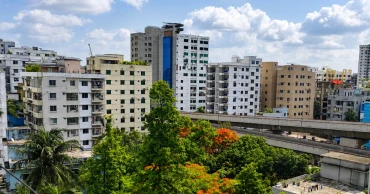
Air quality in Dhaka ‘good’ on Friday morning
Dhaka’s air quality was classified as “good” on Friday morning, with an Air Quality Index (AQI) score of 50.
At 8:45am, the capital ranked 59th among cities worldwide in terms of air pollution.
An AQI between 0 and 50 is considered “good,” while a score between 50 and 100 falls under the “moderate” category.
Indonesia’s Jakarta, Senegal’s Dakar, and Uganda’s Kampala topped the list of cities with the worst air quality, recording AQI scores of 176, 162, and 156, respectively.
According to AQI standards, a reading between 101 and 150 is considered ‘unhealthy for sensitive groups’, 151 to 200 ‘unhealthy’, 201 to 300 ‘very unhealthy’, while levels above 301 are deemed ‘hazardous’, posing serious health risks.
The AQI, which provides daily updates on air quality, indicates how clean or polluted the air is and highlights potential health impacts.
In Bangladesh, the AQI is calculated based on five major pollutants: particulate matter (PM10 and PM2.5), nitrogen dioxide (NO2), carbon monoxide (CO), sulfur dioxide (SO2), and ozone.
Dhaka has long struggled with air pollution, with air quality typically worsening in winter and improving during the monsoon season.
The World Health Organization estimates that air pollution causes around seven million deaths globally each year, mainly due to stroke, heart disease, chronic obstructive pulmonary disease, lung cancer and acute respiratory infections
1 month ago
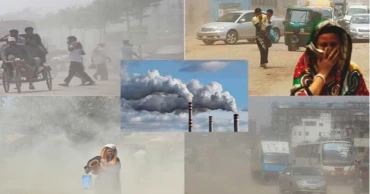
Dhaka ranks world’s most polluted city Tuesday morning
The densely populated capital of Bangladesh has once again topped the list of cities with the worst air quality in the world.
The Air Quality Index (AQI) in Dhaka was recorded at 193 at 9: 01 am on Tuesday
India’s Delhi, China’s Wuhan and Beijing ranked second, third and fourth respectively, with AQI scores of 165, 158 and 158, according to IQAir, a real-time air quality information platform.
An AQI reading between 101 and 200 is considered ‘unhealthy’, particularly for sensitive groups. A reading between 201 and 300 is considered ‘very unhealthy’, while 301 to 400 is classified as ‘hazardous’, posing serious health risks.
The AQI is used by government agencies to report daily air quality and inform the public about pollution levels and possible health impacts.
In Bangladesh, the index is calculated based on five major pollutants — particulate matter (PM10 and PM2.5), nitrogen dioxide (NO₂), carbon monoxide (CO), sulphur dioxide (SO₂) and ozone.
Dhaka has long struggled with severe air pollution, with conditions typically worsening in winter and improving during the monsoon season.
Air pollution remains one of the leading global health risks. Exposure to polluted air increases the risk of heart disease, chronic respiratory illness, lung infections and cancer, according to multiple studies.
The World Health Organization (WHO) estimates that air pollution causes around seven million premature deaths worldwide each year, mainly due to stroke, heart disease, chronic obstructive pulmonary disease, lung cancer and acute respiratory infections.
1 month ago
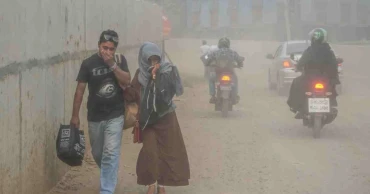
Dhaka ranks world’s most polluted city Monday morning
The densely populated capital of Bangladesh has once again topped the list of cities with the worst air quality in the world.
The Air Quality Index (AQI) in Dhaka was recorded at 174 at 10:20 am on Monday
India’s Delhi, Uzbekistan's Tashkent and Vietnam's Hanoi ranked second, third and fourth respectively, with AQI scores of 153, 147 and 145.
An AQI reading between 101 and 200 is considered ‘unhealthy’, particularly for sensitive groups. A reading between 201 and 300 is considered ‘very unhealthy’, while 301 to 400 is classified as ‘hazardous’, posing serious health risks.
The AQI is used by government agencies to report daily air quality and inform the public about pollution levels and possible health impacts.
In Bangladesh, the index is calculated based on five major pollutants — particulate matter (PM10 and PM2.5), nitrogen dioxide (NO₂), carbon monoxide (CO), sulphur dioxide (SO₂) and ozone.
Dhaka has long struggled with severe air pollution, with conditions typically worsening in winter and improving during the monsoon season.
Air pollution remains one of the leading global health risks. Exposure to polluted air increases the risk of heart disease, chronic respiratory illness, lung infections and cancer, according to multiple studies.
The World Health Organization (WHO) estimates that air pollution causes around seven million premature deaths worldwide each year, mainly due to stroke, heart disease, chronic obstructive pulmonary disease, lung cancer and acute respiratory infections.
1 month ago
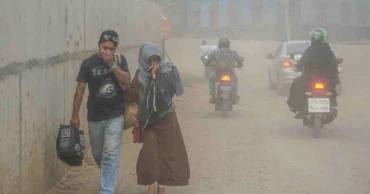
Dhaka again ranked world’s most polluted city
The densely populated capital of Bangladesh has once again topped the list of cities with the worst air quality in the world.
The Air Quality Index (AQI) in Dhaka was recorded at 183 at 9:30 am on Friday.
India’s Delhi, Pakistan’s Lahore and Indonesia’s Jakarta ranked second, third and fourth respectively, with AQI scores of 153, 153 and 148.
An AQI reading between 101 and 200 is considered ‘unhealthy’, particularly for sensitive groups. A reading between 201 and 300 is considered ‘very unhealthy’, while 301 to 400 is classified as ‘hazardous’, posing serious health risks.
The AQI is used by government agencies to report daily air quality and inform the public about pollution levels and possible health impacts.
In Bangladesh, the index is calculated based on five major pollutants — particulate matter (PM10 and PM2.5), nitrogen dioxide (NO₂), carbon monoxide (CO), sulphur dioxide (SO₂) and ozone.
Dhaka has long struggled with severe air pollution, with conditions typically worsening in winter and improving during the monsoon season.
Air pollution remains one of the leading global health risks. Exposure to polluted air increases the risk of heart disease, chronic respiratory illness, lung infections and cancer, according to multiple studies.
The World Health Organization (WHO) estimates that air pollution causes around seven million premature deaths worldwide each year, mainly due to stroke, heart disease, chronic obstructive pulmonary disease, lung cancer and acute respiratory infections.
1 month ago

Dhaka tops list of world’s most polluted cities
Dhaka ranked top among the world’s most polluted cities on Tuesday morning, with an Air Quality Index (AQI) of 169 recorded at 10:00am.
The air quality was categorised as “unhealthy”, indicating a significant risk to public health, according to AQI standards.
Kuwait’s Kuwait City ranked 2nd in the list with an AQI of 157 while India’s Delhi (155) is in the third position.
An AQI reading between 151 and 200 is considered “unhealthy”, while 101-150 is classified as “unhealthy for sensitive groups”. Levels of 201-300 are deemed “very unhealthy”, and readings above 301 are labelled “hazardous”, posing severe health risks.
The AQI, which tracks daily air quality, indicates how polluted the air is and the potential health impact on residents.
In Bangladesh, AQI measurements are based on five key pollutants: particulate matter (PM10 and PM2.5), nitrogen dioxide (NO₂), carbon monoxide (CO), sulfur dioxide (SO₂), and ozone.
Dhaka has long battled air pollution, with conditions typically worsening in winter and improving during the monsoon season.
According to the World Health Organization, air pollution is responsible for an estimated seven million deaths worldwide each year, mainly from stroke, heart disease, chronic obstructive pulmonary disease, lung cancer, and acute respiratory infections.
1 month ago

Dhaka ranks 4th among world’s most polluted cities
Dhaka, the densely populated capital of Bangladesh, ranked 4th among the world’s most polluted cities on Sunday morning, recording an Air Quality Index (AQI) of 138 at 11:37 am.
The air quality was classified as ‘unhealthy for sensitive groups’, indicating potential health risks for the general population, according to the AQI scale.
Hanoi in Vietnam, kolkata in India and Delhi in India occupied the top three positions on the list, with AQI scores of 155, 142 and 142 respectively.
According to AQI standards, a reading between 101 and 150 is considered ‘unhealthy for sensitive groups’, 151 to 200 ‘unhealthy’, 201 to 300 ‘very unhealthy’, while levels above 301 are deemed ‘hazardous’, posing serious health risks.
The AQI, which reports daily air quality, informs residents how clean or polluted the air is and highlights potential health effects.
In Bangladesh, the AQI is calculated based on five key pollutants: particulate matter (PM10 and PM2.5), nitrogen dioxide (NO2), carbon monoxide (CO), sulfur dioxide (SO2), and ozone.
Dhaka has long struggled with air pollution. Air quality usually deteriorates in winter and improves during the monsoon season.
The World Health Organization (WHO) estimates that air pollution causes about seven million deaths worldwide each year, primarily from stroke, heart disease, chronic obstructive pulmonary disease, lung cancer, and acute respiratory infections.
1 month ago