Trending News
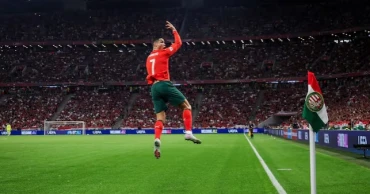
Can Ronaldo conquer the world in his 'last dance' with Portugal's most balanced team ever?
Cristiano Ronaldo walks into what is widely believed to be the final FIFA World Cup of his legendary career, and once again, the football world stops to watch.
At 41, the Portuguese icon is preparing for what many are calling his “Last Dance”, as Portugal begin their 2026 World Cup campaign against DR Congo in Group K at Houston’s NRG Stadium, kicks off at 11:00 PM Bangladesh Standard Time (BST).
Despite age no longer being on his side, Ronaldo remains the central figure of Portugal’s golden generation, a player whose legacy already includes over 965+ career goals, five Ballon d’Or awards, and international dominance across Europe and Nations League triumphs.
Yet one trophy still defines the missing chapter of his career: the FIFA World Cup.
The final chase for football’s biggest prize
Ronaldo’s World Cup journey began in 2006, where Portugal finished fourth. Since then, he has scored in five different World Cups, a record, but the knockout stage has often remained a barrier.
In total, Ronaldo has scored 8 World Cup goals and provided 2 assists in 22 matches, while maintaining one of the longest international careers in football history.
Despite his age, Ronaldo remains a decisive figure for Portugal and continues to feature among the top performers in the Saudi Pro League, where he finished as the third-highest goalscorer for Al Nassr (RSL) in the 2025/26 season.
Portugal arrive at the 2026 World Cup with arguably their most balanced and complete squad in recent memory under coach Roberto Martínez, blending experience, form, and European dominance across positions.
Built for glory?
This time, however, Portugal arrive not just as contenders, but as one of the most balanced squads in the tournament. Under Spanish Coach Roberto Martínez, the team blends experience and youth across all departments.
Vitinha, João Neves, Gonçalo Ramos and Nuno Mendes, all UEFA Champions League winners this season. Bruno Fernandes, Manchester United’s most in-form player in the 2025/26 season. Bernardo Silva, former Manchester City is a consistent creative force. Rafael Leão and Pedro Neto, key attacking outlets offering pace and direct threat, and finally up front the captain and focal point: Cristiano Ronaldo
The squad’s depth across midfield, defence and attack has placed Portugal among the favourites heading into the tournament.
Portugal, ranked among the world’s top five, also enter the tournament as reigning UEFA Nations League champions, strengthening belief that this could finally be their golden generation’s breakthrough moment.
Their group campaign includes DR Congo, Uzbekistan, and Colombia, with the opening fixture against DR Congo expected to set the tone.
Portugal are widely seen as favourites to top the group, but analysts warn of unpredictability from their opponents. DR Congo arrive with physical strength and counter-attacking threat, Colombia bring experience through James Rodríguez, while Uzbekistan make their World Cup debut under Fabio Cannavaro.
Still, all attention remains fixed on one man, Ronaldo. Ronaldo himself has indicated this tournament could mark his sixth and final World Cup appearance, an unprecedented milestone shared only with Lionel Messi in modern football discussions.
Even at 41, he remains decisive, a record international goalscorer with 143 goals for Portugal and the first player to score in five World Cups.
But the World Cup trophy is the one honour missing from his otherwise complete legacy.
The last dance begins
For Portugal, this is more than a campaign. It is a carefully balanced attempt to turn generations of talent into global glory.
For Ronaldo, it is something more personal, a final chance to complete his legacy in football.
Whether 2026 becomes a fairytale ending or another heartbreak, one reality is certain. The world will be watching every step of Cristiano Ronaldo’s last dance on football’s biggest stage.
2 hours ago
One of 2 missing Bangladeshi doctoral students in Florida found dead; suspect in custody
The body of one of the two Bangladeshi doctoral students missing from the University of South Florida was found on a bridge over Tampa Bay, and his roommate has been taken into custody, law enforcement authorities said Friday.
Zamil Limon’s remains were found on the Howard Frankland bridge Friday morning, but Nahida Bristy is still missing, Hillsborough County Chief Deputy Joseph Maurer said.
Limon’s roommate in an off-campus apartment, Hisham Saleh Abugharbeih, 26, was taken into custody at his family’s home nearby on preliminary charges that include unlawfully moving a dead body, failure to report a death, tampering with evidence, false imprisonment and battery.
“We are still actively searching for Nahida,” Maurer said, appealing to the public to share any useful information.
Officers encountered Abugharbeih as they responded to a report of domestic violence at his family’s home, just north of the campus, and were able to remove his relatives to safety. But then he barricaded himself inside and refused to come out. A SWAT team responded, along with a drone, a robot and crisis negotiators, before Abugarbeih came out with his hands up, apparently wearing nothing but a blue towel.
“This is a deeply disturbing case that has shaken our community and impacted many who were hoping for a safe resolution,” said Sheriff Chad Chronister. “While the discovery of Zamil Limon’s remains is heartbreaking, I want the public to know that our detectives worked and are working tirelessly and relentlessly to uncover the truth.”
Limon and Bristy, both 27, were a couple, considering marriage, a relative said. They disappeared from campus on April 16. Limon, who was studying geography, environmental science and policy, was last seen at his home in an apartment complex where he lived with Abugharbeih. Bristy, who was studying chemical engineering and lived on campus, was last seen an hour later at a campus science building.
A family friend contacted authorities last Friday after being unable to contact either one, USF police said.
Investigators interviewed Abugharbeih, who is a native-born U.S. citizen, on Thursday, Maurer said, but Abugharbeih ended the interview after a bit. He said Abugharbeih was speaking with detectives again after his arrest Friday morning.
There are no other suspects in the investigation at this time, Maurer said.
An autopsy is being done on the remains to determine the manner and cause of Limon’s death, and those results are expected Saturday morning, he said.
Abugharbeih had been a USF student but was not currently enrolled. University records showed he had attended the school from Spring 2021 through Spring 2023, and had pursued a BS in Management, a university spokeswoman said.
Abugharbeih also had several previous arrests, the sheriff’s office said. He was charged with battery and burglary of an unoccupied dwelling in September 2023, and with battery that May — both classified in court records as misdemeanors. Court records show Abugharbeih may have entered into a diversion program. A phone call to his lawyer in that case was not immediately returned.
Hillsborough County Court records also showed two domestic violence petitions filed by a family member in 2023. A judge granted an injunction in one case and denied the other petition. He also was accused of traffic violations.
“While the discovery of Zamil Limon’s remains is heartbreaking, I want the public to know that our detectives worked and are working tirelessly and relentlessly to uncover the truth,” Chronister said in the sheriff’s office statement. “We will continue to follow every fact, pursue every lead, and use every tool available to hold those responsible fully accountable. Our thoughts remain with the families of Zamil Limon and Nahida Bristy during this time.”
1 month ago

‘Food Coma’: Causes, Symptoms, Signs, and Remedies
“Food coma” can occur in both people and animals. After having a large meal, you may feel the urgency to rest and find a corner or bed to relax. This is referred to as a “food coma”. The experience feels lethargic, and people struggle to get the necessary energy. However, by being aware of a few steps, food coma can be prevented.
What is a Food Coma?
A food coma is when you feel sleepy and tired after having a heavy meal. It's not like being in a deep sleep or a medical coma. After a large meal, your body sends a lot of blood to your stomach to digest the food, which can make you feel tired because it takes blood away from other parts of your body, like your brain.
Foods high in carbohydrates and fats can also make your blood sugar spike and then crash, leaving you feeling super tired. Additionally, hormones released after eating fatty foods can slow down digestion and make you feel sluggish. When you eat carbs and fats together, it can lead to a release of insulin, which increases the production of a chemical called tryptophan in your brain. Tryptophan boosts serotonin levels, making you feel relaxed and sleepy, leading to what's known as a food coma.
Read more: Reasons Why Ramadan Fasting is More Beneficial Than Dieting
Causes of Food Coma
The reasons for a food coma lie in the intake of certain kinds and amounts of ingredients and the workload the stomach feels while metabolizing foods. To understand more deeply, reading a little explanation will help.
Foods Containing Tryptophan
People often get sleepy after eating certain types of foods. Some experts say it's because foods like whole grain, beef, lamb, poultry, dairy, nuts, seeds, legumes, etc contain a lot of a substance called tryptophan. When someone eats such foods, along with foods high in carbs, like rice or mashed potatoes, it can make them feel even sleepier.
It happens because tryptophan helps the brain make serotonin which makes a person feel calm and relaxed. Serotonin also helps the body produce melatonin, which is a hormone that gets people ready for sleep. So, eating tryptophan-enriched foods and carb-heavy foods can make people feel exhausted after a big meal.
Read more: Colon Cancer: Everything You Need to Know
Anomaly in Blood Supply to Brain
Away from the brain to the digestive organs, a slight shift in blood flow can cause postprandial somnolence. Again, eating pumps up the parasympathetic nervous system (PNS), which is liable to regulate different body functions like blood pressure, heart rate, and digestion. When the stomach fills with enough food, the PNS gets triggered, causing more blood flow to the digestive organs and less to the brain. This lack of blood flow to the brain will cause a person to feel tired and sleepy.
High-Calorie Meals
Some experts propose that high-fat meals like dairy products, eggs, fatty fish, meat, nuts, seeds, etc which are low in carbohydrates can also create drowsiness.
Scientists also propose the idea of satiety signals, a rather complex combination sent to crucial sleep centers in the brain when such a meal with high fat or high calories is taken. The signal theoretically decreases hunger and arousal signals in the brain and increases sleepiness.
Read more: How Does Physical Activity and Exercise Affect Testosterone Levels?
Cytokines Increase
Cytokines, a molecule from the Interlekin-1 family, is a signaling substance, involved in processes like inflammatory response, and is believed by experts to be responsible for augmented post-meal fatigue.
To draw an example of the use case, experts refer to any incident that involves a person taking medications to reduce inflammatory responses when the postprandial somnolence effect gets less intense and less common. Cytokines can affect the central nervous system and increase one’s perception of fatigue.
2 years ago