




































































Engineering Employment Expo Opens to Bridge Skills Gap




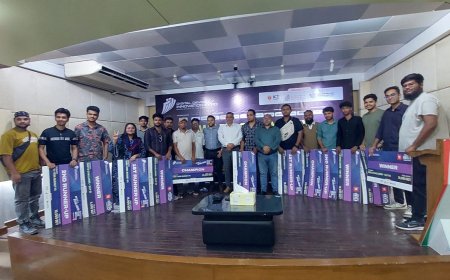
Amid growing concerns over the widening gap between engineering graduates’ skills and industry requirements, the Institution of Engineers, Bangladesh (IEB) has launched its two-day mega “Job Fair and Project Competition 2026” in Dhaka, aiming to create direct employment opportunities for young engineers, strengthen academia-industry collaboration, and develop a workforce aligned with both local and international market demands.
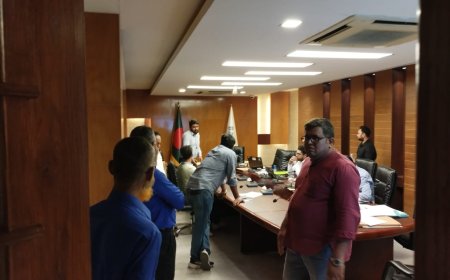
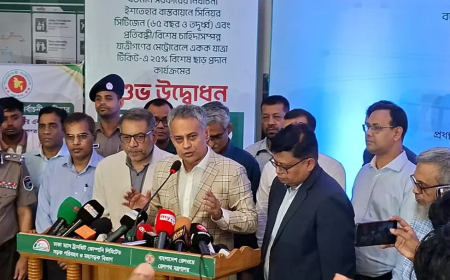
The event was formally inaugurated on Saturday, June 13, at the IEB headquarters in Ramna, Dhaka, by IEB President and Chairman of the Rajdhani Unnayan Kartripakkha (RAJUK), Engineer Mohammad Riazul Islam (Riju).
Addressing the opening ceremony as the chief guest, Engineer Riazul Islam said, “The objective of this special job fair is not merely to provide employment opportunities for a number of job seekers; rather, it is to establish a long-term and effective connection between the current technical competencies of young engineers and the actual requirements of modern industries.”
Highlighting the highly competitive nature of the current job market, he added, “Many of the country’s leading and well-established industrial organizations are participating directly in this year’s job fair, creating a significant opportunity for our young engineers. However, in today’s environment, possessing a degree or certificate alone is no longer sufficient to secure employment. It is now essential to develop oneself into a skilled human resource capable of meeting the technological demands of modern industries. IEB is placing the highest emphasis on enabling engineers to continuously upgrade their knowledge and capabilities in line with modern industry, automation, and Fourth Industrial Revolution technologies.”

He further noted that IEB plans to expand future initiatives to provide more advanced training opportunities and facilitate broader international employment prospects for Bangladeshi engineers.
According to industry and education sector analyses, Bangladesh has witnessed a significant increase in the number of engineering graduates produced annually by public and private universities. However, employers and corporate organizations frequently point to a mismatch between academic training and the practical skills required in modern industries.
Demand is rapidly increasing for expertise in digital technologies, industrial automation, smart infrastructure development, renewable energy, and artificial intelligence (AI)-driven high-tech sectors. Against this backdrop, the IEB initiative serves as a platform that not only connects job-seeking engineers directly with leading employers but also allows participants in the project competition to showcase their innovative ideas, technical solutions, and research-based work before industrial leaders and potential investors.
Among the special guests at the inauguration were Engineer Niaz Uddin Bhuiyan, Convener of the Job Fair and Project Competition Management Subcommittee and IEB Vice-President (S&W), and Engineer Israt Jahan (Jesmin), Member Secretary of the Subcommittee and Secretary of the IEB Women Engineers Chapter.
The event was also attended by several prominent engineering leaders, including Engineer Khan Monjur Morshed, Vice-President (Academic and International Affairs); Engineer Sheikh Al Amin, Vice-President (HRD); Engineer A.T.M. Tanbir-Ul Hasan (Tomal), Vice-President (Administration and Finance); Honorary General Secretary Professor Dr. Engineer Sabbir Mostafa Khan; Engineer Abdullah Al Mamun, Vice-Chairman (Academic and HRD) of IEB Dhaka Centre; and Honorary Secretary Engineer K.M. Asaduzzaman, along with other members of IEB’s central and regional executive committees.
Education and industry experts attending the event observed that narrowing the persistent gap between conventional university curricula and the practical demands of modern industries remains one of Bangladesh’s most pressing challenges in the engineering and economic sectors.
They noted that if IEB’s initiative can successfully integrate practical skill development, active industry participation, and technology-driven innovation into a unified framework, it could have a transformative impact on sustainable employment generation for engineers and contribute significantly to addressing graduate unemployment in the country.